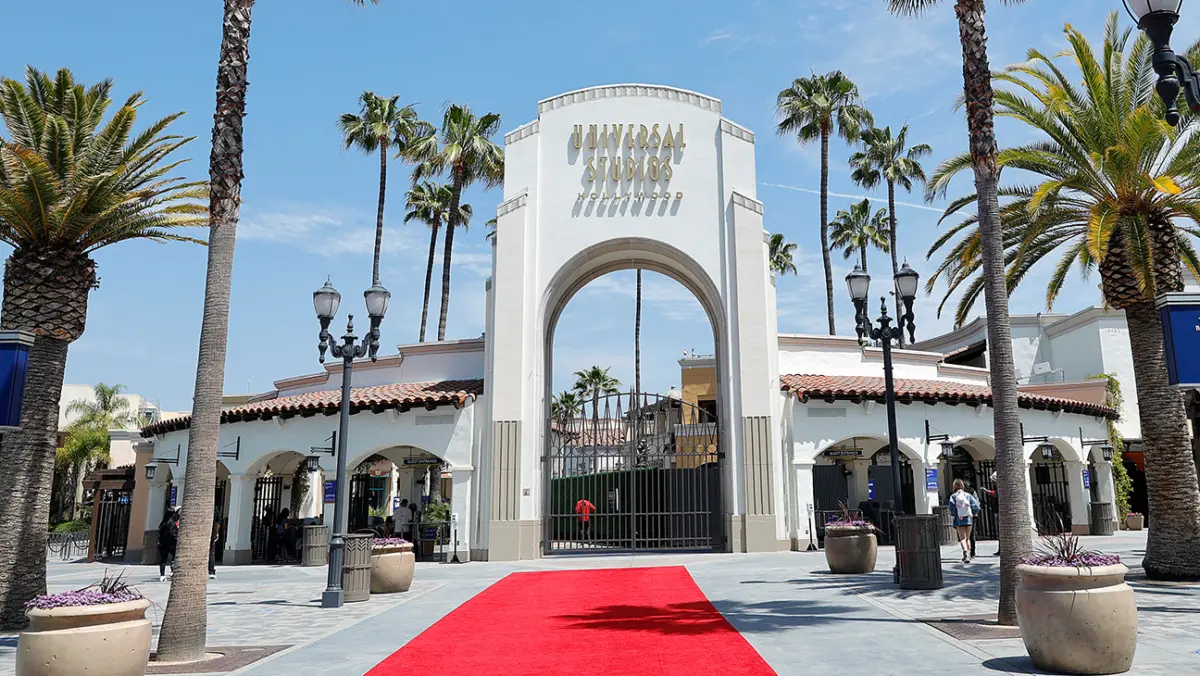
The opulent ballroom at the University of Southern California, adorned with crystal chandeliers and vaulted ceilings, served as an unlikely stage for a confrontation that exposed the widening chasm between Hollywood’s executive elite and the workforce that powers its theme park empire. Diego Rodriguez, a cook at Universal Studios Hollywood, bypassed the polished veneer of an entertainment law conference to confront NBCUniversal Entertainment Chairman Donna Langley. His presence—an anomaly among the sea of high-priced legal professionals—underscored a deepening labor crisis characterized by food insecurity, precarious housing, and stalled contract negotiations that have persisted for nearly a year.
The incident occurred following Langley’s keynote address, where she had spent time highlighting the robust financial successes of her division, including recent projects such as The Odyssey and Obsession. As the event wound down, Rodriguez, accompanied by a representative from Unite Here Local 11, utilized the cover of the departing crowd to approach the stage. Although the microphone he attempted to use was inactive, the ensuing vocal protest forced a direct interaction with one of the most influential figures in the media landscape. Rodriguez, who has spent his career crafting themed culinary items like “Marge Hair Cotton Candy” and “Boss Baby Beignets,” laid bare a reality far removed from the corporate balance sheets being discussed: he was, at times, forced to sleep in his car or within the park confines due to an inability to afford local housing.
A Pattern of Economic Precarity
The confrontation at USC was not an isolated outburst but a symptom of a systemic issue that has plagued Universal Studios Hollywood for years. Data from internal union surveys paints a grim portrait of the daily lives of those responsible for the park’s guest experience. According to the most recent report from Unite Here Local 11, which represents approximately 1,700 workers including cooks, bakers, and food-service staff, the financial strain has reached a breaking point.
More than 60 percent of the 828 union members surveyed reported having to make impossible choices between essential needs such as food, medical care, or rent over the past twelve months. Perhaps most jarring is the statistic that 53 percent of these workers have intentionally skipped meals due to financial constraints. The reliance on external safety nets is equally telling; nearly 26 percent of the workforce indicated they have utilized public assistance programs, including SNAP and food banks, to bridge the gap between their wages and the cost of living in Los Angeles County.
This data mirrors findings from a 2023 UCLA Labor Center study, which assessed the economic stability of the broader park workforce, including ride operators and tour guides. That report found that 67 percent of employees were unable to meet their monthly expenses, and 10 percent of long-term staff reported periods of homelessness. Despite a 23 percent wage increase negotiated in the 2024 contract for employees with over a year of service, the union argues that inflation and the reduction of working hours have effectively neutralized these gains, leaving many workers in a worse position than they were two years ago.
The Dynamics of Contract Negotiations
The current labor standoff stems from a fundamental disagreement over scheduling practices and base pay. While the park’s minimum wage is higher than the federal mandate, it remains strained under the weight of Southern California’s housing market. Union organizers, including Miguel Jauregui, the organizing director for Unite Here Local 11, argue that hourly wage increases are rendered moot when management simultaneously reduces weekly hours.
For many employees, such as seven-year veteran Chris Lillian, the shift in management’s scheduling patterns has been catastrophic. Lillian, a food stand attendant, reported that his average work week has shrunk from 40 hours to approximately 32 hours. On an hourly wage of $24, this reduction in hours—combined with the inflationary pressure on groceries and utilities—has led to significant personal hardship. Lillian noted a weight loss of 20 pounds this year, attributing it to the necessity of stretching limited meals. His sentiment, that he is “one emergency away from ruin,” is echoed across the workforce.
Universal Studios Hollywood has maintained that it is operating in good faith. A company spokesperson pointed to the recent successful ratification of a contract with IATSE Local B-192, which covers 4,000 employees in similar guest-service roles, as evidence of their commitment to “comprehensive wage and benefits agreements.” The company further emphasized that proposals currently on the table for Unite Here Local 11 are intended to build upon the wage increases secured in 2023. However, the union’s move to authorize a strike in September—backed by a 98 percent vote—indicates that the workforce does not share the company’s assessment of the current negotiation progress.
The Macroeconomic Context and Executive Compensation
The tension at the park level stands in sharp contrast to the financial performance of the parent company, Comcast. While the theme park division did see a 4.4 percent revenue decline to $2.6 billion in the third quarter of 2026—attributed by the company to macroeconomic headwinds and increased competition—the parks remain a critical profit driver. In 2025, the theme park division accounted for 8 percent of Comcast’s total revenue, serving as a vital growth pillar as other segments of the media conglomerate face market contraction.
The disparity between executive compensation and frontline worker wages has become a focal point of the union’s rhetoric. In 2025, Comcast co-CEO Mark Cavanagh received $71.8 million in total compensation, a figure representing a 150 percent increase over his 2024 earnings. Co-CEO Brian Roberts saw his compensation rise to $35.1 million. While Mark Woodbury, the chairman and CEO of Universal Destinations & Experiences, does not have his compensation disclosed to shareholders, the sheer volume of wealth distributed at the top of the corporate hierarchy has emboldened union members to press for a larger share of the prosperity generated by their labor.
Implications for the Future of Entertainment Labor
The incident involving Diego Rodriguez and Donna Langley highlights a growing trend in labor activism where employees are increasingly willing to bring their grievances directly to the highest levels of corporate leadership. By disrupting a prestigious academic setting, the union signaled that the standard, quiet channels of bargaining have not provided the relief necessary to address the cost-of-living crisis facing their members.
The implications for Universal Studios Hollywood are twofold. First, the risk of a work stoppage remains high. Should the 1,700 members of Unite Here Local 11 decide to walk off the job, the impact on park operations—particularly in the food and beverage sectors—would be immediate and potentially severe, especially during high-traffic seasons like the annual Halloween Horror Nights. Second, the public optics of a “poverty crisis” at one of the world’s most lucrative entertainment destinations may lead to increased scrutiny from local government officials and consumer advocacy groups.
For workers like Rodriguez, the current situation represents a betrayal of the stability they once associated with employment at a major studio. Having moved from sleeping in his car to a rented room in the Pico-Union neighborhood, he remains acutely aware of the fragility of his situation. His story is a microcosm of the larger struggle: a worker who takes genuine pride in the guest experience, yet finds that his dedication to the company is not reciprocated with a living wage. As negotiations continue, the case of Universal Studios Hollywood will likely serve as a bellwether for the broader service industry, testing whether major corporations will prioritize the financial security of their base-level staff as they navigate a volatile global economy. The resolution of this contract will not only determine the daily lives of thousands of workers but also define the relationship between labor and management in an era of unprecedented wealth inequality in Hollywood.