The Los Angeles film community gathered this past Friday for a commemorative screening of the cult classic thriller Green Room, an event originally intended to celebrate the film’s tenth anniversary. However, the tone of the evening shifted profoundly following the announcement of the death of legendary actor Patrick Stewart, who passed away on Wednesday at the age of 86. Longtime spokesperson Kelly Bush Novak confirmed that the icon died at his home in Los Angeles after a brief, private struggle with Alzheimer’s disease and Lewy body dementia.
During the event, director Jeremy Saulnier addressed the audience, pivoting from his planned promotion of his upcoming project, Slayground, to offer a candid, emotional tribute to the man he credited with the very existence of his 2015 breakthrough film. Saulnier’s remarks highlighted not only the professional magnitude of Stewart’s contribution to the project but also the personal kindness that defined their collaboration.
A Career-Defining Casting Choice
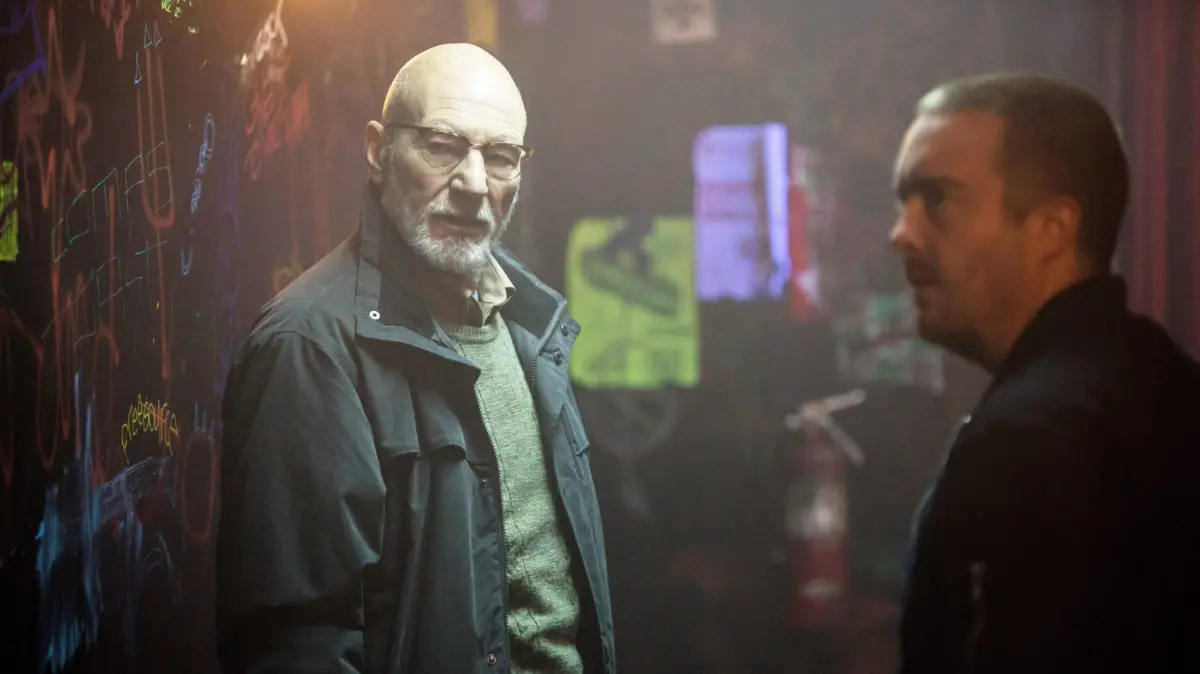
The production history of Green Room is now widely regarded as a case study in the transformative power of A-list involvement in independent cinema. In the months leading up to the production, Saulnier and his team were facing a critical juncture. The film, a gritty, claustrophobic survival horror centered on a punk rock band trapped by a group of neo-Nazis, required a central antagonist capable of commanding immediate, chilling authority.
Saulnier revealed to the audience that the production was effectively at a standstill. "We were at the point of no return, building sets, and under the gun without a Darcy," Saulnier explained, referring to the film’s villain, Darcy Banker. The team was nearing the prospect of shutting down production entirely due to the difficulty of casting a role that demanded such specific gravitas and menace.
According to Saulnier, the intervention of Patrick Stewart was as unexpected as it was essential. Stewart, a titan of stage and screen known globally for his tenure as Captain Jean-Luc Picard in the Star Trek franchise and Professor Charles Xavier in the X-Men series, had no inherent obligation to join a low-budget, independent genre film. Yet, upon reading the script, the actor expressed immediate interest. Within a week, the deal was secured, the film was greenlit, and the production was saved from financial collapse.
The Professional Legacy of Patrick Stewart
Patrick Stewart’s career spanned over six decades, evolving from his foundational training with the Royal Shakespeare Company to becoming one of the most recognizable faces in global science fiction and superhero cinema. His involvement in Green Room served as a testament to his artistic curiosity; he consistently sought out roles that challenged the expectations of his fanbase.
In the industry, Stewart was respected not only for his technical prowess but for his collaborative spirit. Saulnier’s recollection of a specific request made by Stewart during filming provides a window into this dynamic. When the actor approached the director to request the addition of a single, expletive-laden line—"fuck"—it was not a sign of vanity, but of deep alignment with the film’s tone.
"I just knew that he was completely aligned with the film, its aesthetic, its intentions and with me as a filmmaker," Saulnier noted. This anecdote underscores the actor’s willingness to subvert his polished, intellectual persona to serve the raw, visceral needs of a project.
Industry-Wide Mourning and Tributes
The news of Stewart’s passing triggered an immediate and widespread outpouring of grief across the entertainment industry. The profound reach of his influence was reflected in the caliber of individuals who shared public tributes.
His longtime friend and frequent collaborator Sir Ian McKellen led the tributes, reflecting on their enduring friendship that spanned theater and blockbuster cinema. Kevin Feige, the president of Marvel Studios, issued a statement acknowledging Stewart’s contribution to the success of the X-Men franchise, which played a pivotal role in the modern landscape of comic book adaptations.
Other notable figures, including William Shatner, Seth MacFarlane, Hugh Jackman, Minnie Driver, Rebecca Romijn, Halle Berry, and James Marsden, shared personal reflections on social media and through official channels. The consensus among his peers was a portrait of a man who was, in Saulnier’s words, a "fucking sweetheart" and a "true gentleman"—a leader who managed to remain humble and kind despite the immense pressure of his professional status.
The Broader Impact on Independent Cinema
The survival of Green Room serves as a poignant reminder of the fragility of independent filmmaking. In an industry increasingly dominated by franchise intellectual property, the ability of a singular, high-profile actor to catalyze a project has lasting consequences for the diversity of the cinematic landscape.
By taking a "leap of faith" into a project that had no established brand recognition or massive studio backing, Stewart provided a blueprint for how established stars can act as patrons of original, mid-budget storytelling. Saulnier’s assertion that "Patrick Stewart is why I still can make movies" speaks to the structural necessity of such support. Without the gravitas provided by Stewart’s casting, Green Room likely would have remained an unproduced script, and Saulnier’s subsequent career trajectory might have been significantly altered.
Analysis: A Life of Versatility and Grace
The legacy of Patrick Stewart is characterized by a remarkable lack of ego. Throughout his career, he navigated the transition from classical theater to television stardom and eventually to major motion picture fame with a consistency that is rare in the entertainment business.
The fact that his final years were marked by a dignified, private battle with illness is consistent with the way he conducted his professional life: with focus, privacy, and a commitment to the work. His passing represents the end of an era for the Star Trek and X-Men franchises, but it also marks a significant loss for the independent filmmaking community, which relied on his willingness to take risks.
As the film industry continues to grapple with the loss, the 10th anniversary of Green Room stands not just as a celebration of the film itself, but as a memorial to the man who made it possible. In an industry that often prioritizes marketability over artistic risk, Stewart’s choice to "nosedive into our cruddy ass movie" remains a defining example of artistic integrity.
Chronology of Recent Events
- Wednesday: Patrick Stewart dies at his home in Los Angeles following a battle with Alzheimer’s disease and Lewy body dementia.
- Thursday: Official announcement released by spokesperson Kelly Bush Novak.
- Friday: A commemorative screening of Green Room takes place in Los Angeles to mark the film’s 10th anniversary.
- Friday Evening: Director Jeremy Saulnier delivers an emotional tribute to Stewart, detailing the actor’s role in saving the production of the film.
- Ongoing: Tributes continue to emerge from colleagues and collaborators, highlighting Stewart’s impact on both the blockbuster and independent sectors of the film industry.
The resonance of Stewart’s life and career will likely be analyzed for years to come, not only for his iconic performances but for the quiet, behind-the-scenes support he provided to artists like Saulnier. His departure leaves a void in the creative world that will be difficult to fill, but the body of work he left behind—ranging from Shakespearean stage plays to the gritty, urgent realism of independent thrillers—ensures that his influence will continue to inform the next generation of storytellers.