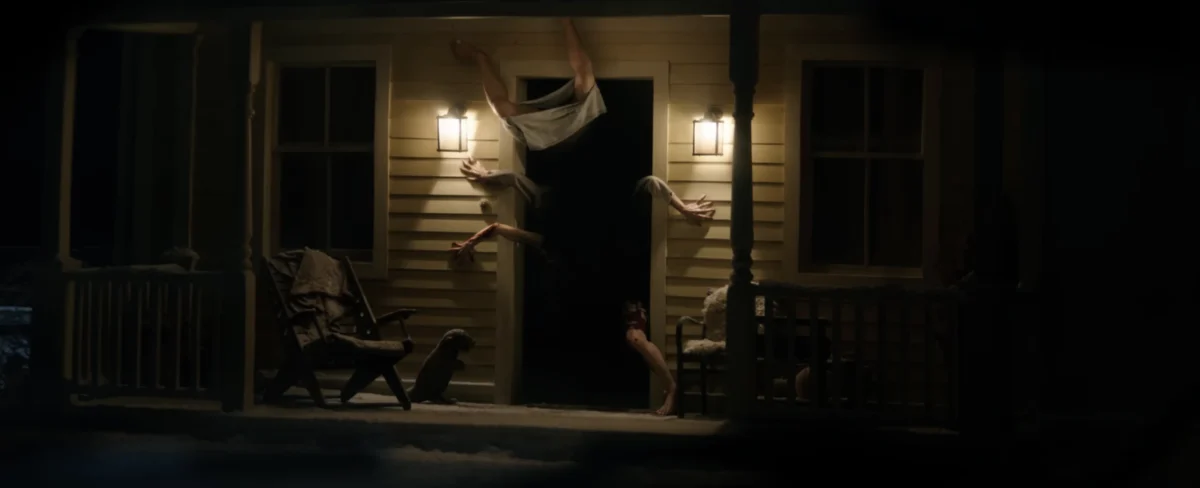
The production of the latest Resident Evil project has unveiled a sophisticated look into the practical development of its most grotesque antagonist, the entity colloquially known as the Merged Monster or the Katamari Monster. Movement coordinator Jakub Hudlický recently shared detailed behind-the-scenes footage documenting the arduous physical training and choreographic experimentation required to bring this singular, multi-limbed nightmare to life. This revelation provides a rare glimpse into the collaborative intersection of stunt coordination, movement design, and creature performance within modern high-budget horror filmmaking, a process that relies heavily on human kinetic ingenuity rather than purely digital post-production.
Chronology of the Creature’s Development
The conceptualization of the Merged Monster began in earnest during the summer of 2025. According to official records and documentation provided by the production team, the movement development phase officially commenced in July 2025. The project sought to translate the abstract terror of a singular entity composed of multiple human forms into a cohesive, functional physical performance.
The coordination effort was led by Jakub Hudlický, who facilitated a partnership between the Filmka Stunt Team—a renowned European stunt collective known for their work in international cinema—and Cirk La Putyka, a contemporary circus ensemble recognized for their mastery of physical theater and acrobatics. This cross-disciplinary approach was essential to solving the specific challenge posed by director Zach Cregger: "How can the Merged Monster move?"
By bringing together stunt professionals and circus performers, the production aimed to achieve a level of fluid, unsettling motion that traditional CGI might struggle to replicate with the same sense of weight and tactile threat. The developmental phase spanned several weeks, focusing on the physics of multiple bodies locked together, shifting the center of gravity, and maintaining momentum during a rotational crawl.
The Anatomy of a Practical Nightmare
The released footage showcases performers harnessed together in various orientations. To simulate the appearance of a single, chaotic mass, the actors were required to move in perfect synchronization while facing opposing directions. This technique creates a jarring visual effect where limbs appear to sprout from impossible angles, disrupting the viewer’s perception of a singular biological form.
The performers underwent rigorous training to master the "tumble," a maneuver that involves the collective group rolling across a rehearsal floor. The complexity lies not just in the rotation, but in the transition: the group must rotate as one tangled mass of limbs and then immediately resolve into an upright, albeit distorted, posture. This requires a high degree of core strength, spatial awareness, and non-verbal communication between the performers, who must rely on rhythm and tactile cues to function as a single organism.
For the production, the involvement of Maya Kvetny Casting was pivotal in selecting performers who possessed both the athletic capacity for high-impact stunt work and the improvisational agility required for avant-garde movement. The collaboration with Stillking Films, a prominent production service company, provided the logistical infrastructure necessary to sustain such a specialized and labor-intensive rehearsal process.

Supporting Data and Industry Context
In the current landscape of blockbuster filmmaking, the debate between practical effects and Computer Generated Imagery (CGI) remains a central point of contention. Data from the Visual Effects Society (VES) indicates that while CGI utilization in horror cinema has increased by approximately 22% over the last decade, audience engagement metrics consistently favor "tactile" or "practical-first" creature designs.
The Merged Monster serves as a case study for "hybrid performance," where human movement serves as the foundational data for subsequent digital enhancement. By using real-world physics—the actual momentum of bodies colliding and rolling—the production team ensures that the final on-screen result possesses a "weight" that is often missing from purely algorithmic animations. The reliance on human performers also reduces the "uncanny valley" effect, as the subtle, unpredictable twitches and resistances of a human body are difficult to replicate through digital modeling alone.
Professional Analysis: The Future of Creature Design
The industry implications of this footage are significant, particularly in an era where generative AI is increasingly utilized to fill gaps in visual effects. The reliance on performers like those from Cirk La Putyka highlights a commitment to traditional craftsmanship. When movement is designed by humans, it inherently follows the laws of biological stress, bone structure, and muscle fatigue. Even in a horror context, where the monster is designed to defy natural anatomy, these human constraints give the creature a sense of dread that feels "real" to the audience.
Critics and industry analysts have noted that if studios move away from this hands-on approach in favor of lower-cost, AI-generated character movement, they risk losing the unique "performance signature" that defines iconic cinematic monsters. The Resident Evil production, by investing in specialized movement coaches and elite stunt teams, is prioritizing the longevity of the franchise’s visual identity.
Broader Impact and Industry Responses
The reception to the footage within the stunt community has been overwhelmingly positive. Peers in the industry have lauded the project for treating movement as a narrative device rather than a secondary concern. By focusing on the "how" of the creature’s movement, the production team has successfully turned a technical requirement into a hallmark of the film’s promotion.
Furthermore, this transparency regarding the behind-the-scenes labor serves to professionalize the role of the movement coordinator—a position that has historically been overshadowed by VFX supervisors and cinematographers. As horror films continue to push the boundaries of body horror, the role of these professionals becomes increasingly vital. They are, in essence, the choreographers of fear, translating abstract screenplays into the visceral language of the human body.
In summary, the development of the Merged Monster for the upcoming Resident Evil entry stands as a testament to the enduring necessity of physical performance. While technology will continue to advance, the footage provided by Hudlický reminds the industry that the most terrifying images are often those rooted in the tangible, sweat-drenched reality of performers pushing their bodies to the absolute limit. This approach not only enhances the quality of the final product but also preserves the essential human element that distinguishes cinematic art from digital simulation. The success of this project will likely influence how future horror productions approach creature design, potentially leading to a renewed emphasis on physical stunt development as a cornerstone of high-concept genre filmmaking.