The 2026 Cannes Film Festival concluded its 79th edition against a backdrop of critical debate regarding its overarching artistic direction, challenging early dismissals of the slate as lackluster by highlighting a pervasive, incremental evolution in contemporary international filmmaking. While mainstream pundits often look for immediate, high-octane narrative payoffs, this year’s selection was defined by accumulative works—films that built emotional and psychological resonance gradually rather than relying on sudden dramatic twists. This shift characterized a festival where geopolitical tensions, cross-cultural collaborations, and formal experimentation took center stage along the Côte d’Azur, culminating in notable wins, surprising omissions, and pointed political discourse on the red carpet.
Main Facts and Competition Highlights
The primary narrative of the 2026 competition revolved around the tension between institutional critiques and quiet, character-driven studies of human connection. The festival’s highest honor, the Palme d’Or, was awarded to Cristian Mungiu for Fjord, a multilingual drama serving as an unflinching critique of Norwegian child protective services. Mungiu’s win marked his second Palme d’Or, following his 2007 victory for 4 Months, 3 Weeks, and 2 Days. However, the selection drew considerable analytical discussion for its starkly polemical framing of Scandinavian welfare systems, contrasting sharply with the subtler humanism found elsewhere in the competition.
Chief among those subtler works was Ryusuke Hamaguchi’s All of a Sudden, a deeply reflective narrative chronicling the burgeoning friendship between a Japanese playwright, Mari, and a French eldercare manager, Marie-Lou. The film explores themes of global decline and personal mortality, drawing thematic inspiration from the real-life correspondence between Japanese anthropologist Maho Isono and philosopher Makiko Miyano. Although All of a Sudden missed out on the top prize, its emotional core was recognized with a joint Best Actress award for Virginie Efira and Tao Okamoto.
The competition also featured high-profile international entries addressing historical trauma and modern political rot. Pawel Pawlikowski presented Fatherland, a road movie following author Thomas Mann (Hanns Zischler) and his daughter Erika Mann (Sandra Hüller) during a 1949 speaking tour across divided Germany. Concurrently, Emmanuel Marre’s A Man of His Time utilized hard-lit 16mm cinematography to chronicle the moral descent of a municipal bureaucrat in Nazi-occupied Vichy France, drawing narrative inspiration from the director’s great-grandfather’s archival letters.
Chronology and Festival Progression
The 12-day festival followed a traditional trajectory, beginning with high-profile red carpet premieres and sidebar showcases before culminating in the weekend awards ceremonies.

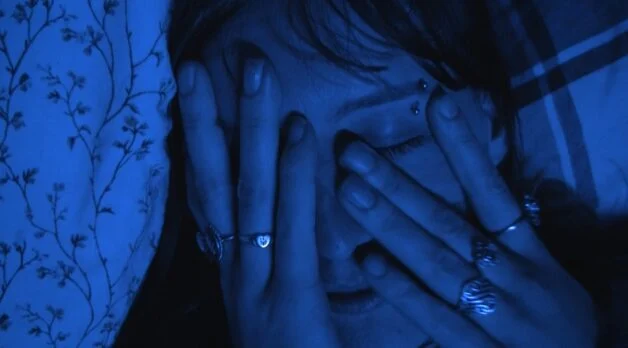
- Early Week Screenings: The initial days established a tone of psychological complexity, highlighted by Jane Schoenbrun’s Un Certain Regard opener, Teenage Sex and Death at Camp Miasma, which explored parasocial dynamics and desire with performances from Hannah Einbinder and Gillian Armstrong.
- Mid-Festival Developments: As the competition progressed past the halfway mark, major acquisitions and late-arriving canvases shifted industry focus. Valeska Grisebach’s three-hour Eastern European borderland saga, The Dreamed Adventure, screened during the final days of premieres, swiftly securing North American distribution. The film stars nonprofessional actor Yana Radeva as Veska, an archaeologist navigating post-Soviet criminal dynamics and outdated gender paradigms.
- Critics’ Week and Sidebar Breakouts: Marine Atlan’s directorial debut, La Gradiva, captured significant critical acclaim in the Critics’ Week section. Set in Naples, the film follows French students on a Pompeii field trip and subsequently secured US distribution through 1-2 Special following an enthusiastic reception.
- Closing Events: The festival concluded with the official awards ceremony on the final Saturday, marked by Andrei Zvyagintsev’s acceptance of the Grand Prix for Minotaur and his subsequent public appeal addressing Russian leadership regarding the ongoing war in Ukraine.
Supporting Data and Industry Metrics
Distribution activity remained robust throughout the 2026 edition, with major independent distributors locking down titles early in the festival run. NEON maintained a substantial footprint, acquiring a diverse slate ranging from South Korean creature feature Hope—featuring morphological design reminiscent of Francisco Goya’s Saturn Devouring His Son—to James Gray’s classic Queens-set family drama, Paper Tiger.
In the sidebar competitions, Sandra Wollner’s Everytime claimed the top prize in Un Certain Regard. Photographed by cinematographer Gregory Oke, the film was noted for its intricate sound design and intimate framing of grief. Meanwhile, the Camera d’Or for best debut feature was awarded to Clarissa, a reimagining of Virginia Woolf’s Mrs. Dalloway directed by Nigerian filmmakers Arie Esiri and Chuko Esiri, which incorporated post-colonial critiques referencing the literary works of Chinua Achebe.
Official Responses and Geopolitical Implications
The 2026 edition was notably punctuated by real-world politics intersecting with cinematic art. Following the precedent set by previous editions, artistic expression served as a direct conduit for dissent. Jafar Panahi, whose film It Was Just an Accident won the Palme d’Or at the 2025 festival, remained a focal point of solidarity as industry figures noted his ongoing legal pressures in Iran.
The most direct political address of the 2026 closing ceremony came from Russian exile Andrei Zvyagintsev. Upon accepting the Grand Prix for Minotaur—an adaptation of Claude Chabrol’s The Unfaithful Wife reframed within the context of contemporary Russian corporate corruption—Zvyagintsev utilized his acceptance speech to publicly implore Vladimir Putin to halt military actions in Ukraine. This gesture underscored a broader thematic current within the festival’s competition slate, where historical allegories and domestic dramas frequently doubled as commentaries on systemic authoritarianism and moral complicity.
Broader Impact and Industry Analysis
The critical discourse surrounding Cannes 2026 reflects a shifting industry landscape wherein immediate, high-impact narratives are increasingly balanced against methodical, character-driven storytelling. While box-office analysts and festival pundits periodically debate the commercial viability of slower-paced international art cinema, the rapid acquisition of titles like Grisebach’s The Dreamed Adventure and Atlan’s La Gradiva suggests sustained institutional and arthouse demand for formally rigorous filmmaking.
Furthermore, the prominence of multilingual co-productions and cross-border narratives highlights the changing geography of European and Asian financing. As directors continue to utilize period settings—from postwar Germany and Vichy France to post-Soviet borderlands—to mirror contemporary anxieties regarding democratic erosion and social isolation, the 79th Cannes Film Festival ultimately cemented its place not as a static showcase of isolated masterworks, but as a dynamic barometer for the socio-political concerns shaping the global film industry.