The global film community mourns the loss of Sam Neill, the versatile New Zealand actor whose prolific career spanned over five decades, crossing international blockbusters, gritty independent dramas, and influential horror cinema. Neill passed away at the age of 78, leaving behind an indelible mark on modern filmmaking. Celebrated for his everyman relatability, intellectual intensity, and distinct ability to anchor high-concept genre pieces with emotional authenticity, Neill transitioned seamlessly from terrifying cinematic villains to beloved franchise heroes. His death prompts a comprehensive reflection on a life dedicated to the arts, agriculture, environmental activism, and an expansive filmography that helped shape contemporary global cinema.
Early Life and Breakthroughs in International Cinema
Born in Omagh, Northern Ireland, in 1947, Neill moved with his family to New Zealand as a child—a landscape that would profoundly shape his personal identity and lifelong connection to the land. Before establishing himself as an international presence, Neill honed his craft in New Zealand’s burgeoning theatrical and documentary scenes during the 1970s.
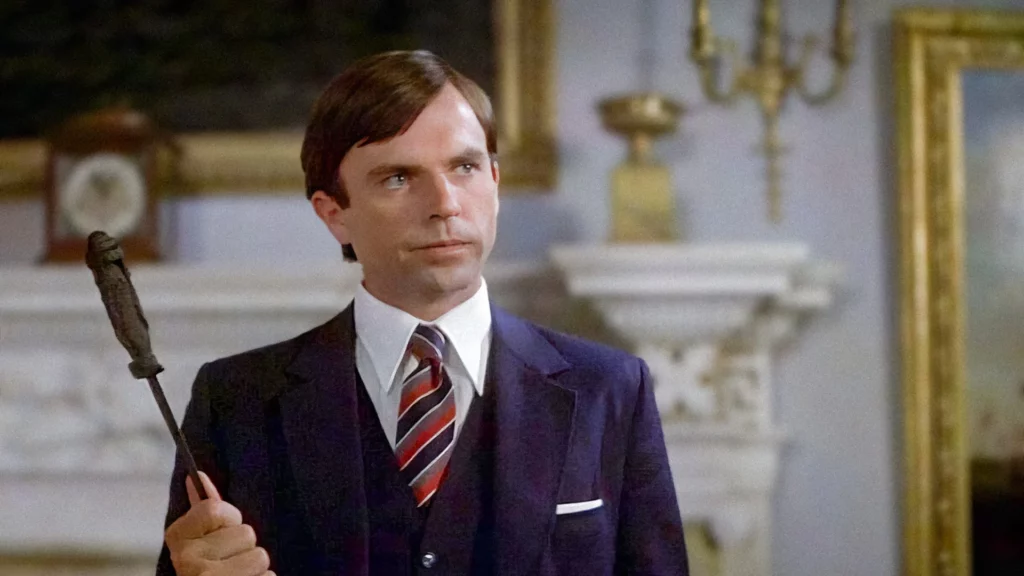
His international breakthrough came in 1979 with Gillian Armstrong’s celebrated arthouse drama My Brilliant Career, starring alongside Judy Davis. Neill’s nuanced portrayal of a wealthy suitor captured the attention of Hollywood casting directors, most notably legendary actor James Mason. Mason subsequently recommended Neill for a role that would introduce him to American audiences on a massive scale: the adult Damien Thorn in The Omen III: The Final Conflict (1981).

The year 1981 proved pivotal for Neill, as it also marked his collaboration with Polish visionary director Andrzej Żuławski on the psychological horror masterpiece Possession. Playing opposite Isabelle Adjani, Neill delivered a frantic, high-wire performance as a government agent unraveling in the wake of his wife’s inexplicable psychological and physical metamorphosis. This early run established a pattern that would define Neill’s career: a refusal to be pigeonholed, alternating effortlessly between prestige historical dramas, provocative European art-house cinema, and mainstream commercial thrillers.
The 1980s and 1990s: Navigating Blockbusters and Auteur Visions
Throughout the 1980s, Neill cemented his status as a leading man of considerable dramatic depth and physical presence. In 1988, he starred in Phillip Noyce’s Australian psychological thriller Dead Calm, opposite a young Nicole Kidman. The intense nautical survival drama drew critical praise and caught the attention of director Steven Spielberg, who was scouting talent for an upcoming adaptation of Michael Crichton’s bestselling novel, Jurassic Park.
Released in 1993, Jurassic Park transformed Neill into a global household name. As paleontologist Dr. Alan Grant, Neill provided the emotional anchor and rationalist perspective needed to ground Spielberg’s revolutionary computer-generated visual effects. Rather than competing with the dinosaurs, Neill played the quintessential straight man, combining rugged scientific authority with an understated, dry wit. His chemistry with co-star Laura Dern and his effortless execution of iconic cinematic moments—such as first beholding the living brachiosaurus—elevated the film from a standard creature feature into a cinematic touchstone.
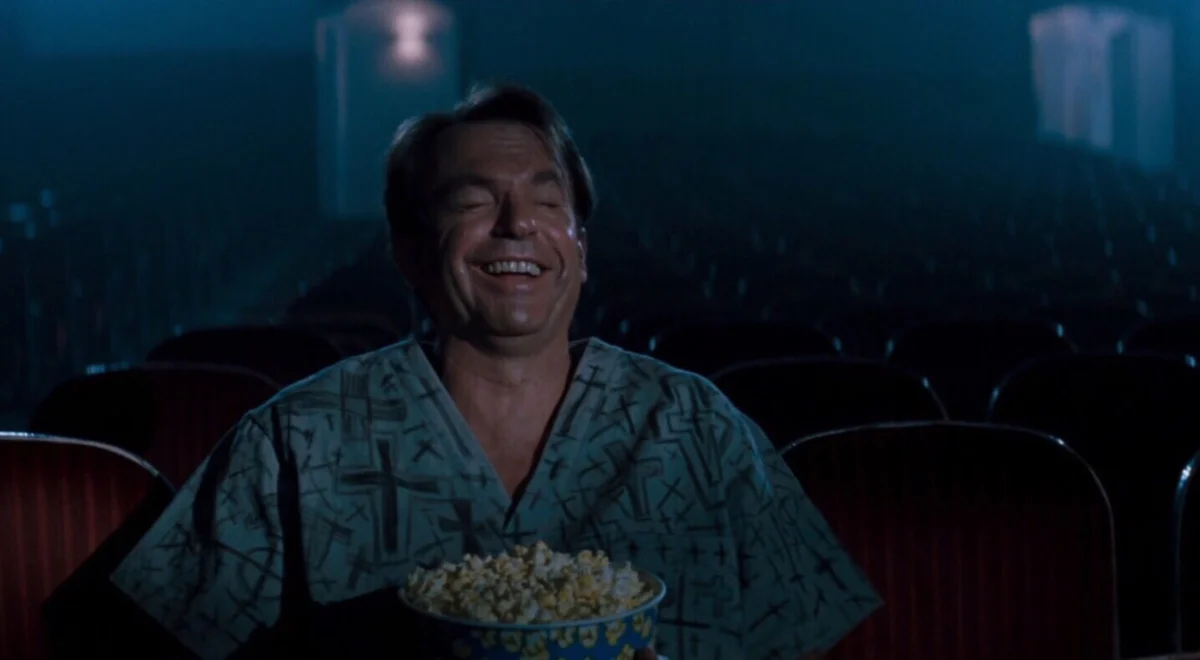
Despite the monumental success of Jurassic Park, Neill avoided becoming trapped in a single persona. In the same general era, he delivered acclaimed performances in Jane Campion’s Academy Award-winning The Piano (1993) and John Carpenter’s cosmic horror classic In the Mouth of Madness (1994). In Carpenter’s film, Neill played John Trent, a cynical insurance investigator slowly descending into Lovecraftian madness. Neill’s ability to ground absurd, terrifying premises in genuine human psychology became a hallmark of his genre work, echoed later in his chilling turn in Paul W.S. Anderson’s sci-fi horror film Event Horizon (1997).

Behind the Scenes: Directorial Ventures and Cultural Advocacy
Beyond his acting credits, Neill maintained a fierce commitment to the cinematic culture of his adopted homeland. In 1995, he co-directed Cinema of Unease: A Personal Journey by Sam Neill alongside Judy Rymer. The documentary explored the unique history, recurring themes, and psychological undercurrents of New Zealand cinema, interrogating the themes of isolation, guilt, and religious repression that permeated the nation’s artistic output. Neill’s critical eye extended to his honest appraisal of indigenous representation in media, highlighting both the artistic triumphs and historical blind spots of local storytelling.
In addition to his cinematic output, Neill cultivated a prominent public identity as an agriculturalist and vintner. Operating under the name Two Paddocks, his organic wine estate in Central Otago, New Zealand, became a labor of love that reflected his deep-rooted bond with the southern hemisphere. During his later years, his social media presence—affectionately chronicling life on his farm among cows, pigs, and ducks—earned him a reputation as one of the entertainment industry’s most genuine and grounded figures. His candid advocacy for environmental causes and his philanthropy reinforced a public persona that matched his off-screen reality.
Facing Health Challenges with Resilience
In 2023, Neill publicly revealed his diagnosis of stage-three angioimmunoblastic T-cell lymphoma, a rare form of non-Hodgkin lymphoma. True to form, Neill approached the diagnosis with characteristic candor, releasing a memoir titled Did I Ever Tell You This? and speaking openly about his medical treatments. While undergoing chemotherapy, he continued to work on television and film projects, maintaining that his passion for living far outweighed any fear of mortality.
Industry Reactions and Tributes
Following the announcement of his death, directors, co-stars, and cultural figures released statements honoring his legacy.
John Carpenter posted a heartfelt remembrance on social media, writing, "The world has lost a remarkable actor, father, farmer, and friend. I’m heartbroken to hear about Sam. We made two movies together, and every day on set was an absolute masterclass in collaboration and professionalism."
Gillian Armstrong, reflecting on her early work with the actor, noted how Neill effortlessly bridged the gap between classic leading-man charisma and contemporary vulnerability, setting a high standard for generations of Australian and New Zealand actors breaking into the global market.
Broader Impact and Cinematic Legacy
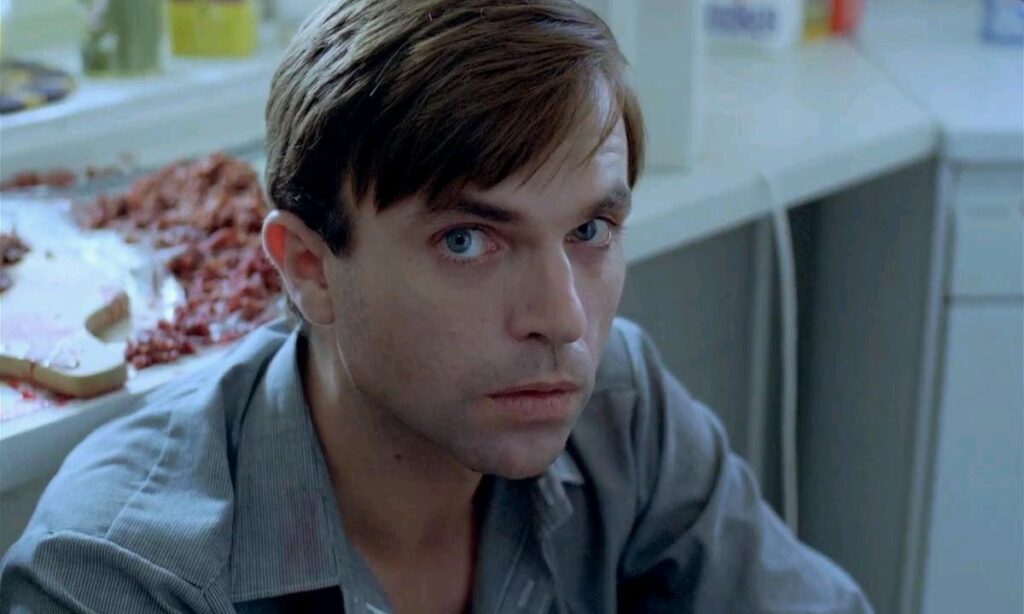
Sam Neill’s professional legacy extends far beyond box office receipts or critical accolades. He represented a dying breed of international character-actor-turned-leading-man who could transition between gritty European auteur projects and high-gloss Hollywood franchises without losing his artistic integrity. Whether fighting prehistoric reptiles, investigating apocalyptic cults, or tending to his vineyards in Central Otago, Neill approached every endeavor with wit, humility, and uncompromising dedication.
As the film industry processes the loss of one of its most reliable and universally respected talents, his extensive filmography stands as a testament to an extraordinary life in cinema—one that balanced the terrifying depths of human imagination with the quiet, grounding comfort of the natural world.