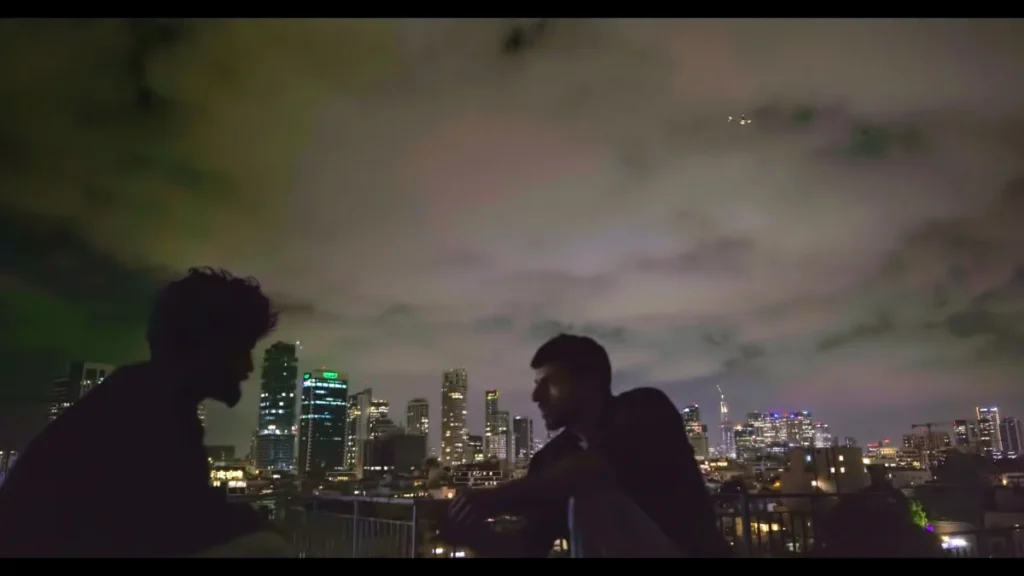
The release of the A24 independent feature film Primetime has sparked a significant public confrontation between the studio and Chris Hansen, the former Dateline NBC journalist who became a household name for his investigative series To Catch a Predator. Following a Thursday night screening at an AMC theater in Times Square, Hansen took to his own podcast, Have a Seat with Chris Hansen, to deliver a scathing critique of the film, which offers a dramatized, unauthorized account of his career during the mid-2000s. Hansen characterized the film as a departure from reality, specifically labeling the portrayal of his life and investigative methods as a fever dream that fails to capture the essence of his work.
The film, directed by Lance Oppenheim, centers on the 2006 era of Hansen’s career, a period marked by the meteoric rise of the To Catch a Predator segment. During this time, Hansen collaborated with law enforcement agencies and the advocacy group Perverted Justice to conduct sting operations aimed at individuals attempting to meet minors for illicit purposes. While the series achieved high ratings and generated widespread cultural discourse, it also faced intense scrutiny from legal experts regarding the ethics of journalism and the potential for entrapment, a tension that the film appears to lean into for its narrative arc.
A Chronology of the Conflict
The friction between Hansen and the production team predates the film’s theatrical debut. According to statements made by Hansen in an interview with The Hollywood Reporter prior to seeing the film, A24 did not reach out to him or his production staff to discuss the premise or verify the factual basis of the script.
The origins of the film’s concept have been traced back to a personalized Cameo video Hansen recorded for director Lance Oppenheim. What began as a fan interaction seemingly morphed into a creative project that, according to Hansen, was framed to a mutual acquaintance as a love letter to the journalist, albeit one that promised unconventional storytelling. However, upon viewing the final product, Hansen rejected the premise of a love letter, arguing that the film is instead an unvarnished and inaccurate character assassination that prioritizes stylistic, dark aesthetic choices over factual reporting.
Hansen’s specific grievances include scenes involving high-level network executives and colleagues, such as former NBC president Jeff Zucker and news anchor Stone Phillips, which Hansen insists are entirely fabricated. Beyond these procedural inaccuracies, Hansen expressed personal offense at the film’s depiction of his family life, specifically the portrayal of his relationship with his children. He maintains that the film’s depiction of him as an emotionally distant parent is fundamentally inconsistent with his lived experience.
The Debate Over Journalistic Ethics
The To Catch a Predator segment, which ran from 2004 to 2007, occupies a complex space in the history of American television. At its peak, the show attracted millions of viewers and was credited by supporters with raising awareness about online safety and child exploitation. Conversely, critics frequently cited the show’s methods as problematic. The legal argument of entrapment—that the suspects were coerced into criminal activity by the show’s elaborate sting operations—became a focal point for defense attorneys and civil libertarians.
The film Primetime appears to invite the audience to examine these moral ambiguities. By dramatizing the behind-the-scenes pressure of maintaining such a high-stakes, controversial segment, the film likely aims to explore the toll that such intense, morally grey investigative work takes on the individual. However, Hansen’s reaction suggests that the film crosses the line from critical examination into misrepresentation. His critique emphasizes that by turning his investigative work into a horror-themed narrative, the film undermines the contributions of the law enforcement professionals who worked alongside him to apprehend offenders.
Industry Implications and Public Response
The clash between a high-profile subject and a major studio production like A24 highlights the growing trend of unauthorized biopics that take creative liberties with the lives of living public figures. While the First Amendment provides significant protections for filmmakers, the social and reputational fallout for the subjects of such films remains a significant concern.
Hansen’s direct, public opposition—including a grade of "D" for Robert Pattinson’s performance—adds a layer of tension to the film’s reception. Pattinson, known for his diverse portfolio of roles, faced the challenge of portraying a man whose public persona is inextricably linked to a specific, high-intensity investigative style. Hansen’s rejection of the portrayal suggests that the performance failed to resonate with the person it was meant to represent, potentially impacting the film’s reception among the audience that followed the original Dateline segments.
In a move to reclaim the narrative, Hansen has intensified his own digital presence. On the same day that he critiqued the A24 film, he and his team at the TruBlu streaming network released the trailer for I’m Chris Hansen, a documentary that aims to present his career and investigative methodology from his own perspective. This counter-programming suggests that the debate over his legacy will continue, with both the dramatized version and the documentary competing for the viewer’s interpretation of his work.
Analysis of the Public Narrative
The broader implications of this conflict touch on the nature of truth in media. When a production company adapts real-world events into a narrative feature, the blending of fact and fiction can often lead to a "chilling effect" where the line between historical record and artistic interpretation becomes blurred. For the public, the challenge lies in distinguishing between the dramatic narrative presented on screen and the documented reality of the events.
Hansen’s assertion that the director "didn’t want to hear that Chris Hansen is a good guy" reflects a fundamental divergence in vision. While the film seeks to explore the darker, psychological underpinnings of the investigative process, the subject of the film seeks to highlight the tangible, positive outcomes of the stings. This disconnect is not unique to the Hansen case; it is a recurring theme in the history of biopics where the subject and the creator operate with different goals—one prioritizing legacy and accuracy, the other prioritizing theme and aesthetic impact.
As the industry continues to produce content based on recent history, the tension between creative freedom and the rights of public figures to control their own narratives will likely persist. For now, the audience is left with two distinct versions of the same career: the one portrayed in the halls of an AMC theater by Robert Pattinson, and the one currently being archived and presented by Chris Hansen himself on his own platforms. Whether the film succeeds in its goal of artistic exploration or fails in its duty to historical accuracy remains a point of contention that will likely continue to evolve as more viewers weigh in on the film’s controversial content.