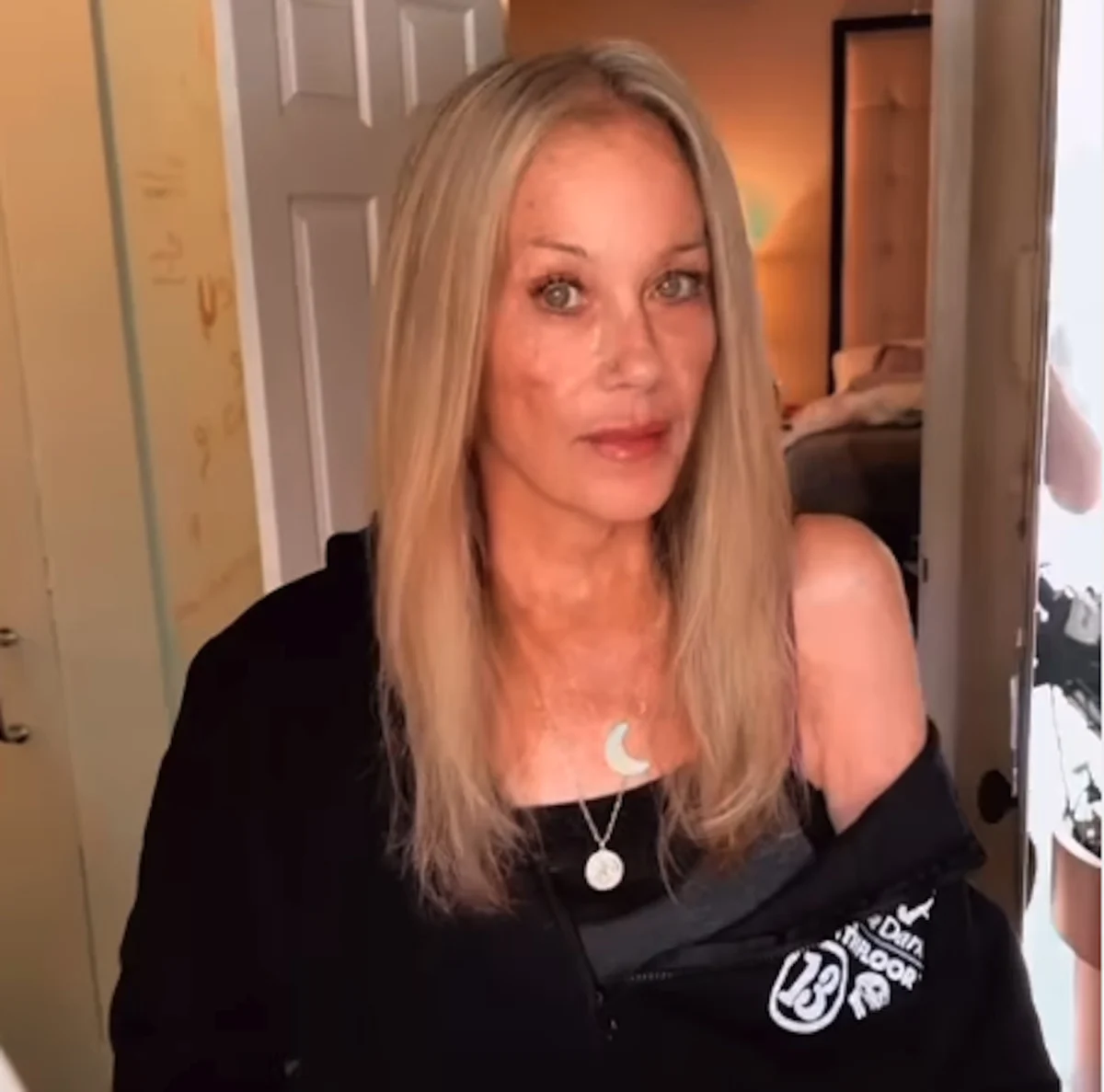
The entertainment industry and fans across the globe recently received a long-awaited update from beloved actress Christina Applegate, who marked her return to social media on September 21 after an extended hiatus. The Emmy-winning performer, who has been a prominent advocate for Multiple Sclerosis (MS) awareness since her diagnosis in 2021, shared a brief video clip on Instagram. The post served as the first visual confirmation of her recovery progress since she was hospitalized in late March due to complications related to her ongoing health challenges.
The video, which captures the actress showcasing a fresh hair color, offers a moment of lighthearted transparency. Applegate, known for her candid approach to her health journey, playfully acknowledged a mark on her cheek while expressing gratitude to her stylist, Dave Stanwell, for "brightening up" her day. While the content of the post was focused on a simple aesthetic change, the implications were significant for a fan base that had spent months speculating on her well-being following reports of her four-month hospital stay.
A Timeline of Recent Health Challenges
The trajectory of Applegate’s health over the past year has been a subject of public concern, balanced by her consistent efforts to maintain transparency with her supporters. The chronology of these events underscores the volatility of life with a chronic, progressive condition such as MS.
In early 2024, Applegate continued to navigate her professional and personal commitments with her characteristic resilience. However, in late March, reports confirmed that the actress had been admitted to a medical facility. The specific nature of her hospitalization remained largely confidential, adhering to her desire for privacy during acute flare-ups. Following the disclosure of her admission in April, Applegate took to Instagram to address the situation directly. She characterized herself as a "strong chick" and emphasized that while health issues are a constant variable in her life, she was focused on stabilization and recovery.
Throughout the spring and early summer, the actress’s public presence remained static. While she occasionally shared archival content—such as behind-the-scenes photographs from her memoir photo shoots and vintage videos with her daughter—there were no new appearances. This silence was broken by reports in early August from outlets such as TMZ, which indicated that Applegate had finally been discharged and had returned home to continue her recovery. The September 21 video serves as the definitive confirmation that she is now in a phase of post-hospitalization rehabilitation.
Understanding the Impact of Multiple Sclerosis
To contextualize Applegate’s experience, it is essential to understand the clinical reality of Multiple Sclerosis. MS is an unpredictable, often disabling disease of the central nervous system that disrupts the flow of information within the brain and between the brain and body. According to the National Multiple Sclerosis Society, nearly one million adults in the United States are living with an MS diagnosis.
The disease manifests differently in every patient, but common symptoms include fatigue, mobility issues, and cognitive changes. For high-profile figures like Applegate, the diagnosis often carries a dual burden: the physical reality of the disease and the public expectation to remain visible and "camera-ready." Applegate has been lauded for rejecting the pressure to mask the physical toll of her condition. During her appearances at the 2023 SAG Awards and the 2024 Emmys, she walked the red carpet with a cane, effectively normalizing the presence of mobility aids in high-glamour environments. Her recent video, in which she points out a "weird spot" on her face, continues this pattern of radical honesty, stripping away the curated facade often expected of Hollywood stars.
The Role of Advocacy and Public Vulnerability
Applegate’s willingness to share her health struggles has transformed her into a focal point for the MS community. By documenting her journey, she has highlighted the "invisible" aspects of chronic illness—the exhaustion, the medical uncertainty, and the emotional labor required to maintain a positive outlook during setbacks.
The response to her recent video has been overwhelming, with thousands of fans and peers offering messages of support. Many commenters highlighted the bravery required to appear on camera while managing a "debilitating disease." This feedback suggests that Applegate’s impact extends far beyond her filmography; she has become a representative for those who feel their own health struggles are unseen or stigmatized.
From a sociological perspective, this form of celebrity disclosure serves a vital function. When a public figure shares the reality of a chronic diagnosis, it often leads to a measurable increase in public awareness and funding for related research. In the case of MS, Applegate’s advocacy has helped shift the narrative from a focus on the "tragedy" of the diagnosis to a focus on the necessity of ongoing care, lifestyle management, and the normalization of disability.
Clinical Implications and Long-term Recovery
While the public sees the "fresh hair" and the smile, medical experts note that the period following a four-month hospitalization for an MS patient is critical. Recovery from a significant flare-up or health complication often involves rigorous physical therapy, medication adjustments, and a slow recalibration of daily routines.
The fact that Applegate is appearing on camera suggests a level of stability that, while positive, does not imply a "cure." Rather, it reflects a successful management of a baseline that allows for higher-quality daily functioning. Her focus on "brightening up" her day through personal care routines—such as a visit from her stylist—is a hallmark of psychological resilience. For patients dealing with chronic illness, these small acts of normalcy are often crucial components of a holistic treatment plan, helping to maintain mental health in the face of physical decline.
Looking Ahead: The Future of Her Advocacy
As Applegate transitions back into her life at home, the broader implications of her journey continue to resonate. She has previously expressed that her career path may change to accommodate her physical limitations, potentially shifting more toward voice acting or behind-the-camera work. However, her presence remains a constant in the cultural conversation.
The entertainment industry has historically been reluctant to address the realities of aging and illness among its stars. By defying these norms, Applegate has established a new precedent. She is not merely "recovering" in the sense of returning to her previous state; she is integrating her health status into her public identity.
In the months to come, supporters expect that the actress will continue to provide updates at her own pace. Whether or not she returns to large-scale productions, her influence on the public understanding of chronic illness is already secured. By maintaining this delicate balance between privacy and public transparency, Applegate has provided a roadmap for others navigating similar health challenges, proving that strength is not defined by the absence of illness, but by the courage to remain authentic in its presence.
As she settles into a new routine at home, the sentiment expressed by her fans remains the central theme of her current chapter: a collective hope for stability, comfort, and the continued ability for her to find joy in the "fresh" moments of life. The outpouring of support from the millions who follow her is a testament to the connection she has fostered—one built on empathy, shared vulnerability, and a profound respect for her tenacity. Her journey remains one of the most closely watched narratives in celebrity health, serving as a reminder that behind the headlines are human beings navigating the complexities of medical reality with grace and, whenever possible, a sense of humor.