The cinematic world is abuzz with the release of Christopher Nolan’s highly anticipated adaptation of Homer’s ancient Greek poem, The Odyssey, which has finally premiered in theaters, showcasing a formidable cast of Hollywood’s elite. This grand epic marks Nolan’s first project since his critically acclaimed 2023 blockbuster Oppenheimer, which swept the Academy Awards, securing him his first Best Director and Best Picture accolades. Audiences and critics alike have eagerly awaited his follow-up, and The Odyssey arrives with monumental expectations, not only for its narrative scope but also for its groundbreaking technical ambition as the first feature film shot entirely with IMAX 70mm film cameras.

The Genesis of an Ancient Epic Reimagined
Homer’s The Odyssey, a foundational text of Western literature, chronicles the tumultuous 10-year journey of the cunning Greek king Odysseus as he strives to return to his kingdom of Ithaca after the fall of Troy. His perilous voyage is fraught with encounters with mythical creatures, divine interventions, and profound personal trials, all while his loyal wife, Penelope, and courageous son, Telemachus, contend with a horde of avaricious suitors vying for his throne and Penelope’s hand. Nolan’s decision to tackle such a revered and complex narrative signals a continued fascination with profound human struggles against vast, indifferent forces, a recurring theme in his celebrated filmography.

The director’s previous works, from the labyrinthine dreamscapes of Inception to the cosmic voyages of Interstellar and the historical gravitas of Dunkirk and Oppenheimer, have consistently demonstrated his ability to blend intellectual depth with visual spectacle. The Odyssey presents a unique challenge and opportunity: to translate the lyrical prose and mythic grandeur of Homer into a visceral, immersive cinematic experience. Nolan’s commitment to practical effects, intricate storytelling, and a non-linear approach (often employing flashbacks or layered narratives) aligns remarkably well with the episodic structure and thematic richness of the original poem, which itself incorporates tales of the past and prophetic visions. The selection of The Odyssey after the intense, historical drama of Oppenheimer suggests a pivot back to a more fantastical yet deeply human narrative, allowing Nolan to explore heroism, resilience, and the concept of home through a mythological lens.
A Pantheon of Performers: Nolan’s Star-Studded Cast

True to his reputation for attracting top-tier talent, Christopher Nolan has assembled an extraordinary ensemble for The Odyssey. The cast list reads like a who’s who of contemporary cinema, featuring a blend of his frequent collaborators and new additions to his directorial universe. Among the prominent names gracing the screen are Oscar, Emmy, and Tony winners, reflecting the prestige and gravitas Nolan sought for his epic.
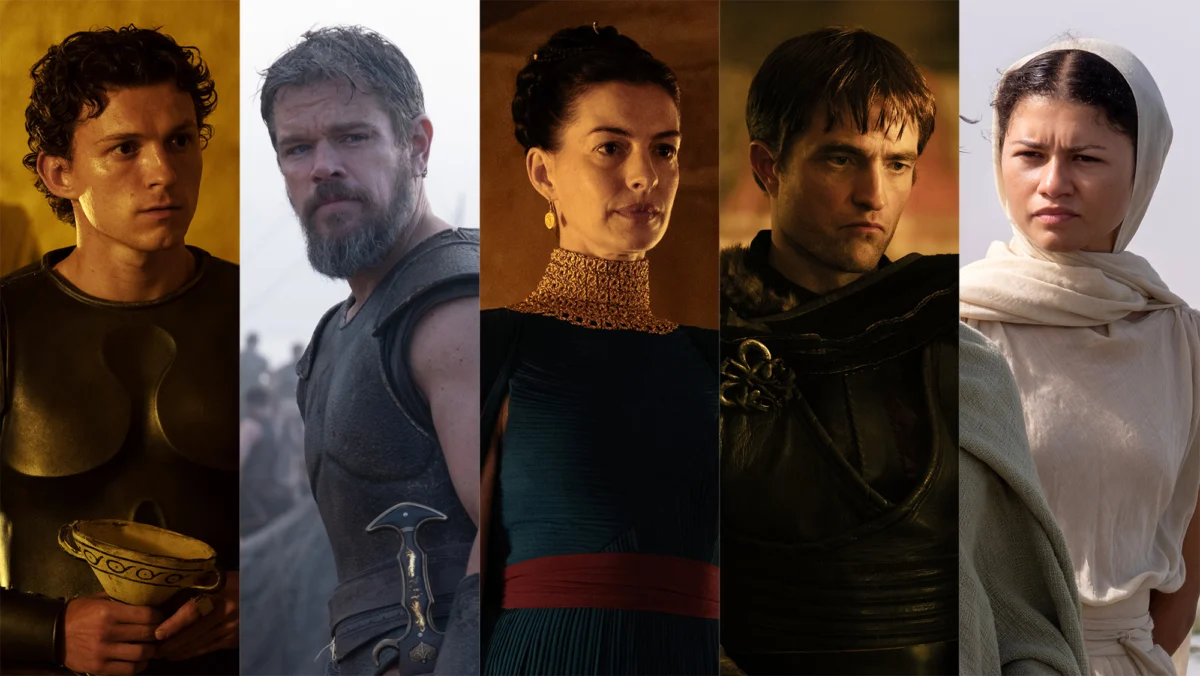
Returning to Nolan’s fold are acclaimed actors such as Matt Damon, Anne Hathaway, and Robert Pattinson, all of whom have delivered memorable performances under his direction in films like Interstellar and The Dark Knight Rises. Their presence in The Odyssey underscores Nolan’s trust in their abilities to embody complex characters and navigate demanding narratives. While specific roles for all cast members are yet to be fully detailed, the image caption prominently features Tom Holland, Matt Damon, Anne Hathaway, Robert Pattinson, and Zendaya. It is highly anticipated that Matt Damon, a veteran known for his gravitas and heroic roles, takes on the monumental task of portraying Odysseus, the resourceful and enduring king. Anne Hathaway, celebrated for her versatility and emotional depth, is a strong candidate for Penelope, Odysseus’s steadfast and clever wife, whose unwavering loyalty forms the emotional core of the epic.

The inclusion of younger, globally recognized stars like Tom Holland and Zendaya brings a fresh dynamic to the ancient narrative. Tom Holland, widely beloved for his portrayal of Spider-Man, could lend a youthful earnestness to Telemachus, Odysseus’s son, embarking on his own journey of self-discovery and paternal quest. Zendaya, known for her captivating presence and strong performances, might embody a powerful goddess like Athena, Odysseus’s divine protector, or a mesmerizing figure like Circe or Calypso, who profoundly impact his journey. Robert Pattinson, having previously showcased his range in Nolan’s Tenet, could inhabit a variety of roles, from a formidable suitor to a mythical companion or even a deity. The mention of "even a rapper" in the initial breakdown hints at Nolan’s adventurous casting choices, potentially integrating unexpected talent to bring a contemporary edge or unique perspective to certain roles. This diverse casting strategy not only aims for artistic excellence but also strategically broadens the film’s appeal across various demographics, ensuring its resonance with a global audience.
Technological Grandeur: The IMAX 70mm Commitment

Christopher Nolan’s unwavering commitment to the theatrical experience and large-format filmmaking reaches new heights with The Odyssey. The film is touted as the "first feature film shot entirely with Imax 70mm film cameras," a declaration that immediately distinguishes it in an era increasingly dominated by digital cinematography and streaming platforms. This choice is not merely a technical flourish but a fundamental aspect of Nolan’s artistic vision for an epic of this scale.
IMAX 70mm film provides unparalleled visual fidelity, resolution, and immersion. Unlike standard film or digital formats, it captures images with extraordinary detail and depth, making the cinematic frame feel vast and expansive. For The Odyssey, this means audiences will be transported directly into the heart of Odysseus’s journey. The sweeping vistas of the Aegean Sea, the foreboding darkness of the Cyclops’s cave, the ethereal beauty of Calypso’s island, and the grandeur of ancient palaces will be rendered with breathtaking clarity and realism. Nolan’s preference for practical effects over extensive CGI, combined with the immense canvas of IMAX 70mm, promises a tactile, authentic world where every ripple on the water, every glint of sunlight on armor, and every expression on an actor’s face is magnified. This technological ambition aligns with the epic scope of Homer’s poem, ensuring that the visual storytelling is as monumental as the narrative itself. It reinforces Nolan’s belief that cinema, particularly in its most expansive form, remains the ultimate medium for grand storytelling, offering an experience that cannot be replicated elsewhere.

The Production Journey and Pre-Release Discourse
The journey of bringing The Odyssey to the big screen has been as epic as the poem itself. Following the immense critical and commercial success of Oppenheimer, which garnered nearly $1 billion globally and dominated awards season, the announcement of Nolan’s next venture immediately captured global attention. Pre-production for The Odyssey reportedly began swiftly, with principal photography spanning several months across diverse Mediterranean locations, including rumored shoots in Greece, Italy, and Malta, to capture the authentic landscapes described in Homer’s text.

However, the production was not without its moments of public discussion, particularly concerning Nolan’s creative choices. Prior to its release, reports surfaced regarding a perceived "backlash" over the film’s use of "modern dialogue." This sparked a debate among purists and enthusiasts about the fidelity of adapting ancient texts. Critics of the approach argued that contemporary language might detract from the historical authenticity and poetic grandeur expected of Homeric adaptation. Christopher Nolan, ever steadfast in his artistic conviction, reportedly dismissed this backlash as "irrelevant" before audiences had even had the chance to experience the film. His stance reflects a pragmatic understanding that while respect for source material is paramount, an adaptation must also engage a contemporary audience. Nolan has historically shown a willingness to interpret and modernize classic narratives or genres, ensuring accessibility without sacrificing thematic depth. This dialogue choice could be an intentional strategy to bridge the gap between ancient storytelling and modern sensibilities, making the profound themes of The Odyssey resonate more directly with today’s viewers. It exemplifies Nolan’s confidence in his vision and his commitment to delivering a compelling story, regardless of traditional expectations.
Critical Acclaim and Box Office Projections

Upon its release, The Hollywood Reporter and other major outlets quickly began compiling reviews, indicating a generally positive reception, a common trajectory for Nolan’s works. While specific critical details are still emerging, early analyses suggest that critics are largely commending Nolan’s ambitious vision, the breathtaking visuals achieved through the IMAX 70mm format, and the stellar performances from its A-list cast. The film is being praised for its immersive quality and its success in translating the sprawling, episodic narrative of the ancient poem into a cohesive and captivating cinematic experience. The initial buzz points to a visually stunning and emotionally resonant film that honors its source material while imbuing it with Nolan’s signature intellectual depth and technical mastery.
Industry analysts are projecting robust box office numbers for The Odyssey. Nolan’s reputation as a director whose films consistently deliver both artistic merit and commercial success, coupled with the global appeal of a universally recognized epic and a cast featuring some of the biggest names in cinema, positions the film for significant financial performance. Early estimates suggest a strong opening weekend worldwide, with projections indicating it could become one of the year’s highest-grossing films. The unprecedented commitment to IMAX 70mm is also expected to drive audiences to premium large-format screens, further boosting revenue. Beyond commercial success, The Odyssey is widely anticipated to be a strong contender in the upcoming awards season, particularly in technical categories, but also potentially for Best Picture, Best Director, and acting nods, following in the footsteps of its highly decorated predecessor, Oppenheimer. The film’s ability to draw both critical praise and widespread audience engagement speaks to its potential to be a cultural touchstone.

The Enduring Legacy: Nolan, Epics, and the Future of Cinema
Christopher Nolan’s The Odyssey is poised to leave a lasting impact on both his illustrious filmography and the broader cinematic landscape. For Nolan, it represents a bold exploration into the realm of classical mythology, showcasing his versatility as a storyteller while reaffirming his signature stylistic and thematic concerns – time, memory, perseverance, and the human spirit’s journey. The film adds another layer to his legacy as a director who consistently pushes the boundaries of cinematic storytelling, blending intellectual rigor with grand-scale spectacle.

Its impact on the genre of epic adaptations could be profound. In an age where studios often shy away from historical or mythological epics due to their high production costs and perceived niche appeal, Nolan’s The Odyssey demonstrates that such stories, when handled with vision and technical prowess, can still captivate a mass audience. It might inspire a resurgence in large-scale, thought-provoking adaptations of literary classics, encouraging filmmakers to embrace challenging narratives with artistic integrity.
Furthermore, The Odyssey serves as a powerful testament to the enduring power and necessity of the theatrical experience. By shooting entirely in IMAX 70mm, Nolan has made an unequivocal statement about the value of communal, immersive cinema in an increasingly fragmented media environment. This film is designed to be seen on the biggest possible screen, offering an unparalleled visual and auditory journey that transcends the home viewing experience. It reinforces the idea that certain stories demand to be told and experienced in the grandest format available, thereby championing the future of traditional cinema.

Ultimately, Christopher Nolan’s The Odyssey is more than just a film; it is a cinematic event. It is a testament to the timeless appeal of Homer’s narrative, a showcase for cutting-edge filmmaking technology, and a demonstration of a master director at the peak of his powers, continuing to redefine what is possible on the silver screen. As Odysseus’s arduous journey culminates, so too does Nolan’s latest endeavor cement its place as a significant contribution to contemporary cinema, inviting audiences to embark on an unforgettable voyage of their own.