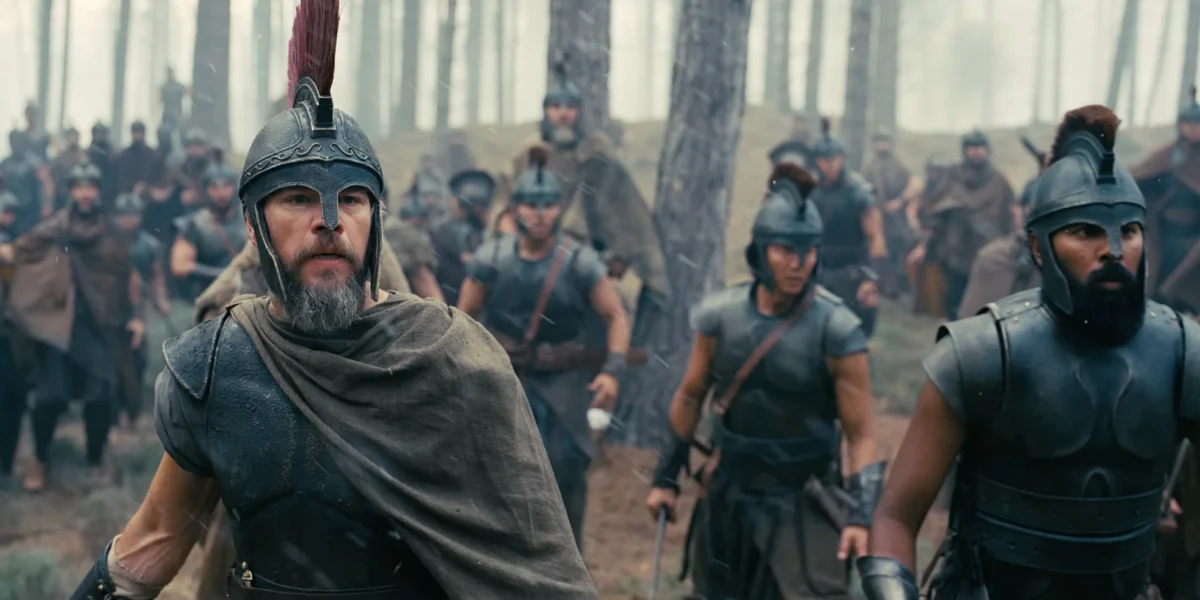
The release of the latest trailer for Christopher Nolan’s upcoming cinematic epic, The Odyssey, has catalyzed a wide-ranging debate across digital platforms, highlighting the intersection of historical expectations and contemporary filmmaking. As the director’s first project following his Academy Award-winning work on Oppenheimer, the film carries the weight of immense industry expectations and a reported production budget of $250 million. The trailer, which debuted during a high-profile media rollout, offers a substantial look at Nolan’s interpretation of Homer’s foundational Greek poem, revealing a production of unprecedented scale that combines technical innovation with controversial stylistic choices.
Production Scope and Technical Milestones
The Odyssey represents a significant milestone in motion picture history as the first narrative feature film to be shot entirely using IMAX 70mm cameras. While Nolan has utilized this high-resolution format for major sequences in previous films such as Dunkirk and Interstellar, the commitment to an all-IMAX 70mm production underscores the director’s dedication to the theatrical experience. The technical demands of these cameras, which are notoriously heavy and loud, necessitated bespoke engineering solutions to capture dialogue and intimate character moments.
Filming for the project spanned a global footprint, with production units operating in Morocco, Greece, Italy, Scotland, Iceland, Western Sahara, and Malta. This diverse array of locations was selected to represent the varied and often supernatural landscapes encountered by Odysseus during his ten-year journey home from the Trojan War. The use of practical locations over digital environments remains a hallmark of Nolan’s directorial style, and the $250 million budget—the highest of his career to date—was largely allocated toward these international logistics and the construction of large-scale practical sets.
Analysis of Stylistic Choices and Vernacular Controversy
The trailer’s release has been met with specific scrutiny regarding its dialogue and linguistic tone. A central point of contention involves a line delivered by Robert Pattinson, who portrays the primary antagonist Antinous. In a scene depicting a confrontation regarding the young Telemachus, played by Tom Holland, Antinous refers to the boy as "pining for a daddy he barely knew." The use of modern American vernacular in a story set in the Bronze Age has triggered a debate among historians and cinephiles regarding the necessity of period-accurate dialogue.

Critics of the choice argue that modern phrasing breaks the immersion of the ancient setting, while supporters suggest that Nolan is employing a "non-fiction text" approach where the themes of the myth are prioritized over linguistic mimesis. This stylistic decision is paired with the use of natural American and British accents by the ensemble cast, eschewing the "Mid-Atlantic" or heightened British accents often associated with Hollywood sword-and-sandal epics.
Furthermore, historical enthusiasts have noted discrepancies in the costuming. The helmets and armor worn by Odysseus (Matt Damon) and Agamemnon appear to be inspired by Hellenistic or Classical Greek designs, which emerged several centuries after the Mycenaean period in which the Trojan War is traditionally situated. Additionally, the visual palette of the film leans into a desaturated, "grim-dark" aesthetic, a departure from the vibrant, sun-drenched imagery often associated with Mediterranean epics.
A Chronology of Nolan’s Career and Audience Reception
To understand the current discourse surrounding The Odyssey, it is necessary to examine the trajectory of Christopher Nolan’s career, which has frequently been defined by initial skepticism followed by critical and commercial vindication.
- 2006–2008: Following the success of Batman Begins, Nolan faced backlash for casting Heath Ledger as the Joker in The Dark Knight. The decision was widely ridiculed on internet forums until the film’s release, after which Ledger’s performance became a benchmark for the genre.
- 2014: Interstellar was initially criticized by some reviewers for being "cold" and overly focused on theoretical physics. In the years since, it has undergone a critical reappraisal, now frequently cited as one of the most emotionally resonant films in his filmography.
- 2017: Dunkirk was met with questions regarding its lack of traditional character development and its complex, tri-partite timeline. It ultimately earned eight Academy Award nominations and was praised for its visceral realism.
- 2023: Oppenheimer, a three-hour biographical drama about the father of the atomic bomb, was viewed as a commercial risk. Bolstered by the "Barbenheimer" cultural phenomenon, it grossed nearly $1 billion worldwide and secured Nolan his first Best Director Oscar.
This pattern suggests that Nolan’s stylistic gambles—whether they involve non-linear storytelling or unconventional casting—often find their footing once the complete work is viewed in context.
The Ensemble Cast and Narrative Structure
The Odyssey features a sprawling ensemble cast, a staple of Nolan’s high-budget productions. Matt Damon leads the film as Odysseus, the King of Ithaca, marking his third collaboration with Nolan after Interstellar and Oppenheimer. Anne Hathaway returns to the Nolan fold as Penelope, Odysseus’s wife, who must navigate the political machinations of suitors in his absence.

The cast is further bolstered by:
- Tom Holland as Telemachus, the son of Odysseus.
- Zendaya as Athena, the goddess who serves as Odysseus’s protector.
- Robert Pattinson as Antinous, the leader of the suitors.
- Charlize Theron as the enchantress Circe.
- Zendaya, Lupita Nyong’o, Jon Bernthal, Benny Safdie, Mia Goth, and Elliot Page in undisclosed or supporting roles.
Narratively, the film is reported to follow a non-linear structure, reflecting the original organization of Homer’s epic, which begins in media res. During an appearance on late-night television, Nolan indicated that the film would weave together Odysseus’s current struggles at sea, his past exploits during the war, and the escalating tension in Ithaca. This structural complexity is designed to mirror the fragmented memory and psychological toll of a decade-long journey.
Supporting Data: The Economics of the Nolan Brand
The financial stakes for The Odyssey are considerable. Nolan is one of the few remaining directors in Hollywood capable of securing a $200 million-plus budget for a non-franchise project (though based on existing IP, it is not part of a modern cinematic universe).
| Film | Budget | Global Box Office |
|---|---|---|
| Inception (2010) | $160M | $839M |
| Interstellar (2014) | $165M | $731M |
| Dunkirk (2017) | $100M | $527M |
| Tenet (2020) | $200M | $365M (Pandemic release) |
| Oppenheimer (2023) | $100M | $975M |
| The Odyssey (2026) | $250M | TBD |
The $250 million investment by the studio reflects a high degree of confidence in Nolan’s ability to draw audiences to theaters for "event" cinema. The film’s release is expected to be accompanied by an extensive 70mm IMAX engagement, which traditionally yields higher per-screen averages due to premium ticket pricing and the format’s exclusivity.
Broader Industry Implications and Fact-Based Analysis
The Odyssey arrives at a critical juncture for the film industry, as major studios navigate a landscape increasingly dominated by streaming services and established franchises. Nolan’s insistence on practical effects, traditional film stock, and a theatrical-first window serves as a litmus test for the viability of the "prestige blockbuster."

The inclusion of mythological elements—such as the Cyclops Polyphemus, the Sirens, and the nymph Calypso—presents a unique challenge for a director known for "grounding" his films in a sense of physical reality. Analysts suggest that the "jarring" dialogue and modern accents may be a deliberate attempt to bridge the gap between the mythic past and the contemporary viewer, suggesting that the human elements of the story (grief, fatherhood, and the desire for home) are timeless and independent of historical window-dressing.
Furthermore, the controversy over historical accuracy in costume design may be secondary to Nolan’s interest in visual symbolism. In his previous works, Nolan has often prioritized the "feel" of a scene over strict adherence to period details, such as the use of modern naval vessels in the background of Dunkirk. The choice of armor and desaturated colors in The Odyssey may be intended to evoke a sense of "bronze-age noir," aligning with the director’s established visual language.
As the marketing campaign for The Odyssey continues, the focus is likely to shift from the minute details of the trailer to the broader spectacle promised by the IMAX 70mm cinematography. While the digital discourse remains divided on the film’s linguistic and aesthetic choices, the industry consensus points toward a major cinematic event that will test the limits of modern filmmaking technology and the enduring appeal of ancient mythology. The Odyssey is scheduled for a global theatrical release this summer, with early tracking suggesting it will be a dominant force at the seasonal box office.