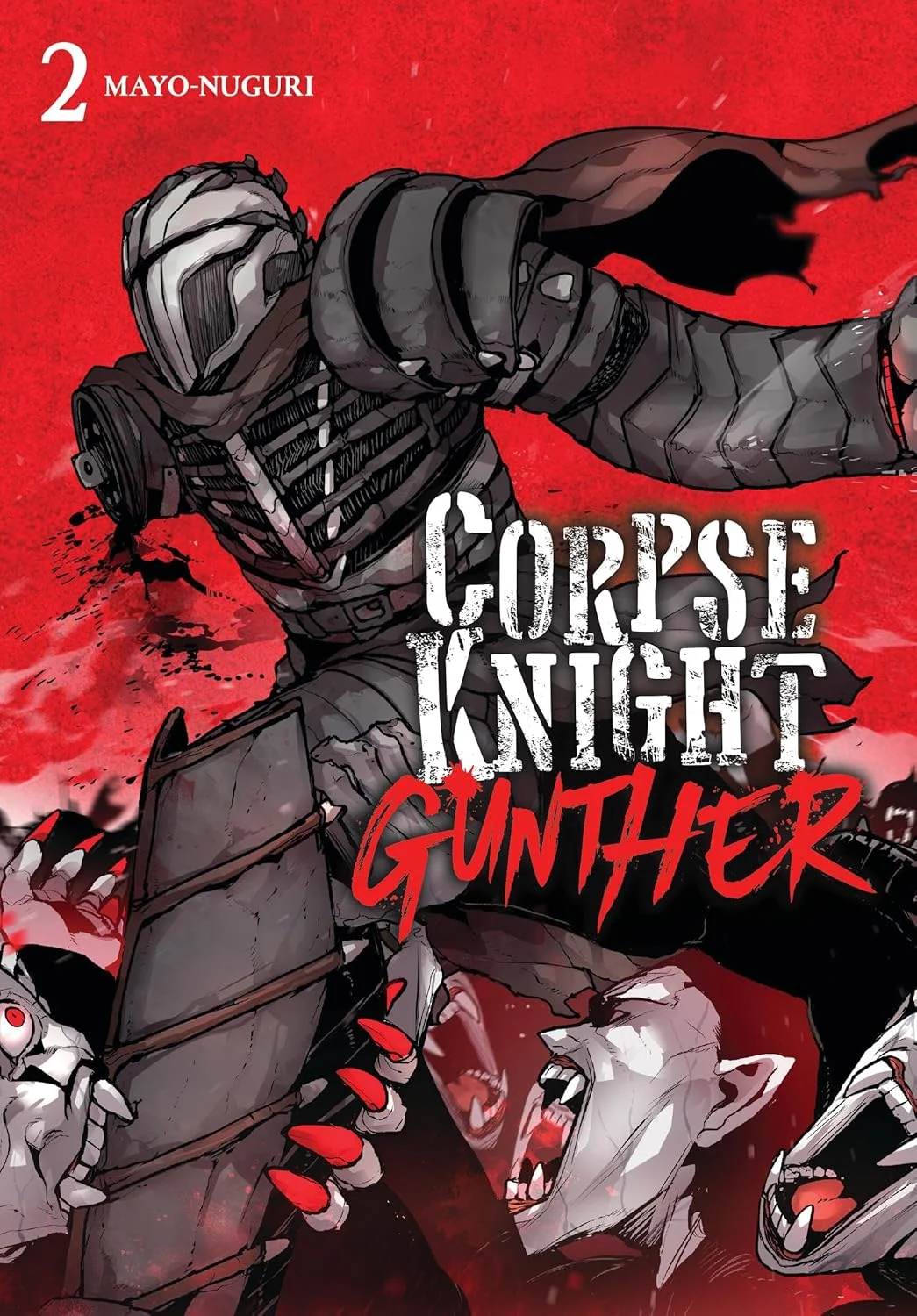
The latest installment in the dark fantasy manhwa series, Corpse Knight Gunther, Vol. 2, plunges protagonist Gunther into a relentless siege, amplifying the stakes and deepening the socio-political commentary that underpins its visceral action. Following the foundation laid in the inaugural volume, this 290-page continuation meticulously crafts a narrative around two formidable higher vampires, Evelyn and Miranda, while simultaneously exploring the ethical quandaries facing its diverse cast. The volume reaffirms the series’ distinct blend of grotesque artistry, black humor, and profound thematic exploration, solidifying its position as a compelling entry in the global manhwa landscape.
The Genesis of the Corpse Knight Saga: A Recap
The narrative journey of Gunther, the eponymous Corpse Knight, commenced with an immediate plunge into conflict, depicting him battling a horde of vampires. However, the first volume swiftly employed a non-linear narrative structure, backtracking to Gunther’s very inception as the Corpse Knight. Readers were introduced to his origins as a gladiator, forcefully repurposed into a living weapon under the clandestine "Corpse Knight project." This project is overseen by the enigmatic General Rainer, with Arien serving as a key figure in Gunther’s new, albeit unwilling, existence. His initial transformation and reluctant acceptance of his monstrous new purpose were central to establishing his character.
The debut volume’s primary conflict revolved around Gunther’s confrontation with Benzel, a high-ranking vampire whose terrifying visage is grotesquely composed of the faces of his human victims. This extensive battle consumed a significant portion of the first volume’s pages, demonstrating the creators’ commitment to intricate combat sequences that serve dual purposes: delivering spectacular action and providing profound character insights. The initial volume effectively established the dark, brutal world Gunther inhabits, setting the stage for the escalating challenges and moral complexities introduced in the subsequent installment. The series quickly garnered attention for its unique premise and grim aesthetic, drawing comparisons to other dark fantasy staples while carving out its own identity through its distinct visual style and narrative voice.
Escalation in Volume 2: Siege and Scarcity
Volume 2 immediately immerses Gunther and his allies into a desperate siege, a stark departure from the more contained, albeit intense, encounters of the first volume. This new predicament introduces an "excessive lack of resources," a critical element that heightens tension and forces difficult choices, underscoring the brutal realities of their ongoing conflict against the vampiric menace. This strategic narrative choice moves beyond simple combat encounters, adding layers of logistical and survivalist challenges that test the characters’ resolve and ingenuity under duress.
The core of this volume’s action centers around two distinct and formidable higher vampires: Evelyn and Miranda. Evelyn is characterized as a "circus freak," both literally in her presentation and metaphorically in her unsettling nature, presenting a unique psychological and physical threat. Miranda, on the other hand, is a colossal figure, her design overtly acknowledged as being inspired by the titans from the popular Japanese manga and anime series, Attack on Titan. This influence is evident in her sheer scale and the overwhelming sense of dread she inspires, positioning her as a devastating force of nature.
The confrontations with Evelyn and Miranda are depicted with the series’ signature blend of "impressive, grotesque and absurd" action. The detailed choreography and visceral impact of these battles are meticulously rendered, maintaining a high level of visual intensity. Distinctive combat elements, such as the "biting hand" and the "lizard hand weapon," exemplify the series’ unique approach to weaponry and combat mechanics, often infused with a dark, almost comedic, sensibility. Gunther’s cynical and often exasperated attitude during these chaotic encounters further contributes to the black humor, providing moments of levity amidst the grim proceedings without detracting from the inherent danger. The narrative carefully balances these intense action sequences with the overarching struggle for survival, as the Corpse Knight and his supporting group battle not just their monstrous foes but also the increasingly dire circumstances of the siege itself.
A Deeper Dive into Societal Critique: The Blights of Humanity
Beyond the immediate battles, Corpse Knight Gunther, Vol. 2 significantly expands its socio-political commentary, offering a scathing critique of power, privilege, and human nature. This thematic exploration is notably woven through Gunther’s interactions with Queen Olivia Hound of Bahal, the sovereign whose realm is under siege. Gunther’s deliberate disregard for courtly etiquette and his blunt demeanor serve as a narrative device to expose the superficiality and corruption embedded within the aristocratic class.
The narrative extends its critical lens far beyond Gunther’s past as a gladiator, where he was forced to fight and kill fellow human beings for the entertainment and profit of the wealthy. The series now directly challenges the "higher ups" of society, portraying them with an almost predatory indifference to the suffering of ordinary citizens. A particularly chilling example is the concept of aristocrats engaging in a perverse competition to collect the "ugliest and smallest individuals" they can find, vying over who owns the most "horrid." This grotesque practice serves as a direct, unvarnished metaphor for the dehumanization and objectification perpetuated by extreme wealth and power.
Queen Olivia herself emerges as a central figure in this critique. She is depicted as "cruel, cowardly, and essentially a problem for everyone around her," embodying the very worst aspects of a self-serving ruling class. Her actions and attitudes underscore the profound disconnect between the elite and the populace, a theme that resonates deeply within historical and contemporary contexts. Throughout history, societies have grappled with the implications of unchecked power, from ancient empires where rulers dictated life and death to modern systems where economic disparities create vast gulfs between social strata. The manhwa intelligently leverages its fantastical setting to reflect these very real-world concerns.
The stark contrast between the sacrifices of ordinary people, who are "sacrificing and getting killed every day," and the rich, who "hide," is a potent source of the volume’s commentary. This disparity inevitably breeds "doubt in the hearts of everyone involved," including Gunther himself. This growing disillusionment is a crucial development, hinting at a significant shift in the series’ future trajectory. The question of "if humanity is worth fighting for" becomes a central moral dilemma, transforming Gunther from a reluctant weapon into a figure grappling with existential questions about the very nature of good and evil within his own species. This sophisticated layering of social critique elevates the series beyond mere action-fantasy, imbuing it with a thought-provoking depth that challenges readers to consider broader societal implications.
Complex Character Dynamics and Moral Ambiguity
Amidst the chaos and social commentary, Corpse Knight Gunther, Vol. 2 continues to meticulously develop its characters, particularly through their relationships. The bond between Gunther and Arien, as well as General Rainer’s relationship with his daughter, stand in stark contrast to the pervasive cynicism and corruption depicted elsewhere. These relationships serve as beacons, highlighting "who the good people are" within a morally compromised world. They represent the human connections and personal stakes that drive many characters, offering glimpses of hope and genuine affection in a brutal reality.
However, the series masterfully maintains a degree of ambiguity, especially concerning Gunther himself. While he is undeniably willing to "fight and get hurt against all odds" for what he perceives as a necessary cause, he remains "extremely self-centered and a giant ass in general." This internal contradiction is presented not as a flaw in writing, but as one of the most "interesting and amusing aspects of the book." Gunther’s anti-heroic persona—his gruffness, his lack of social graces, and his often cynical worldview—makes him a complex and surprisingly relatable protagonist. He is not a conventional hero, driven by pure altruism, but a pragmatic survivor with a twisted sense of duty, making his moments of genuine concern or heroism all the more impactful.
This moral greyness is a hallmark of contemporary storytelling, where audiences often gravitate towards characters who defy traditional archetypes. Gunther’s refusal to conform to heroic ideals, coupled with his undeniable effectiveness in combat, allows for richer character development and narrative possibilities. His journey is less about becoming a pure hero and more about navigating a morally compromised world on his own terms, forcing readers to question conventional definitions of good and evil. This nuanced portrayal ensures that Gunther remains a captivating figure, his internal struggles as compelling as his external battles.
Artistic Excellence and Production Quality
The visual storytelling in Corpse Knight Gunther, Vol. 2 remains a significant strength, with the artistic execution once more proving "impressive." The overall presentation is greatly enhanced by the quality of the physical edition, featuring "intense coloring, quality paper and the great cover." These elements collectively contribute to an immersive reading experience, underscoring the value placed on the production quality of print manhwa.
The dominant color palette of "red and black" is strategically employed, particularly during battle sequences. These colors are not merely aesthetic choices but are deeply symbolic, evoking themes of blood, death, darkness, and power, perfectly complementing the series’ grim tone. MAYO-NUGURI’s "prowess in portraying grotesqueness is outstanding," a critical attribute for a series that frequently delves into body horror and the monstrous forms of its vampiric antagonists. The intricate details of Benzel’s face-composed body in the first volume, or the unsettling nature of Evelyn and Miranda in the second, are rendered with meticulous care, ensuring maximum impact.
The "detail of the characters is of the highest level," extending to their expressions, armor, and unique physiologies. "The movement excellent" in action sequences, conveying fluidity and impact, crucial for a battle-heavy narrative. Furthermore, "the overall conception of the different vampires" is highlighted as one of the title’s biggest traits. Each vampire design is unique and memorable, contributing significantly to the world-building and the distinct horror elements of the series. This artistic consistency and high level of detail are characteristic of top-tier manhwa production, where teams of artists, colorists, and inkers collaborate to achieve a cohesive and visually striking product, rivaling the best in global comic industries. The visual identity of "Corpse Knight Gunther" is a cornerstone of its appeal, reinforcing its narrative themes through powerful imagery.
The Manhwa Landscape and Adaptation Potential
Corpse Knight Gunther, Vol. 2 arrives at a time of unprecedented global recognition for Korean manhwa. Driven by the accessibility of digital webtoon platforms and subsequent high-quality print releases, Korean comics have garnered a massive international following. Series like Solo Leveling, Tower of God, and God of High School have successfully transitioned from webtoons to print and, crucially, to anime adaptations, demonstrating the immense commercial and cultural potential of the medium. This trend has established a clear pathway for successful manhwa to reach even broader audiences through animation.
Against this backdrop, "Corpse Knight Gunther, Vol. 2" not only maintains the high standards set by its predecessor but also reinforces the series’ status as a prime candidate for an anime adaptation. The critical reception, as evidenced by the positive appraisal of its narrative depth, artistic excellence, and compelling characters, strongly suggests that it possesses the key ingredients for a successful animated rendition. An anime adaptation would allow its dynamic action sequences, intricate character designs, and rich thematic elements to be brought to life on screen, further expanding its global reach and introducing Gunther’s dark odyssey to a new demographic of viewers.
The desire for an anime version, explicitly stated by reviewers, is a significant indicator of the series’ impact and the enthusiasm it generates. Such an adaptation would not only be a testament to the series’ quality but also contribute to the growing cultural footprint of Korean creative content worldwide, solidifying manhwa’s position as a major force in popular entertainment. The economic implications of such a transition are substantial, ranging from increased merchandise sales to international licensing deals, further cementing "Corpse Knight Gunther" as a valuable intellectual property.
Conclusion: A Series of Enduring Quality
In summary, Corpse Knight Gunther, Vol. 2 stands as a testament to the series’ ongoing excellence. It masterfully expands upon the dark fantasy narrative, deepening the protagonist’s struggles within a desperate siege, introducing formidable new adversaries, and significantly enriching its socio-political commentary. The volume’s exploration of aristocratic corruption, the moral ambiguity of its characters, and the profound question of humanity’s worth elevate it beyond a typical action-driven story.
The consistent brilliance of MAYO-NUGURI’s artwork, characterized by its intense coloring, grotesque detailing, and dynamic action, ensures that the visual experience is as compelling as the narrative. The quality of the physical edition further enhances its appeal, making it a standout in the competitive manhwa market. "Corpse Knight Gunther, Vol. 2" not only delivers on the promise of its debut but also reinforces its position as an "excellent series" with significant potential for broader adaptation, particularly into an anime format. Its ability to blend visceral action with thoughtful critique and complex character development makes it a compelling read that continues to push the boundaries of the dark fantasy genre.