The intersection of classic Western Gothic motifs and traditional Japanese horror finds a novel expression in Never After Dark, the debut feature film directed by filmmaker Dave Boyle. Announced and showcased following its screening circuit run—including a notable appearance at Film at Lincoln Center’s Scary Movies XIII festival—the project marks a significant collaborative milestone for its creators. Centering on the professional and personal life of a roaming freelance exorcist named Airi, portrayed by Moeka Hoshi, the production infuses established cinematic genre tropes with a distinct focus on emotional healing, grief, and the operational mechanics of supernatural intervention.
Main Facts and Premise
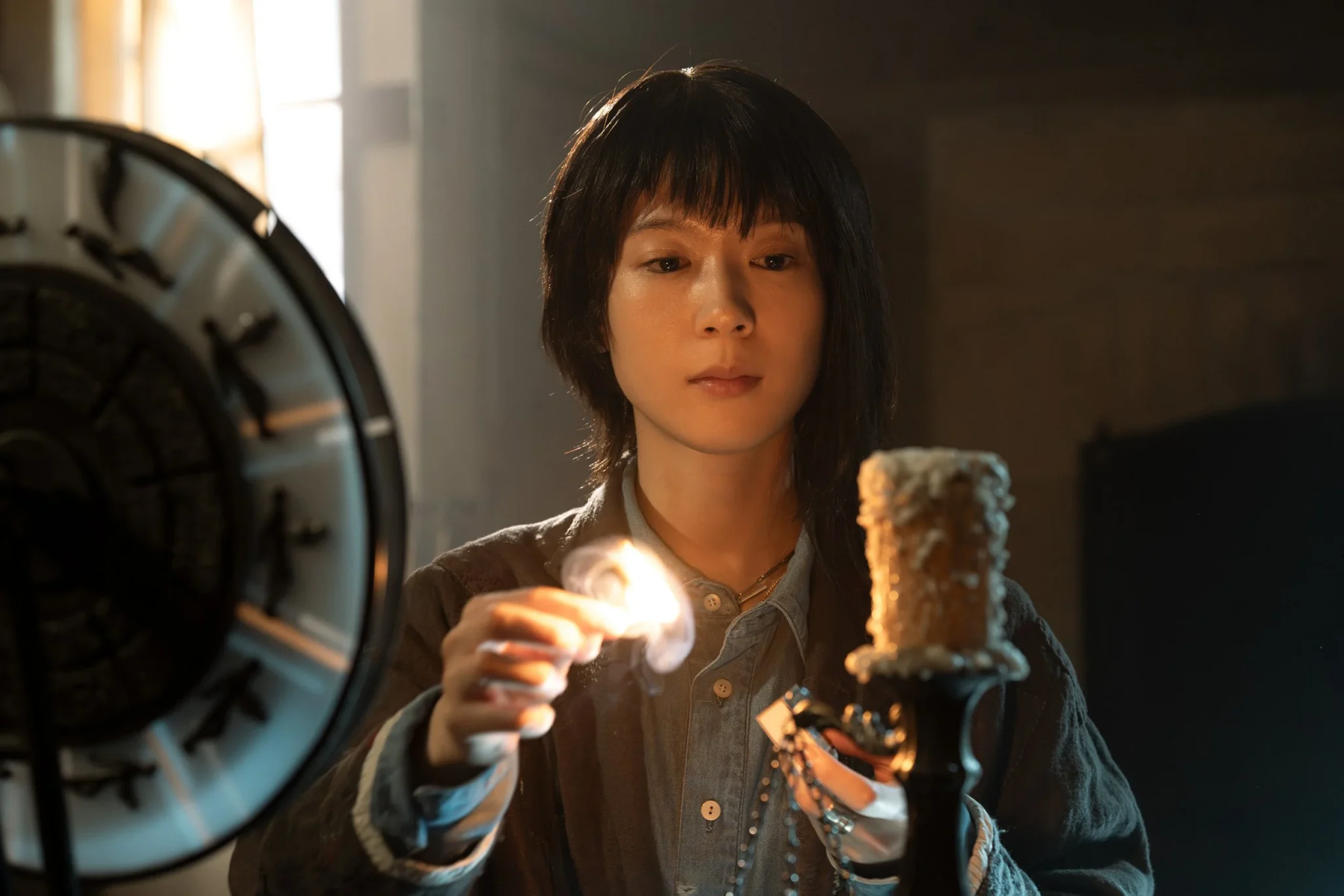
Never After Dark establishes its narrative rules early: spirits of the deceased grow significantly more powerful after nightfall, increasing the danger of attempting to guide them toward the afterlife. During daylight hours, equipped with specialized rites and tools, the protagonist Airi manages her responsibilities with a gentle, methodical approach. She does not view the deceased as inherently menacing, treating her occupation instead as a form of restorative care.
Airi’s professional and metaphysical journey is accompanied by a persistent companion: the ghost of her older sister, Miku, played by Kurumi Inagaki. Although Miku passed away years prior, she manifests visually as a teenager and frequently urges Airi to prioritize the living over the spectral entities she services. This interpersonal dynamic grounds the supernatural elements in a familiar, lived-in realism before the narrative shifts toward its central conflict.
The core plot initiates when Airi is hired to resolve a haunting at a sprawling, historic property. Once operating as a commercial hotel, the building has since been converted into a private residence. The client, Teiko—played by Tae Kimura—is a recent widow residing with her adult son, Gunji, portrayed by Kento Kako. Despite projecting a youthful, bubbly exterior, Teiko carries profound emotional pathos resulting from the recent loss of her husband. Her primary motivation in hiring Airi is a desperate search for empirical proof of an afterlife and reassurance regarding her late husband’s cosmic well-being.
Conversely, Gunji embodies open skepticism. During his initial meeting with Airi, he explicitly rejects the validity of the paranormal, expressing concern that the exorcist is exploiting his mother’s vulnerability. Complications multiply as Gunji’s skepticism is undercut by a developing romantic interest in Airi, creating friction between his protective instincts and his personal attractions.
Chronology and Production Background
Dave Boyle, an established director with extensive professional experience working in Japan, helms the production following his notable work on the Netflix series House of Ninjas. The creative continuity from that series extends behind and in front of the camera; actors Tae Kimura and Kento Kako both appeared in House of Ninjas, and Boyle subsequently partnered with Kako to establish the independent production company Signal181, Inc.
The production timeline saw the feature completed ahead of its prominent festival exhibition cycle, culminating in its selection for prestigious genre showcases such as Film at Lincoln Center’s Scary Movies XIII. By merging structural elements of traditional Japanese horror (J-Horror) with the moody atmospheres of Western Gothic cinema and classic haunted hotel narratives, Boyle’s feature draws clear stylistic inspiration from historical genre touchstones, including classic cinematic explorations of grief and isolation like The Changeling.

Supporting Data, Design, and Practical Effects
A critical component of Never After Dark is its meticulous visual and spatial design, supervised by production designer Yuji Hayashida. The residential hotel setting serves as a character in its own right, functioning through deep shadows, draped furniture, and erratic architectural features that build psychological tension before explicit supernatural events manifest.
Rather than relying heavily on contemporary computer-generated imagery, Boyle opted for practical effects, collaborating with veteran special effects makeup artist Tomo Hyakutake. The physical makeup and practical manifestations adhere to traditional J-Horror aesthetics while maintaining a distinct visual identity. Furthermore, the sonic landscape of the film incorporates contemporary elements, featuring original pop compositions by Jonathan Snipes of the group clipping., which serve to punctuate the downtime between Airi’s ritualistic preparations.
The mechanics of Airi’s exorcisms are presented through minimalist, highly stylized tools. Eschewing standard cinematic tropes of violent confrontations or elaborate pyrotechnics, the film introduces subtle, elegant implements that redefine the procedural aspects of cinematic ghost removal within the narrative universe.
Thematic Implications and Past Trauma
Beyond its foundational ghost story elements, Never After Dark addresses the disruptive nature of personal tragedy. Airi carries deep-rooted trauma from her past, a formative element of her character arc rather than a late-stage narrative twist. The screenplay intentionally avoids reductive thematic messaging, choosing instead to examine how catastrophic personal loss collides with the routine mechanics of everyday existence.
As the narrative progresses, the line between past and present—much like the boundary between the living and the dead—repeatedly collapses. What begins as a routine haunting with predictable behavioral patterns eventually deviates into uncharted territory. This escalation forces Airi to operate outside her established methodologies, transforming a standard supernatural investigation into an unpredictable, high-stakes confrontation.
Industry Impact and Future Outlook
The release of Never After Dark through Magnolia Pictures and Signal181, Inc. signifies a growing international appetite for cross-cultural genre filmmaking, blending American indie sensibilities with Japanese talent and crew structures. By subverting traditional jump-scare formulas in favor of atmospheric dread, character-driven empathy, and unique procedural world-building, the film expands the boundaries of modern ghost stories.
As festival circuits conclude and broader distribution plans unfold, industry analysts note that projects like Never After Dark—stemming from agile independent production houses rather than major studio conglomerates—continue to drive innovation within the horror genre. The film’s balanced synthesis of practical effects, emotional resonance, and precise technical execution positions it as a notable entry in contemporary international genre cinema.