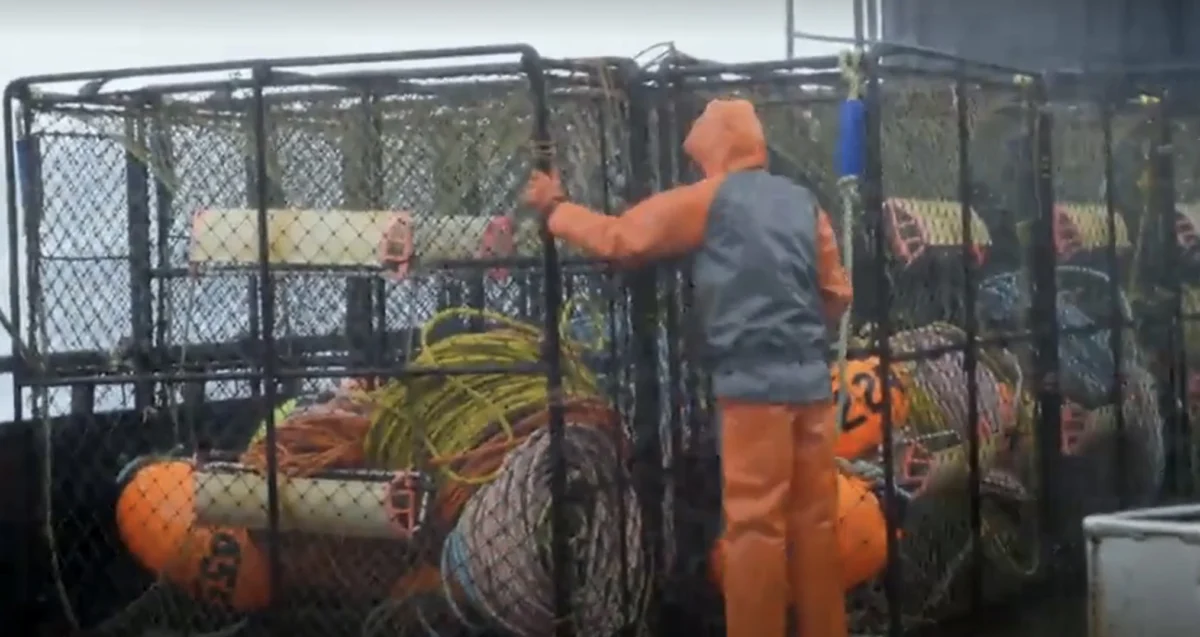
The Bering Sea commercial fishing fleet encountered some of the most treacherous maritime conditions in recent history during the latest peak of the Red King Crab season. As Typhoon Halong transitioned from a tropical system near Japan into a powerful extratropical cyclone, it barreled northeast toward western Alaska, placing the vessels of the Discovery Channel series Deadliest Catch in a precarious position. The storm, which generated massive 25 to 30-foot waves, forced veteran captains to weigh the immense financial promise of a $30-per-pound market against the immediate physical safety of their crews and the structural integrity of their vessels.
According to meteorological data and on-site reports, the fleet was operating approximately 200 miles from the relative safety of Dutch Harbor when the system hit. The storm impacted a 55,000-square-mile fishing ground, effectively trapping several high-profile vessels, including the Time Bandit, the Cornelia Marie, and the Aleutian Lady. With the Red King Crab season recently reopened after significant conservation-led closures in previous years, the stakes were historically high, with individual pots potentially holding thousands of dollars worth of product.
The Meteorological Impact of Typhoon Halong on the Bering Sea
Typhoon Halong’s arrival in the Bering Sea represents a phenomenon often referred to by meteorologists as "extratropical transition." While the system originated in the warmer waters of the Pacific, its interaction with the cold, high-latitude air of the North Pacific transformed it into a sprawling "bomb cyclone." For the crab fleet, this meant more than just high winds; it resulted in a "confused sea," where waves from multiple directions collide, making vessel navigation unpredictable and extremely hazardous.
The narrator of the recent dispatch noted that the fleet had departed Dutch Harbor while the system was still classified as a tropical depression. However, the rapid intensification caught several crews in the middle of active hauls. With the price of pure Red King Crab reaching a premium of $30 per pound, the economic pressure to remain on the grounds was immense, despite the escalating environmental risks.
Time Bandit: Strategic Risks and the Psychological Toll of Extreme Weather
On the Time Bandit, Captain Johnathan Hillstrand faced a multi-layered logistical crisis. Beyond the physical dangers of the 30-foot swells, Hillstrand was operating under a strict temporal constraint. The vessel was in a race against time to reach the processing cannery to unload its current catch. In the Bering Sea crab industry, cannery "slots" are strictly scheduled; missing a window can result in a vessel being pushed to the back of a line, risking the health and viability of the live crab held in the onboard tanks.
Hillstrand estimated that the crew still needed to secure $1.5 million worth of King Crab to meet their seasonal objectives. To maximize efficiency during the storm, Hillstrand identified a specific underwater topographical feature—a "mound"—where crab were congregating. "The pot that had 100 [crabs] in it was right on top of this mound here," Hillstrand observed. He opted to concentrate his gear, stating he would "set everything I got on top of that mount," placing up to 100 pots in a single square mile.
However, the maneuver was fraught with danger. The proximity of the gear meant that any navigational error in the heavy seas could lead to tangled lines, a "mess" that would be nearly impossible to untangle in 30-foot waves. The psychological weight of the decision became evident as Hillstrand admitted to visible tremors. "My legs are shaking right now. I just can’t hurt nobody," he stated, highlighting the shift from a focus on profit to a focus on survival. Despite the fear, the strategic gamble paid off, as the concentrated sets resulted in high-density yields, proving that the "mound" was indeed a primary migratory path for the crab.
Cornelia Marie: Mechanical Failure and Emergency Repairs
While the Time Bandit struggled with logistics and strategy, the Cornelia Marie, commanded by Captain Jake Anderson, faced a life-threatening mechanical failure. In the midst of 25-foot seas, the vessel’s propulsion system malfunctioned. One throttle became "stuck wide open" while another ceased responding entirely. In maritime operations, the loss of throttle control in heavy surf is a catastrophic scenario, as it prevents the captain from "heading into" waves to avoid capsizing or "broaching."
Anderson’s immediate priority was to reduce the vessel’s top-heavy weight by deploying pots into the ocean, regardless of whether they were perfectly positioned on the "mud piles" where crab typically feed. The urgency was driven by the fear of losing total control of the ship. "If I can’t control the boat, I’m screwed," Anderson remarked during the height of the crisis.

The situation was eventually stabilized through the technical intervention of Jake Albinio, who managed to repair the throttle linkage. Once control was restored, the crew transitioned back to fishing operations. Despite the initial setbacks and the "learning curve" of navigating such a massive system, the Cornelia Marie began finding success in the mud piles. The operation remained perilous throughout, with massive waves frequently breaching the deck and drenching the crew, a constant reminder of the thin margin for error in the Bering Sea.
Aleutian Lady: Financial Volatility and Operational Recovery
Captain Rick Shelford of the Aleutian Lady provided a stark look at the financial mathematics of storm-season crabbing. The journey north into the heart of the storm was characterized by high fuel consumption and significant overhead. For the voyage to be profitable, the vessel needed to "hit and hit good," according to Shelford.
The Aleutian Lady’s operations were nearly derailed when a trailer line parted. In crab fishing, a trailer line is essential for retrieving the buoy and the attached pot. A parted line risks the gear being "sucked into the wheel" (the propeller), which would disable the vessel and necessitate a high-seas rescue. To avoid this, Shelford was forced to maneuver the boat in a way that exposed the starboard rail—and the crew working on it—to the direct force of the incoming waves.
The inability to turn the vessel quickly enough in the massive swells resulted in the loss of a buoy line, representing an immediate $14,000 loss in potential revenue. Frustrated by the "f**king big" waves, Shelford made the executive decision to abort the mission and "jog" (wait out the storm) for 14 hours. This period of downtime, while expensive in terms of fuel and lost time, allowed the weather to break slightly. When the crew returned to the gear, the yield was significant, with pots containing 64 and 68 crabs respectively, validating Shelford’s decision to prioritize the safety of the vessel over immediate retrieval.
Economic and Environmental Context of the Bering Sea Red King Crab Season
The events of the May 15 episode underscore the precarious nature of the Alaskan crabbing industry. The Red King Crab (Paralithodes camtschaticus) is one of the most valuable marine resources in the world. The $30-per-pound price point mentioned by the fleet is a reflection of several factors:
- Quota Scarcity: After several years of closed seasons due to declining biomass, the current quotas are strictly managed, driving up the market value.
- Global Demand: High-end culinary markets in Asia and North America maintain a steady demand for "pure" Red King Crab.
- Operational Risk: The price reflects the extreme "hazard pay" and insurance costs associated with operating in the Bering Sea during typhoon season.
The biology of the crab also dictates the captains’ strategies. The "mounds" and "mud piles" mentioned by Hillstrand and Anderson refer to the specific benthic environments where Red King Crab congregate to feed on detritus and small organisms. Success in the fishery requires an intimate knowledge of this underwater geography, which becomes significantly harder to navigate when surface conditions are chaotic.
Broader Implications for the Fishing Fleet
The encounter with the remnants of Typhoon Halong serves as a case study in modern maritime resilience. The integration of high-stakes commercial fishing with extreme meteorological events creates a high-pressure environment where captains must act as both CEOs and safety officers.
The implications of this storm extend beyond the immediate episode. For the fleet, the loss of gear (as seen with the Aleutian Lady) and the mechanical strain on vessels (as seen with the Cornelia Marie) represent long-term costs that eat into the seasonal profit margins. Furthermore, the psychological impact on crews—faced with 30-foot walls of water and the constant threat of injury—remains a significant factor in the high turnover rate within the industry.
As the season progresses, the data gathered by these vessels regarding crab locations and weather patterns will be vital for the remainder of the fleet. The resilience shown by Hillstrand, Anderson, and Shelford under the pressure of Typhoon Halong highlights the enduring, albeit dangerous, nature of the Alaskan crab fishery. Despite the mechanical failures and the "legs shaking" fear of the captains, the allure of the "red gold" continues to drive the fleet into some of the most hostile environments on the planet.
Deadliest Catch continues to air its 22nd season on the Discovery Channel, providing a factual look at the intersection of global weather patterns and the high-stakes world of commercial fishing. The fleet remains at sea, navigating the ever-changing conditions of the Bering Sea in pursuit of the season’s remaining quota.