
Lana Daher’s debut feature, Do You Love Me (2026), stands as a powerful and deeply personal exploration of Lebanon’s intricate cultural memory. The 76-minute documentary, a kaleidoscopic journey through seven decades of archival material, has garnered significant attention since its premiere at Venice Days, now enchanting audiences at Metrograph in New York. As a Beirut-based multidisciplinary artist, Daher meticulously wove together an array of found footage, from independent Lebanese cinema and newsreels to intimate home movies, creating a visceral portrait where past and present dynamically collide and recontextualize each other.
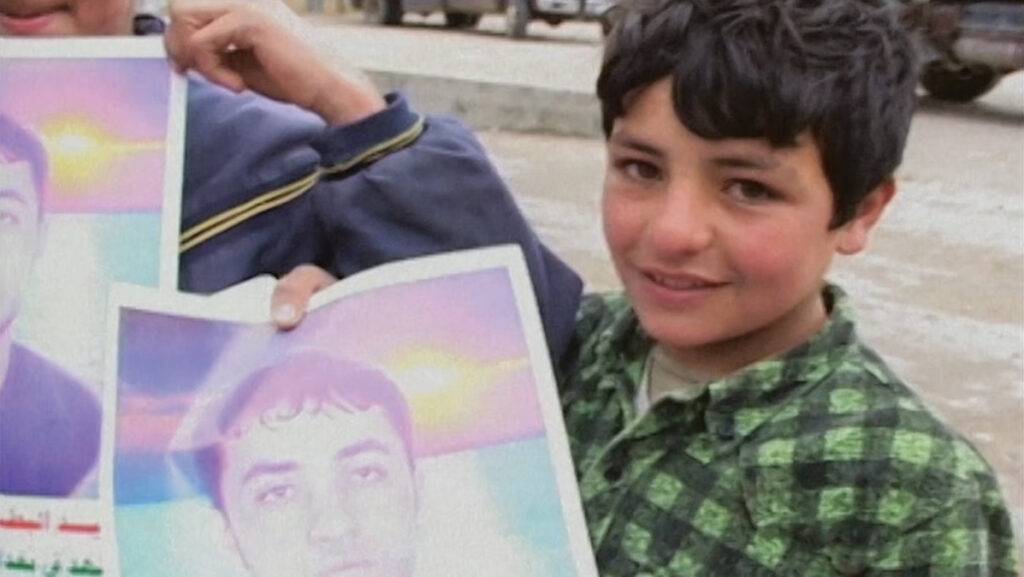
The film’s innovative structure defies linear chronology, mirroring the fractured experience of memory and trauma. Daher masterfully cuts between disparate time periods, juxtaposing scenes from action films with raw newsreel footage depicting violence on the streets of Beirut. This deliberate blurring of real and staged events challenges viewers to question perceptions and the construction of historical narratives. Voices of everyday civilians and prominent intellectuals articulate their perspectives on the Lebanese Civil War and the nation’s complex system of political confessionalism, delivered in both Arabic and French, reflecting the country’s linguistic and cultural tapestry. Moments of profound joy—newlyweds dancing, children celebrating birthdays—are interwoven with scenes of profound sorrow: families desperately searching for missing loved ones and mourning their losses. The soundtrack, a rich tapestry itself, transitions fluidly from traditional Middle Eastern melodies to contemporary hip-hop, underscoring the dynamic and often contradictory nature of Lebanese identity.
Notable archival inclusions further enrich the narrative. An excerpt from the 2008 Beirut-set film I Want to See features Catherine Deneuve, portraying a famous actress, inquiring about an empty apartment building, only to be informed it now stands as a war monument. Earlier, the pioneering Lebanese filmmaker and journalist Jocelyne Saab, in a poignant clip from one of her documentaries, expresses a weary lament over the destruction of 150 years of family history, reporting from the wreckage of her demolished home, a casualty of yet another Israeli bombardment. These layered narratives collectively reinforce Daher’s guiding principle for the film: that "disorientation is part of the journey" to truly comprehending her beloved homeland.
The Genesis of a Personal "Love Letter" to Beirut
The conceptualization of Do You Love Me began in 2018, initially as an academic inquiry into the relationship between war and music—how melodies carry memory and traverse periods of conflict. Daher’s early research focused specifically on the popular Lebanese band, the Bendaly Family, whose song lent the film its evocative title. While always conceived as an archive-based documentary, the project gradually evolved into something far more intimate and profound.

Daher revealed that the film’s true shape emerged as her focus shifted to a deeply personal exploration: her own relationship with Beirut, her childhood experiences, personal traumas, and the collective societal relationship with memory and history in Lebanon. "At its core, it’s really a love letter to my city," Daher explains, emphasizing its birth from a profound need to convey the lived reality of Lebanon, a nation perpetually marked by crisis, and how this constant flux has shaped her at every stage of life. The director underscored the importance of capturing not merely historical events, but also the nuanced emotions, inherent contradictions, and the profound humanity of individuals navigating life in a state of permanent instability. This personal lens transforms the film from a historical document into an emotional testament.
Navigating a Fragmented Past: The Archival Hunt
The process of gathering source material for Do You Love Me was, as Daher describes it, "closer to a hunt than a search." Lebanon, unlike many nations, notably lacks a centralized national archive or even a unified, agreed-upon history textbook. This institutional void meant Daher and her team had to embark on an extensive, painstaking quest to unearth the fragments of Lebanon’s past.
More than half of the footage incorporated into the film originated from independent Lebanese cinema, spanning 106 fiction and documentary features produced from 1958 to the present day. This rich cinematic heritage, often overlooked, became a cornerstone of the project. Beyond films, Daher meticulously sought out journalistic footage, private home videos, photographs, podcasts, music videos, radio broadcasts, and even abandoned personal archives. The oldest piece of material dates back to a home video from 1928, showcasing the vast chronological scope of her endeavor. In total, Daher amassed an staggering collection of over 20,000 audiovisual fragments, stored across multiple hard drives. Ultimately, only approximately seven percent of this exhaustive research made it into the final cut, requiring the clearance of close to 400 rights contracts—a testament to the immense logistical and legal challenges involved in such a project.
The absence of a personal family archive further fueled Daher’s resolve. Like countless Lebanese families, her own had lost much of its historical record due to successive wars and waves of migration. This personal experience of historical void deepened her commitment to constructing a narrative "from the inside," allowing Lebanese voices to speak for themselves and their experiences to be seen through their own eyes. This approach directly addresses the gaps in official historical records and offers an alternative, more organic form of national memory.
A Brief Historical Context of Lebanon’s Fractured Identity

To fully appreciate the layered complexity of Do You Love Me, a brief overview of Lebanon’s tumultuous modern history is essential. A nation forged from the ashes of the Ottoman Empire and shaped by the French Mandate, Lebanon gained independence in 1943. Its unique political system, known as confessionalism, allocates power among religious sects (Maronite Christian President, Sunni Muslim Prime Minister, Shia Muslim Speaker of Parliament) and was designed to foster coexistence but has often exacerbated divisions.
- 1958 Crisis: Early tensions emerged, marked by a brief civil conflict stemming from political and religious strife, with US intervention.
- The Lebanese Civil War (1975-1990): This devastating 15-year conflict was a brutal period of internecine fighting involving various Lebanese factions, Palestinian militias, Syrian forces, and Israeli interventions. It resulted in an estimated 120,000 fatalities, 76,000 wounded, and a million displaced persons (nearly a quarter of the population). The war shattered the country’s social fabric, destroyed infrastructure, and left deep, unhealed wounds. The lack of a national archive can be directly linked to the chaos and destruction of this period.
- Israeli Invasions and Occupation: Israel’s involvement in Lebanon dates back decades, with major invasions in 1978 and 1982 (leading to a prolonged occupation of southern Lebanon until 2000). The 2006 Lebanon War further exacerbated tensions and caused widespread destruction.
- Post-War Challenges: Following the Taif Agreement in 1989, which officially ended the Civil War, Lebanon has grappled with political instability, economic crises, and ongoing regional conflicts, including the powerful influence of Hezbollah. The Beirut port explosion in 2020 served as a stark reminder of the country’s persistent vulnerability and systemic failures.
This backdrop of continuous crisis and external interference explains the profound sense of "disorientation" and the fragmented memory that Daher explores, making her archival mosaic not just a film, but a vital act of historical reclamation.
Crafting Emotional Logic: The Editing Process
The editing process was undeniably the "heart of the film" from its inception, given Daher’s commitment to building the narrative entirely from archive footage, without a guiding voiceover or a singular central figure. Daher dedicated nearly five years to working alone, occasionally with junior researchers, before collaborating with the Paris-based Syrian editor Qutaiba Barhamji. By the time they met, Daher had assembled a four-hour rough cut, yet she insisted on starting "from scratch" with Barhamji, who also served as co-writer.
Daher’s decision to work with a non-Lebanese editor was deliberate. She sought an external perspective, one unburdened by the same deep personal attachments to the images, events, and traumas that she, as a Lebanese national, inherently carried. This objective distance allowed them to evaluate footage based on its universal resonance. "If a scene didn’t open into something more universal, we let it go," Daher recounts. They established clear rules: no full scenes were to be lifted directly from existing films, and no Lebanese politicians would appear on screen or on the soundtrack. Their collaborative approach was intuitive, focusing on fragmenting and recombining isolated shots to create new meanings.
The choice to forgo a linear chronology was a conscious artistic decision, stemming from the understanding that neither memory nor trauma adheres to a straightforward timeline. Instead, the film is held together by an "emotional logic," driven by the rhythm and associations meticulously constructed through editing and sound design. This non-linear approach immerses the audience in the subjective experience of Lebanese history, mirroring the way personal and collective memories often surface in fragmented, interconnected bursts.
Centering the Female Gaze: Legacy and Inspiration
Do You Love Me prominently features clips from the oeuvre of the renowned journalist and filmmaker Jocelyne Saab, notably her 1975 work, Lebanon in Turmoil. It is fitting that the film’s Metrograph run is accompanied by the series "Jocelyne Saab: Letters from Lebanon," underscoring her profound influence. Daher expresses immense admiration for Saab, acknowledging that through Saab’s films, she gained a crucial understanding of the events that shaped her world. Saab’s courage in documenting the horrors of her time as they unfolded left a lasting impression.
Beyond individual influences, Daher was acutely aware of the "presence—and absence—of women’s perspectives in the archive itself." A powerful female perspective permeates Do You Love Me, a narrative choice that Daher deems crucial due to its historical underrepresentation. She observes that much of what endures as "the record"—home videos, family photographs, personal collections—was often shot, preserved, and passed down by women, even if they weren’t the ones behind the camera. Women frequently served as literal "witnesses to time," preserving what official institutions often failed to. This inherent characteristic of the archival material naturally led the film to center women’s gazes and their enduring presence, offering a vital counter-narrative to male-dominated historical accounts.
More broadly, the film serves as an homage to the countless filmmakers, journalists, musicians, photographers, and writers whose work forms its very fabric. Daher believes that by layering her own representation of Beirut over their existing ones, their collective "energy and love for this place is carried inside the film," even when not explicitly acknowledged. This creates a powerful intergenerational dialogue and a communal act of remembrance.
Beyond the Screen: Confronting Present Realities
The reception of Do You Love Me takes on heightened significance in light of Lebanon’s current geopolitical challenges, with the country once again caught in regional crossfires. Daher, however, challenges simplistic narratives, asserting that reducing the situation to merely a confrontation between Israel and Hezbollah "overlooks a much longer history." She emphasizes the fundamental asymmetry between the parties, stating, "They’re not equal, and nothing about this war is equal." The director highlights the devastation inflicted upon southern Lebanon, with entire towns and villages erased, and contextualizes the conflict within Israel’s repeated invasions and occupations of Lebanese territory over the past five decades, predating Hezbollah’s formation.
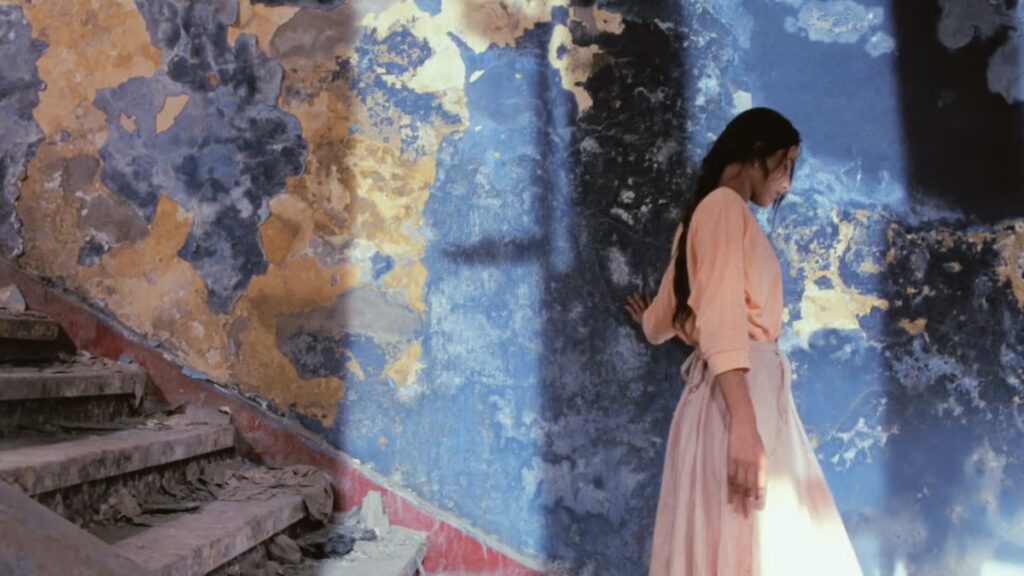
For Daher, delving into the archives was an act of confronting a history that is neither taught nor easily accessible, revealing "the repetition in our [historical] cycles." She notes that Lebanon is currently enduring yet another war, and she believes the deepest problem lies not only with external adversaries but also with internal fragmentation. She abandoned attempts to explain the country conventionally, choosing instead to "accept it in its full and unresolved complexity."
Screening the film in Beirut for its Lebanese premiere amidst the ongoing conflict provided a profoundly resonant experience. Daher recounts a screening where the sound of an Israeli drone outside became an unwitting part of the film’s sound design, creating an unsettling collapse of reality and archive. Audiences have reacted with a spectrum of emotions: some leave feeling lighter, reminded of the Lebanese people’s innate desire for life over conflict, while others depart with a sense of sadness, fearing they are destined to live and die amidst war.
A Living Archive: The Film’s Enduring Message
Do You Love Me serves as a poignant reminder that Lebanon is not merely "another war-torn country where death becomes a statistic." Daher passionately asserts the humanity of her people, emphasizing their stories, humor, tenderness, and profound vitality. This humanity, she argues, "deserves to be seen." Trauma, she notes, is an inherited burden in Lebanon, passed down through both explicit narratives and unspoken silences.
In its profound impact, Do You Love Me aspires to function as a form of "national archive"—one that is neither official nor complete, but rather "alive and felt." This ambition, Daher believes, is "enough." Her initial hope was for the film to "hold space" for collective feelings, and by all accounts, it has achieved precisely that. Through its intricate tapestry of images and sounds, Do You Love Me offers a vital testament to resilience, a call for empathy, and a complex, loving tribute to a nation perpetually navigating the echoes of its past and the uncertainties of its present. It is a cinematic experience that not only documents history but actively participates in its ongoing negotiation and understanding.