Chilean filmmaker Dominga Sotomayor, known for her intimate character studies set within confined yet expansive emotional landscapes, has premiered her latest feature, La Perra, at the prestigious Cannes Film Festival. This new work marks a significant evolution in Sotomayor’s acclaimed career, moving beyond the autobiographical narratives that defined her earlier successes and delving into the realm of literary adaptation. Set against the stark, windswept backdrop of a remote island off Chile’s southern coast, La Perra explores the intricate relationship between humanity, nature, and the concept of domestication, signaling a bold new direction for the director.
An Evolving Cinematic Signature: From Memory to Adaptation
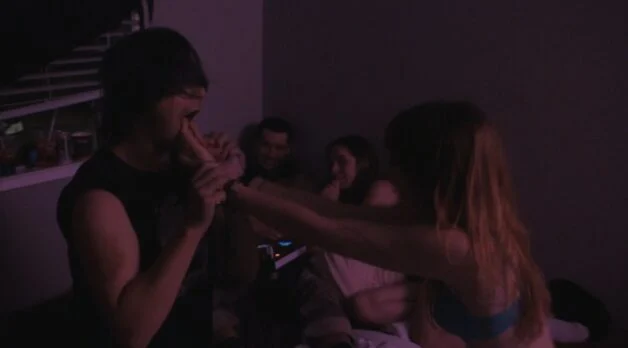
Sotomayor’s filmography has consistently garnered international praise for its distinctive style, often characterized by narratives unfolding within tightly circumscribed environments. Her 2012 debut, Thursday till Sunday, masterfully confined its emotional drama to a family car journey across northern Chile, subtly revealing marital discord through limited physical space. Her 2018 festival breakout, Too Late to Die Young, a poignant coming-of-age story, immersed viewers in the isolated, bohemian confines of a commune during Chile’s nascent post-Pinochet era, earning her the Best Director award at the Locarno Film Festival. More recently, her Netflix-produced Swim to Me (2025) honed in on the dynamics within an affluent Santiago villa, further demonstrating her ability to extract profound insights from concentrated settings.
La Perra, however, distinguishes itself by venturing into uncharted narrative waters for Sotomayor. Unlike its predecessors, which drew directly from her childhood experiences, this film is an adaptation of Pilar Quintana’s 2017 novel of the same name. This strategic pivot represents a conscious decision by Sotomayor to explore stories beyond her personal history, a move she describes as liberating. "True, I had to set aside my own stories for a change," Sotomayor reflected in an interview, "but I think that when you move away from those private realms you often wind up finding things that are even more personal and intimate. It’s a beautiful contradiction." This departure, co-written with Inés Bortagaray, allowed for a "lot more freedom and lightness," contributing to what Sotomayor perceives as a "rawer, more obscure" work.
The transition from deeply personal, memory-driven projects to literary adaptation is a significant one for any filmmaker. For Sotomayor, whose earlier works like Too Late to Die Young were years in the making and deeply intertwined with reconstructing "the blurrier parts of one’s memory," adapting a pre-existing text offered a different kind of creative challenge and opportunity. She noted the appeal of working with material that was "already ‘digested,’ and by another woman, to boot," finding intrigue in the process of making another’s narrative her own. This shift was less a conscious decision than a "culmination of a much bigger journey," driven by a desire to move beyond her own recollections and engage in an "exercise in empathy" by approaching the unknown.
Thematic Exploration: Domestication, Identity, and the Non-Human
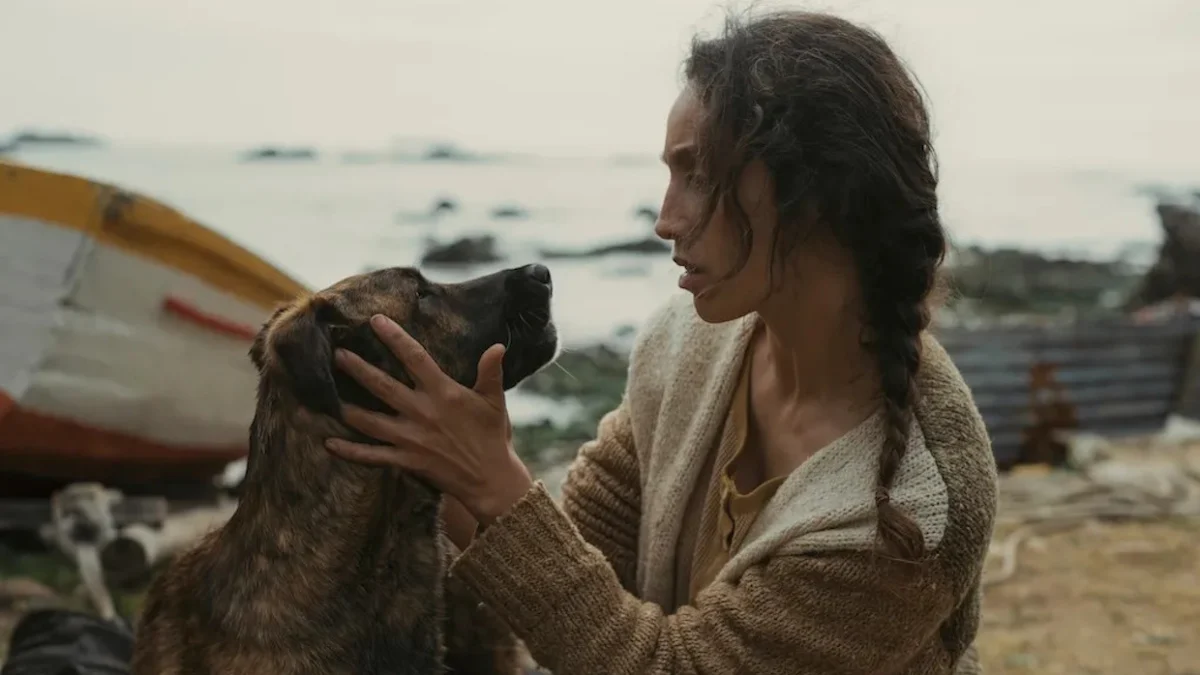
At its core, La Perra is a character study centered on Silvia (Manuela Oyarzún), a childless woman in her 40s who sustains herself by harvesting seaweed on the remote island. Her solitary existence is profoundly altered when she adopts a stray puppy she discovers on the shore. Named Yuri, after a 1980s Mexican pop star whose hits subtly underscore Clint Mansell’s score, the dog is not merely a plot device or a simplistic metaphor for Silvia’s emotional void. Sotomayor deliberately refrains from treating the animal as a "trite metaphor," instead elevating Yuri to a protagonist in her own right.
This nuanced portrayal of the human-animal bond is a central fascination for Sotomayor. "I’m interested in the concept of domestication," she explained, "the extent to which an animal can ever really be ours." This question resonates throughout the film, challenging conventional anthropocentric narratives. Early in the film, cinematographer Simone D’Arcangelo’s camera momentarily shifts from Silvia’s perspective to Yuri’s, capturing the dog running freely on the beach. This visual decision underscores the film’s commitment to presenting Yuri as an independent entity, pursuing her "own identity, [her] freedom."
The relationship between Silvia and Yuri evolves beyond initial affection, mirroring a recurring theme in Sotomayor’s work: how the familiar can become foreign, and comfort can transform into threat. Much like the seemingly warm commune in Too Late to Die Young eventually becomes "threatening, exhausting," Silvia’s initial warmth towards Yuri gradually gives way to a more complex, even perilous dynamic. The dog, initially a source of companionship, "becomes a threat," pushing the boundaries of domestication and the inherent wildness that resists absolute control. This exploration aligns with Sotomayor’s consistent interest in "that permeable border between the human and the non-human."
Crafting an Imaginary Reality: A Temporal and Geographical Labyrinth
Beyond its thematic depth, La Perra distinguishes itself through its formal innovation, particularly its disorienting manipulation of time and space. The film exists in a temporal limbo, where contemporary elements like smartphones and modern cars coexist with vintage television sets and other anachronistic props. This deliberate ambiguity challenges viewers to piece together a chronological understanding, inviting them to "luxuriate in its enigmas."
This atemporality is a conscious artistic choice by Sotomayor, who believes "cinema has less to do with linear time than with the kind that we imagine or remember." This approach extends to the film’s setting. While parts of La Perra were shot on the real Santa Maria island, the depicted geography is largely "fake," an "imaginary world" conjured by the filmmakers. Silvia’s shack and the abandoned beachside villa, for instance, were not indigenous to the island but constructed elements. Sotomayor describes this as "inventing a territory in a way that suggests a documentary but doesn’t turn the film into a mirror of reality." Even elements like the seaweed industry, though researched, were stylized for cinematic effect, highlighting the director’s love for cinema’s "ability to create a fake reality and then document it as if it was real."

The film’s sole flashback sequence further exemplifies this defiance of conventional temporal markers. Unlike traditional cinematic flashbacks that employ distinct visual cues—such as altered palettes or period-specific costumes—La Perra deliberately blurs the lines, making it challenging to register the shift in era. Sotomayor eschews "narrative" flashbacks, aiming instead for the past to exist as "its own standalone unit that tried to capture a feeling of her childhood," contributing to the film’s overall diffused and meandering structure. This refusal to adhere to a rigid timeline or geography fosters a universal quality, allowing the narrative to resonate beyond specific cultural or historical contexts.
Production Journey and Creative Freedom: Independent vs. Platform Filmmaking
Sotomayor’s recent projects offer a compelling case study in navigating the distinct landscapes of independent cinema and streaming platform production. Having completed Swim to Me for Netflix and La Perra as a cinema-focused feature within the same year—a remarkable feat for a director who typically takes "six or eight years to make one"—Sotomayor provides valuable insights into the differing degrees of creative autonomy.
While she values both experiences, Sotomayor unequivocally states that La Perra is "a film I made for the cinema, and that changes everything. It’s a completely free film." This freedom, she emphasizes, should not be taken for granted. Working with significant producers who trusted her vision allowed for formal experimentation, enabling her to explore concepts that felt "new" to her, if not "radical." This contrasts with Swim to Me, a Netflix commission where, while granted liberties such as casting choices, the project inherently required catering to a broader audience and adhering to a more "straightforward" narrative structure.
Sotomayor’s preference for "dispersed, meandering" cinema finds its fullest expression in La Perra. This formal freedom allowed for a more reactive and spontaneous production process, particularly beneficial given the inherent challenges of filming in a remote, windswept location and working with untrained animals. The difficulties encountered during the shoot, such as the dog running off mid-scene, ultimately became "the film’s language," transforming adversities into integral parts of its fabric. This adaptability and willingness to embrace unforeseen circumstances underscore the film’s "special project—spontaneous and liberating" nature.
Artistic Collaborations and Influences
For La Perra, Sotomayor collaborated for the first time with cinematographer Simone D’Arcangelo, known for his work on acclaimed films like Felipe Gálvez Haberle’s The Settlers (2023) and Alessio Rigo de Righi and Matteo Zoppis’s The Tale of King Crab (2021). Their collaboration, though lacking a traditional storyboard due to time constraints, was deeply collaborative, involving the creation of a "collage of pictures" from the island and extensive discussions around shared cinematic and artistic influences.
Sotomayor drew inspiration from a diverse array of sources, including the dramatic, 19th-century landscape paintings of her grandmother, Carmen Couve, and uncle, Adolfo Couve, which evoked the stark atmosphere of Santa Maria with their "barren islands and bulbous clouds." These were juxtaposed with psychologically charged works by artists like Lucien Freud and Francis Bacon. Cinematographically, they referenced films such as Barbara Loden’s Wanda (1970), Michael Roemer’s Vengeance is Mine (1984), and Michelangelo Antonioni’s L’avventura (1960), which informed the film’s meandering structure and rigid mise-en-scène. Australian films like Nicolas Roeg’s Walkabout (1971) and Henri Safran’s Storm Boy (1976) were also discussed for their "open" cinematic language, inspiring Sotomayor to "let go of the idea that each scene had to have its own logic" and embrace a more fluid approach.
The casting of Yuri also reflected this commitment to authenticity and spontaneity. Instead of pedigree dogs, Sotomayor insisted on mutts, eventually finding an adult dog at a Santiago animal shelter just a month before shooting. This untrained, wild energy required extensive sessions between the dog and lead actress Manuela Oyarzún to build familiarity. A two-month-old abandoned puppy was found to play baby Yuri. This unconventional casting and training process meant much of Oyarzún’s performance was a reaction to the animals, further emphasizing the film’s organic and unpredictable nature.
Implications and Broader Context for Chilean Cinema
Dominga Sotomayor’s presence at Cannes with La Perra underscores the continued vitality and critical recognition of Chilean cinema on the global stage. Following a wave of acclaimed filmmakers from the region, Sotomayor stands as a distinctive voice, pushing artistic boundaries and challenging conventional narrative structures. Her shift from autobiographical work to literary adaptation, while maintaining her signature thematic interests in confined spaces and the interplay between characters and their environments, suggests a mature artist unafraid to evolve.
La Perra‘s exploration of the human-animal relationship as a non-metaphorical, co-protagonist dynamic offers a fresh perspective in cinema, aligning with growing global conversations about ecological awareness and challenging anthropocentric worldviews. The film’s temporal and geographical ambiguities invite deeper engagement, positioning it as a work that prioritizes feeling and atmosphere over strict narrative linearity, a hallmark of art-house cinema. Its premiere at Cannes not only solidifies Sotomayor’s standing as a major international director but also highlights the diverse storytelling capabilities emerging from Latin America, promising a thought-provoking cinematic experience for audiences willing to embrace its enigmas.