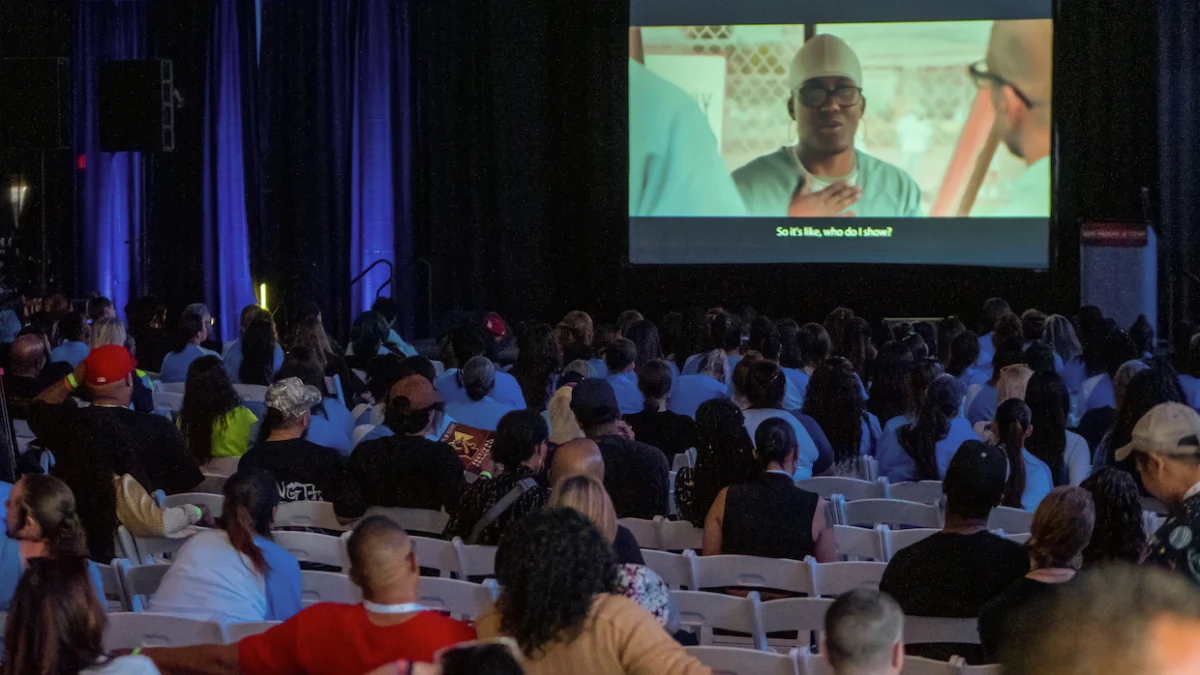
The San Quentin Film Festival (SQFF) made a significant and historic expansion of its mission on March 28, 2026, by hosting its inaugural event at the Central California Women’s Facility (CCWF) in Chowchilla. This landmark occasion marked the festival’s first venture outside the walls of San Quentin Rehabilitation Center and its pioneering entry into a women’s correctional institution. The event brought together incarcerated filmmakers and audiences with prominent figures from the film industry, fostering dialogue, showcasing talent, and emphasizing the transformative power of storytelling within the carceral system.
A Groundbreaking Event for Incarcerated Women
The festival at CCWF was meticulously organized as a curated program, featuring a diverse array of cinematic offerings, engaging panel discussions, and a competitive pitch forum exclusively for incarcerated writers and filmmakers. The initiative sought to bridge the gap between the incarcerated community and the professional film industry, creating a unique platform for connection and mutual understanding. Attendees included approximately 300 incarcerated women, alongside a contingent of around 200 outside guests comprising industry executives, nonprofit organizers, and government officials.
The atmosphere inside the facility’s gymnasium was described as vibrant and anticipatory, a stark contrast to the stringent security protocols that define daily life within the prison. The event commenced with a powerful performance by an incarcerated gospel choir, which reportedly "electrified the room," setting an uplifting tone for the day. This was followed by screenings of award-winning short films, including the narrative short So, Boom, which garnered enthusiastic "hooting, hollering, and laughter" from the audience, indicative of its resonant storytelling.
Among the films screened was Oscar’s Return, a documentary short that had previously won the jury award for Best Documentary Short at the 2025 San Quentin Film Festival. The film, which chronicles the journey of Oscar, a formerly incarcerated individual navigating reentry after serving 25 years for a juvenile life sentence, deeply resonated with the CCWF audience. Reactions were immediate and profound, with women openly expressing emotional connections to Oscar’s struggles and triumphs. One audience member reportedly remarked on the film’s ability to elicit tears, while another connected the film’s depiction of a dog to the enduring bond of companionship, stating, "Aw, you will always have your best friend, won’t you?" The film’s conclusion was met with "spirited applause," indicating genuine appreciation and recognition from an audience described as unlikely to offer "charity" in their reactions.
During the subsequent Q&A session, an incarcerated woman spoke passionately about CCWF’s own dog training program, drawing parallels between Oscar’s journey and her own hopes for finding employment upon parole. She shared a poignant anecdote about her first dog, adopted by a family who continues to send her updates and pictures, highlighting the profound impact of such programs on both the incarcerated individuals and their connections to the outside world.
Distinguished Industry Participation and Collaborative Efforts
The festival’s success was significantly bolstered by the participation of esteemed figures from the film industry, underscoring the event’s credibility and reach. Dee Rees, the acclaimed director of Mudbound, contributed her insights to a "women-in-film" panel. This panel was skillfully moderated by Lakisa "Kiki" Crowder, a dedicated member of the CCWF Journalism Guild, further emphasizing the collaborative spirit between inside and outside participants.
The screening of Oscar’s Return was followed by a discussion moderated by Emmy-winner W. Kamau Bell, known for his incisive commentary and humanitarian efforts. The festival’s jury, a testament to its robust industry network cultivated in part through co-founder Cori Thomas’s extensive experience at Tribeca, included Minari producer Christina Oh, writer-director Christine Swanson, and Song Sung Blue cinematographer Amy Vincent. Their presence not only lent prestige but also provided invaluable professional validation for the incarcerated filmmakers.
The logistical complexities of organizing such an event within a correctional facility were expertly navigated through a collaborative effort. Jesse Vasquez, executive director of the Pollen Initiative and a formerly incarcerated journalist, served as a crucial liaison, coordinating weekly between SQFF’s internal and external teams. This monumental undertaking received vital support from CCWF Warden Anissa De La Cruz and Public Information Officer Lt. Monique Williams, whose cooperation was essential in making the day’s programming a reality.
Fostering Talent: The Pitch Competition
A cornerstone of the SQFF at CCWF was its screenplay and documentary pitch competition, an exclusive opportunity for incarcerated writers to present their creative visions to industry professionals. This segment aimed to identify and nurture emerging talent, providing a tangible pathway for their stories to be heard beyond prison walls. Krysten Webber emerged as the winner of the Narrative Pitch Competition, a significant achievement that recognized her potential as a storyteller.
Webber’s victory, however, was tinged with the sobering realities of reentry. In a conversation with Oscar, the subject of the documentary, she expressed concerns that "freedom was not what they were promised" by friends who had been released. She observed their struggles to find community on the outside, mirroring Oscar’s own experiences. This exchange brought into sharp focus the complex challenges of transitioning from incarceration to society, highlighting the critical need for robust support systems beyond prison gates. Cori Thomas, a co-founder of SQFF, articulated the festival’s philosophy on this matter, emphasizing that "the work is the work," implying that creative output from within prison walls deserves the same respect and consideration as any other professional artistic endeavor.

The Context of Incarceration for Women in California
The Central California Women’s Facility, opened in 1990, is the largest women’s prison in the United States, housing approximately 2,000 inmates. It is one of only three state prisons for women in California, reflecting a significant demographic shift in the incarcerated population. According to data from the Bureau of Justice Statistics, the number of women in state and federal prisons has increased dramatically over the past four decades, growing by more than 700% since 1980. While men still constitute the vast majority of the incarcerated population, women represent the fastest-growing segment.
California’s female inmate population, while having seen some decline in recent years due to criminal justice reforms, remains substantial. Many incarcerated women are mothers, with studies indicating that a significant percentage are primary caregivers for minor children prior to their incarceration. Their offenses often stem from socio-economic factors, substance abuse, mental health issues, and intimate partner violence, necessitating a gender-responsive approach to rehabilitation and reentry programs.
The mission statement prominently displayed at CCWF, "Our mission is to ensure public safety and successful reentry," underscores the dual objectives of the correctional system. However, the realities of reentry, as highlighted by discussions at the festival, often fall short of this ideal. Formerly incarcerated individuals, particularly women, face myriad barriers to successful integration into society, including difficulty finding stable housing and employment, limited access to healthcare and education, and the stigma associated with a criminal record. Recidivism rates, though generally lower for women than men, remain a concern, emphasizing the need for effective rehabilitative interventions.
Beyond the Barbed Wire: Glimmers of Humanity and Community
The festival day was marked by poignant observations that underscored the enduring human spirit amidst the confines of incarceration. The author noted the omnipresent security—twenty-foot barbed-wire fences, watchful guards, and multiple security checkpoints—creating an environment designed for control. Yet, within this landscape of surveillance, elements of beauty and care persisted. A meticulously maintained rose garden and a playground situated beyond a backdrop of barbed wire offered a striking juxtaposition, symbolizing "beauty within the inhospitable."
A subtle yet powerful moment occurred when a sneeze from the incarcerated section of the audience was met with a chorus of "bless you’s" that were "layered and overlapping, said with a vigor that surprised" the outside observers. This spontaneous outpouring of care, a "reflex of care" that the institution seemingly could not suppress, demonstrated the resilience of human connection and community-building even under conditions of "ritualized violence" and "dress-coded segregation." These small, everyday gestures underscored the women’s capacity to forge their own rituals of mutual support and humanity.
The temporary void created when the incarcerated women were "summoned" for lunch, leaving approximately 200 "outside guests" (many in the suggested black attire) in a "hollow" gymnasium, served as a stark reminder of the segregation and the profound impact of their presence. Christine Swanson’s candid observation to the author, "These women are in here. And we are not," offered a moment of "tough love," refocusing perspective on the privilege of freedom and the shared humanity that transcends correctional boundaries.
Historical Echoes and Future Implications
The locale of Chowchilla itself carries historical significance. Before becoming synonymous with CCWF in 1990, the land was agricultural, and prior to colonial partitioning, it belonged to the Yokuts people. They called themselves "chaushila," meaning "brave," and had elaborate ceremonies to mourn their dead. This historical context adds a layer of depth to the contemporary narrative, connecting the present-day resilience of the incarcerated women to a lineage of bravery and cultural heritage.
The San Quentin Film Festival’s expansion to CCWF represents more than just a screening event; it is a vital step in humanizing the incarcerated, fostering creative expression, and promoting dialogue about critical social issues. Such initiatives are increasingly recognized for their role in rehabilitation, reducing recidivism, and preparing individuals for successful reentry. By providing a platform for incarcerated voices, the festival challenges prevailing stereotypes and encourages a more nuanced understanding of those within the correctional system.
The event at CCWF underscores the critical importance of arts and cultural programming within prisons. Studies have shown that participation in arts programs can improve inmates’ behavior, reduce disciplinary infractions, enhance cognitive skills, and foster a sense of purpose and self-worth—all factors contributing to a more successful transition back into society. The emotional resonance of films like Oscar’s Return and the talent showcased in the pitch competition demonstrate the rich creative potential waiting to be tapped within incarcerated communities.
As the festival drew to a close, and Krysten Webber, the narrative pitch winner, disappeared into the "mass of women in blue" moving towards the door, the lingering questions about reentry and community remained. Her concerns about the realities of freedom versus the support found within prison walls highlight a systemic challenge. The SQFF’s commitment, encapsulated by Cori Thomas’s assertion that "the work is the work," aims to dismantle the invisible walls that separate "inside" from "outside" talent, advocating for a future where creativity and humanity are recognized and valued, irrespective of circumstance. The success of this pioneering event at CCWF sets a precedent for broader engagement and continued efforts to leverage the power of film for social change and rehabilitation within the correctional system.