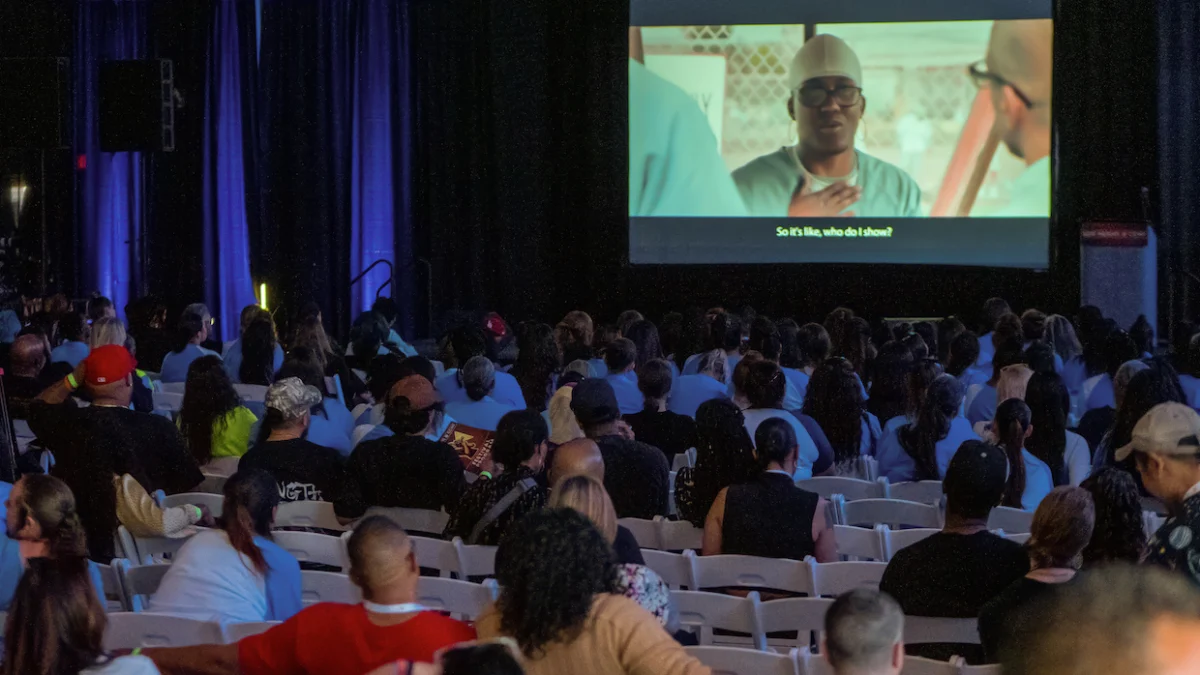
Chowchilla, CA – In a landmark expansion of its mission, the San Quentin Film Festival (SQFF) recently hosted its first-ever event outside San Quentin Rehabilitation Center, bringing a curated program of films, panels, and pitch competitions to the Central California Women’s Facility (CCWF) in Chowchilla. The 2026 festival marked a significant moment for both incarcerated women and a host of industry heavyweights, fostering a unique dialogue between creativity and incarceration, and underscoring the transformative power of storytelling.
The event, held on a bright day in late March, was meticulously coordinated over months, bridging the complex divide between a high-security correctional facility and the free world of independent cinema. This historic foray into a women’s prison represented a crucial step for SQFF, an organization dedicated to showcasing the cinematic talents of incarcerated individuals and creating platforms for meaningful exchange. The program featured an award-winning shorts screening, dynamic panel discussions, and a competitive pitch session exclusively for incarcerated writers and filmmakers.
A Day of Unprecedented Connection
The atmosphere at CCWF was a striking blend of institutional rigor and artistic fervor. Visitors, including filmmakers, producers, and esteemed jurors, navigated security checkpoints and barbed-wire fences, a stark contrast to the typical red carpet glamour. Yet, within the facility, a palpable sense of anticipation and pride permeated the air. The event’s organizers, many of whom are incarcerated women themselves, had worked tirelessly to bring the festival to life, posting sign-up sheets in housing units and carefully managing attendance to maximize opportunity across the facility.
One visiting filmmaker, presenting his documentary short Oscar’s Return, recounted the surreal experience of preparing for the screening. Opting for a vividly patterned shirt adorned with dinosaurs and aliens, he embraced a spirit of individuality, drawing inspiration from formerly incarcerated Sing Sing star Clarence Maclin. This personal choice underscored the broader theme of the day: the assertion of self and creativity within restrictive environments. The filmmaker described being "on edge," not due to the physical confines of the prison, but due to the profound responsibility of screening his work before 300 incarcerated women, many of whom shared similar lived experiences with the film’s subject.
Bridging Worlds: Industry Leaders and Incarcerated Talent
The lineup of industry professionals attending the CCWF event was testament to the growing recognition of the talent emerging from behind prison walls and the importance of such initiatives. Mudbound director Dee Rees participated in a "Women in Film" panel, moderated by CCWF Journalism Guild member Lakisa "Kiki" Crowder. Emmy-winner W. Kamau Bell was slated to moderate the Q&A session for Oscar’s Return. The festival’s jury, a prestigious group drawn from SQFF co-founder Cori Thomas’s extensive network, built in part from her years at Tribeca Film Festival, included Minari producer Christina Oh, writer-director Christine Swanson, and Song Sung Blue cinematographer Amy Vincent.
This convergence of established talent and emerging voices from within the prison system created a powerful synergy. Jesse Vasquez, executive director of the Pollen Initiative and a formerly incarcerated journalist, played a pivotal role in coordinating weekly between SQFF’s inside and outside teams. His efforts, coupled with critical support from CCWF Warden Anissa De La Cruz and Public Information Officer Lt. Monique Williams, were instrumental in navigating the complex logistics and ensuring the day’s programming ran smoothly. Warden De La Cruz remarked on the positive impact, stating, "This festival not only brings invaluable exposure and mentorship to our residents but also reinforces our commitment to rehabilitation and successful reintegration. It’s a testament to the potential that lies within."
The Power of Storytelling and Shared Experience
The morning began with a powerful gospel choir, whose electrifying performance set a vibrant tone for the day. Incarcerated jurors and organizers beamed with pride as their photos were taken on the red carpet, a symbolic moment of recognition and dignity. Prior to Oscar’s Return, a narrative short titled So, Boom screened, eliciting enthusiastic hoots, hollers, and laughter from the audience, demonstrating the profound resonance of film within this unique setting. The filmmaker’s composer, Josh, described the festival as "the most spirited pep rally he’d ever been to," a sentiment echoed by many attendees.
Oscar’s Return, the documentary short by the visiting filmmaker, held particular significance for the CCWF audience. The film chronicles Oscar, a man who served 25 years on a life sentence he began as a juvenile, as he navigates reentry into Los Angeles after decades of incarceration. Meeting Oscar through his work with API RISE, an organization supporting formerly incarcerated immigrants, the filmmaker documented Oscar’s journey of learning to trust the world again, often through the process of training dogs. The film portrays his struggles with family rejection and the enduring weight of his past, highlighting the immense challenges faced by individuals returning to society.
The screening of Oscar’s Return was met with immediate and profound reactions. Women in the audience were visibly moved, some brought to tears, others remarking on the film’s portrayal of resilience and the bond between Oscar and the dog. The applause was spirited and genuine, reflecting a deep connection to the film’s themes. During the subsequent Q&A, an incarcerated woman spoke passionately about CCWF’s own dog training program, expressing how Oscar’s story instilled hope for finding work upon her parole. She shared that her first dog from the program had been adopted by a family who still sent her pictures and updates, underscoring the tangible impact of such rehabilitation initiatives.
Reentry and the "Reflex of Care"

The day’s program included a scheduled break for lunch, during which the incarcerated women were summoned, leaving the gymnasium filled with approximately 200 outside guests – a mix of industry executives, nonprofit organizers, and government officials, predominantly dressed in black, with only a few splashes of color. The sudden absence of the women in blue created a noticeable void, prompting reflections on the stark realities of their daily lives.
Christine Swanson, one of the esteemed jurors, offered a moment of "tough love" to the visiting filmmaker, who admitted to feeling deflated by industry pressures and career uncertainties. "These women are in here. And we are not," she reminded him, her words serving as a powerful anchor to the profound privilege of freedom. This exchange sparked deeper contemplation on the societal divisions and the inherent risk of viewing incarcerated individuals as a "distant, banished class." The filmmaker reflected on his own sister’s struggles with the justice system, lamenting the systemic failures that can lead individuals down such paths, and the absence of a compassionate witness during critical moments.
Amidst the structured environment of headcounts, buzzers, and watchful correctional officers, moments of profound humanity shone through. When someone sneezed in the section reserved for the women in blue, a cascade of "bless you’s" erupted, layered and overlapping with surprising vigor. This spontaneous "reflex of care" became a powerful symbol of the resilience and community fostered within the prison walls, a testament to the human spirit’s capacity for connection even in the face of "ritualized violence."
Challenges of Reintegration and the Promise of Community
The festival concluded with the announcement of the pitch competition winners. Krysten Webber, the winner of the Narrative Pitch Competition, engaged in a poignant conversation with Oscar, the subject of Oscar’s Return. She expressed concerns shared by many incarcerated individuals: that "freedom was not what they were promised." Her friends who had been released struggled to find community on the outside, much like Oscar initially did. This observation highlighted the critical and often overlooked challenges of successful reentry, where the absence of a supportive community can render formal freedom isolating. For some, the established community and sense of purpose within prison, such as being an "award-winning writer," can ironically feel more secure than the uncertainties of the outside world.
The sign prominently displayed in the visitation room, "Our mission is to ensure public safety and successful reentry," resonated deeply in these conversations. While the institution’s stated goal is clear, the practical realities of achieving "successful reentry" are complex and multifaceted, requiring not just release, but comprehensive support systems for housing, employment, and community integration.
As Krysten Webber was congratulated, she humbly downplayed her achievement, stating her writing "wasn’t even that good." This self-effacing remark stood in contrast to the judgment of industry professionals who had chosen her script from a competitive field. Cori Thomas, an SQFF co-founder, often articulates the festival’s philosophy: "The work is the work," emphasizing that artistic creations from within prison walls deserve to be evaluated on the same merits as those from outside. This principle aims to dismantle barriers and foster genuine recognition for incarcerated talent.
As the line of women in blue began to form, Krysten uttered a familiar farewell: "I have to go." Her departure, disappearing into the mass of uniforms, underscored the temporary nature of these connections and the stark reality of their return to their institutional lives.
Historical Context and Broader Implications
The Central California Women’s Facility, established in 1990, sits on land that holds its own complex history. Before its transformation into a prison, the area was agricultural land, and prior to that, it belonged to the Yokuts people, who called themselves chaushila, meaning "brave." This historical context adds another layer of meaning to the narratives of resilience and community observed within the prison walls.
The San Quentin Film Festival’s expansion to CCWF is part of a broader movement advocating for arts and educational programs within correctional facilities. Research consistently demonstrates that engagement in creative activities can significantly reduce recidivism rates, improve mental health outcomes, and equip incarcerated individuals with valuable skills for future employment. A 2017 study by the RAND Corporation, for instance, found that incarcerated individuals who participated in correctional education programs had a 43% lower likelihood of reoffending than those who did not. While film festivals like SQFF focus on artistic expression, they contribute to these broader rehabilitative goals by fostering self-esteem, critical thinking, and a sense of agency.
The CCWF event serves as a powerful example of how culture can transcend barriers, offering moments of connection, validation, and hope. It challenges preconceived notions about incarceration and highlights the immense human potential that persists even in the most challenging environments. By bringing together incarcerated individuals, industry professionals, and policymakers, the San Quentin Film Festival continues to champion a vision of justice that prioritizes rehabilitation, human dignity, and the profound, universal language of storytelling.
Some names have been changed to protect privacy.