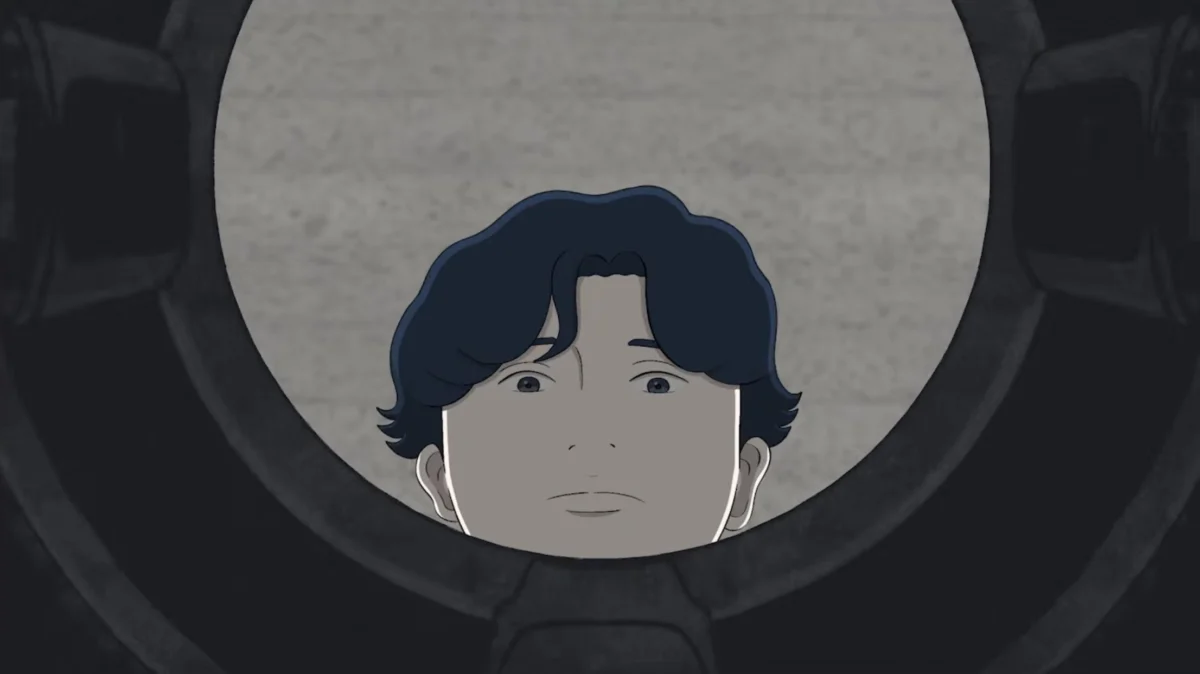
The burgeoning popularity of anime as a cinematic medium has paved the way for a wider distribution of its films in North America, a trend exemplified by the nationwide release of Ryuya Suzuki’s independent animation, Jinsei. While a release across over a hundred theaters might not constitute a blockbuster opening, it represents a significant departure from the limited engagements typically afforded to anime features, particularly those outside the mainstream studio system. This expansion of reach for films like Jinsei signals a maturing market and a growing appetite for diverse animated storytelling.
Historically, even critically acclaimed anime films have struggled to secure extensive theatrical runs. For context, the celebrated works of the late Satoshi Kon, known for masterpieces like Perfect Blue and Paprika, never exceeded 37 screens during their initial theatrical releases in his lifetime. Studio Ghibli’s Oscar-nominated The Tale of the Princess Kaguya, a visually stunning and critically lauded film, reached a maximum of only 29 theaters upon its 2014 debut. Even more accessible family-friendly fare, such as Mamoru Hosoda’s Summer Wars, which garnered significant positive reviews and found a broad audience, peaked at a mere 11 theaters in 2010. While these films have since enjoyed wider re-releases and found larger audiences through home media and streaming, their initial theatrical limitations highlight the challenges faced by anime productions in securing mainstream cinematic exposure.
The current release strategy for Jinsei therefore stands out. Despite its unconventional production and subject matter, the film is set to open at the IFC Center in New York on June 5, followed by a nationwide rollout to over a hundred theaters beginning June 12. This broader distribution, while not on the scale of Hollywood blockbusters, is considerably wider than what was once considered standard for North American anime releases, underscoring a discernible shift in the industry’s landscape.
The Genesis of an Independent Vision: Ryuya Suzuki’s Jinsei
Jinsei is a testament to the power of a singular creative vision, being the product of a remarkably small and dedicated team, primarily driven by first-time filmmaker Ryuya Suzuki. Suzuki is credited with writing, directing, animating, and editing the entire feature film by himself. He also co-composed the musical score with Yuki Hara. This level of individual contribution is rare in feature-length animation, especially for a project of this scope.
The film’s production credits, beyond Suzuki and Hara, are notably brief. They include voice actors, a sound team led by Shuji Suzuki, marketing personnel, a list of Kickstarter backers who provided crucial funding, effects artist Taishu Tomita, and producer Kenji Iwaisawa. Iwaisawa’s involvement is particularly significant, as he is also the producer and director behind On-Gaku: Our Sound, another independent, crowdfunded anime produced with a similarly lean team. On-Gaku itself was a remarkable feat, taking seven years to animate. In contrast, Suzuki managed to complete Jinsei in an ambitious 18 months, a compressed timeline that speaks to his relentless dedication.
The financial backing for Jinsei was largely secured through crowdfunding. The Kickstarter campaign for the film aimed to raise funds to help complete post-production, including sound mixing, color correction, and marketing, enabling the film to reach a wider audience. This reliance on crowdfunding highlights a growing trend in independent filmmaking, allowing artists to bypass traditional funding gatekeepers and connect directly with their potential audience. The success of the campaign underscores a segment of the audience eager to support unique, creator-driven projects.
Narrative Ambition and Stylistic Choices
The premise of Jinsei is certainly intriguing, following a single protagonist who assumes various identities over the course of a century. This concept draws parallels to Satoshi Kon’s Millennium Actress, a film celebrated for its imaginative exploration of memory and identity. Jinsei further distinguishes itself by its genre-bending narrative, which begins in a realistic vein before progressively evolving into psychedelic science fiction. This bold narrative shift has been likened to the work of Don Hertzfeldt, another animator known for his distinctive one-man productions, such as It’s Such a Beautiful Day, which similarly journeys through profound shifts in tone and reality.
However, despite the conceptual ambition and the evocative comparisons to acclaimed works, the critical reception has been mixed, with some reviewers finding the film’s execution to be less compelling than its underlying ideas. The visual style of Jinsei has been a particular point of discussion. The film employs limited animation techniques, a necessity given the constraints of a solo animator working on a tight deadline. While limited animation can be highly effective when used deliberately to enhance stylistic motion or graphic simplicity, as seen in projects like The Powerpuff Girls, or when paired with exceptionally detailed art, Jinsei‘s approach has been described as falling into a "bland middle ground." The character designs and the fluidity of movement have been noted as areas where the film struggles to overcome the inherent limitations of its animation style.
Despite these criticisms of the animation’s dynamism, the film’s compositional strengths have been acknowledged. Suzuki’s command of visual storytelling, particularly in his use of symmetry, color design, and varying aspect ratios to denote different eras, has drawn comparisons to the meticulously crafted visual language of director Wes Anderson. The striking juxtaposition of violence with mundane activities, such as sushi preparation, which appears in both Jinsei and Anderson’s Isle of Dogs, has been noted as a potentially intentional or coincidental stylistic echo.
A Chronological Journey Through Identity
Jinsei is structured into distinct chapters, each marking a new phase in the protagonist’s life and often a new assumed identity.
Early Life and the Seeds of Tragedy
The initial segment, "Se-chan," effectively utilizes minimalist visuals to narrate the protagonist’s origins. The story unfolds through a montage of car journeys, culminating in a fatal accident that profoundly shapes the character’s early life. This segment establishes a somber tone and hints at the underlying themes of loss and consequence that will pervade the narrative.
The Idol Aspirations and the "God of Death"
The subsequent chapter, "God of Death," delves into the protagonist’s deep mourning and experiences with bullying. It is during this period that the character finds a crucial connection with Kin (voiced by Taketo Tanaka), a classmate who shares a passion for boy bands. The narrative takes a turn as Se-chan, revealed to be the son of a famous idol, and Kin decide to pursue their own musical ambitions. Under the moniker "Kuro," the protagonist undergoes five years of rigorous training under an abusive manager, Shiratori (voiced by Kanji Tsuda). This period highlights the pressures and exploitation that can exist within the entertainment industry.
Shifting Personas and a Descent into the Unconventional
Breaking away from the idol narrative with a burst of violence, the protagonist embarks on a new life as "Reito," a host club worker. This phase sees him narrowly escape death after an incident in an abandoned warehouse. He is subsequently discovered and identified as "Man A," eventually receiving a second chance at celebrity as "Zen." The narrative then introduces Sakura (voiced by Miho Ohashi), a woman he previously failed to protect from a sexual assault.
The film then takes a dramatic leap into the surreal and the futuristic. The latter half of Jinsei becomes increasingly bizarre, catapulting the protagonist into a bunker existence during a far-future war. The journey culminates in an alien encounter reminiscent of the philosophical and visually ambitious sequences in Stanley Kubrick’s 2001: A Space Odyssey.
Character Development and Pacing Concerns
Despite the dramatic transformations and the extraordinary lifespan of the protagonist, a recurring observation in reviews is that the character remains a somewhat "blank slate" throughout the film. While some viewers might interpret this as a depiction of a specific form of depression or existential detachment, for many, it results in a lack of deep investment in the character’s journey. The narrative leaps between life stages are often left vague, hindering the development of a satisfying character study.
The supporting cast also faces challenges with adequate development. Kin emerges as a particularly sympathetic and compelling character, prompting a desire for more screen time and exploration of his relationship with the protagonist. The dynamic between the protagonist and Sakura is described as baffling, lacking clear emotional resonance.
The pacing of Jinsei has also been a point of contention. While the third act introduces more creative visuals and extreme narrative turns that inject some energy, the overall progression of the film is frequently characterized as a "slog." This suggests that the ambitious narrative structure, coupled with the pacing, may not fully engage all viewers.
Broader Implications and Future Outlook
Despite the criticisms regarding its artistic execution and narrative depth, the very existence and broad release of Jinsei are viewed as significant achievements. The film represents a triumph for independent animation, demonstrating that a creator working outside the established studio system can produce a feature-length work and secure substantial theatrical distribution. This accessibility for outsider artists is crucial for fostering innovation and diversity within the animation landscape.
The success of Jinsei‘s distribution model could inspire other independent animators and filmmakers. It suggests a potential pathway for unconventional projects to reach wider audiences, bypassing traditional gatekeepers and connecting directly with viewers through platforms like crowdfunding and a more open theatrical distribution system.
Looking ahead, the critical reception of Jinsei might offer valuable insights for Ryuya Suzuki’s future endeavors. The desire for more robust character development and potentially a more cohesive narrative arc, perhaps achieved through collaboration, has been expressed. As the anime market continues to expand and diversify, films like Jinsei, with their unique visions and ambitious storytelling, play a vital role in shaping its future, pushing creative boundaries and broadening the definition of what animated cinema can be. The film’s journey from a solo creator’s vision to a nationwide theatrical release is a compelling narrative in itself, reflecting the evolving dynamics of film production and distribution in the digital age.