DreamWorks Animation has long established itself as a cornerstone of the global family entertainment industry, delivering critically acclaimed theatrical releases since its foundational era in the late 1990s. While industry competitors have frequently pivoted toward franchise sequels or high-volume, standardized releases, DreamWorks has maintained a distinct production strategy focused on thematic originality, artistic risk-taking, and diverse cultural narratives. The studio’s newest feature film, Forgotten Island, represents a continuation of this tradition, blending traditional hand-drawn animation influences with state-of-the-art computer-generated imagery while drawing deeply from Southeast Asian folklore. As the film begins its theatrical run, early box-office returns and audience engagement metrics suggest a strong commercial and critical reception, positioning the project as a notable entry in the studio’s contemporary catalog.
Background and Cultural Integration
Forgotten Island distinguishes itself within the contemporary animation landscape by centering its narrative on the lesser-explored dynamics of female adolescence, enduring friendship, and Filipino mythology. Directed and produced by a diverse creative team, the film utilizes the rich oral traditions of the Philippines to construct its central setting, the mystical island of Nakali.
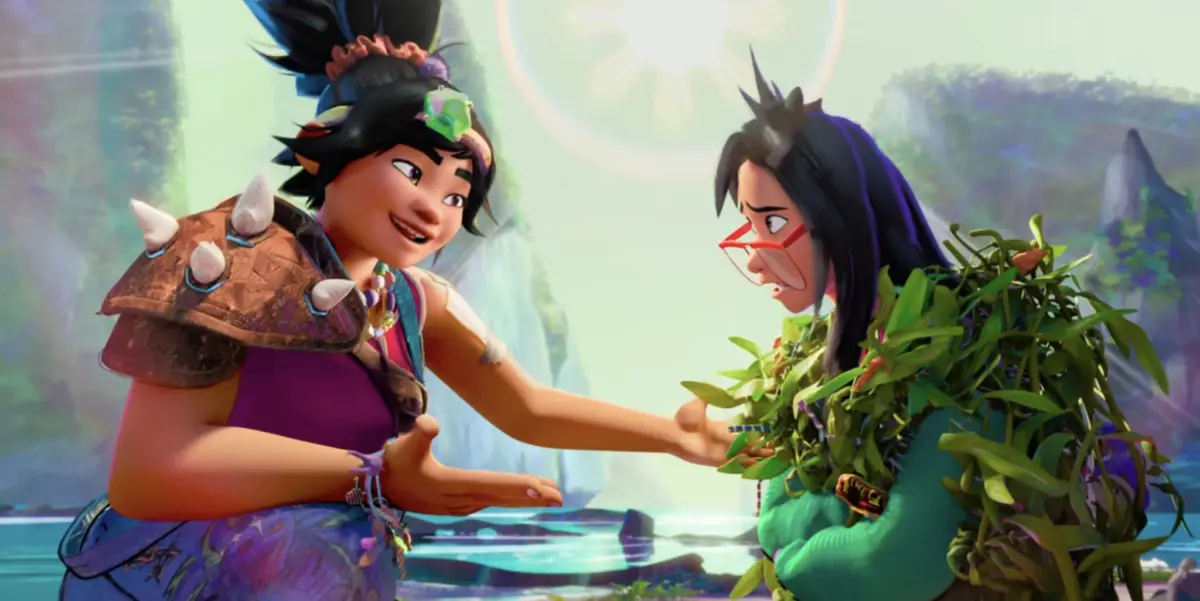
The integration of authentic cultural elements extends beyond the visual aesthetic into the film’s production values. Composer Nathan Matthew David conducted extensive field research within the Philippines, studying indigenous musical traditions to incorporate authentic instrumentation and rhythmic structures into the orchestral score. Furthermore, the film features a prominent voice cast of Filipino and Filipino-American artists, including H.E.R. as Jo Yuson, Liza Soberano as Raissa Molina, Dolly de Leon as Lola, Lea Salonga as Manang the Mananggal, and supporting performances from Dave Franco and Jenny Slate. This deliberate casting strategy has been widely cited by industry analysts as a progressive step toward authentic representation in mainstream Hollywood animation, mirroring broader demographic shifts in consumer demand for culturally specific storytelling.
Chronology of the Plot and Narrative Arc

The narrative follows the lifelong bond between Jo Yuson and Raissa Molina, two distinct personalities brought together in their youth following a disciplinary incident at school. Jo, characterized by her fierce protectiveness and adherence to the folkloric tales told by her grandmother, clashes with institutional skepticism regarding Filipino mythology. Raissa, her academically brilliant and pragmatic counterpart, serves as a steadying presence as the duo navigate years of shared experiences, documented symbolically through an expanding collection of charms on a shared friendship bracelet.
As the protagonists approach adulthood, external pressures threaten to dissolve their partnership. Jo, grappling with the loss of her grandmother and the absence of a clear career path, works as a fast-food mascot, while Raissa prepares to relocate for higher education at the California Institute of Technology (CalTech). A final, spontaneous excursion leads the pair to the threshold of Nakali, the legendary forgotten island.
Upon waking on the island, the characters face a temporal and mnemonic vacuum: Raissa has acquired a pair of wings belonging to the formidable vampire-like creature known as the Mananggal, the physical key required for their return is missing, and neither young woman can recall the events of the preceding evening. Aided by Raww, a shapeshifting aspin, and Batiba, an agoraphobic memory demon, the protagonists embark on a quest across the island. The journey functions structurally as a road-trip narrative, forcing the characters to retrace their steps, confront suppressed anxieties regarding their impending separation, and reconcile the emotional friction inherent in growing apart.
Production Data and Technical Specifications
From a technical standpoint, Forgotten Island employs a hybrid visual methodology. The studio has merged its established 3D character-animation pipeline with two-dimensional anime-inspired action conventions and dynamic visual gags. Industry insiders note that this stylistic synthesis allows for fluid action sequences while preserving the expressive character acting characteristic of major studio releases.
The project’s financial and logistical parameters reflect DreamWorks Animation’s standard investment scale for original intellectual properties, typically ranging between $80 million and $120 million in production expenditure, supported by global marketing initiatives. Strategic promotional campaigns targeted multiple demographics, utilizing nostalgia-driven marketing for Millennial audiences—who identify with the 1990s upbringing of the protagonists—alongside family-oriented trailers that highlighted the fantasy adventure elements.

Critical Reception and Audience Metrics
Initial audience response in domestic and international markets has demonstrated high engagement levels across multiple age brackets. Exit polling indicates strong word-of-mouth promotion, particularly regarding the film’s emotional resonance, humor, and musical composition. Critics have highlighted the narrative’s handling of complex interpersonal conflicts, specifically noting the thematic parallels drawn between characters who struggle with isolation, historical misunderstanding, and the preservation of personal memory.
Some reviewers have noted minor discrepancies between the marketing campaign’s framing and the final narrative execution. Promotional materials initially suggested a psychological thriller element akin to memory-erasure tropes, whereas the final film adopts a more linear, quest-based resolution. However, industry analysts agree that this structural choice ultimately enhances the film’s accessibility for younger demographic segments without diluting its emotional complexity.
Broader Industry Implications
The commercial performance of Forgotten Island carries significant implications for major animation studios considering original properties versus established intellectual property. In an economic environment where studios frequently rely on sequels and brand familiarity to guarantee box-office returns, DreamWorks Animation’s continued investment in culturally specific, original storytelling provides a valuable case study.
By demonstrating that narratives rooted in specific cultural mythologies can achieve broad, cross-demographic appeal, Forgotten Island may encourage further financial backing for diverse creative teams within the mainstream animation sector. As theatrical exhibition models continue to evolve in the post-pandemic media landscape, the film’s success underscores the viability of theatrical releases that prioritize character-driven emotional arcs, innovative visual styling, and authentic cultural representation.