A Cinematic Descent into Totalitarianism
The narrative premise follows the Regime—an omnipresent, faceless governing body that maintains control by dictating social belonging. The plot centers on a ruthless Interrogator tasked with breaking a Suspect to manufacture a confession of guilt. However, the film subverts the traditional thriller genre by focusing on the psychological erosion of both characters, questioning whether the architects of such oppressive systems can ultimately escape the "flaws" in their own machinations.
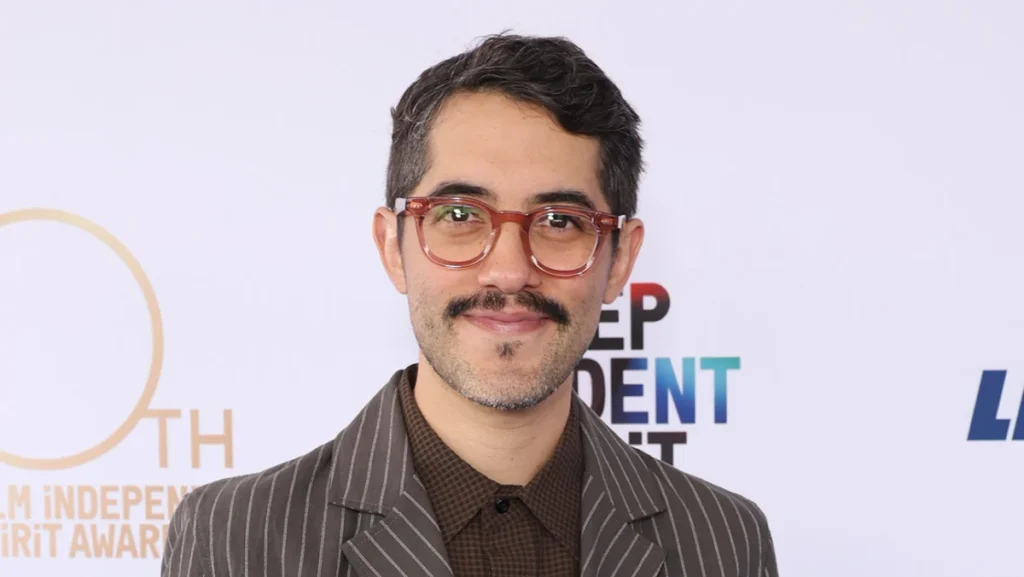
For Papastylianos, the transition from reading Samarakis’ work as a teenager to interpreting it as a filmmaker marked a profound shift. The director notes that his objective was to transcend the immediate dystopian setting and create an allegory that remains resonant years beyond its initial release. "I wasn’t reading it as a teenager, like the first time. Now, I was reading it as a director," Papastylianos explained in a pre-premiere interview. The film’s development required a delicate balance between faithfulness to the source material and the necessity of ensuring that the narrative’s critique of power structures would remain relevant in the coming decade.

The Evolution of the Tallinn Black Nights Film Festival
The premiere of The Flaw at the 30th anniversary of the Tallinn Black Nights Film Festival highlights the event’s growing stature on the international circuit. Since its inception in 1997, PÖFF has evolved from a small regional gathering into one of Northern Europe’s most significant cultural events. By 2026, the festival has solidified its position as a gateway for prestige cinema, particularly within the Baltic Film Competition, which showcases projects that reflect the complex socio-political history of the region.
The selection of The Flaw for the competition is indicative of the festival’s focus on high-concept, intellectually rigorous filmmaking. The decision to host the premiere in the Baltics is thematic as well as logistical; the stark, brutalist architecture found in Riga, Latvia, provided a visual foundation that complements the film’s exploration of dehumanizing regimes.
Production and Creative Vision
The film’s visual language is a calculated effort to manipulate the viewer’s subconscious. By combining locations in Greece and Latvia, the production design team created a "timeless space" that avoids grounding the story in a recognizable geographic reality. This decision was supported by the work of cinematographer Thodoris Zacharakis and editor Yannis Chalkiadakis, both of whom focused on deliberate, rhythmic pacing designed to make the audience feel as though they are assembling a puzzle.

The casting process for the film was as unconventional as its visual approach. Papastylianos bypassed traditional headshots, instead providing casting directors with portraits by Amedeo Modigliani. "I used a lot of Modigliani in terms of the paintings that I sent, because he has this energy and these figures that are surreal, but at the same time, they’re actual people," the director noted.
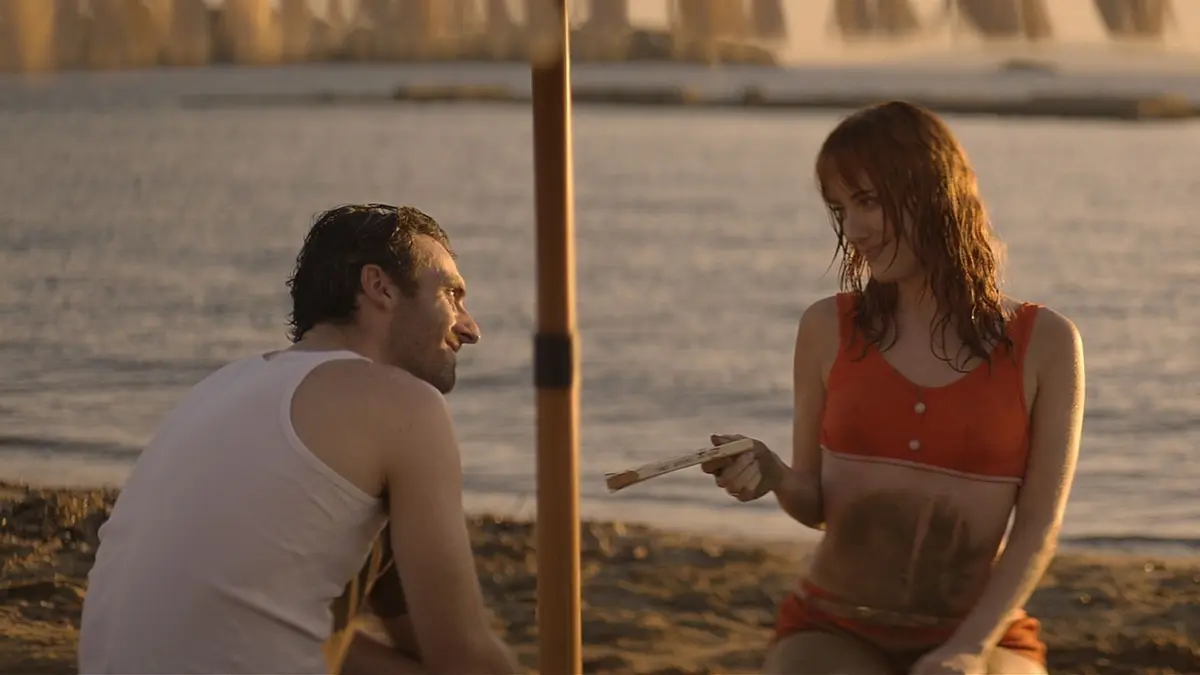
The ensemble cast is led by David Dawson, known for his portrayal of Derek Jarman in Elsinore, as the Interrogator, and Arthur McBain, recognized for his work in After the Flood and Napoleon, as the Suspect. The supporting cast includes Ralf Little, Angela Brouskou, Lyne Renée, Sarah Akokhia, and Georgia Small. Brouskou’s role as "the Head" was specifically designed to move away from naturalism, representing the regime not as a person, but as an evolving, abstract ideology.
Analytical Perspectives on Societal Control
Beyond the surface-level critique of totalitarianism, The Flaw functions as an exploration of individual prejudice. Papastylianos argues that humans are, in effect, "regimes" unto themselves. The director utilizes the metaphor of a hunter looking through a rifle scope: by focusing exclusively on the "prey," the hunter loses sight of the deer as a living creature. This analogy is applied to the film’s exploration of binary social conflicts, such as the polarization seen during the COVID-19 pandemic, where middle-ground discourse was frequently abandoned in favor of rigid, antagonistic categories.

The sonic landscape of the film further reinforces this sense of detachment and tension. Composer Dimitris Fessas worked alongside the production team to interweave the distinct "melodies" of the Interrogator and the Suspect. By blending electric guitars with traditional instruments like the Cretan lyra, the score achieves an otherworldly, dissonant atmosphere that mirrors the characters’ internal instability.
Broader Implications and Industry Impact
The film enters the market at a time when dystopian narratives are experiencing a resurgence in both literature and film. However, The Flaw differentiates itself by grounding its narrative in character psychology rather than spectacle. Industry analysts suggest that the co-production model between Greece and Latvia—facilitated by producers Panos Papahadzis, Theophilos Papastylianos, Alise Rogule, and Lina Yannopoulou—is becoming an increasingly vital strategy for European independent cinema. By pooling resources across borders, filmmakers can access diverse aesthetic landscapes and public funding streams, allowing for more ambitious artistic projects that might otherwise struggle to find financial backing in a single-territory market.
As the film prepares for its November 18 debut, the industry will be watching closely to see how critics and audiences respond to its somber, allegorical approach. The film’s producers, represented by sales agent Jacques Kruger, are aiming for a successful festival run that will pave the way for wider international distribution.

Chronology of the Project
- Literary Foundation: The film is based on the modern Greek classic by Antonis Samarakis, a work celebrated for its psychological depth and commentary on power dynamics.
- Development Phase: Director Theophilos Papastylianos began the adaptation process years prior to the 2026 premiere, focusing on ensuring the script’s longevity and relevance.
- Production: Filming took place across two primary locations—Greece and Latvia—with the latter chosen specifically to provide a brutalist, timeless aesthetic.
- Post-Production: A rigorous emphasis was placed on sound design and color grading to ensure that every frame served the film’s overarching goal of psychological manipulation.
- Premiere Announcement: In late 2026, the film was confirmed for the Baltic Film Competition at the 30th Tallinn Black Nights Film Festival.
- World Premiere: Scheduled for November 18, 2026, in Tallinn, Estonia.
Conclusion: The Puzzle of Human Nature
The ultimate success of The Flaw rests on the viewer’s ability to engage with its slow-burn, non-linear structure. By the film’s conclusion, the characters have undergone a transformation so subtle that it forces the audience to re-evaluate the entire preceding narrative. As Papastylianos aptly put it, the film acts as a puzzle; the viewer is not merely watching an interrogation, but is instead being asked to reconcile the shifting identities of those involved.
By presenting the Interrogator and the Suspect as alter egos, the director forces the audience to confront the "flaw" mentioned in the title—a flaw that exists not just in the machinery of the regime, but in the human tendency to categorize, judge, and ultimately, oppress others to justify one’s own existence. The film stands as a sobering reminder that while political regimes may rise and fall, the mechanisms of self-deception and moral compromise remain a constant, and perhaps more dangerous, aspect of the human condition.