The year 1972 marked a pivotal moment in the career of Japanese actor Tomisaburo Wakayama. While his legendary portrayal of Itto Ogami in the immensely popular "Lone Wolf and Cub" series cemented his status as a cult icon, another significant chapter closed with the release of Eight Men to Kill. This film served as the final entry in the "Bounty Hunter" trilogy, a series that, years earlier, had laid the foundational groundwork for Wakayama’s celebrated anti-heroic persona through the character of Shikoro Ichibei. Directed once again by Shigehiro Ozawa, Eight Men to Kill presented a stark and unflinching conclusion to Ichibei’s narrative, distinguished by its exceptionally bleak tone, heightened violence, and overtly exploitative elements—a pronounced departure from the comparatively heroic narratives often found in the genre, and indeed, from the series’ own earlier installment, The Fort of Death. Despite its grim outlook, the film masterfully synthesized the strengths of its predecessors, delivering a profoundly satisfying, albeit dark, conclusion to the trilogy and featuring what many critics and fans consider Wakayama’s finest performance as the complex bounty hunter-physician.
The Genesis of a Cult Icon: Tomisaburo Wakayama’s Path to Stardom
Tomisaburo Wakayama, born Masaru Okumura in 1929, embarked on a cinematic journey rooted deeply in martial arts. The elder brother of the equally iconic Shintaro Katsu (famous for Zatoichi), Wakayama was a formidable practitioner of judo, kendo, and karate, skills that would become hallmarks of his screen presence. His early career in the 1950s saw him navigate the traditional chanbara (sword-fighting drama) landscape, often playing heroic, if somewhat conventional, samurai figures. However, as the 1960s progressed, Japanese cinema underwent a significant transformation. The post-war economic boom and shifting social values led to a demand for more nuanced, often darker, narratives that challenged established heroic archetypes. This period saw the rise of the "anti-hero," a figure often morally compromised, existing in a world devoid of clear-cut good and evil.
Wakayama was perfectly positioned to capitalize on this shift. His imposing physique, intense gaze, and understated acting style lent themselves well to portrayals of stoic, often tormented, warriors. While Toshiro Mifune had largely defined the samurai archetype for a generation, Wakayama, along with his brother Katsu, began to carve out a new niche, depicting characters who operated on the fringes of society, driven by complex motivations rather than pure righteousness. The 1970s, in particular, would be his decade, primarily due to the global phenomenon of "Lone Wolf and Cub." Yet, it was the "Bounty Hunter" trilogy, beginning in 1969, that allowed Wakayama to truly hone the morally ambiguous, ruthlessly efficient, yet ultimately compassionate persona that would become his signature. The character of Shikoro Ichibei, with his dual life as a physician and a merciless bounty hunter, served as a crucial stepping stone, refining the intensity and internal conflict that Wakayama would later bring to Itto Ogami.
The "Bounty Hunter" Trilogy: A Chronological Overview
The "Bounty Hunter" series, produced by Toei Company, represented a concerted effort to capitalize on the burgeoning market for grittier, more adult-oriented samurai films.
-
1. The Fort of Death (1969): The inaugural film introduced Shikoro Ichibei, a character immediately distinguished by his conflicting professions. As a physician, he is dedicated to healing and compassion; as a bounty hunter, he is a lethal instrument of justice (or injustice, depending on the client). This initial entry established the core premise of Ichibei being drawn into assignments that test his moral boundaries. Directed by Shigehiro Ozawa, the film explored themes of corruption and the plight of the common people, albeit with a comparatively more heroic undertone for Ichibei. Critics at the time noted its fresh take on the samurai genre, praising Wakayama’s intense portrayal and the film’s blend of action and social commentary. The film’s success indicated a strong appetite for this new breed of chanbara.
-
2. Killer’s Mission (1969): Released in the same year, Killer’s Mission deepened the character of Ichibei and ventured into darker territory. While still retaining elements of his dual nature, the narrative pushed Ichibei into more morally compromising situations, further blurring the lines between hero and anti-hero. Ozawa continued to helm the series, developing a distinctive visual style that emphasized stark landscapes and brutal action sequences. The film expanded on the political machinations surrounding Ichibei’s assignments, showcasing a world increasingly driven by greed and betrayal. It served as a crucial bridge, transitioning the series from the somewhat traditional heroic stance of the first film to the profound cynicism that would define its conclusion.
-
3. Eight Men to Kill (1972): The culmination of the trilogy, Eight Men to Kill, represents a definitive embrace of the darkest aspects of Ichibei’s world. Released just as "Lone Wolf and Cub: Sword of Vengeance" was also hitting theaters, this film arrived at a moment when audiences were primed for more extreme and morally ambiguous narratives. Ozawa’s return to the director’s chair for this final installment was crucial, allowing him to weave a consistent thematic thread through the series, bringing Ichibei’s journey to a bleak, yet impactful, close. The film not only intensified the violence and exploitation but also deepened the philosophical despair, portraying a protagonist increasingly weary of the "path of hell" he walks.
"Eight Men to Kill": Plot Synopsis and Thematic Depth
Eight Men to Kill opens with Shikoro Ichibei (Tomisaburo Wakayama) attempting to maintain a semblance of a normal life, running a medical clinic. However, the grim reality of his practice’s dire financial situation forces him back into the lucrative, albeit morally ambiguous, world of bounty hunting. His latest assignment, presented by the Tokugawa shogunate, involves recovering a substantial shipment of stolen gold from a formidable group of bandits. The reward is too tempting to refuse, especially given the clinic’s needs. Before embarking on his perilous journey into the mountains, where the gang’s elusive leader is rumored to be hiding, Ichibei receives a critical stipulation: the gold must be recovered before an upcoming solar eclipse, imposing a severe time constraint on his investigation.
What initially appears to be a straightforward recovery mission quickly unravels into a complex web of political intrigue and personal betrayals. Ichibei finds himself entangled with a cast of duplicitous characters, each with their own designs on the stolen treasure. Omon (Noriko Maki), the alluring owner of a local inn, has strategically seduced one of the bandits, plotting to seize the gold for herself. Simultaneously, the treacherous samurai Yajuro (Shigeru Amachi) orchestrates a sinister scheme against Ichibei, dispatching his men to attack the bounty hunter and frame him for crimes he did not commit, aiming to eliminate him from the pursuit. Adding another layer of complication is Tatsu (Minoru Oki), a long-suffering individual who, after years of exploitation at the hands of the shogunate, harbors his own aspirations to claim the treasure as a desperate bid for freedom and retribution. Surrounded by enemies on all sides, Ichibei must rely not only on his legendary combat skills but also on his sharp intellect and cunning ingenuity if he hopes to navigate this treacherous landscape and survive.
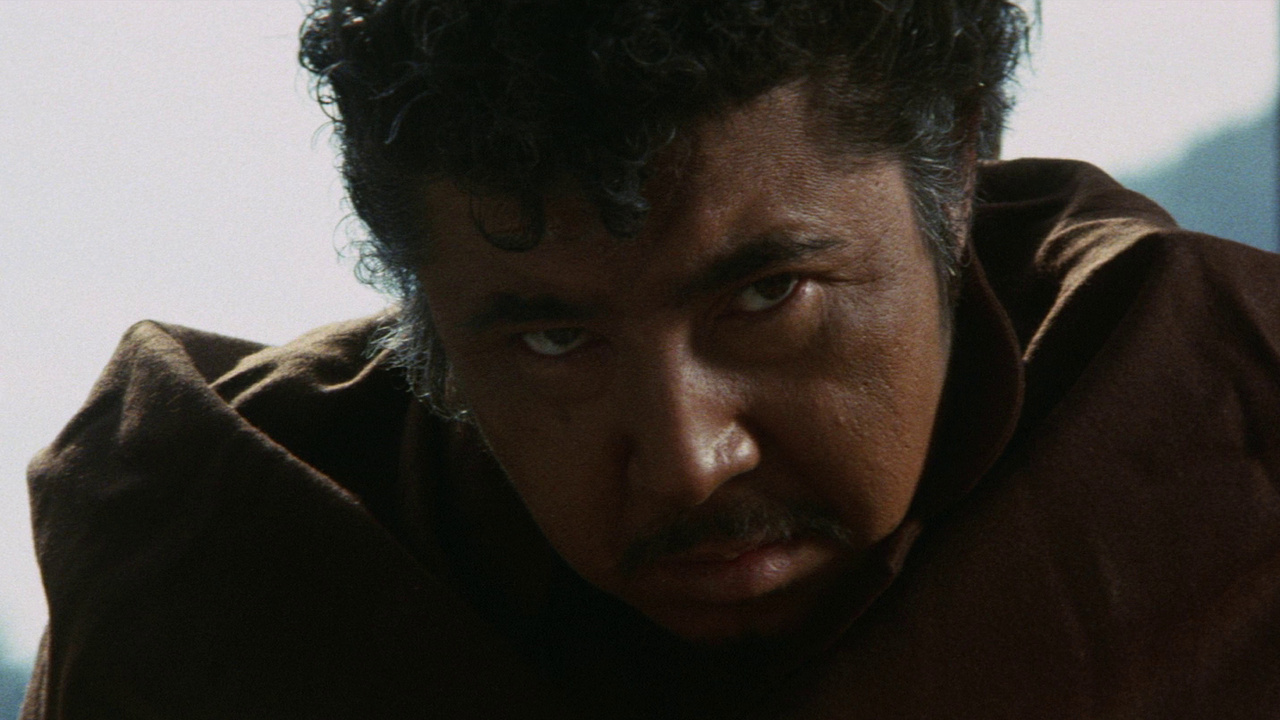
The thematic undercurrents of Eight Men to Kill are considerably more pessimistic than those explored in The Fort of Death, where the social and political commentary often carried a more universal resonance, suggesting hope for change. In this final installment, the darker tone permeates every aspect of the narrative, particularly shaping the portrayal of its protagonist. It reflects a world where even those striving to uphold some semblance of righteousness remain fundamentally powerless against the relentless forces of violence, corruption, and injustice. The film’s somewhat circuitous opening meticulously establishes the gold from two distinct mines as the economic lifeblood of the shogunate, thereby providing the compelling driving force behind the intricate web of betrayal and manipulation that swiftly engulfs Ichibei. Throughout his arduous journey, he repeatedly encounters faces "distorted with gold fever," a memorable remark that encapsulates the pervasive avarice. The shocking and uncompromising finale ultimately reinforces Ozawa’s grim vision, surpassing even the bleakness found in Killer’s Mission. The film posits that in this brutal world, individual integrity is a fragile commodity, often crushed by systemic corruption and the insatiable lust for wealth.
Wakayama’s Portrayal of Shikoro Ichibei: A Masterclass in Anti-Heroism
Tomisaburo Wakayama’s third and final performance as Shikoro Ichibei is profoundly enriched by his deep familiarity with the role and similar characters he had inhabited throughout his career. This intimate understanding allowed him to strike a delicate balance between Ichibei’s inherent compassion for the weak and disenfranchised and his often unpredictable, ruthless nature, all conveyed through sheer charismatic presence and remarkable restraint. The character, in Eight Men to Kill, returns closer to the anti-hero archetype introduced in the original film, shedding some of the more heroic inclinations that may have surfaced in the interim.
Despite the bleakness of his world and the cynicism that surrounds him, Ichibei never entirely loses his capacity for empathy. This is poignantly demonstrated when he observes that even a fraction of the missing gold could dramatically improve the lives of ordinary people, highlighting his underlying concern for social justice. Yet, he remains the archetypal resourceful bounty hunter, capable of surviving seemingly impossible situations through a combination of his unparalleled combat prowess and an extensive arsenal of ingenious gadgets. These tools, which have become a signature of the series, return in satisfyingly bloody fashion, underscoring his pragmatic approach to a world that offers no easy solutions.
Perhaps the finest example of Wakayama’s nuanced performance is his love scene with Omon. Instead of a straightforward romantic encounter, the more explicit moments are strategically intercut with images inspired by shunga (erotic Japanese art), lending the scene a complex, almost voyeuristic quality. This artistic choice not only elevates the scene beyond mere titillation but also speaks volumes about Ichibei’s character. He fully comprehends the duplicitous nature of those offering him assistance, including Omon, yet he would never refuse the "hell of lust" she places before him. This acceptance of human imperfection and moral ambiguity, even within himself, is a testament to Wakayama’s ability to imbue Ichibei with profound psychological depth, portraying a character who embraces the dark realities of his existence without succumbing entirely to nihilism. His performance here solidifies Ichibei as one of Japanese cinema’s most compelling anti-heroes, a figure who navigates a morally bankrupt world with a unique blend of stoicism, brutality, and fleeting compassion. Contemporary critics likely lauded this sophisticated portrayal, recognizing its contribution to the evolution of the samurai genre’s protagonist.
Stylistic Elements and Production Context
The visual and auditory landscape of Eight Men to Kill is meticulously crafted to amplify its dark thematic core. Shigehiro Ozawa’s directorial vision for this finale is defined by a stark, almost oppressive cinematography that utilizes shadows and muted color palettes to create a sense of impending doom and moral decay. The camera often lingers on the desolate, rugged mountain landscapes, mirroring the internal desolation of the characters. Action sequences are choreographed with a brutal realism, emphasizing the raw, visceral impact of violence rather than stylized grace. This approach aligns perfectly with the burgeoning trend of exploitation cinema in early 1970s Japan, where explicit depictions of gore and suffering were becoming more commonplace. The editing is sharp and dynamic during fight scenes, heightening the tension and immediacy, while moments of quiet reflection are allowed to breathe, underscoring Ichibei’s internal struggles.
The film’s music score, often characterized by its melancholic and dissonant tones, plays a crucial role in establishing and maintaining the pervasive sense of dread. It avoids conventional heroic anthems, opting instead for arrangements that underscore the characters’ desperation and the futility of their struggles. This deliberate choice further distances Eight Men to Kill from earlier, more romanticized chanbara films.
Produced by Toei Company, a powerhouse in Japanese cinema known for its prolific output across various genres, the "Bounty Hunter" trilogy exemplified the studio’s strategic shift towards producing more adult-oriented and commercially viable action films. During this era, Toei was instrumental in shaping the landscape of jidaigeki (period drama) and chanbara, pushing boundaries in terms of content and violence. The success of series like "Lone Wolf and Cub" and the "Bounty Hunter" films demonstrated Toei’s keen understanding of evolving audience tastes, providing a platform for directors like Ozawa and actors like Wakayama to explore complex narratives that challenged traditional cinematic conventions. The production values, while perhaps not lavish, were effective in creating a believable and immersive historical world, albeit one steeped in grime and despair.
Legacy and Broader Impact: The Enduring Influence of "Bounty Hunter"
The "Bounty Hunter" trilogy, culminating in Eight Men to Kill, holds a significant place within the broader canon of Japanese exploitation cinema and the chanbara genre. It stands as a testament to the period’s willingness to deconstruct traditional heroic archetypes, presenting protagonists who operate in morally grey areas, driven by necessity and a distorted sense of justice rather than unwavering virtue. The series, and particularly its bleak conclusion, contributed substantially to Tomisaburo Wakayama’s enduring legacy, solidifying his image as a master of the stoic, morally complex warrior—a persona he would perfect in his subsequent roles.
The character of Shikoro Ichibei, with his unique blend of medical healing and brutal bounty hunting, served as a vital precursor to Wakayama’s iconic Itto Ogami. The thematic explorations of a protagonist walking a "path of hell," the intricate political conspiracies, and the visceral action choreography found in "Bounty Hunter" all clearly foreshadowed or ran parallel to the stylistic and narrative choices that would define "Lone Wolf and Cub." This connection underscores the trilogy’s importance in the evolution of Wakayama’s screen persona and the development of the anti-hero in Japanese cinema.
Beyond its immediate impact, the "Bounty Hunter" trilogy has continued to influence subsequent generations of filmmakers and martial arts enthusiasts. Its blend of character-driven drama, intricate plotting, and brutal action has resonated with audiences worldwide, contributing to its status as a cult classic. Modern critical re-evaluations frequently highlight the series’ artistic merits, particularly Ozawa’s uncompromising vision and Wakayama’s powerful performances, recognizing their role in pushing the boundaries of the genre. The continued availability of the trilogy, notably through Blu-ray releases like the one from Terracotta Distribution, speaks to its enduring relevance and its ability to captivate new audiences decades after its initial release. Film scholars and genre enthusiasts consistently point to Eight Men to Kill as a prime example of how Japanese cinema fearlessly explored the darker facets of human nature and societal corruption, leaving an indelible mark on the landscape of international cult films.