For actress Ellie Bamber, the formidable task of portraying fashion icon Kate Moss for the first time on screen in "Moss & Freud" transcended mere mimicry of voice, style, or characteristic mannerisms. The true key to unlocking the enigmatic supermodel, a role Bamber describes as her most daunting yet, lay in mastering one distinct attribute: her laugh. "Her laugh is so specific," Bamber revealed to The Hollywood Reporter, emphasizing its unexpected but profound importance in her transformative process. This seemingly small detail became the linchpin for embodying one of the most recognized and photographed women globally, setting the stage for a performance that promises to delve into the rarely seen vulnerabilities beneath Moss’s confident exterior.
Ellie Bamber’s Ascendance in British and Global Cinema
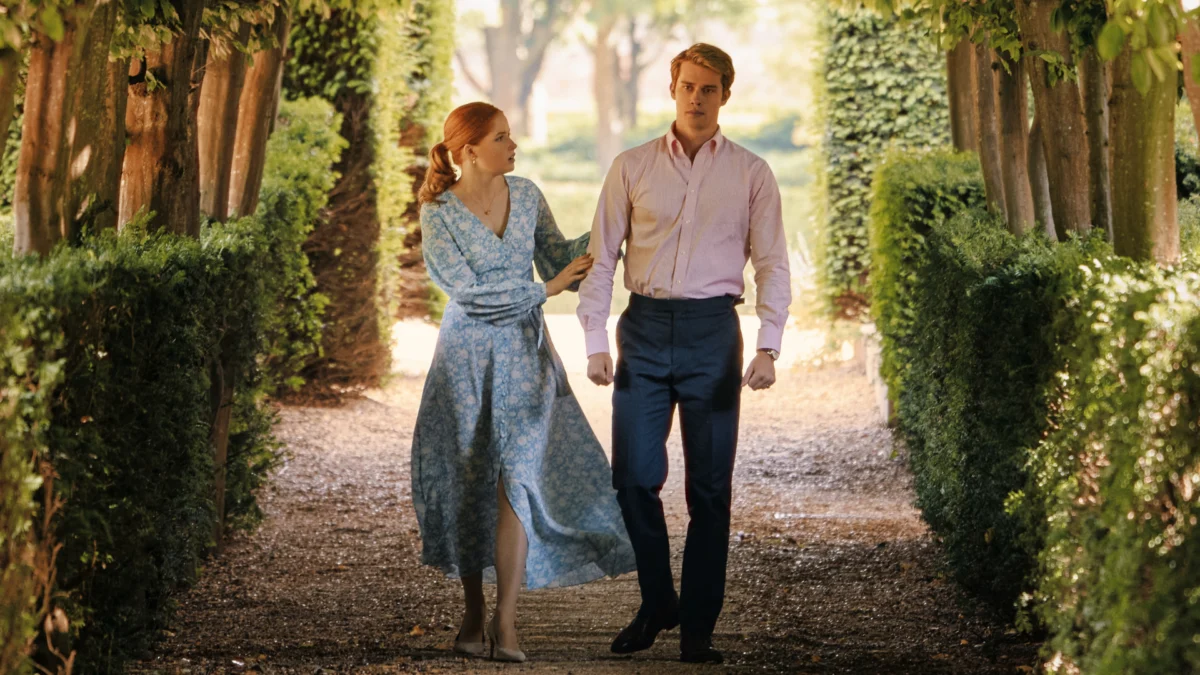
Ellie Bamber, a former child actor, has steadily carved a significant niche within the competitive landscape of the British film and television industry. Her journey reflects a carefully curated career path, moving from early roles to joining a select cohort of young British talent now making substantial waves on the international stage. This group includes contemporaries such as Nicholas Galitzine, known for "Masters of the Universe" and a long-time friend of Bamber’s, and Jonah Hauer-King of "The Little Mermaid" fame.
Bamber’s early career saw her secure parts in diverse projects that showcased her range. In 2016, she appeared in the genre-bending "Pride and Prejudice and Zombies," a humorous twist on a literary classic, and the critically acclaimed psychological thriller "Nocturnal Animals," directed by Tom Ford. Her presence also extended to the small screen, notably in "The Trial of Christine Keeler," a historical drama exploring the infamous Profumo affair. However, it was her role as the beloved Princess Bea in "Red, White & Royal Blue," one of 2023’s most buzzed-about streamer adaptations, that significantly elevated her profile, introducing her to a vast global audience and cementing her status as a fan-favorite.
Her consistent work across varied genres and platforms has not only honed her craft but also positioned her as an actor capable of navigating both commercial successes and artistically driven projects. This trajectory prepared her for the immense challenge of "Moss & Freud," a role that demands not just acting prowess but an almost alchemical transformation into a living legend.
The Da Vinci Code of Kate Moss: Preparation for an Icon
Stepping into the shoes of Kate Moss, a figure whose image is synonymous with an era of fashion and cultural rebellion, presented an unparalleled acting challenge. Moss, a global icon who has graced countless magazine covers and catwalks, possesses a public persona that is both instantly recognizable and fiercely private. For Bamber, the preparation was an intricate, multi-faceted endeavor, meticulously designed to capture not just the superficial aspects but the very "essence" of Moss at a specific point in her life.
"I was mostly terrified, honestly," Bamber confessed, reflecting on the initial apprehension of taking on such a colossal role. This terror, however, proved to be a powerful motivator. "The terror is a good thing and it pushes you and it challenges you to step outside of something that is comfy," she elaborated. Bamber found that Moss’s inherent confidence ultimately became a wellspring of empowerment for her performance, enabling her to transcend her fears and inhabit the role fully. She recognized Moss’s remarkable ability to navigate the demanding fashion industry from a tender age with "grace and poise," while also possessing a "deep vulnerability underneath" — a duality that became central to her portrayal.

To achieve this profound transformation, Bamber engaged in a rigorous and specialized training regimen. She collaborated with movement coach Polly Bennett, renowned for her work on other high-profile biopics, to dissect every physical nuance of Kate Moss. This involved poring over countless videos, meticulously analyzing Moss’s posture, gestures, and perhaps most famously, her iconic runway walk. "Working with Polly was amazing. And we did a lot of work on the runway walk, which was just kind of a trip, I would say," Bamber recounted, highlighting the unique physical language Moss developed throughout her career.
Parallel to the physical training, Bamber worked with vocal coach Louise Jones, focusing on recreating Moss’s voice at the age of 27, the period depicted in the film. Voices evolve significantly over time, and pinpointing the exact vocal quality from that specific era required extensive research into archival interviews and footage. Crucially, it was during this vocal work that the significance of Moss’s laugh emerged. "Her laugh is so specific," Bamber reiterated, "and the laugh was the first thing that I felt would unlock the rest of everything, which was weird. The laugh was, weirdly, really important to me." This insight speaks volumes about the depth of character study undertaken, where a seemingly minor detail can become a profound gateway into a person’s inner world.
Physical transformation was also key, particularly given the film’s depiction of Moss in Lucian Freud’s nude portrait. Bamber worked with personal trainer Luke Wellington to prepare her body for the demands of the role. Beyond these technical aspects, Bamber immersed herself in every available piece of information about Moss, from countless photographs to interviews and articles.
A particularly invaluable resource was James Brown, Kate Moss’s close friend since their childhood in Croydon. Brown provided intimate, anecdotal insights that no public record could offer. "With him it was amazing because he was able to spot things and be like, ‘Oh, she does this when she dances,’ [or], ‘When she first puts a dress on, she shimmies her shoulders a bit’," Bamber explained. These minute observations, gleaned from years of close friendship, added layers of authenticity and idiosyncratic detail to Bamber’s performance, allowing her to embody Moss with a depth that goes beyond mere imitation.
Decoding the Supermodel: Insights from Bamber
Bamber’s journey into the psyche of Kate Moss also revealed unexpected connections and surprising facets of the supermodel’s personality. One immediate point of relatability for Bamber was their shared experience of entering the creative industries at a young age. "I think we both started working when we were 15, 16," Bamber noted. "That was a big thing — understanding that we’d both been thrown into a creative industry at quite a young age, and we’d had to grow up during that time in a strange way." This shared trajectory, being in the public eye from their teenage years, fostered a deep empathy in Bamber for Moss’s unique path and the pressures she faced.
While Bamber had admired Moss’s aspirational style and "cool sense of fashion" since her own teenage years, having a picture of her on her bedroom wall like many others, the deeper dive for the film uncovered a more complex individual. One of the most striking revelations for Bamber was Moss’s prowess as a storyteller. "I always say that she’s a really amazing storyteller," Bamber shared. "As a storyteller myself, seeing her tell a story in a room is one of the most enigmatic, incredible things I’ve ever seen. She knows exactly how to tell a story beginning to end with moments of fun, and then also moments of… She’s just an incredible orator." This observation paints a picture of Moss far beyond her public image as a silent, enigmatic beauty, revealing an engaging and captivating personality. Bamber recounted an instance on set where everyone was "so drawn to her," gathered around, listening intently to her life stories – a testament to her magnetic presence.
Bamber’s first encounter with the real Kate Moss was, in itself, a moment of serendipity. Shortly after landing the role, Bamber attended a party hosted by British designer Jasper Conran. Having confided in Conran about her upcoming role, she was surprised when he hinted at an imminent arrival. "He basically turned around to me and was like, ‘Oh, you’re never going to guess who’s going to walk through the door in a few minutes’ time’," Bamber recalled. The ensuing meeting was organic and informal, away from the structured environment of a film meeting. This natural interaction allowed for a genuine conversation, fostering a connection that proved invaluable for Bamber’s research. She later met with Moss again for more specific questions and to observe her within her own world, gaining further insights. Moss’s role as an executive producer on the film also ensured her close involvement from its conception, collaborating with director James Lucas on the script.
The Unveiling of "Moss & Freud": A Unique Artistic Bond

"Moss & Freud," directed by James Lucas, centers on the much-talked-about, yet often misunderstood, friendship between Kate Moss and the late celebrated artist Lucian Freud. The film explores the period when Moss sat for Freud’s nude portrait, a painting that ultimately sold for approximately £3.5 million ($5.3 million) at Christie’s in 2005, cementing its place in art history. While rumors at the time occasionally hinted at a romantic entanglement between the two, the film aims to portray their relationship as a profound and "wholesome" artistic collaboration and friendship.
Lucian Freud, the grandson of psychoanalyst Sigmund Freud, was one of the most significant British artists of the 20th century, renowned for his intensely personal and often unsettling nude portraits. His subjects were typically friends or family, and he was known for the extended, arduous sittings he demanded, often lasting months or even years. For Moss, then at the height of her supermodel fame, sitting for Freud represented a departure from the highly controlled and glamorous world of fashion photography. It was an opportunity for raw, unvarnished artistic expression, and for Freud, it was an engagement with a contemporary icon, stripping away the layers of celebrity to reveal the human form beneath.
Bamber admitted she was largely unaware of their specific relationship prior to the film. "I mean, I really had always appreciated and loved Freud’s work… but I didn’t know that she’d ever been painted by him," she stated. The scarcity of information online about their collaboration only intensified her fascination, leading her to "dive into the world of her and Lucian Freud a lot more" once she learned of their unique bond.
The film delves into themes of empowerment in motherhood – as Moss was pregnant during some of her sittings – the enriching dynamics of age-gap friendships, and the profound joy found in the process of art-making itself, rather than solely focusing on the final product. Bamber highlighted the film’s significance as a "coming-of-age story" for Moss. "I think that the painting meant a lot. I imagine that it was really something she had quite fond memories of, and it’s empowering to see [a] woman in quite a transitional point in her life, figuring out where her life is going to go." This perspective positions the sittings not merely as an artistic endeavor but as a period of personal introspection and growth for Moss, guided by the wisdom and artistic discipline of Freud as he neared the end of his illustrious career.
Chemistry and Collaboration: Bamber and Jacobi
The dynamic between Ellie Bamber’s Kate Moss and Derek Jacobi’s Lucian Freud is central to the film’s success. Jacobi, a veteran actor with a career spanning over six decades, brings gravitas and artistic depth to the role of Freud. Bamber spoke warmly of their immediate connection, which blossomed into a genuine friendship off-screen. "We went to lunch, and I think it was immediate that we struck up a friendship," she explained.
Bamber was captivated by Jacobi’s life experiences, particularly his anecdotes about working with theatrical legends like Laurence Olivier. "At one point during our lunch, he mentioned something about Laurence. And I was like, ‘Are you talking about Laurence Olivier?’ And he was like, ‘Yeah.’ And I was like, ‘Woah’," she recalled, underscoring the profound sense of history and mentorship she felt. This respect and admiration translated directly into their on-screen chemistry, fostering a dynamic that was both playful and deeply resonant. "We had more of a cheeky relationship with each other, which I think then, hopefully, translated to the movie," Bamber said, indicating how their personal rapport enriched their performances.
The film’s exploration of age-gap friendships particularly resonated with Bamber. She emphasized the invaluable lessons learned from individuals at different life stages. "I’ve got friends who are older than me, and I’ve always felt I’ve learned so much from having those friends and learnt so much about life and life experience," she articulated. In "Moss & Freud," this dynamic sees Moss learning about the discipline and dedication inherent in the art world from Freud, while simultaneously navigating her own burgeoning journey into a new chapter of her life.
Beyond the Catwalk: Kate Moss’s Enduring Legacy and the Film’s Impact

Kate Moss’s impact on fashion and culture is undeniable. From her discovery at JFK Airport at age 14 to her rise as a supermodel, she defied conventional beauty standards, ushering in the "waif" aesthetic of the 1990s. Her image has always been synonymous with a certain effortless cool, often associated with rock-and-roll glamour and a sense of understated rebellion. The Lucian Freud portrait, however, offered a starkly different lens through which to view her. It stripped away the fashion gloss, presenting her as a raw, vulnerable human form. This painting remains a significant cultural artifact, not only for its artistic merit and commercial value but for its symbolic power in depicting a fashion icon through the uncompromising gaze of a master painter.
"Moss & Freud" contributes significantly to the understanding of Moss’s career and personal journey by shining a light on this rarely explored chapter. By focusing on the intimate artistic relationship rather than the sensationalism often associated with celebrity, the film offers a nuanced portrayal of a woman at a pivotal moment. It humanizes an icon, showcasing her as a young mother grappling with her identity and future, finding solace and profound connection in an unexpected friendship. The film implicitly asks audiences to reconsider the public narratives surrounding Moss, inviting them to see the depth, resilience, and unexpected vulnerabilities that lie beneath the surface of a global phenomenon.
A Versatile Future: Bamber’s Diverse Project Slate
Looking ahead, Ellie Bamber’s career shows no signs of slowing down, with a diverse slate of upcoming projects that underscore her versatility and eagerness to explore different genres. "There’s so much out there, and I feel like there are so many new stories that are so exciting, and so many directors that I would just adore to work with," she enthused. Her recent experiences have solidified her love for "shifting from different genres," a strategic move that prevents typecasting and allows her to continuously challenge her acting capabilities.
Among her anticipated projects is "Red, White & Royal Wedding," the sequel to the highly successful "Red, White & Royal Blue." Bamber expressed her excitement to reprise her role as Princess Bea, a character she describes as "so fun and also she’s super strong." The opportunity to reunite with her long-time friend Nicholas Galitzine on set added another layer of enjoyment to the experience, highlighting the camaraderie that often fuels successful productions.
Bamber is also set to appear in "Animal Friends," a Ryan Reynolds-starring film that offered her a chance to "dip [her] toe into the comedy space," an experience she found "really fun" under the direction of Peter Atencio. Further diversifying her portfolio, she has collaborated with acclaimed horror director Ti West on "Ebenezer: A Christmas Carol." West, known for his distinctive vision in the horror genre (e.g., "X," "Pearl"), is someone Bamber deeply admires, describing him as "just the most amazing [filmmaker]. He’s a real visionary… I just think he’s insane." This project promises to be a "wild ride" and a stark departure from her more recent roles.
Additionally, Bamber will be seen in "The Face of Horror," directed by Anna Biller, whose "distinct, unique voice" she finds "really exciting and fresh." This film also provided the opportunity to work again with her friend Jonah Hauer-King, further emphasizing the collaborative and community spirit within the British acting scene. These diverse roles, ranging from romantic comedy to horror and drama, signify Bamber’s ambition to embrace a wide spectrum of storytelling, ensuring a dynamic and unpredictable future in her burgeoning career.
"Moss & Freud" is currently playing in U.K. cinemas and is available for streaming on VOD in the U.S. now, offering audiences a captivating glimpse into the artistic and personal world of one of fashion’s most enduring figures, brought to life with meticulous detail and profound insight by Ellie Bamber.