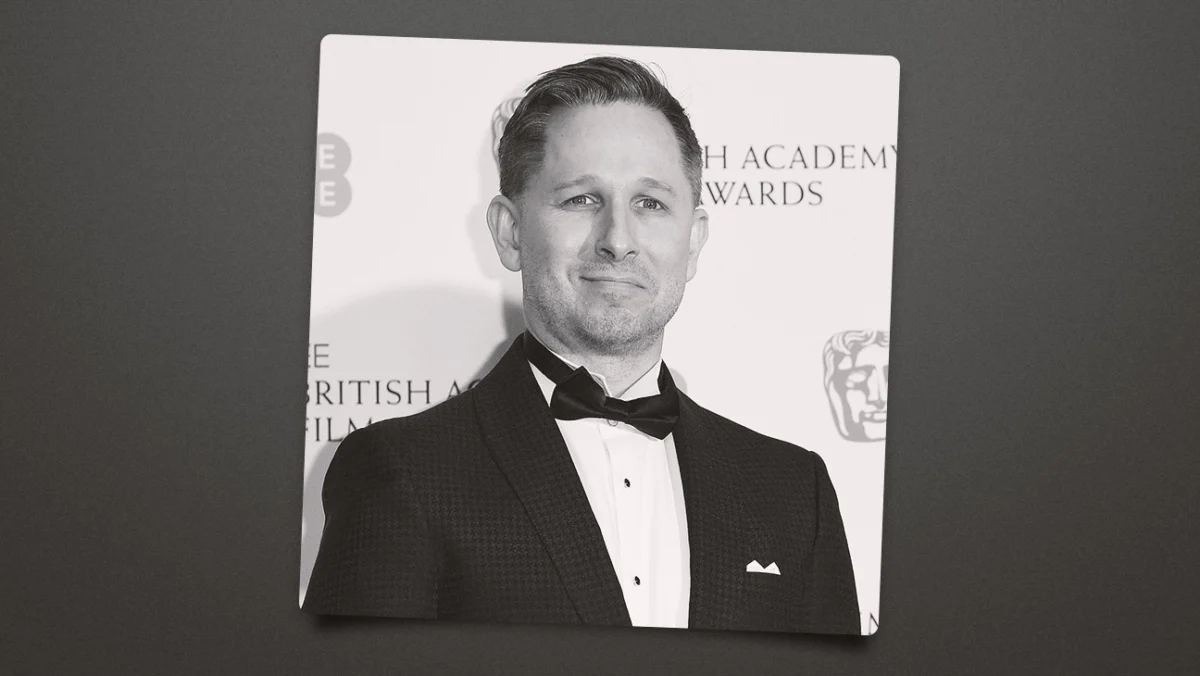
The Los Angeles County Medical Examiner confirmed that Graham died by suicide on Saturday in Los Angeles. His passing marks a significant loss for the cinematic arts, particularly within the specialized and often understated craft of film editing, where he was regarded as a master of narrative pacing and emotional resonance.
A Career Built on Narrative Precision
Born on June 8, 1976, in Claremont, California, Graham’s trajectory in the industry was marked by an early aptitude for the technical and artistic demands of post-production. His professional journey began in the early 2000s, a period defined by the rapid transition from celluloid to digital nonlinear editing. He earned his first professional credit on the 2001 thriller The Last Minute, directed by Stephen Norrington. This early work served as a foundational experience, demonstrating a unique ability to weave complex, high-tension sequences into coherent, visceral storytelling.
Graham’s technical prowess quickly attracted the attention of high-profile directors. Following his early work, he moved into the blockbuster sphere, contributing additional editing to X2: X-Men United in 2003. This experience paved the way for his collaboration with director Bryan Singer on the 2006 superhero epic Superman Returns. It was during this phase that Graham began to refine his signature style: an acute sensitivity to the subtext of a scene and an unwavering commitment to the "breath" of a film—the deliberate choice of when to cut and when to let a performance resonate.
The Milk Breakthrough and Critical Acclaim
The defining moment of Graham’s career arrived with the 2008 biopic Milk. Directed by Gus Van Sant and penned by Dustin Lance Black, the film chronicles the life and political ascent of Harvey Milk, the first openly gay man elected to public office in California. Graham’s editing was instrumental in translating the film’s political urgency into a deeply intimate, character-driven narrative.
For his efforts, Graham received an Academy Award nomination for Best Film Editing. The film itself became a cultural landmark, receiving eight Oscar nominations and securing wins for Best Actor (Sean Penn) and Best Original Screenplay. Producer Dan Jinks, reflecting on the collaboration years later, noted on social media that the project’s delicate balance of historical gravitas and personal humanity "wouldn’t have come together in the way it did without [Graham’s] amazing work."
This success cemented Graham’s reputation as an editor capable of managing both the sweeping scale of biographical epics and the subtle nuances of human drama. He would go on to reunite with Van Sant on the 2011 romantic drama Restless, further exploring the emotional textures that had become the hallmark of his editing room.
A Diverse Filmography: From Biopics to Global Blockbusters
Graham’s career was defined by its remarkable breadth. Unlike many in his field who remain anchored to a specific genre, Graham moved seamlessly between independent character studies, intense dramas, and massive global franchises.
His collaboration with director Danny Boyle on the 2015 feature Steve Jobs highlighted his ability to edit dialogue-heavy, rapid-fire scripts. The film, which required a distinct, rhythmic approach to match Aaron Sorkin’s fast-paced screenplay, remains a masterclass in modern editing. Similarly, his work on the 2019 Marvel blockbuster Captain Marvel demonstrated his versatility in handling complex visual effects and large-scale action sequences while maintaining the protagonist’s internal character arc.
Throughout his tenure, Graham contributed his expertise to a variety of significant projects:
- 2005: The Greatest Game Ever Played (directed by Bill Paxton)
- 2008: 21 (directed by Robert Luketic)
- 2014: Trash (directed by Stephen Daldry)
- 2017: Molly’s Game (directed by Aaron Sorkin)
Furthermore, he served as a producer and editor for the 2018 FX limited series Trust, which explored the 1973 kidnapping of John Paul Getty III. His additional editing contributions on high-profile films such as The Amazing Spider-Man 2, I Am Michael, and Beasts of No Nation further underscore his status as a ubiquitous and highly sought-after technician in the industry.
Final Contributions and Recognition
In what would ultimately serve as his final major credit, Graham collaborated with director Cary Joji Fukunaga on the 2021 James Bond film No Time to Die. Co-edited with Tom Cross, the film was a massive undertaking that required the synthesis of practical stunts, complex narrative threads, and the high-stakes expectations of a long-standing franchise. For this work, Graham received a BAFTA Award, a fitting capstone to a career characterized by technical excellence and artistic integrity.
The Silent Architect of Cinema
The role of the film editor is frequently described as the "final rewrite" of a movie. While actors and directors garner the majority of public recognition, the editor is the silent architect who assembles the raw footage into a cohesive emotional journey. Graham was widely recognized among his peers as a collaborator who elevated the raw material of a shoot into something more than the sum of its parts.
Industry observers note that Graham’s passing creates a vacuum in the post-production community. The technical skills he possessed—specifically the ability to balance the mechanical requirements of a blockbuster with the artistic needs of an independent drama—are increasingly rare. His influence extends to the generation of editors he worked alongside, many of whom have cited his methodical approach to the "AVID" software and his philosophical approach to scene construction as major influences on their own work.
Broader Implications and Mental Health in the Industry
The news of Graham’s death has reverberated through the Hollywood post-production community, triggering broader conversations regarding the high-pressure nature of film industry roles. Post-production professionals often work in isolated, high-intensity environments with demanding deadlines, long hours, and the immense pressure of multi-million-dollar budgets.
While the entertainment industry has made strides in recent years to address mental health, the sudden loss of a figure as respected as Elliot Graham serves as a somber reminder of the vulnerabilities faced by those working behind the scenes. Professional organizations, including the American Cinema Editors (ACE), have frequently highlighted the need for better support systems for creative professionals who navigate the isolating realities of long-term projects and the cyclical nature of freelance production work.
A Legacy of Excellence
Elliot Graham leaves behind a body of work that will continue to be studied by students of cinema for years to come. From the quiet, historical hallways of Milk to the explosive, high-octane sequences of the James Bond universe, his career was marked by a commitment to the craft that few achieve.
He is remembered not just for the awards he won or the blockbuster franchises he helped shape, but for the quiet, meticulous work that went into every frame he touched. His colleagues, friends, and the broader cinematic community are left to reconcile with the loss of a talent who helped define the look and feel of modern American film. As the industry continues to evolve, the standard of excellence set by Graham—his precision, his versatility, and his profound understanding of human emotion on screen—remains a testament to a life dedicated to the art of storytelling.
If you or someone you know is struggling or in crisis, help is available. You can call or text 988 or chat at 988lifeline.org in the U.S. and Canada, or call 111 in the U.K. These services are free, confidential, and available 24/7.