Long before Western cinema embraced modern film franchises and sprawling cinematic universes, Japanese studios had already mastered the art of creating successful, consistent, and frequently serialized narratives across various genres. This approach, while particularly favored for yakuza stories and tales of wandering ronins, extended far beyond these archetypes to encompass buddy comedies, narratives centered on the everyday salaryman, and even tentpole family-friendly holiday releases. Manga adaptations, with their inherently episodic nature, proved especially conducive to this serialized filmmaking model, offering a rich wellspring of pre-established characters and storylines.
A distinctive feature of many Japanese series was the practice of retaining popular actors for subsequent releases, often having them portray different characters across a single franchise, as seen in the Stray Cat Rock or Code Between Brothers series. However, an equally prominent and often more impactful trend involved the same actors consistently embodying the same iconic characters across multiple features, building a deep connection with audiences over decades. While numerous trilogies or quadrilogies followed this path, a select few productions pushed this concept to extraordinary lengths, establishing some of the longest-running character-driven series in global cinematic history. For the purpose of this analysis, we delve into film series where the same actors have portrayed the same character in five or more productions, encompassing both theatrical releases and direct-to-video (V-Cinema) productions, and occasionally including significant television specials that contributed to the overarching narrative. The following list is presented in alphabetical order, offering a comprehensive look at these remarkable examples of cinematic endurance.
The Genesis of Japanese Film Franchises: A Historical Perspective
The prolific nature of Japanese film series stems from a unique interplay of studio economics, audience demand, and a cultural appreciation for consistent, familiar narratives. In the post-war era, major studios like Toho, Daiei, Toei, Nikkatsu, and Shochiku operated on a conveyor-belt system, producing dozens of films annually. This high-volume output fostered an environment where successful films were quickly followed by sequels, often within the same year, to capitalize on their popularity. Audiences developed a strong loyalty to certain characters and stars, making reliable franchises a cornerstone of the studios’ business models. The emergence of V-Cinema in the 1980s further democratized serialization, allowing for even more rapid production cycles and catering to niche markets, particularly in the yakuza genre, which saw an explosion of direct-to-video series. This robust infrastructure, combined with a vast literary and manga landscape ripe for adaptation, created a fertile ground for the enduring sagas explored below.
Iconic Characters and Their Enduring Sagas
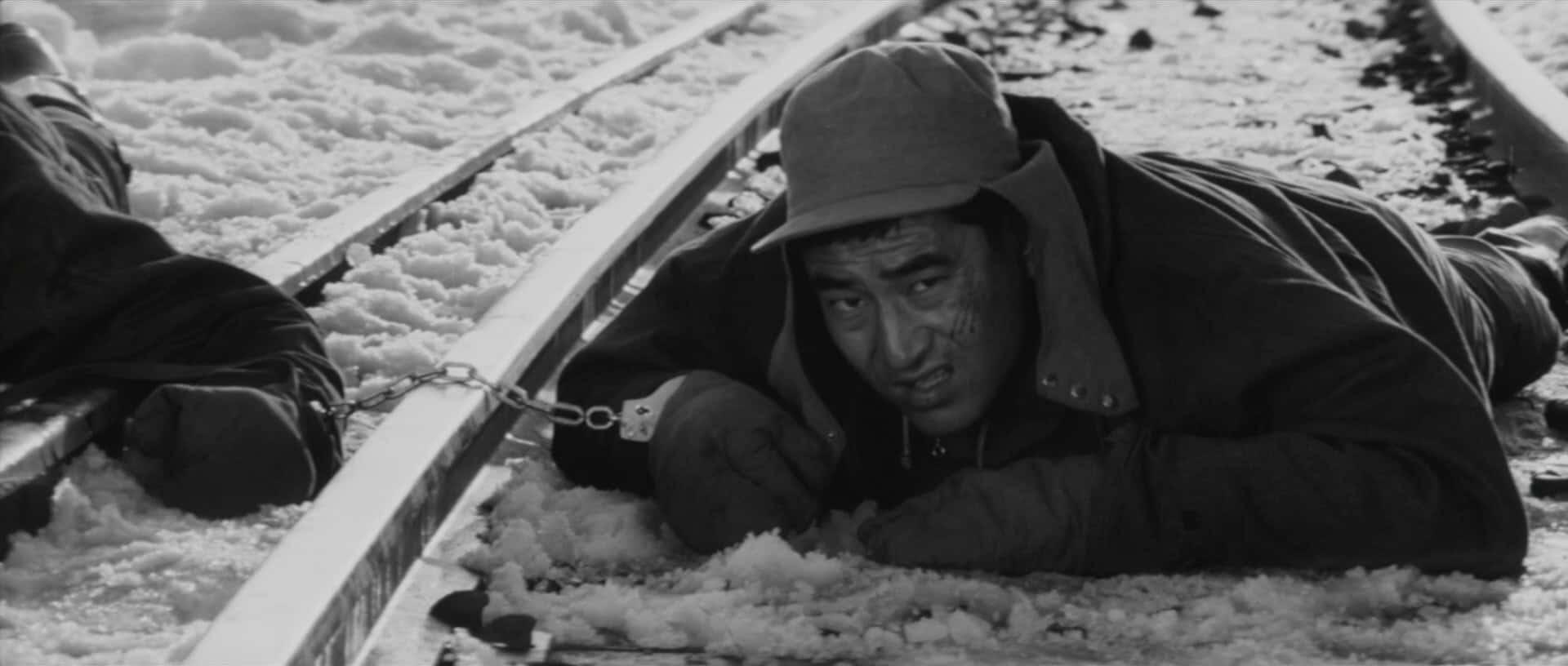
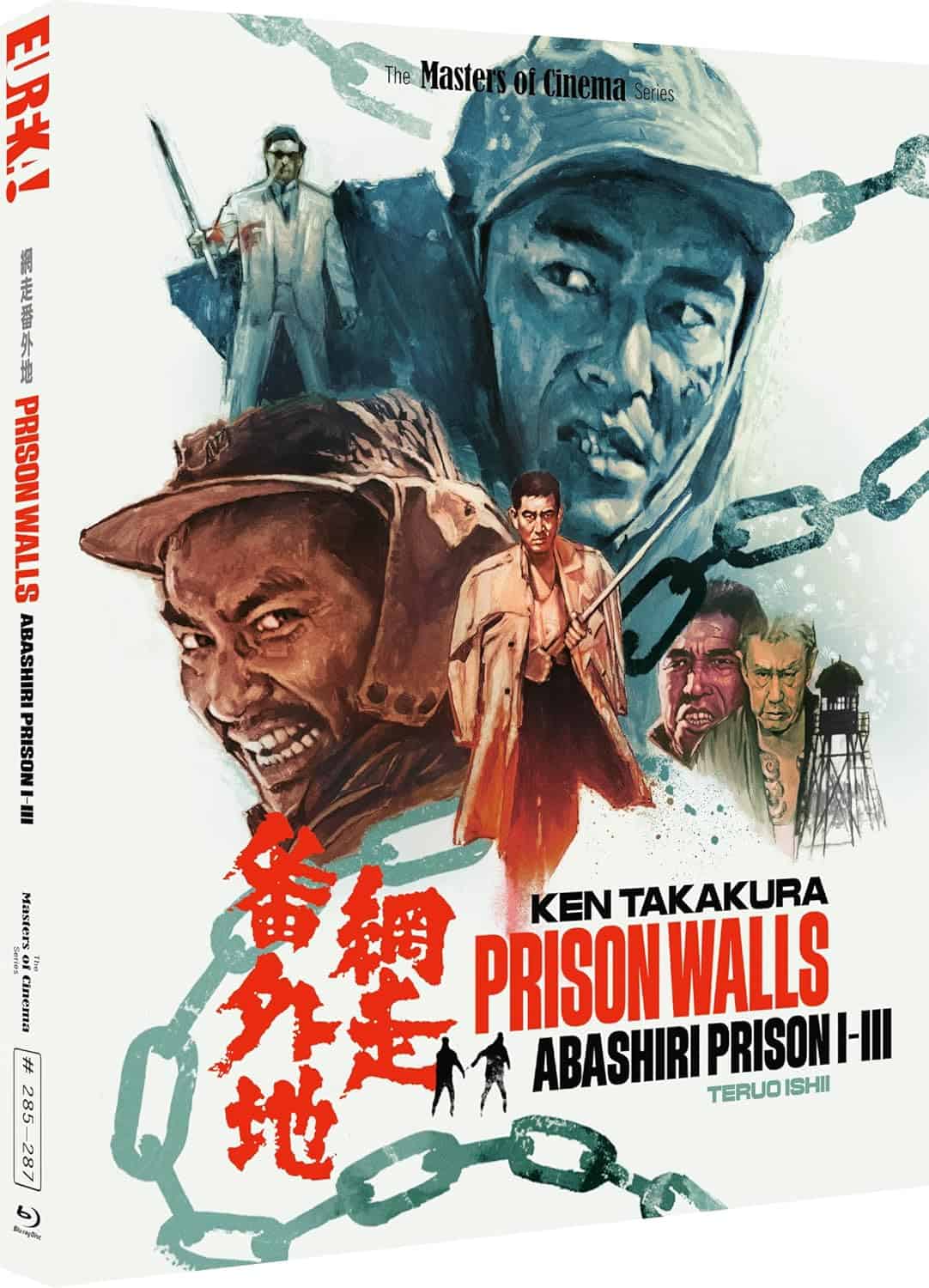
Abashiri Prison (Ken Takakura as Shinichi Tachibana and as Suehiro Katsuji)
The stark, historic setting of Abashiri Prison provided the backdrop for this seminal yakuza series, which commenced in 1965 with Abashiri Prison directed by Teruo Ishii. Starring the legendary Ken Takakura as the stoic Shinichi Tachibana, a character based on a novel by Hajime Ito, the film proved an instant hit. Its success led to an astonishing 17 sequels, transforming it into a cornerstone of the ninkyo eiga (chivalrous yakuza film) genre. Ishii directed the initial ten installments, with Takakura consistently reprising his role as Tachibana over a compressed period of three years, demonstrating the rapid production pace characteristic of the era. For the subsequent seven films, produced over five years under various directors, Takakura returned, but intriguingly, he played a different character, Suehiro Katsuji. This transition highlights both the actor’s immense popularity and the studio’s desire to maintain a central star presence even as the narrative evolved. The series cemented Takakura’s image as the quintessential tough-but-honorable outlaw, a persona that resonated deeply with Japanese audiences.
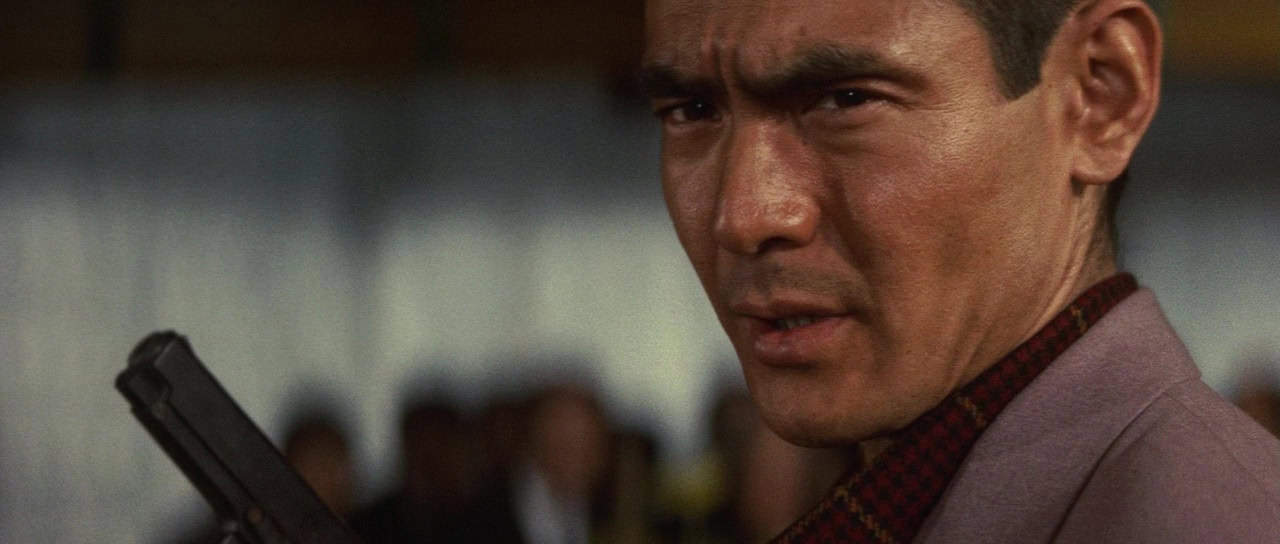
Battles Without Honour and Humanity (Bunta Sugawara as Shozo Hirono)
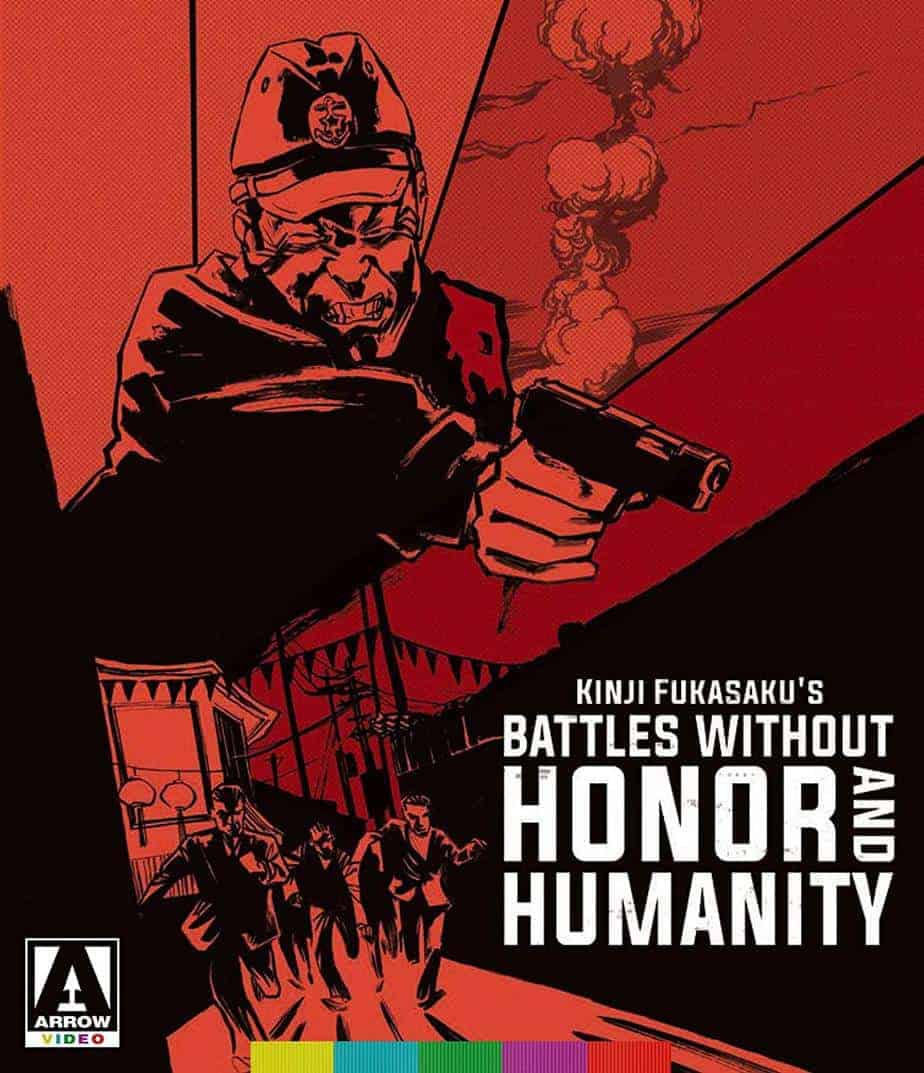
Kinji Fukasaku’s groundbreaking Battles Without Honour and Humanity saga revolutionized the gangster film genre, moving away from the romanticized ninkyo tradition towards a gritty, violent, and unflinchingly realistic portrayal of yakuza life. While the series famously featured many actors in recurring roles, sometimes even playing different characters across films, Bunta Sugawara’s portrayal of Shozo Hirono remained a constant. Hirono, a character based on the writings of real-life ex-yakuza Kozo Mino, anchored the original five films, which were released in quick succession between 1973 and 1974. Sugawara’s raw, intense performance captured the brutal realities of the Hiroshima yakuza wars, reflecting the jitsuroku eiga (true accounts film) style that Fukasaku pioneered. The series’ visceral energy and documentary-like approach profoundly impacted Japanese cinema, influencing countless subsequent crime films and earning it international acclaim for its uncompromising vision.
Bayside Shakedown (Several recurring cast members)
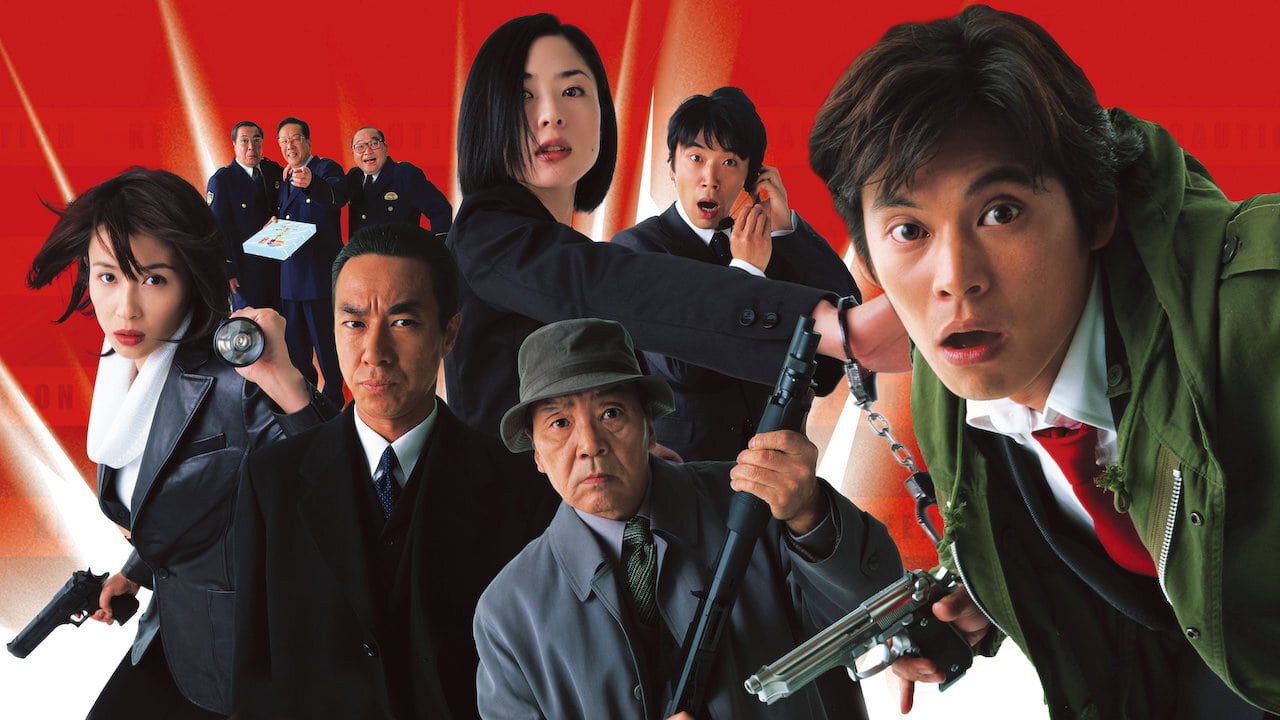
The Bayside Shakedown phenomenon began as an 11-episode police detective comedy-drama television series in 1997, quickly gaining a devoted following. Its immense popularity facilitated a multi-platform expansion, including three successful TV specials before making a triumphant leap to the big screen for four major theatrical releases. The franchise continued its diverse expansion with an additional TV special movie, two theatrical spin-offs, a TV spin-off special, and even a stage play, all benefiting from the continuity of its much-loved original cast. Yuji Oda led the ensemble as the young detective Shunsaku Aoshima in the TV specials and theatrical films, becoming synonymous with the character. The core of the recurring cast included Toshiro Yanagiba as the fan-favorite Shinji Muroi, Eri Fukatsu as Sumire Onda, Chosuke Ikariya as Heihachiro Waku, Miki Mizuno as Yukino Kashiwagi, and Yusuke Santamaria as Masayoshi Mashita, among many other familiar faces. This ensemble’s consistent presence across varied media formats cultivated a deep sense of familiarity and affection among audiences, solidifying Bayside Shakedown as a beloved fixture in Japanese pop culture.
Jingi (Riki Takeuchi as Hitoshi Kamibayashi and Toshihiko Sakakibara as Yoshiro Yazaki)
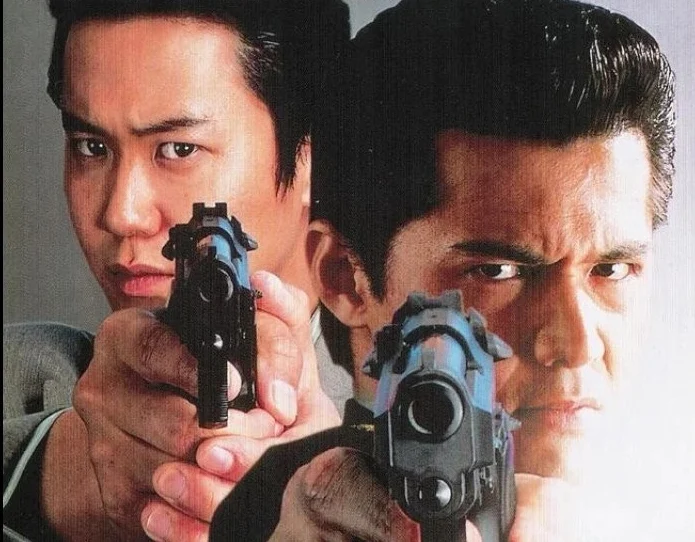
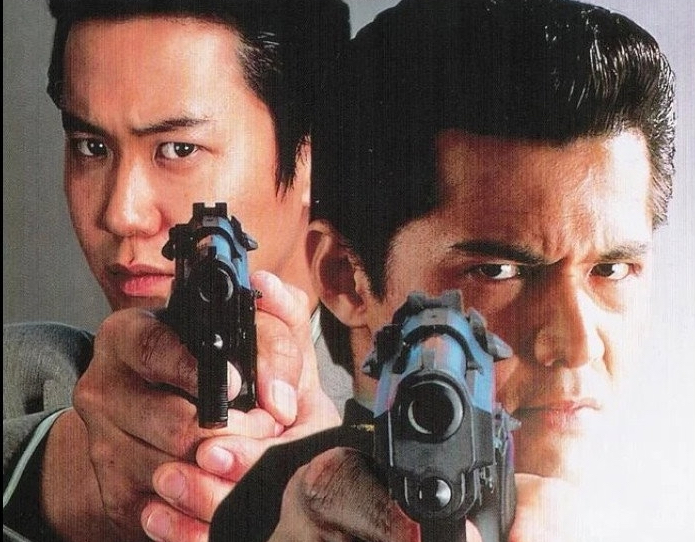
The Jingi series, though regrettably less known in the Western world due to a scarcity of English-language source material and international releases, holds a significant place in the annals of Japanese V-Cinema. This long-running yakuza saga is particularly noteworthy for defining the career of V-Cinema legend Riki Takeuchi. Originating from a manga, the series initially saw a poorly received theatrical release before finding its true home and audience in the direct-to-video market. Comprising approximately 57 films, Jingi stars Riki Takeuchi as Hitoshi Kamibayashi, a formidable gang boss, alongside Toshihiko Sakakibara as Yoshiro Yazaki. The narrative primarily revolves around their relentless battles against rival gangs and various antagonists within the criminal underworld. The series’ longevity in the V-Cinema market underscores the demand for serialized, character-driven narratives outside mainstream theatrical distribution, catering to a dedicated fan base eager for consistent releases featuring their favorite stars in compelling genre roles.
King of Minami (Riki Takeuchi as Ginjiro Manda)
King of Minami (Minami no Teio) stands as a testament to the power of adaptation and the direct-to-video market. Based on one of Japan’s longest-running manga series, which had astonishingly reached 178 volumes as of August 2024 since its inception in 1992, it was only natural for a film series adaptation to follow suit with remarkable longevity. Starring Riki Takeuchi as Ginjiro Manda, a shrewd loan shark businessman with deep ties to Osaka’s yakuza organizations, the series is almost synonymous with the actor. Initial theatrical releases underperformed, but the franchise found its true stride and a loyal audience in the V-Cinema market. It went on to produce a staggering total of 60 films, with most entries expertly directed by Sadaaki Haginiwa. Takeuchi’s portrayal of the cunning and ruthless Ginjiro Manda became iconic, solidifying his status as a kingpin of V-Cinema and demonstrating the immense commercial viability of direct-to-video releases for sustained franchise development in Japan.
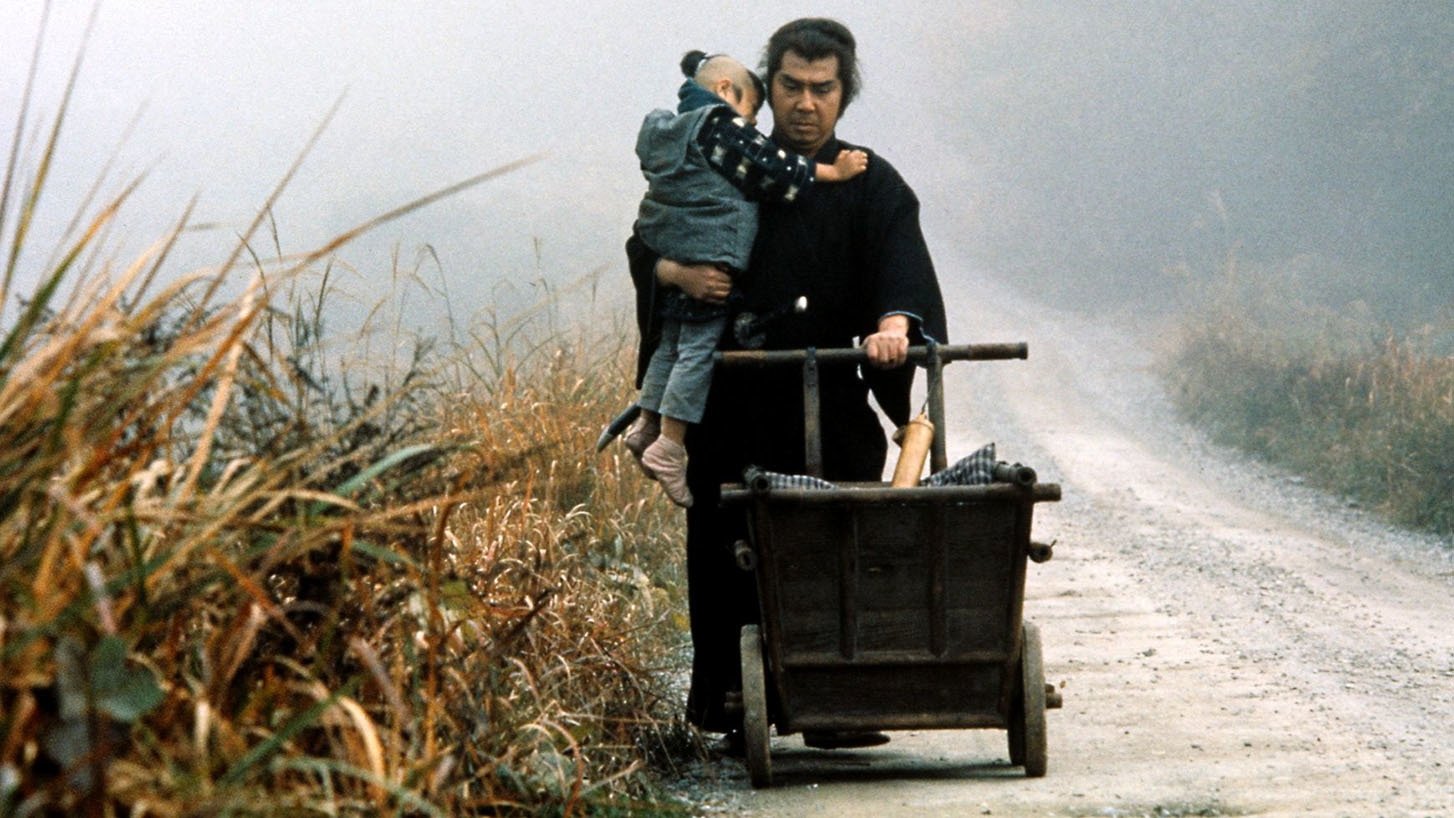
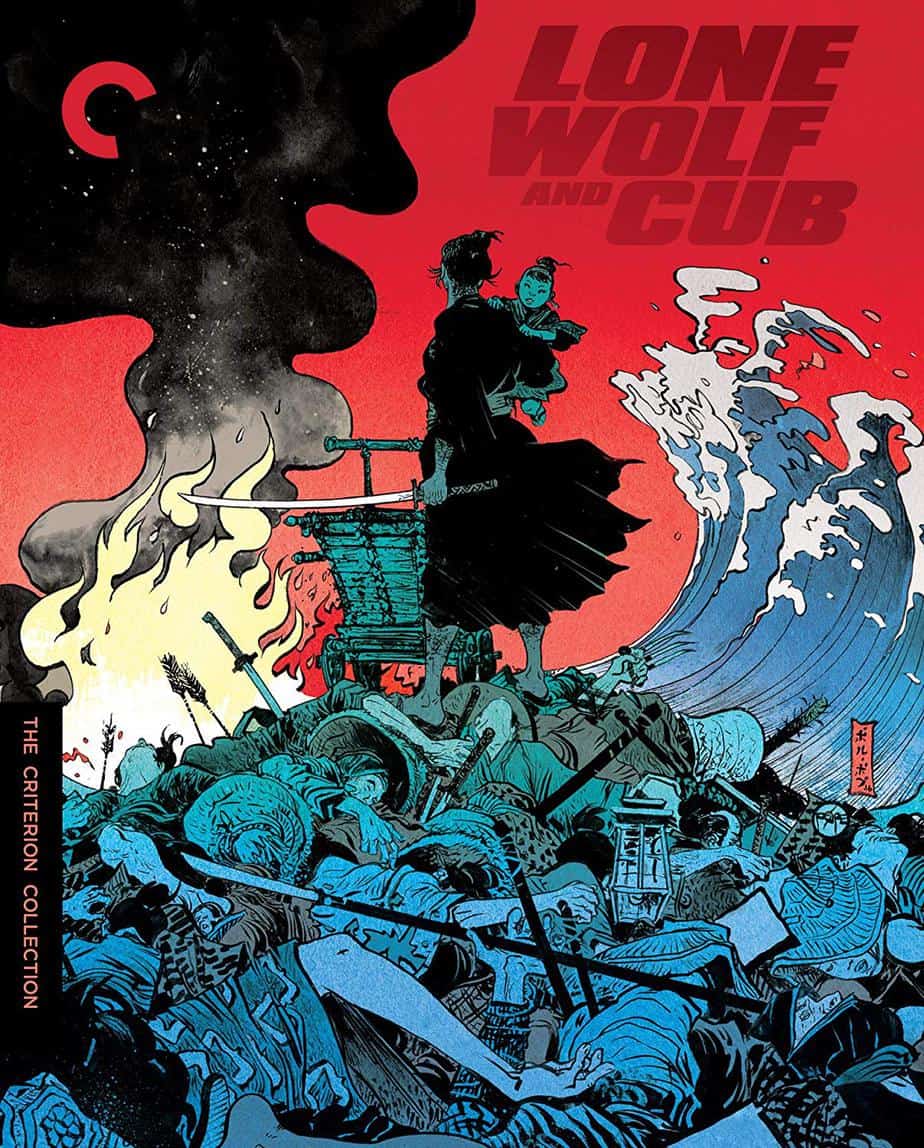
Lone Wolf and Cub (Tomisaburo Wakayama as Ogami Itto and Akihito Tomikawa as Daigoro)
Kazuo Koike’s beloved Lone Wolf and Cub manga, an immensely influential series, was almost tailor-made for live-action adaptation, and its transition to the screen proved epochal. Toho greenlit the first feature film in 1972, helmed by Kenji Misumi, the acclaimed director who a decade prior had launched the equally iconic Zatoichi series. The film starred Tomisaburo Wakayama, the real-life brother of Zatoichi actor Shintaro Katsu, as the stoic and deadly Ogami Itto, alongside young Akihito Tomikawa as Itto’s infant son, Daigoro. The immediate box-office success of the initial release prompted rapid commissioning of sequels, resulting in six films released between 1972 and 1974. This short but intensely prolific period created one of the most memorable and iconic Japanese action film series and characters. Wakayama’s portrayal of Itto, the disgraced shogun’s executioner turned assassin for hire, became arguably his most well-known and beloved role, deeply influencing samurai cinema and leaving an indelible mark on international pop culture, inspiring filmmakers and artists worldwide.
Nihon Toitsu (Yasukaze Motomiya as Renji Himuro and Hitoshi Ozawa as Yuto Tamura)
Nihon Toitsu (literally "Unification of Japan") is not only the longest-running series on this list but also potentially the most extensive yakuza film franchise in history, and remarkably, it remains ongoing. A true titan of V-Cinema, the series boasts approximately 75 films in its core line-up to date, supplemented by numerous theatrical spin-offs, television series, and character-focused films. The saga commenced in 2013, with the latest five entries released in the current year, illustrating its relentless production schedule. The overarching narrative centers on Renji Himuro and Yuto Tamura, two delinquents from Yokohama who rise through the ranks of Kobe’s Kyowakai gang, driven by an ambition to conquer the yakuza world and ultimately achieve the symbolic unification of Japan’s underworld. Yasukaze Motomiya and Hitoshi Ozawa have consistently portrayed Himuro and Tamura throughout the entire series. Their exceptional on-screen chemistry, a direct result of their real-life friendship, is widely considered one of the series’ greatest strengths, providing a compelling anchor for its vast and intricate narrative.
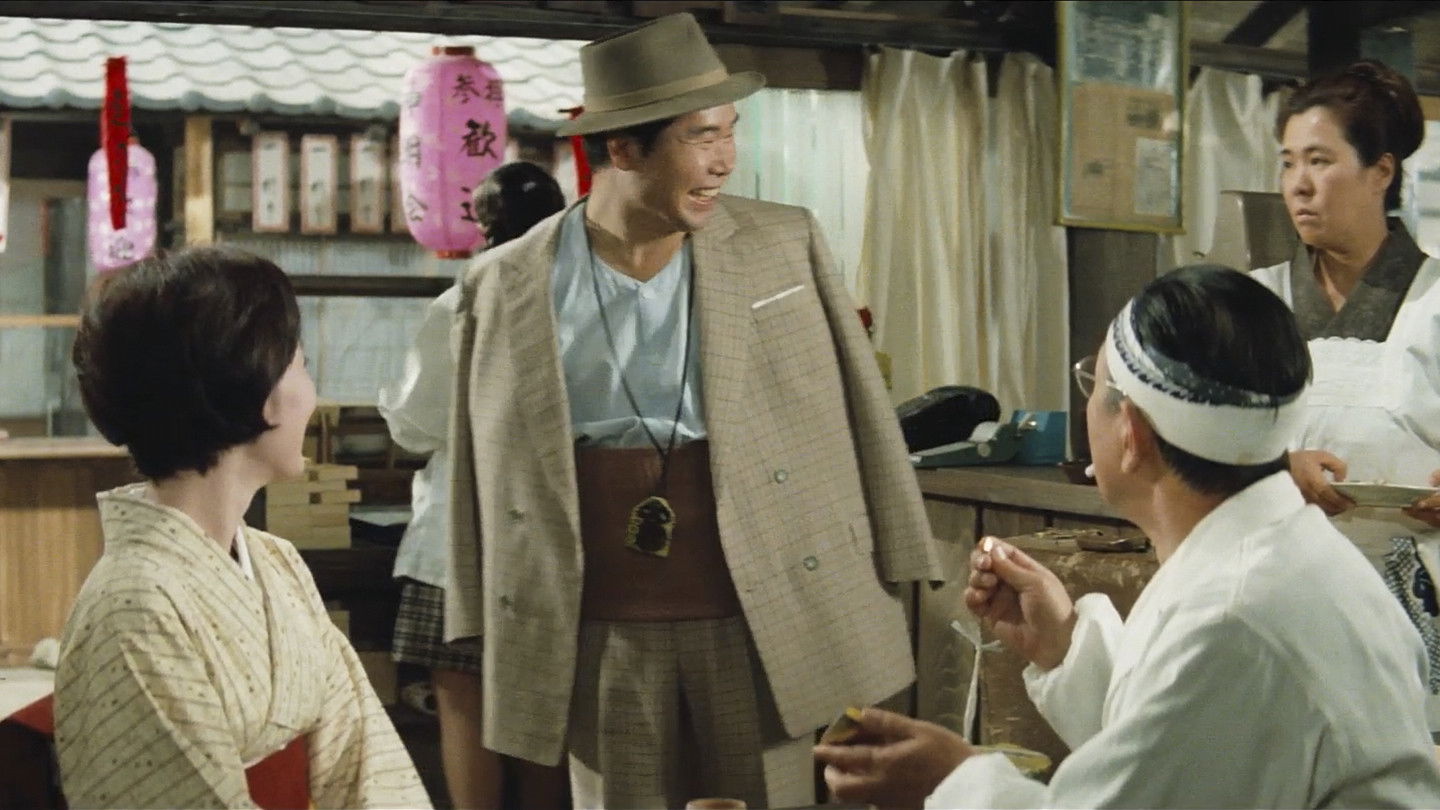
Tora-san (Kiyoshi Atsumi as Torajiro Kuruma aka Tora-san)
Following a popular, albeit short-lived, teledrama, Otoko Wa Tsurai Yo (It’s Tough Being a Man) was greenlit as a feature film at Shochiku. Visionary director Yoji Yamada penned and helmed the project, with Kiyoshi Atsumi reprising his role as the lovable vagabond Torajiro Kuruma, affectionately known as Tora-san. Little could anyone involved have predicted that this single feature would ignite a cinematic phenomenon – the Tora-san series – that would go on to produce an unprecedented 48 theatrical releases during Atsumi’s lifetime, with two more released posthumously. This remarkable achievement established it as the longest-running theatrically released film series of all time globally. Shochiku, driven by its immense popularity, ambitiously aimed for and successfully delivered two films each year, one for the summer and another for the New Year, a tradition that continued until the 1990s when it scaled back to one annually. While each installment introduced a new love interest (or "Madonna") into Tora-san’s life, a consistent ensemble of beloved characters and their actors remained, fostering a strong sense of family and continuity. Notably, Chieko Baisho consistently played his sister Sakura, and Gin Maeda portrayed her husband Hiroshi, among many other long-serving cast members, cementing the series as a heartfelt and enduring chronicle of Japanese life and sentiment.
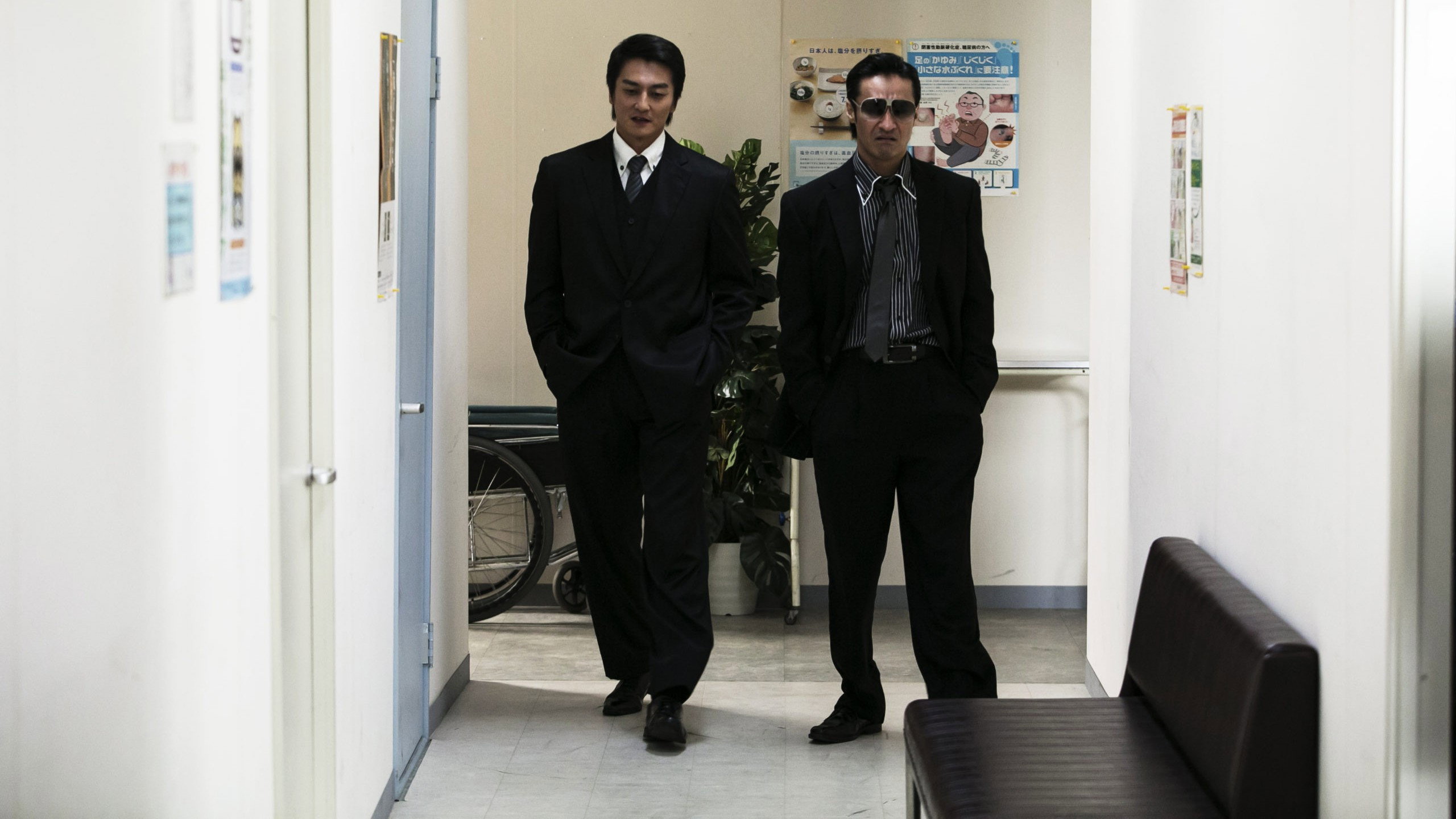
Outlaw Gangster VIP (Tetsuya Watari as Goro Fujita)
Outlaw Gangster VIP served as a crucial bridge in the evolution of Japanese gangster films, transitioning from the romanticized ninkyo eiga to the grittier jitsuroku eiga. Based on the memoirs of real-life ex-yakuza Goro Fujita, the Nikkatsu studio star Tetsuya Watari embodied a fictionalized version of Fujita, portraying a character that paved the way for the likes of Fukasaku’s Battles Without Honour and Humanity. The film’s success prompted Nikkatsu to immediately commission sequels, leading to a rapid production cycle where an astonishing five of the six Outlaw films starring Watari as Goro Fujita were released in 1968 alone. This accelerated output underscores the studio’s confidence and the audience’s appetite for the new, more realistic gangster narrative. Chieko Matsubara also featured as the female lead in all entries, though she played different characters in each, a common practice in the era that allowed popular actors to remain central to a franchise while offering fresh dynamics.
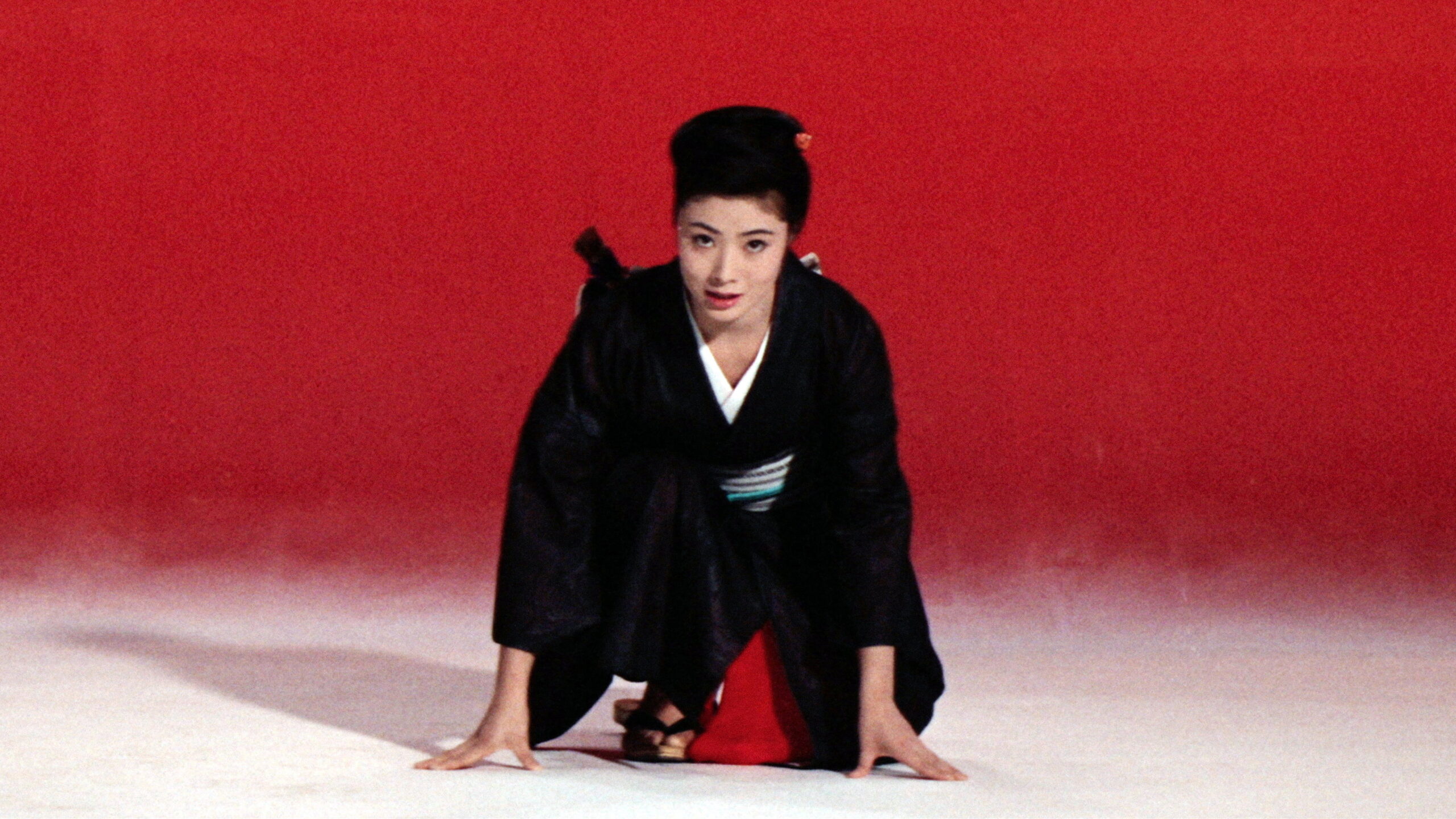
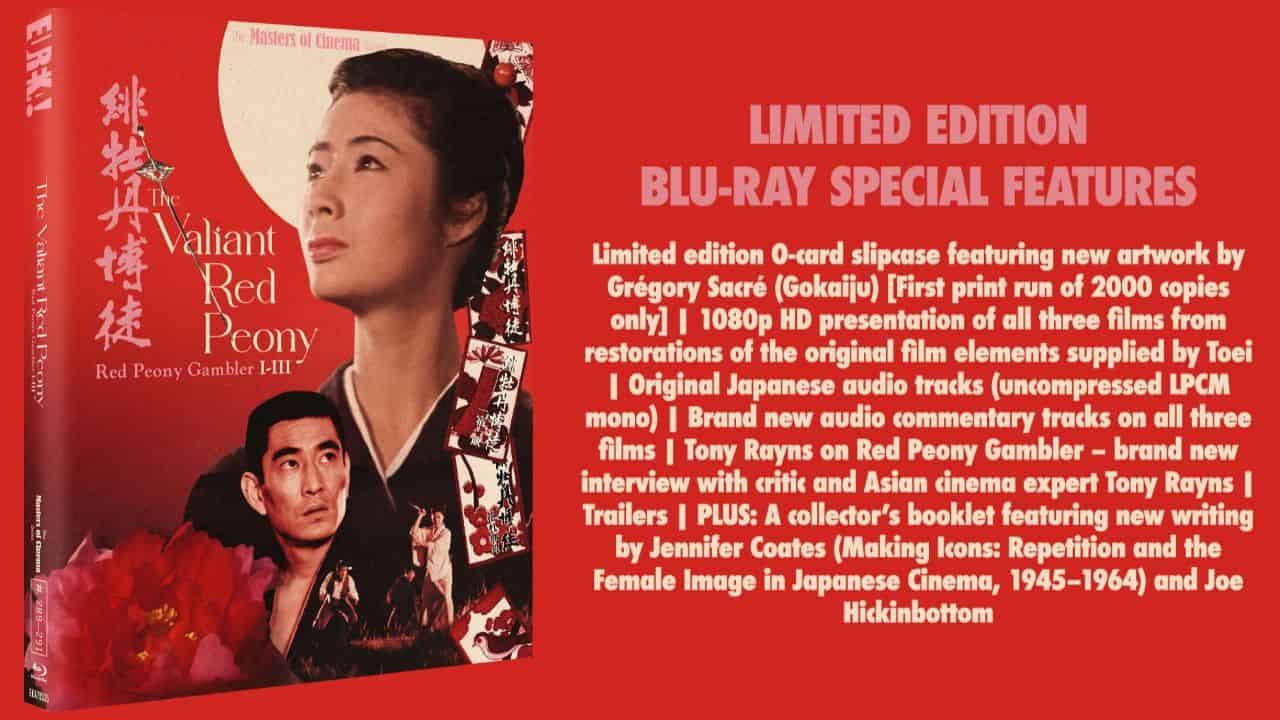
Red Peony Gambler (Junko Fuji as Oryu the Red Peony)
Conceived as a direct rival to Daiei Studio’s Woman Gambler series, 1968’s Red Peony Gambler marked a pivotal moment in actress Junko Fuji’s career. Despite having appeared in nearly 50 Toei productions prior, this film catapulted her into superstardom. Toei’s confidence in the feature’s potential was so immense that sequels were commissioned even before the first film’s release. According to screenwriter Norifumi Suzuki, who would go on to direct the second installment, the script for the immediate sequel was already 70% complete before the original premiered. The series ultimately expanded to eight entries, directed by a roster of talented filmmakers including Suzuki, Tai Kato, Kosaku Yamashita, Buichi Saito, and Shigehiro Ozawa. Junko Fuji consistently starred as Oryu the Red Peony, a formidable woman gambler navigating and asserting her presence in the male-dominated yakuza world. The series not only solidified Fuji’s iconic status but also spawned a short-lived spin-off duology featuring Tomisaburo Wakayama’s recurring character, further expanding its cinematic universe.
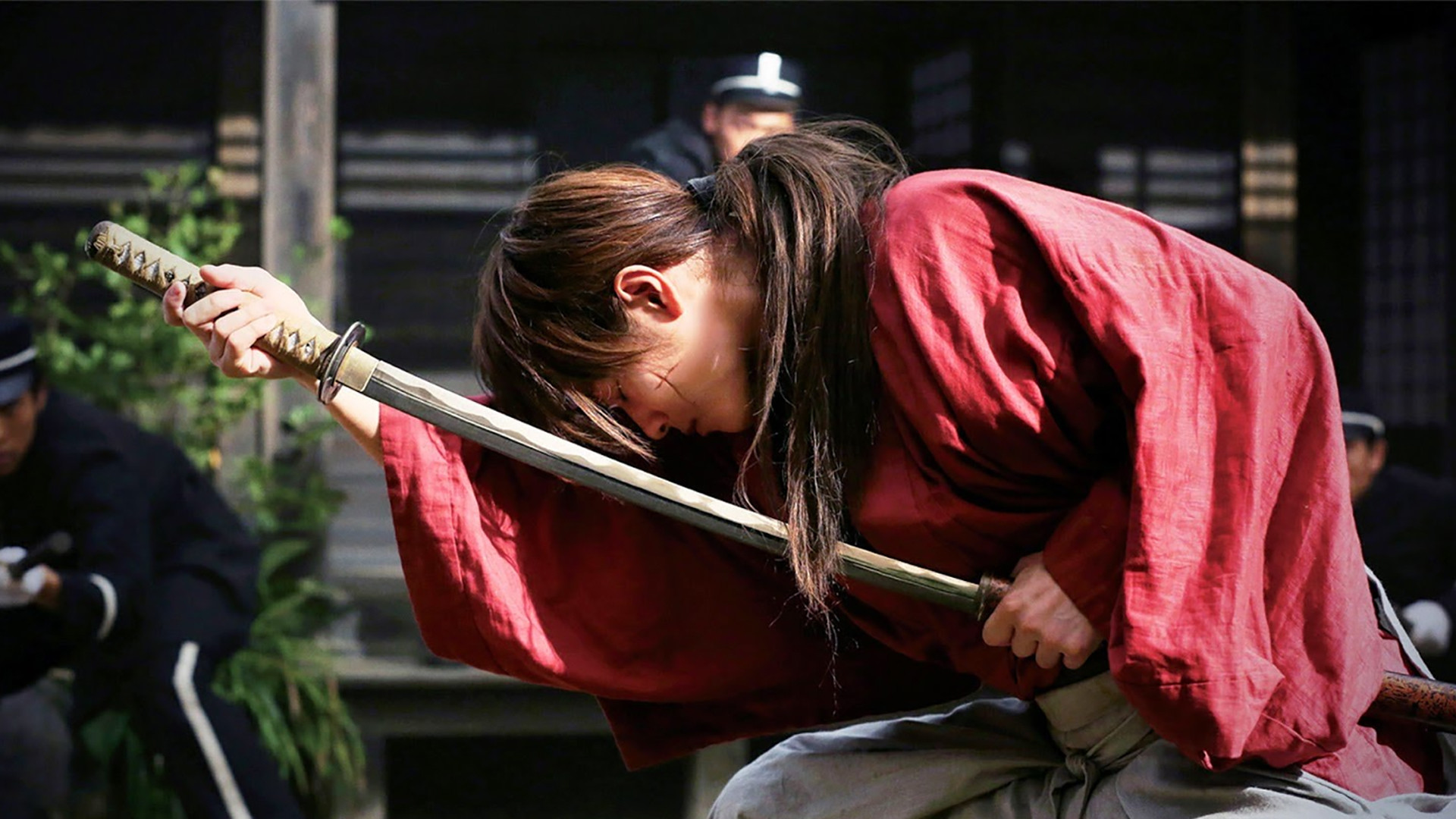
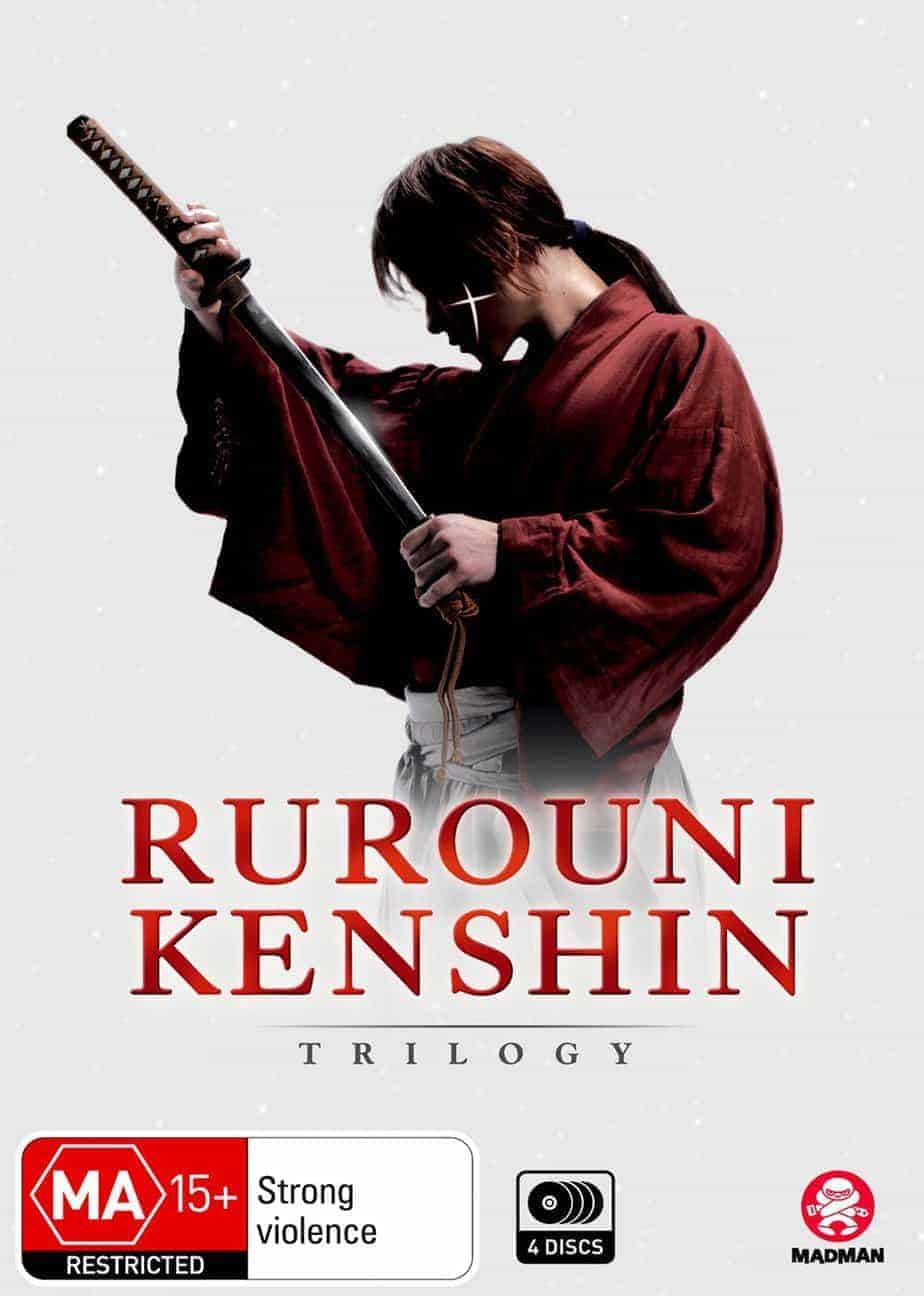
Rurouni Kenshin (Takeru Satoh as Himura Kenshin)
Nobuhiro Watsuki’s immensely popular chanbara (sword-fighting) manga, Rurouni Kenshin, which had already enjoyed a successful anime adaptation in the late 1990s, received a highly anticipated live-action feature film adaptation in 2012. Directed by Keishi Otomo, the film starred Takeru Satoh in the lead role of Himura Kenshin, the wandering ronin with the distinctive cross-shaped scar. The project was always envisioned as a series, and its critical and commercial triumph led to two immediate sequels released over the following two years. While fans initially believed the trilogy concluded Kenshin’s cinematic journey, Warner Bros. Japan later announced two additional films, which premiered in 2021. These final installments brought a perfect closure to Kenshin’s story within this latest series on our list. Although many actors reprised their roles in four of the five films, the final part being a prequel meant that only Takeru Satoh as Himura Kenshin and Yosuke Eguchi as Saito Hajime maintained their presence across all five entries, anchoring the narrative through its chronological shifts.
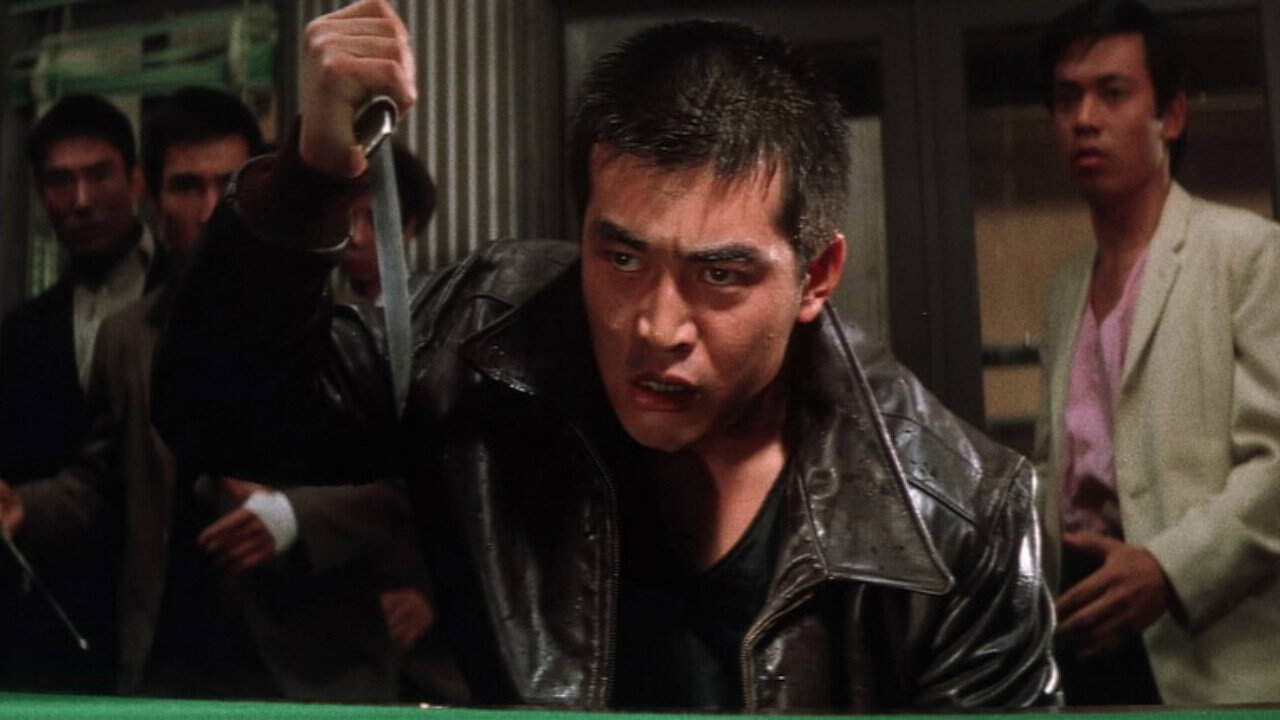
Shura Ga Yuku (Show Aikawa as Hongo Ryuichi and Nagare Hagiwara as Masaharu Ino)
Another significant V-Cinema manga adaptation, the Shura Ga Yuku series, ran for an impressive 13 films between 1995 and 2000. It starred Show Aikawa as Hongo Ryuichi, an ambitious yakuza who eschews traditional gang loyalty in favor of personal advancement and a desire to reshape the underworld itself. Pitted against him was Masaharu Ino, portrayed by Nagare Hagiwara, an equally ambitious and ruthless gangster. The intense rivalry between these two characters formed the central conflict and driving force throughout all 13 movies. Interestingly, this series, marketed in its day as the "Heisei-era Battles Without Honour and Humanity," distinguished itself by its continuous, overarching narrative. Unlike many episodic V-Cinema productions, individual entries in Shura Ga Yuku did not function effectively as standalone films, requiring viewers to follow the entire saga. This commitment to a continuous story, coupled with the consistently strong performances of Aikawa and Hagiwara, made it a unique and compelling entry in the V-Cinema landscape.
Sleepy Eyes of Death (Raizo Ichikawa as Nemuri Kyoshiro)
The 1960s were a golden age for film series at Daiei Studio, which had already launched the immensely successful Zatoichi series in 1962. The very next year, Daiei capitalized on this formula by initiating another iconic franchise, Sleepy Eyes of Death. Based on Renzaburo Shibata’s popular novel series, Sleepy Eyes of Death: The Chinese Jade, directed by Tokuzo Tanaka, introduced Raizo Ichikawa as the eponymous Nemuri Kyoshiro. This detached, anti-heroic character, renowned for his distinctive "Full Moon Cut" sword technique, quickly captivated audiences. Ichikawa reprised the role an impressive 11 more times after The Chinese Jade, leading to a total of 12 films with him in the lead role. The series’ popularity endured, leading to two additional films with Hiroki Matsukata taking over the character of Kyoshiro, further cementing the legacy of this unique and stylish chanbara saga.
Suit Yourself or Shoot Yourself (Show Aikawa as Yuji Fujita and Koyo Maeda as Kosaku Yoshiyuki)
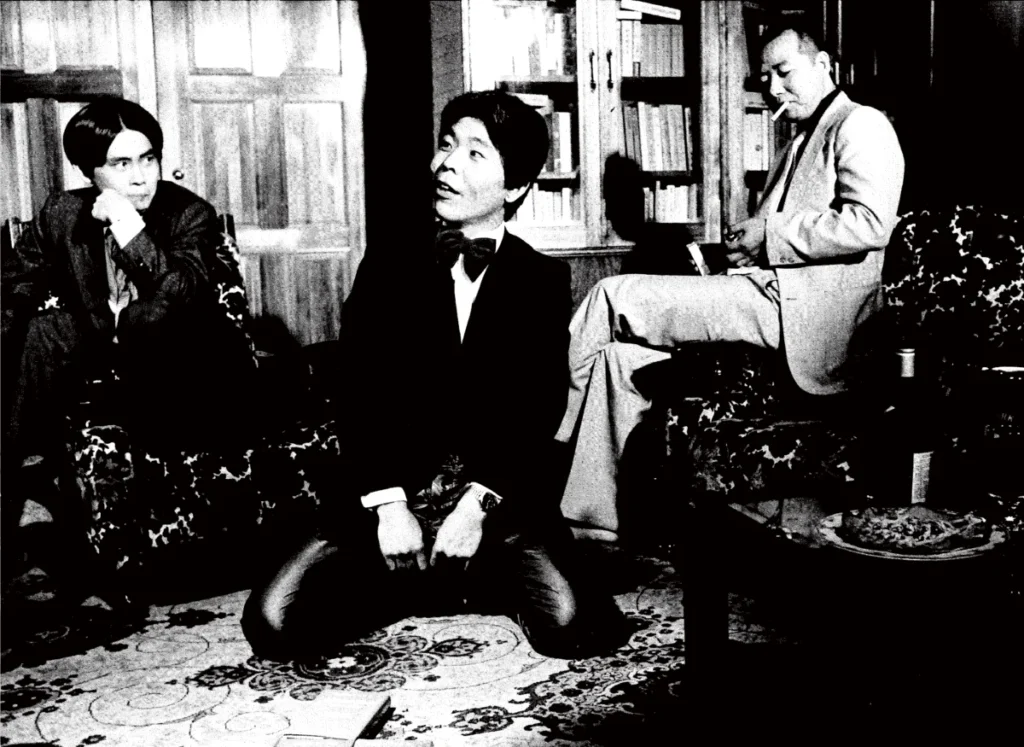
Before his internationally acclaimed "golden period" that commenced with films like Cure (1997), Kiyoshi Kurosawa spent several formative years directing a series of six V-Cinema releases known as Suit Yourself or Shoot Yourself. This series, released between 1995 and 1996, centered on two low-level yakuza, Fuji Fujita and Kosaku Yoshiyuki. The films followed their often-comedic misadventures as they stumbled into low-stakes trouble, blending elements of comedy, buddy-movie dynamics, melodrama, and slapstick. While the specific storylines varied across the six productions, the consistent overarching narrative focused on the evolving and deepening friendship between Show Aikawa’s Fuji Fujita and Koyo Maeda’s Kosaku Yoshiyuki. This V-Cinema output provided Kurosawa with a fertile training ground, allowing him to experiment with genre conventions and character dynamics before his later breakthrough into more arthouse-oriented thrillers.
Truck Yaro (Bunta Sugawara as Momojiro “Ichibanboshi” Hoshi and Kinya Aikawa as Kinzo “Jonathan” Matsushita)
Norifumi Suzuki’s high-octane action-comedy series Truck Yaro burst onto the scene with Truck Rascals: No One Can Stop Me in 1975 and, within an incredibly short span of five years, delivered a total of ten films. The dynamic duo of Bunta Sugawara and Kinya Aikawa starred as Momojiro Hoshi and Kinzo Matsushita, respectively, two larger-than-life truck drivers known for their flamboyant, elaborately decorated rigs. Much like the Tora-san series, a central comedic trope involved Momojiro falling for a new "Madonna" in each installment, with both drivers ultimately racing against time to help these women unite with their true loves. This fun and irreverent series was a vibrant showcase for Toei regulars, featuring numerous cameos from familiar faces such as Tomisaburo Wakayama, Kunie Tanaka, Takuzo Kawatani, and Sonny Chiba. Beyond Sugawara and Aikawa, the only other actor to appear in all ten films was Masumi Harukawa, who played Jonathan’s long-suffering wife, Kimie, adding a consistent familial anchor to the episodic adventures.
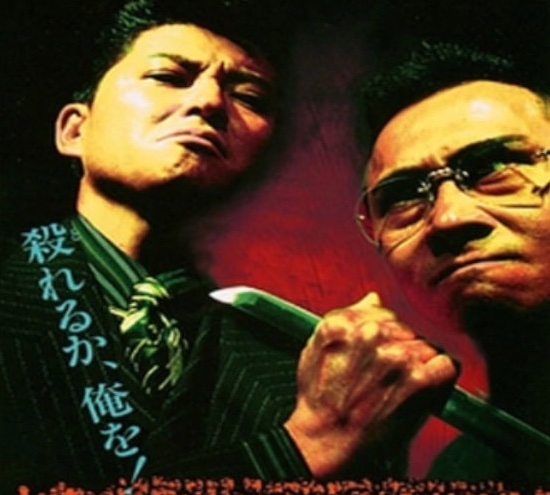
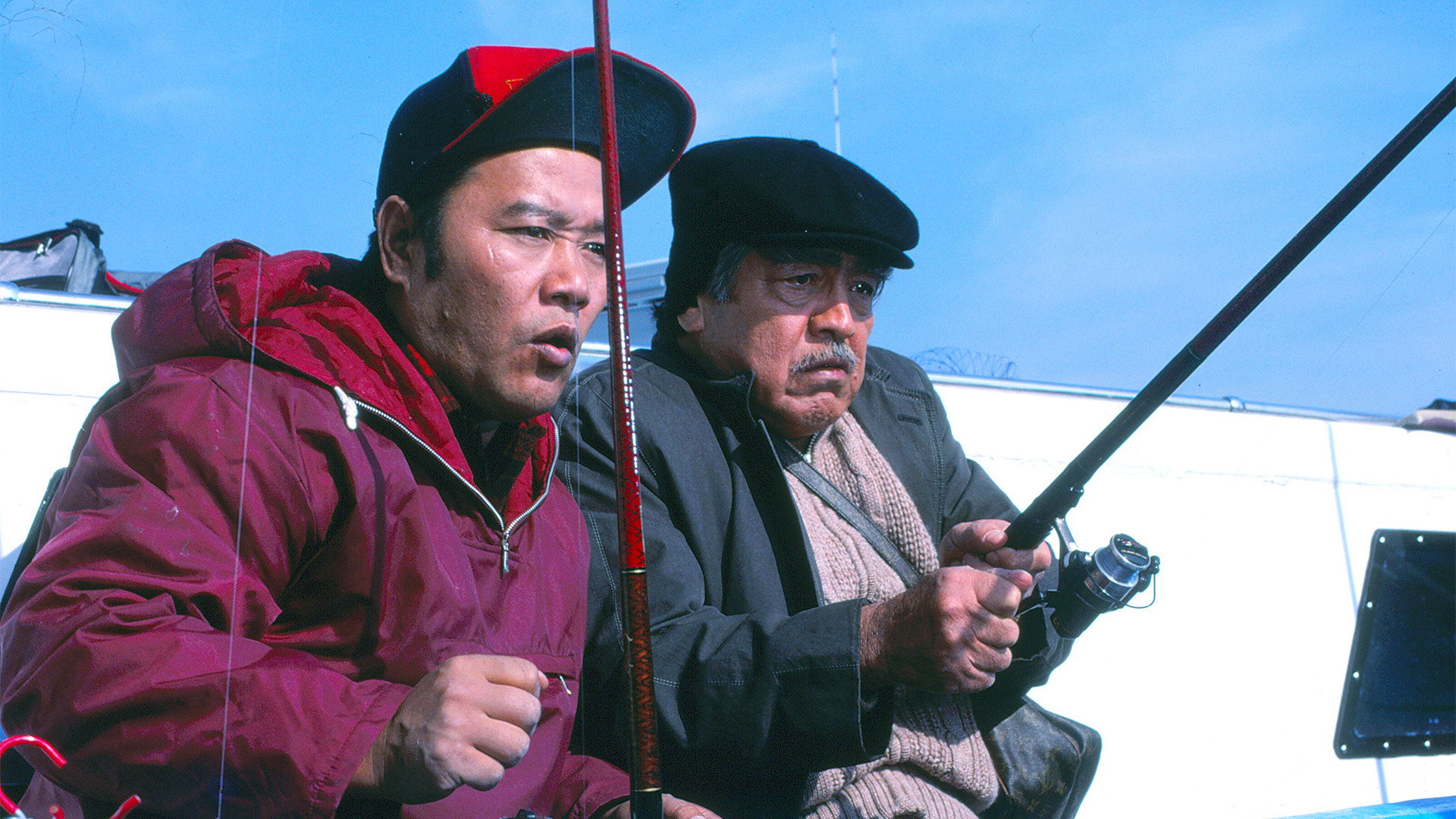
Tsuribaka Nisshi (Toshiyuki Nishida as Densuke “Hama-chan” Hamasaki and Rentaro Mikuni as Ichinosuke “Su-san” Suzuki)
The Tsuribaka Nisshi (literally, "Fishing Fool’s Diary," also known as Free and Easy) series commenced in 1988 with its homonymous feature film. Starring Toshiyuki Nishida as Densuke Hamasaki, a humble salaryman with an unwavering passion for fishing, the film was an immediate success with both audiences and critics. The core of the series’ enduring appeal lay in the developing and charming friendship between Hama-chan and Ichinosuke Suzuki, a man Hamasaki befriends during one of his fishing excursions, only to discover he is the president of the very company he works for. Rentaro Mikuni brilliantly portrayed Su-san, providing a delightful comedic foil and a nuanced exploration of class dynamics. The series resonated deeply with Japanese audiences due to its gentle social satire, its focus on workplace dynamics, and its celebration of fishing and travel, with each film typically set in a different picturesque region of Japan. A massive success domestically, frequently garnering awards from the Japanese Academy, the Tsuribaka Nisshi series remarkably ran for over 20 years and 20 films, with both Nishida and Mikuni reprising their roles in every entry. Despite its extensive run and cultural impact in Japan, the series remains largely unknown and unexplored in the Western world. Actress Eri Ishida played Michiko Hamasaki, Hama-chan’s wife, in seven of the features before Miyoko Asada took over the role for the remainder of the series, ensuring continuity for these pivotal supporting characters.
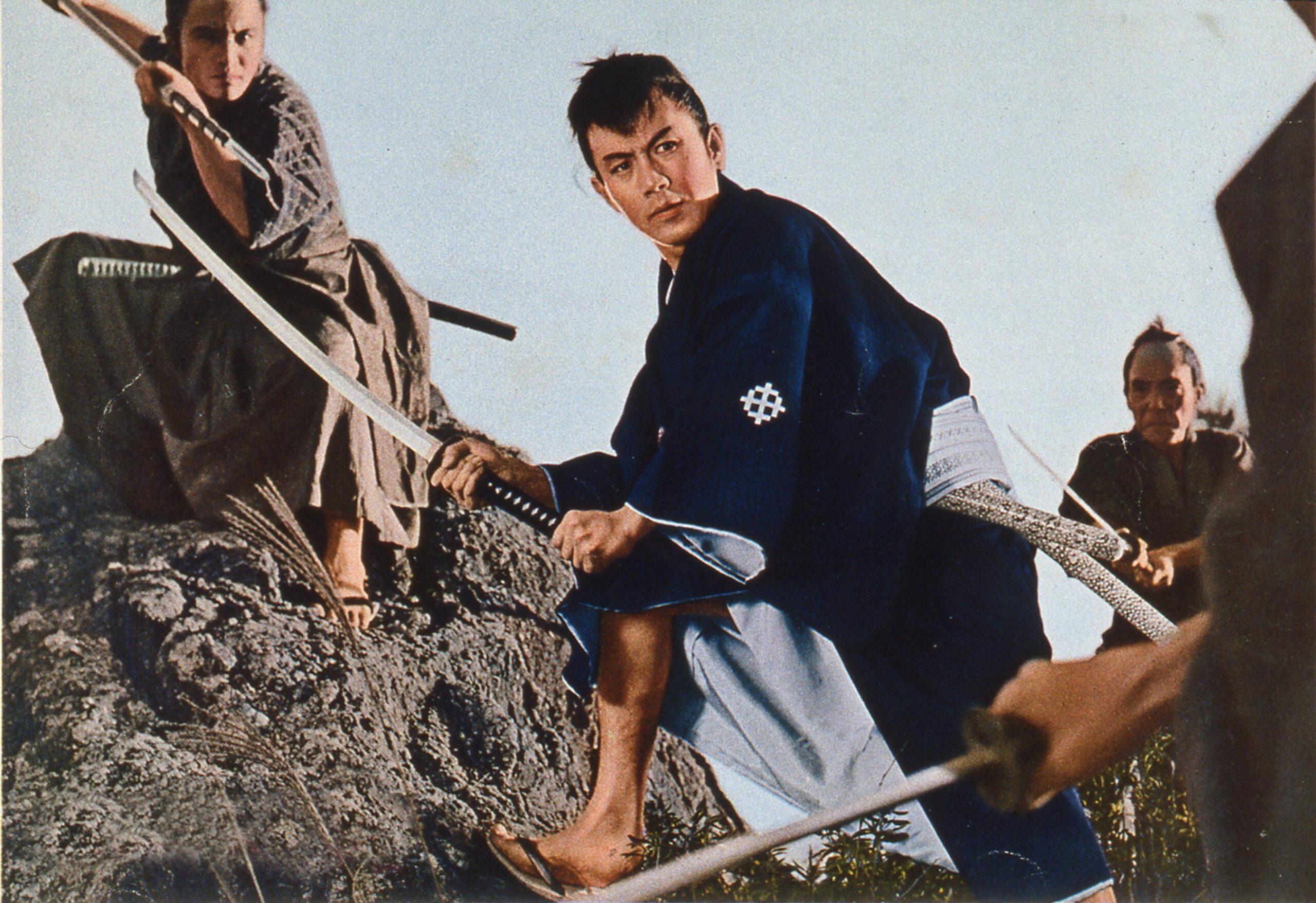
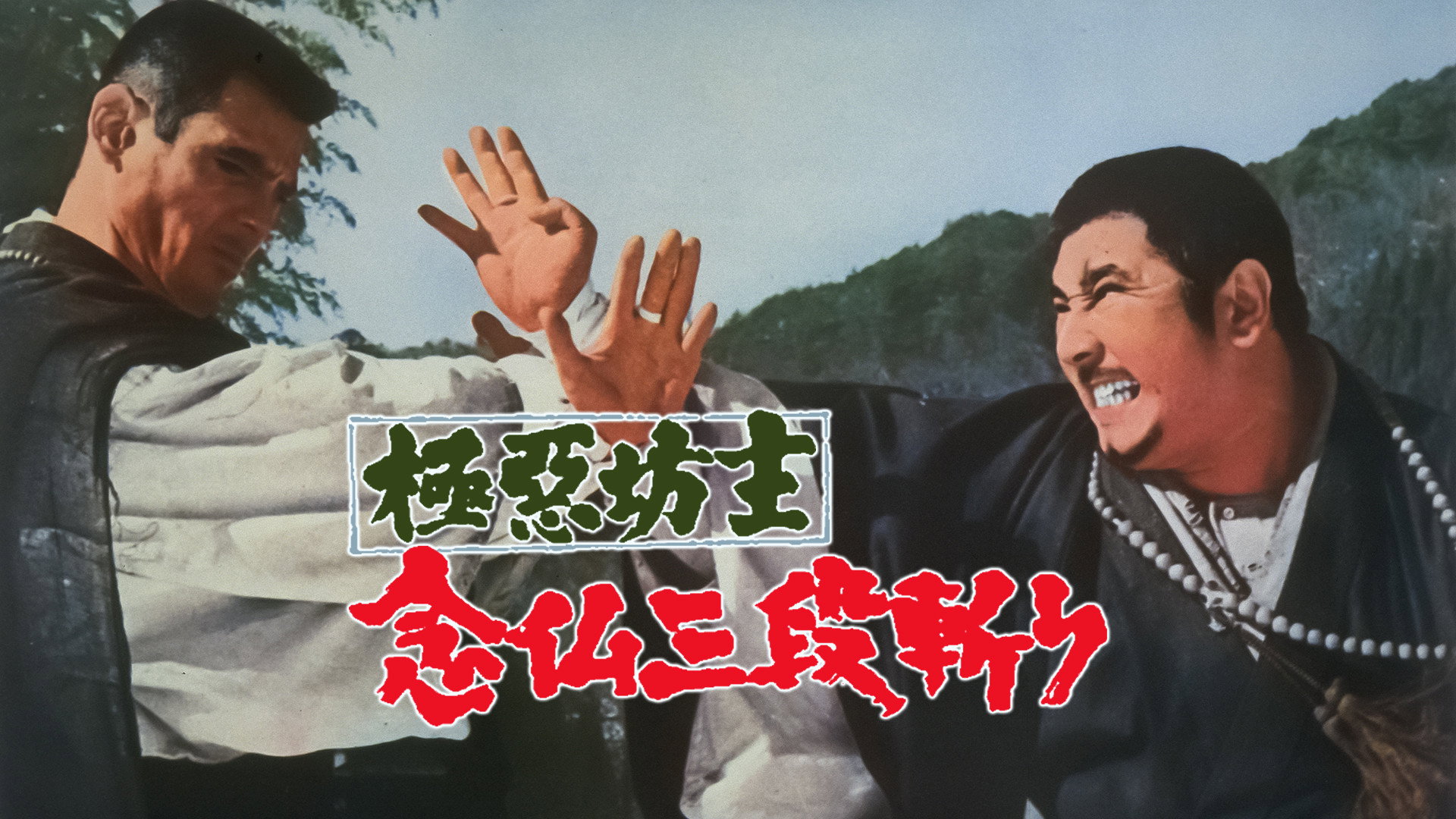
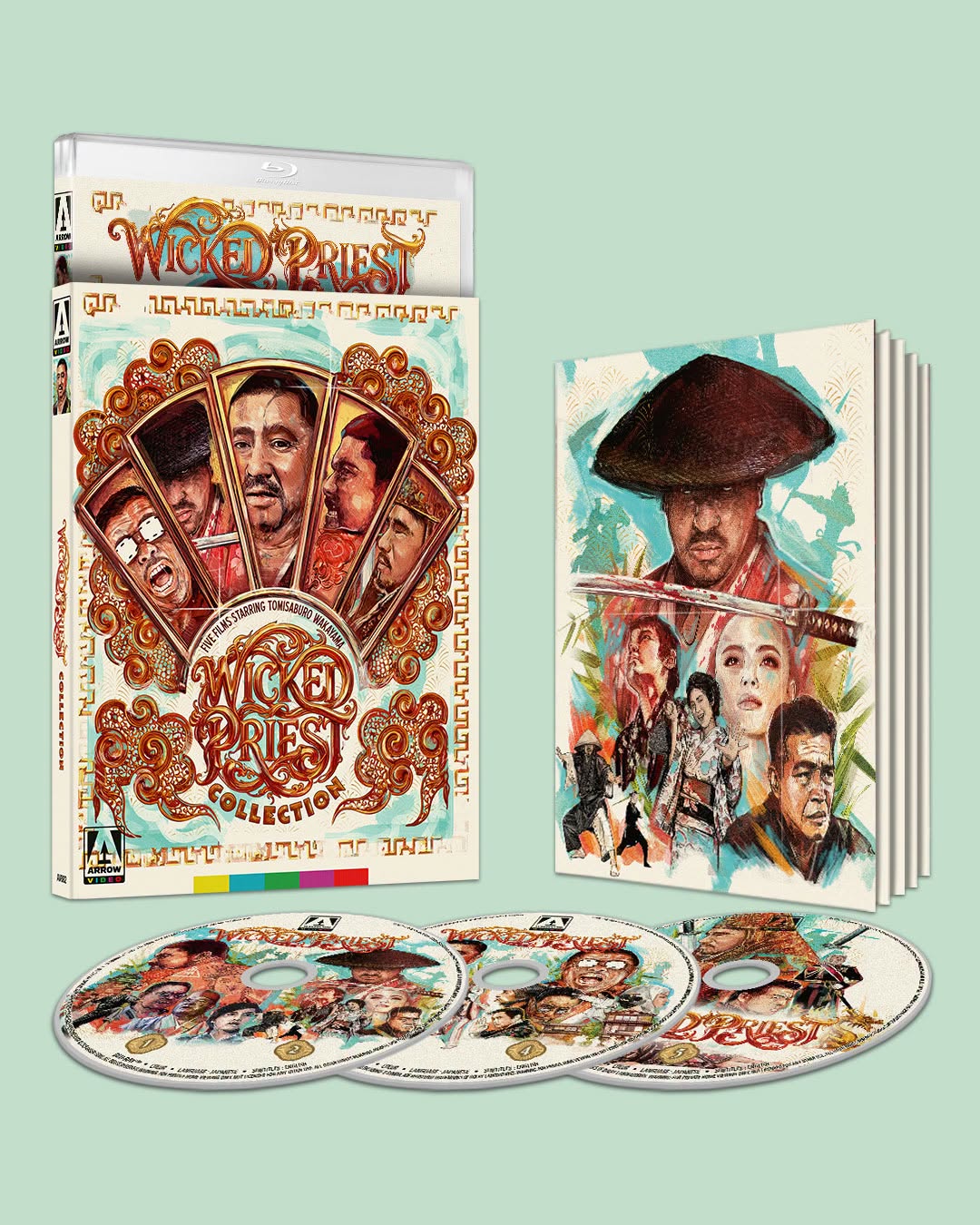
Wicked Priest (Tomisaburo Wakayama as Shinkai and Bunta Sugawara as Ryutatsu)
Much like Shintaro Katsu’s Hanzo the Razor, Tomisaburo Wakayama found his own charismatic anti-hero in the Wicked Priest series. In this feature, Wakayama embodies Shinkai, a man of the cloth who, despite his religious vows, possesses a marked fondness for alcohol, gambling, women, and a formidable knack for confronting villains. Set in the early 20th century, the initial success of Wicked Priest rapidly spawned sequels, with a total of five releases within two years. These films saw Wakayama’s Shinkai engaging in adventures against corrupt monks, yakuza, and various other antagonists, showcasing his formidable skills in this fun, albeit short-lived, series. An interesting aspect of this franchise is that while Shinkai featured in five main adventures, his co-star Bunta Sugawara, who played the wayward priest Ryutatsu, actually received a spin-off film between the fifth and sixth entries. This unique development meant Sugawara technically had more appearances as the same character within the broader series continuity than Wakayama himself, highlighting the flexibility and audience appeal of its ensemble cast.
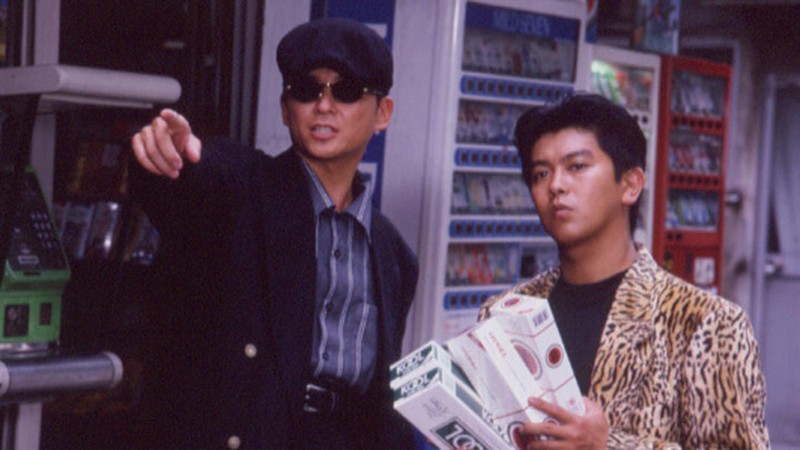
Woman Gambler (Kyoko Enami as Ogin)
Before Oryu the Red Peony graced the screens, Daiei Studio presented Ogin, their pioneering woman gambler and the heroine of 1966’s A Woman Gambler. Following a successful formula akin to Zatoichi, Sleepy Eyes of Death, and Lone Wolf and Cub, the Woman Gambler series depicted Ogin, a prolific gambler expertly portrayed by Kyoko Enami, as she journeyed from village to village. In each new locale, she would inevitably find herself assisting those in need and restoring a semblance of peace before moving on to her next adventure. The series proved incredibly popular, leading Daiei to produce a remarkable 17 films within a mere six years, a testament to its commercial viability and Enami’s star power. This rapid production cemented Enami’s status as a certified Daiei superstar and established Ogin as the defining role of her illustrious career, making her a trailblazing figure in female-led Japanese action cinema.
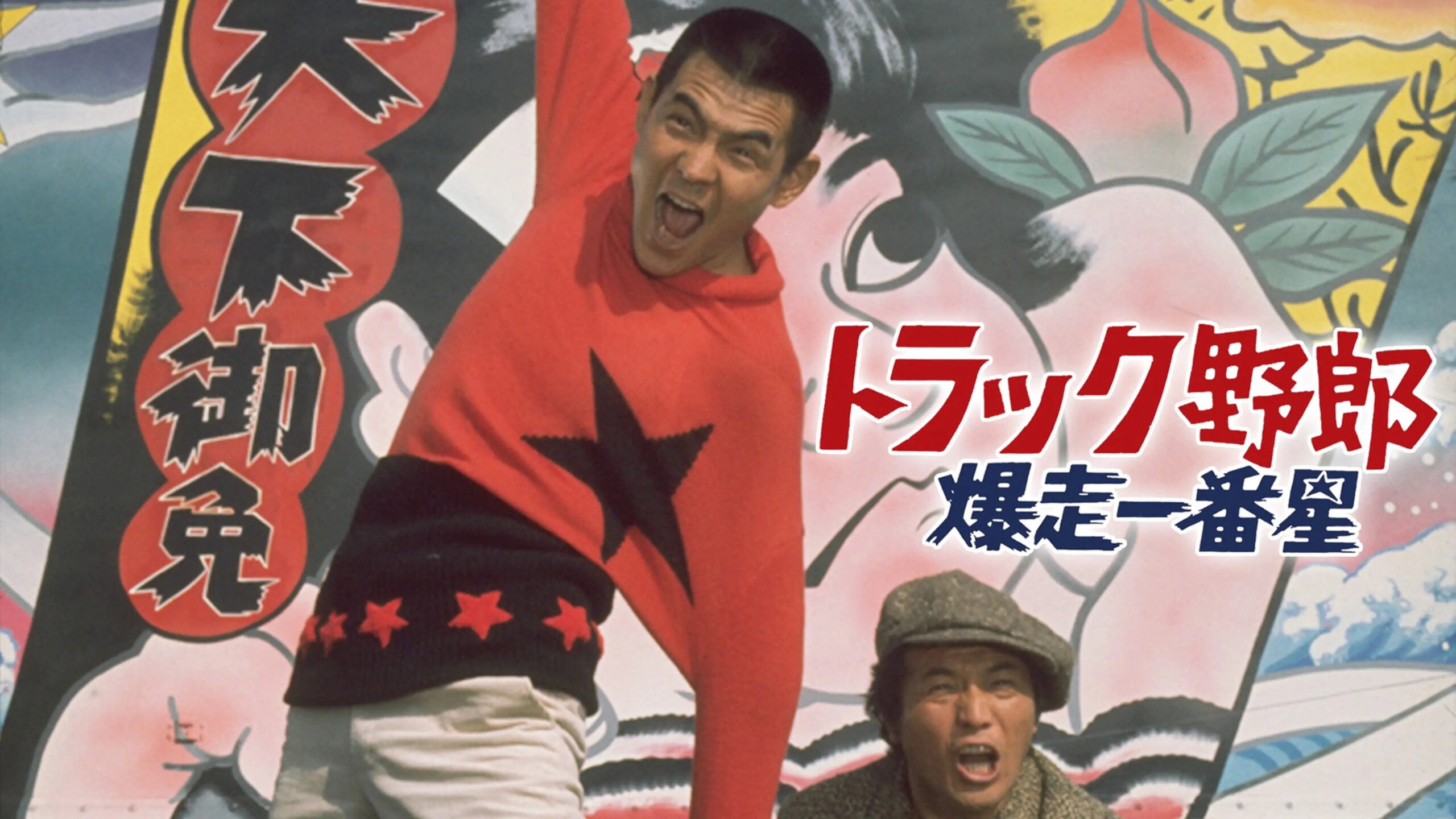
Yakuza Deka (Sonny Chiba as Shiro Hayata)
Before Sonny Chiba exploded onto the international scene with his wildly popular Street Fighter trilogy, he honed his action star persona in the Yakuza Deka series. In these films, Chiba played Shiro Hayata, an undercover cop infiltrating the yakuza underworld. Hayata routinely outwitted and overpowered his criminal adversaries, relying not just on his policing acumen but, more famously, on his formidable karate skills. The Yakuza Deka series, often known in English as the Kamikaze Cop series, ran for five entries over a concentrated period of two years (1970-1971), serving as a crucial precursor to the international success that awaited Chiba. One could conceptualize Hayata as a Japanese "James Bond," but one who traded high-tech gadgets for an unparalleled mastery of martial arts. Ryohei Uchida also featured in all five productions, though he played a different character in each, a common practice for popular supporting actors of the era.
Zatoichi (Shintaro Katsu as Zatoichi)
Arguably the most famous and culturally significant series on this list, Daiei’s The Tale of Zatoichi, directed by Kenji Misumi and starring Shintaro Katsu in the titular role, ignited a cinematic phenomenon in 1962. Zatoichi, a wandering blind masseur possessing legendary, lightning-quick swordsmanship, instantly captured the hearts of audiences. His unique blend of humility, wit, and deadly skill made him a beloved character and an unlikely hero. The character’s immense popularity spawned an incredible 25 films within just 11 years (1962-1973), with a final, poignant installment arriving much later in 1989. All of these films featured the magnetic Shintaro Katsu in the lead role, making it the longest-running action film series in cinema history to feature the same lead actor. Katsu’s indelible portrayal of Zatoichi not only cemented his own legacy but also established a benchmark for chanbara films, influencing countless sword-fighting narratives and becoming a global icon of Japanese cinema.
The Broader Impact and Enduring Legacy of Japanese Film Series
The prevalence and longevity of these Japanese film series underscore a deep-seated cultural appreciation for sustained narrative and character development. Economically, the studio system’s high-volume production model in the mid-20th century, coupled with the later rise of the direct-to-video (V-Cinema) market, created fertile ground for rapid serialization. This allowed studios to consistently deliver content that resonated with specific fan bases, from action aficionados to family audiences, often with compressed production schedules that would be unthinkable in Western mainstream cinema.
Culturally, these series often served as a mirror to Japanese society, reflecting evolving social values, historical contexts, and everyday concerns. Tora-san, for instance, offered a comforting, episodic exploration of family, community, and the changing Japanese landscape. Yakuza series, whether ninkyo or jitsuroku, grappled with themes of loyalty, honor, and survival in the underworld, often reflecting broader societal anxieties. The enduring appeal of characters like Zatoichi and Lone Wolf and Cub speaks to universal themes of justice, vengeance, and the lone hero’s journey.
Moreover, these franchises have left an indelible mark on cinematic history, influencing filmmakers both domestically and internationally. The stylistic innovations of Battles Without Honour and Humanity, the narrative structure of Lone Wolf and Cub, and the sheer endurance of Tora-san have inspired generations of creators. The dedication of actors like Ken Takakura, Bunta Sugawara, Riki Takeuchi, Kiyoshi Atsumi, and Shintaro Katsu to their signature roles created deeply ingrained cultural icons, forging bonds of loyalty with audiences that spanned decades. This remarkable legacy of sustained storytelling and character continuity firmly positions Japan as a pioneering force in the global landscape of