Evil Dead Burn marks the latest expansion of the long-standing horror series, introducing a fresh directorial vision while maintaining the visceral, gore-soaked traditions established by Sam Raimi in 1981. Directed and co-written by Sébastien Vaniček, alongside co-writer Florent Bernard, the film shifts the narrative focus to a secluded family gathering that descends into a supernatural catastrophe. Starring Souheila Yacoub, Hunter Doohan, and Tandi Wright, the production aims to balance the franchise’s signature "splatstick" humor with a modern emphasis on domestic trauma and expanded mythology. As the series moves further away from its original protagonist, Ash Williams, this 110-minute feature serves as a litmus test for the franchise’s ability to thrive under the stewardship of emerging international filmmakers.
Narrative Framework and Plot Progression
The story centers on Alice (Souheila Yacoub), a woman grappling with the recent death of her husband, Will (George Pullar), who perished in a violent car accident under suspicious circumstances. The narrative begins as Alice joins her late husband’s estranged family at a remote residence to observe funeral rites. The atmosphere is immediately established as one of high tension, not only due to the grief of the loss but because of the underlying friction between Alice and her in-laws. Alice’s history with Will was marred by years of domestic abuse—a reality that his mother, Susan (Tandi Wright), refuses to acknowledge, preferring to maintain a sanitized image of her son.
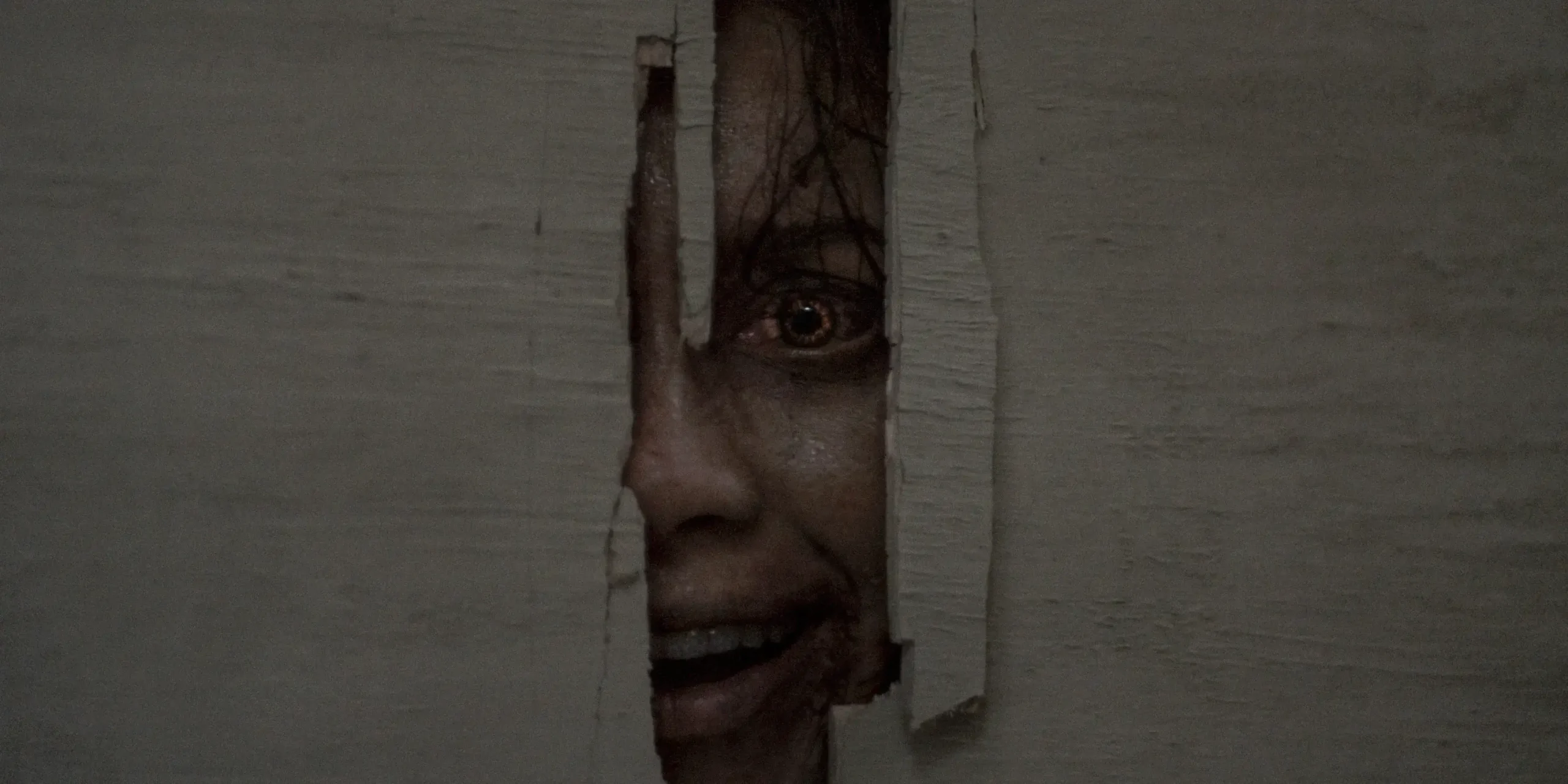
The horror is catalyzed at a funeral home when Edgar (Erroll Shand) encounters a malevolent spirit. This entity, a staple of the franchise known as a Deadite, poisons his soul and initiates a chain reaction of possession. The setting shifts back to the family home, where the ensemble—including Will’s brother Joseph (Hunter Doohan), his girlfriend Thya (Luciane Buchanan), and the family matriarch (Maude Davey)—finds themselves besieged. The plot introduces a significant lore expansion involving an ancient cult and a weapon researched by the family’s long-deceased grandfather. The Deadites’ primary objective is the retrieval of this artifact, leading to a bloody siege that forces Alice to confront both literal demons and the metaphorical ghosts of her abusive marriage.
The Evolution of the Evil Dead Franchise
To understand the positioning of Evil Dead Burn, it is necessary to examine the four-decade trajectory of the franchise. The series began with The Evil Dead (1981), a low-budget independent film that became a cult classic due to its inventive camerawork and uncompromising intensity. It was followed by Evil Dead II (1987) and Army of Darkness (1992), which leaned heavily into slapstick comedy and dark fantasy, respectively.
After a long hiatus from the big screen, the franchise was revitalized in 2013 with Fede Álvarez’s Evil Dead, a "soft reboot" that stripped away the humor in favor of extreme, realistic gore. This trend continued with Lee Cronin’s Evil Dead Rise (2023), which moved the action from the traditional "cabin in the woods" to a decaying Los Angeles apartment complex. Evil Dead Rise was a significant commercial success, grossing over $147 million worldwide against a modest $19 million budget. This financial viability paved the way for Evil Dead Burn, as the producers—including Sam Raimi and Robert Tapert—continued their strategy of hiring distinct directorial voices to interpret the "Deadite" mythos.
Sébastien Vaniček was selected for this installment following the critical success of his French horror-thriller Infested (Vermines). His appointment reflects a broader industry trend of tapping international genre directors to helm established American intellectual properties, bringing a "European sensibility" to the pacing and visual style of the films.
Technical Execution and Directorial Style
Vaniček’s direction in Evil Dead Burn is characterized by a high-velocity approach to storytelling. The film utilizes rapid-fire editing and propulsive camerawork to create a sense of mounting dread and physical disorientation. Critics and industry analysts have noted that the pacing is exceptionally fast, often transitioning from quiet emotional beats to full-scale carnage with minimal transition. This "breakneck" speed is designed to mirror the chaotic nature of a Deadite outbreak, though it occasionally leaves little room for the "slow-burn" tension found in earlier entries.
A hallmark of the film is its reliance on "squeamish" practical effects combined with digital enhancements. One particular sequence involving a pen has been highlighted as a standout moment of body horror, designed to elicit a visceral physical reaction from the audience. However, the film’s climax has drawn comparisons to modern blockbuster trends, utilizing more significant amounts of CGI than previous installments. While the digital effects allow for a larger-scale "final boss" encounter, some purists argue that it lacks the tactile, "grimy" impact of the practical makeup effects that defined the 1981 and 2013 films.
The sound design also plays a critical role, featuring the distorted, guttural vocalizations of the Deadites. While these auditory choices enhance the otherworldly nature of the antagonists, there have been observations regarding the clarity of the dialogue during high-intensity sequences, where the sound mix favors environmental chaos over narrative exposition.
Performance and Character Analysis
The cast of Evil Dead Burn is tasked with portraying characters who are often defined more by their physical endurance than their dialogue. Souheila Yacoub delivers a performance rooted in the "Final Girl" trope, but with an added layer of psychological weight. Her character’s struggle against the Deadites serves as a physical externalization of her internal battle to reclaim her agency after years of domestic subjugation.
Hunter Doohan and Tandi Wright provide the emotional anchors for the family unit. Wright, in particular, has been noted for her portrayal of a mother blinded by grief and denial, providing a human foil to the supernatural threats. Maude Davey, playing the grandmother afflicted with dementia, provides much of the film’s dark humor. Her character’s unpredictable outbursts and the use of a motorized stair-lift during a horror sequence hark back to the "splatstick" roots of the franchise, offering moments of levity amidst the grim proceedings.
Lore Expansion and Narrative Implications
Evil Dead Burn attempts to deepen the mythology of the series by moving beyond the Necronomicon Ex-Mortis (the Book of the Dead) as the sole source of evil. By introducing an ancient cult and a specific artifact sought by the spirits, the film suggests a wider universe of malevolence.
This shift toward "world-building" is a departure from the original trilogy, which focused primarily on the immediate survival of the protagonists. While the introduction of a more structured backstory provides a framework for the action, it also presents a challenge for the filmmakers. The "Evil Dead" series has traditionally thrived on the inexplicable nature of its horror. By providing concrete explanations and "boss-level" stakes, the film risks moving into the territory of conventional action-horror, a move that has met with a mixed reception from long-term fans who prefer the raw, unexplained chaos of the earlier films.
Industry Impact and Future Outlook
The release of Evil Dead Burn signifies the continued health of the horror genre in a volatile theatrical market. Horror remains one of the most reliable genres for return on investment, particularly when attached to a recognized brand name.
Industry analysts suggest that the success of this film will likely determine the frequency of future installments. The "producer-led" model, where Raimi and Tapert oversee a rotating door of directors, allows the franchise to stay relevant without becoming tethered to a single creative vision or a specific lead actor. This ensures that the series can adapt to contemporary cinematic trends—such as the current interest in "elevated horror" themes like trauma and family dysfunction—while still delivering the high-octane gore that the core audience expects.
In conclusion, Evil Dead Burn is a transitionary piece for the franchise. It honors the legacy of Sam Raimi through its use of dark humor and inventive violence while attempting to carve out a more complex narrative path. While the increased focus on lore and CGI-heavy finales represents a shift in the series’ DNA, the film’s technical proficiency and strong central performance by Souheila Yacoub solidify its place as a functional and aggressive entry in the 43-year-old saga. As the credits roll on this "family reunion from hell," it is clear that the Deadite threat remains a potent and adaptable tool for modern horror cinema.