The landscape of modern television is increasingly defined by ambitious expansions of beloved literary and cinematic universes, as showrunners and directors delve deeper into established narratives, often with the direct collaboration of original creators. This trend allows for a rich exploration of characters, settings, and themes that transcend the limitations of their initial mediums, offering audiences fresh perspectives on familiar worlds. From the chilling dystopia of Gilead to the ancient horrors of Derry and the cold vacuum of space, these new series are not merely adaptations but significant narrative continuations and prequels, designed to resonate with contemporary audiences while honoring their source material.
The Handmaid’s Tale Universe: Continuing Gilead’s Legacy
Showrunner Bruce Miller embarked on the monumental task of bringing Margaret Atwood’s seminal dystopian novel, The Handmaid’s Tale, to the screen, a journey that began with his initial, somewhat unsatisfied reaction to the book’s open ending. "I was like, ‘Well, I hope there’s a sequel!’" Miller recalls, a sentiment that would ironically foreshadow his future role in expanding the narrative. Two decades after his first encounter with the novel, Miller found himself at the helm of the Hulu series, which premiered in 2017. Its timing, coinciding with the first Trump administration, imbued its themes of reproductive rights, totalitarian control, and female subjugation with a profound and immediate resonance. The series quickly became a cultural phenomenon, with the evocative imagery of the red cape and white bonnet, famously worn by star Elisabeth Moss as June Osborne (Offred), transforming into a powerful symbol of both oppression and burgeoning resistance. This critical and popular success led to the show becoming the first streaming offering to win an Emmy for Best Drama Series, ultimately collecting 13 more awards over its subsequent five seasons.
The idea of continuing Atwood’s story beyond the confines of her 1985 novel was not unique to Miller. Unbeknownst to him, Atwood herself was contemplating a literary sequel. Miller notes, "I’m sure it had been suggested a zillion times before." However, he believes the television adaptation provided a unique catalyst. "I think with the show, and especially with her personal relationship with some of the cast, [she got to see] the fun of television in terms of expanding stories." As production for the second season of The Handmaid’s Tale commenced, Atwood revealed to Miller that she had begun writing The Testaments. Published in 2019, this literary sequel is set 15 years after the events of The Handmaid’s Tale, offering a new vantage point on Gilead’s enduring grip and its eventual unraveling.
Atwood’s early communication of her expanded vision provided Miller with crucial narrative guidance. A significant directive for the ending of his Handmaid’s Tale series was to preserve the character of Aunt Lydia, the menacing figure expertly portrayed by Emmy winner Ann Dowd, as she was slated to play a pivotal role in The Testaments. This collaborative synergy allowed Miller to develop the television series with an awareness of the future narrative, bridging the gap between Atwood’s two novels.
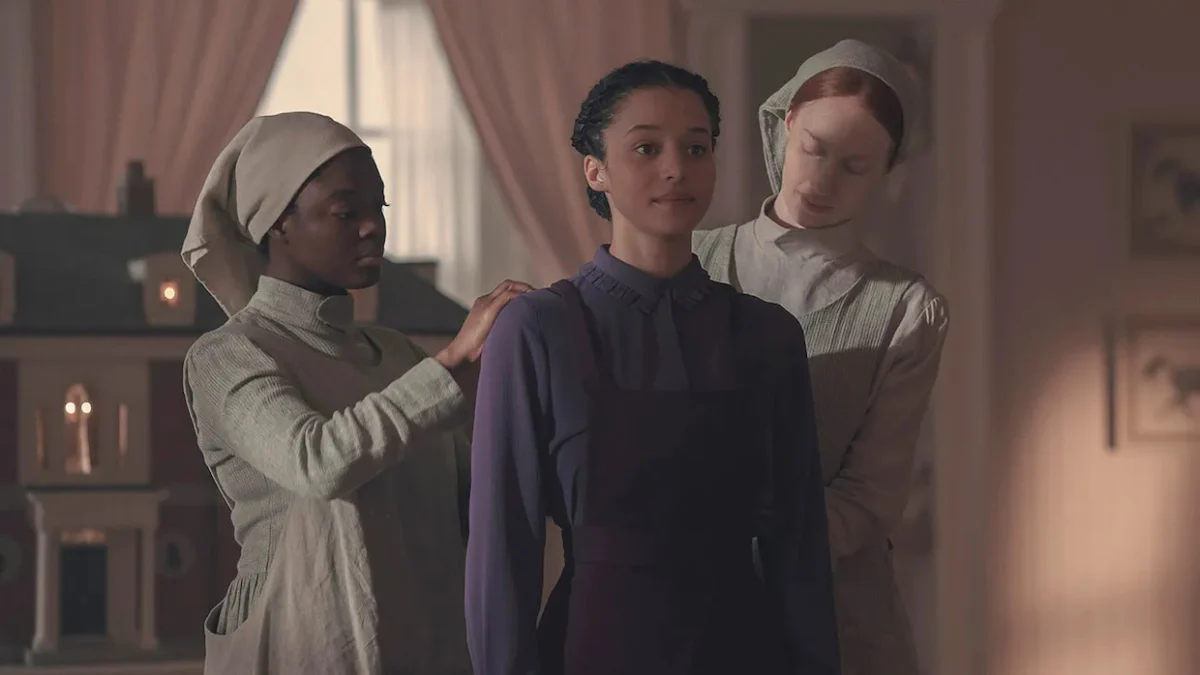
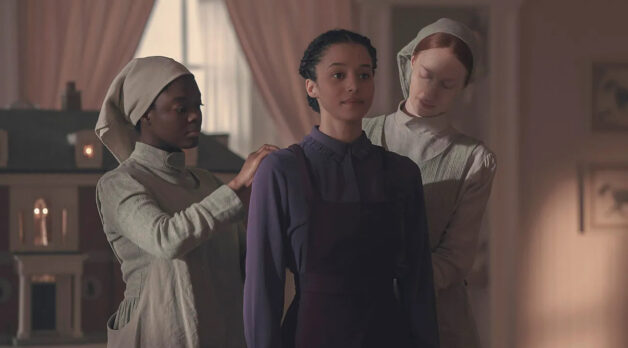
In Miller’s televised universe, June Osborne (Elisabeth Moss), whose real name is revealed as June, manages to escape the totalitarian Republic of Gilead for Canada, albeit leaving her daughter behind. This diverges from Atwood’s original novel, which concludes with Offred’s ambiguous fate, her account discovered posthumously. The Testaments then picks up the story 15 years later, introducing Agnes (Chase Infiniti), a handmaid-in-training who is unaware of her true parentage as June’s daughter.
Miller initially expressed reluctance to significantly alter The Handmaid’s Tale for television, given his profound admiration for the novel. However, he acknowledges that the narrative needed to evolve to suit the demands of the television medium. "She was very encouraging for me to take the book and interpret it," he states, highlighting Atwood’s trust in his creative vision. The pair maintained a close working relationship, meeting halfway through the writing of each season of Handmaid’s for Miller to share his ideas and solicit Atwood’s input. This open dialogue, coupled with foreknowledge of The Testaments‘ central premise, granted Miller the artistic freedom to flesh out the intricate narrative between Atwood’s two literary works.
"The sequel made me realize that Margaret was comfortable with expanding the world," Miller explains. He observed that when writing The Testaments, Atwood seemed to be considering the eventual fates of the characters introduced in The Handmaid’s Tale. This realization encouraged Miller to contemplate "some victories for June," leading to a significant departure from the source material. While Atwood’s novel concludes with June (Offred) dying in anonymity, Miller’s television series allows her to survive, actively engaging in the resistance. Consequently, the plot details of the televised Testaments would naturally diverge from Atwood’s novel, yet its overarching narrative, exploration of power, and prescient themes of resistance and survival remain powerfully intact. The anticipated series, buoyed by its award-winning predecessor, is already generating Emmy buzz, with Chase Infiniti’s lead performance earning her a Gotham Award, signaling its potential to further cement the franchise’s legacy.
Stephen King’s IT: Unmasking Pennywise’s Origins
Beyond the socio-political commentary of Gilead, other creators are venturing into the realm of cinematic terror, expanding on iconic horror narratives. Director Andy Muschietti, alongside his producing partner and sister Barbara Muschietti, achieved critical and commercial success with their two-part adaptation of Stephen King’s epic horror novel, It. It was during the production of these films that the seed for a prequel series, It: Welcome to Derry, was planted. On-set conversations between Andy Muschietti and Bill Skarsgård, who chillingly portrayed Pennywise the Dancing Clown, delved deep into the character’s enigmatic motivations and backstory. "When you’re close to your actor and talking about character a lot, you go into depths that transcend the story you’re telling," Andy explains. This collaborative process ignited their curiosity about Pennywise’s origins: "Soon we were very excited about the potential exploration of Pennywise’s origins—when did the monster become the clown? It’s very enigmatic in the book, but intentionally cryptic."
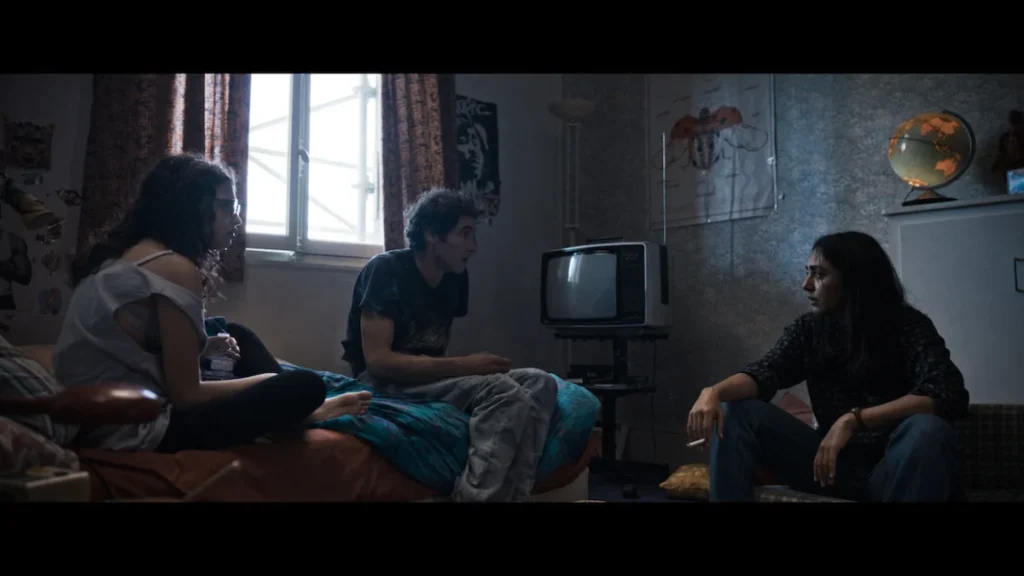
The Muschiettis, serving as executive producers on the HBO Max prequel series, are crafting a narrative set 27 years before the events of It: Chapter One. While King’s original novel features segments set in the late 1950s, the Muschiettis chose to set their first film adaptation in the late 1980s, an era that resonated deeply with them as it marked their own childhood discovery of King’s writing. "That was our childhood," Barbara notes. It: Welcome to Derry continues this chronological playfulness by commencing in the early 1960s. This deliberate choice allows the creators to weave rich historical context into the supernatural horror. The backdrop of the Cold War and the burgeoning Civil Rights Movement casts a palpable shadow over the new ensemble of young outcasts, reminiscent of the original novel’s beloved "Loser’s Club," as they confront the terrifying entity lurking beneath their seemingly idyllic town.
The series promises to stage an origin story for Pennywise’s human alter ego, Bob Gray. This narrative thread is reportedly set at the tail end of the Great Depression, depicting Gray as a dancing clown on the carnival circuit with his young daughter. His descent into villainy is initiated when he is lured away by the unnamed primordial monster that eventually assumes his persona to ensnare its young victims. This evocative use of vaudevillian imagery not only grounds the supernatural horror in a tangible historical period but also establishes a broader narrative strategy for future seasons of Welcome to Derry, hinting at explorations of Pennywise’s influence across various historically significant periods.
Stephen King’s extensive bibliography has seen countless adaptations, some faithfully adhering to the source material, others taking significant liberties. The Muschiettis, however, maintain a close relationship with the master storyteller, keeping him informed of any proposed changes or expansions. "Whenever we want to test the waters, we let him know immediately," Barbara affirms, describing King as the ultimate "mastermind behind the whole enterprise." The challenge of expanding on a novel as iconic as It lies in balancing the desire to explain the villain’s motivations without diminishing the inherent sense of mystery and cosmic horror that makes Pennywise so terrifying. Andy Muschietti reassures fans that their approach is direct yet surprising: "Over the three seasons that we’re planning, we’re hitting the character’s motivation right in the face, and it’s very clear what he wants. It’s not something that people necessarily will expect, but it’s very exciting." This promises a deep dive into the psychology of one of horror’s most enduring villains, while hopefully preserving the terrifying enigma at its core.
Alien: Earth: Beyond the Xenomorph, New Terrors and Themes
In another bold expansion of a classic science fiction universe, Noah Hawley, the acclaimed creator and showrunner of the Emmy-winning anthology series adaptation of Fargo, ventures into the terrifying cosmos of Alien with his FX series, Alien: Earth. Unlike Miller and the Muschiettis, Hawley had no prior involvement with the Alien film franchise. However, his proven track record in reinterpreting beloved narratives instilled confidence in his ability to tackle this iconic universe.
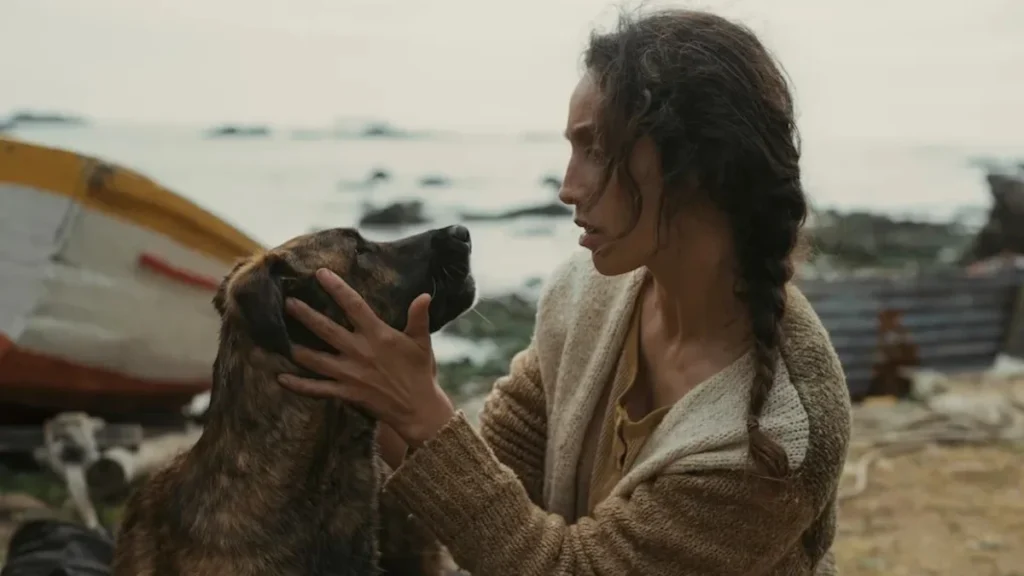
Alien: Earth is strategically set just before the events of Ridley Scott’s seminal 1979 film, providing a fresh yet familiar entry point into the franchise. The series stars Sydney Chandler as Wendy, a pioneering human-cyborg hybrid – the first of her kind. Wendy leads a specialized team of fellow hybrids to investigate the crash landing of a research vessel. As anticipated, a xenomorph is running rampant on board, having decimated the ship’s crew. This premise immediately establishes a high-stakes scenario, blending the familiar horror elements with innovative character concepts.
Hawley emphasizes that the expansive canvas of a 10-episode series allows him to delve into the larger, more profound themes of the Alien franchise, bringing them into sharp focus for a contemporary audience. "What is [the original] movie at its core?" Hawley posits. "If it had just been a monster movie, I don’t know if there would be a television series there." He aims to transcend mere creature feature territory, exploring the deeper philosophical and societal implications inherent in the Alien universe.
Central to Hawley’s narrative is the concept of corporate conflict and its insidious reach. Wendy finds herself caught between two powerful entities: Weyland-Yutani, the ubiquitous and morally ambiguous corporation that owns the ill-fated vessel and claims ownership of the alien specimen, and Prodigy, the cutting-edge tech company responsible for her hybrid program. This dynamic shrewdly builds upon a core tension established in Scott’s original film, where Sigourney Weaver’s Ripley faces not only the immediate threat of the xenomorph but also the chilling betrayal of Ian Holm’s android, Ash, who prioritizes Weyland-Yutani’s assets over human life. Hawley articulates this contemporary resonance: "You realize she’s trapped between nature and technology, and they’re both trying to kill her. That seems pretty on point with our moment on Earth right now." This analysis highlights the enduring relevance of Alien‘s themes of corporate greed, technological overreach, and humanity’s precarious position amidst powerful, indifferent forces.
Furthermore, Hawley has seized the creative freedom to introduce new extraterrestrial creatures into the Alien canon. While some will undoubtedly be deadly threats to humans, others are surprisingly benign. He clarifies his approach: "It’s called Alien. It’s not called Xenomorph, right?" This distinction allows him to broaden the scope of alien life forms within the universe, creating opportunities for fresh narratives where audiences are kept guessing about the nature, diet, and reproduction of these new species. "That allows me to introduce a bunch of new characters, basically, where you don’t know what they eat or how they reproduce. We get to make it fresh again for the audience," Hawley asserts.
Ultimately, Hawley’s vision for Alien: Earth is one of additive storytelling. "If you say, ‘Here’s the world of Alien, here’s the creatures and premise that you love, and let me see if I can do something additive to it,’" he explains, "the hope is that people will feel happy about that." This approach seeks to enrich the established lore, expand the narrative possibilities, and offer both long-time fans and new viewers a compelling, thought-provoking, and terrifying journey into the unknown.
The Future of Franchise Storytelling
These ambitious television projects – The Testaments, It: Welcome to Derry, and Alien: Earth – represent a sophisticated evolution in franchise storytelling. They move beyond mere adaptation, embracing the collaborative spirit between original creators and new showrunners, leveraging the expansive format of television to deepen narratives, explore character motivations, and integrate contemporary social and political contexts. By carefully navigating the delicate balance between honoring established lore and forging new paths, these series demonstrate the immense potential of television to breathe new life into beloved universes, ensuring their continued relevance and captivating a new generation of audiences. This trend signifies a mature approach to intellectual property, where creative expansion is valued as much as faithful translation, offering rich, layered narratives that stand as significant contributions to their respective canons.