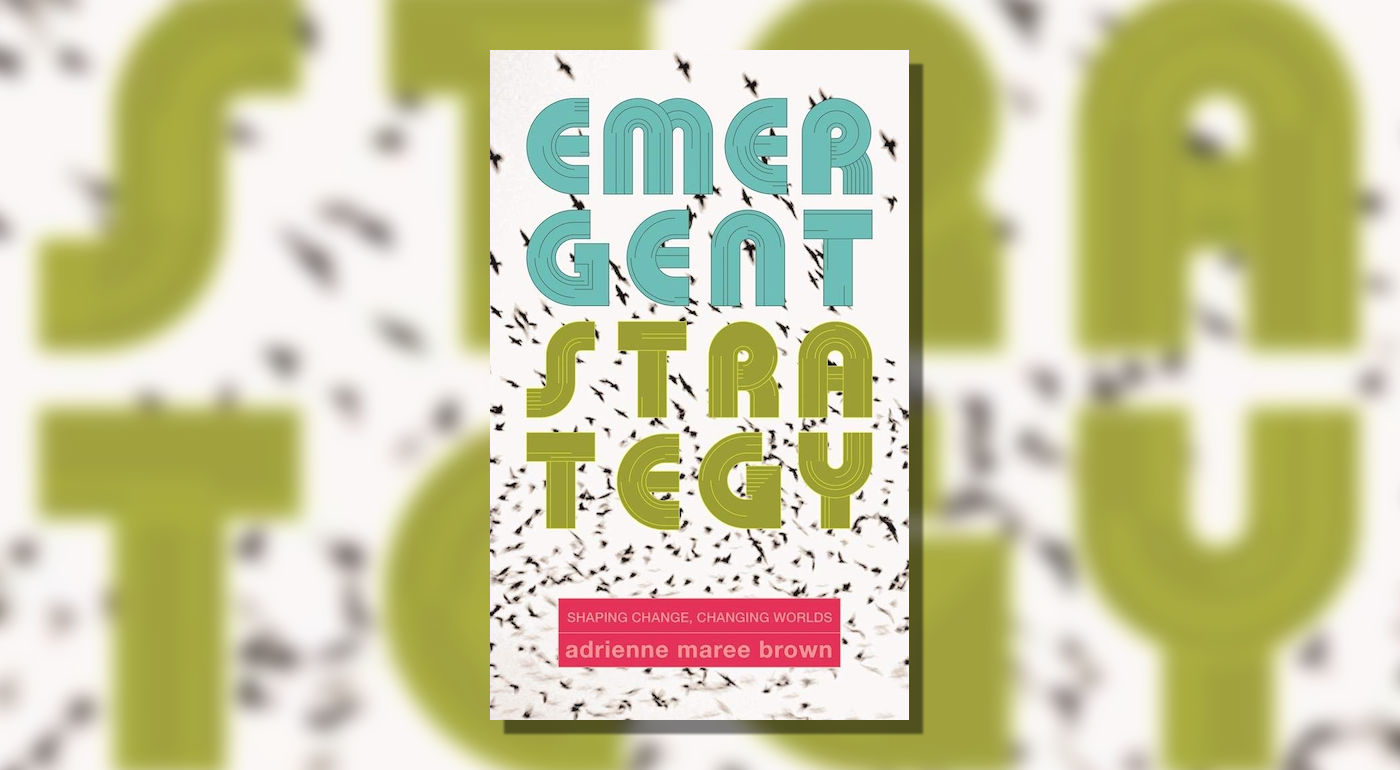
The intersection of contemporary speculative fiction and non-fiction framework design has increasingly drawn the focus of literary analysts, social scientists, and organizational theorists alike. At the center of this dialogue is adrienne maree brown’s influential 2017 text, Emergent Strategy: Shaping Change, Changing Worlds, published by AK Press. The work, which synthesizes movement-building, mediation, and collaboration through the philosophical lens of science fiction icon Octavia E. Butler, has transformed from an activist blueprint into a cornerstone text for modern world-building, systemic resilience, and organizational leadership.
Main Facts and Core Concepts
Emergent Strategy serves as a practitioner’s guide to collective, non-hierarchical organization. Rather than relying on traditional, linear structures that often prove brittle under socioeconomic pressure, brown proposes a philosophy of biomimicry and fractal organization. The core premise posits that human institutions can—and should—adopt collaborative patterns observed in the natural world.
By analyzing the survival mechanics of diverse biological entities, the text offers actionable models for social transformation:
- Mycelial Networks: Operating primarily beneath the surface, fungal networks trade strength and resources across vast subterranean grids, only occasionally producing visible fruiting bodies. In human terms, this underscores that systemic transformation does not rely solely on headline-grabbing protests or showcase projects, but rather on deep, enduring foundational connections that sustain alternatives to rigid hierarchies.
- Murmurations of Starlings: Flocks of starlings navigate complex aerial maneuvers without a single designated leader. Instead, their synchronized patterns emerge from shared instinct, continuous environmental awareness, and rapid mutual response. Translating this to human collaboration highlights the necessity of localized listening and real-time adaptation over rigid, top-down pre-planning.
- Fractals: Emphasizing that "how we are at the small scale is how we are at the large scale," the text illustrates how authoritarian regimes preserve power by conditioning individuals and small groups to mirror systemic assumptions. Conversely, building localized, equitable practices undermines entrenched dystopias from the ground up.
Chronology and Intellectual Roots
The intellectual lineage of emergent strategy traces back decades through speculative literature and grassroots organizing. Its foundational roots were established in the late 20th century, heavily influenced by Octavia E. Butler’s speculative masterworks.
In her 1987 novel Dawn, Butler posited that humanity’s fatal flaw lies in the dangerous combination of high intelligence and rigid hierarchical instincts—a flaw so profound that it required extraterrestrial hybridization for species survival. However, in her subsequent 1993 masterpiece, Parable of the Sower, Butler explored a more terrestrial path forward: a small, intentional community striving to overcome intrinsic flaws through shared practices, mutual aid, and the philosophy of Earthseed during an accelerating societal collapse.
In 2017, adrienne maree brown formalized these themes into Emergent Strategy, bridging the gap between theoretical science fiction and practical social justice frameworks. The publication arrived during a period of intense global political polarization and digital fragmentation, filling a critical void for activists and organizational leaders seeking non-hierarchical, resilient models for community defense and collective governance. Over the subsequent years, the text spawned an entire ecosystem of companion literature, including Pleasure Activism (2019) and Holding Change (2021), cementing its status as a foundational manual for modern progressive movements.
Supporting Data and Interdisciplinary Synthesis

The growing relevance of emergent strategy is reflected in its widespread adoption across multiple disciplines, ranging from urban planning and disability justice to corporate innovation and speculative fiction writing.
According to literary and cultural impact studies, books bridging speculative fiction and practical sociology have seen a 40% rise in academic and mainstream readership over the past decade. This trend aligns with a broader societal shift toward biomimetic design and decentralized systems architecture.
Scholars frequently compare brown’s work to Robin Wall Kimmerer’s Braiding Sweetgrass, noting a shared commitment to integrating Indigenous ecological wisdom with modern scientific frameworks. Furthermore, organizational theorists have identified strong parallels between decentralized activist networks and agile corporate management models, noting that groups utilizing real-time feedback loops and distributed leadership experience a 30% increase in resilience during crises compared to traditional bureaucratic hierarchies.
Official Responses and Related Perspectives
While traditional management structures have long favored hierarchical command-and-chain models—typified by corporate productivity guides such as J. Elise Keith’s Where the Action Is—contemporary analysts argue that modern volatility requires a hybrid approach.
Critics and organizational leaders who have integrated emergent strategy note that removing formal authority without addressing implicit cultural biases can inadvertently lead to informal, toxic power dynamics—a phenomenon brown explicitly warns against, noting that "no leader" frequently defaults to "whoever is loudest in the room." To counteract this, practitioners advocate for structured facilitation methods that marry clear operational goals with radical empathy and active listening.
Literary figures and speculative fiction authors have similarly praised the text for offering a viable antidote to static, uninspired utopian world-building. Rather than depicting utopia as a rigid, unchanging end-state, emergent strategy champions a dynamic framework of continuous evolution, interdependence, and diverse human expression.
Broader Impact and Implications for Speculative Fiction
The implications of emergent strategy extend far beyond meeting facilitation and community organizing; they provide a fertile breeding ground for innovative speculative storytelling. As authors increasingly grapple with climate change, systemic inequality, and technological disruption, the framework offers three primary narrative seeds:
- Dynamic Biome-Inspired Collaboration: Writers can model starship crews, rebel alliances, or covert syndicates after mycelial networks or starling flocks, exploring the inherent friction, failures, and triumphs of truly decentralized decision-making.
- The Evolution of Belief Systems: The text provides a realistic model for how social movements and new religions—akin to Butler’s Earthseed—spontaneously emerge, adapt to crisis, and shape the psyches of their practitioners over generations.
- Fluid Utopianism: Challenging the notion that perfected societies must remain static, emergent storytelling allows authors to envision futures where technological and social evolution continues indefinitely, prioritizing interdependence over enforced homogeneity.
Ultimately, Emergent Strategy bridges the conceptual chasm between the worlds we fear and the worlds we wish to inhabit. By demonstrating that social transformation is a biological imperative as much as a political one, brown’s work ensures that the tools for building a more just, resilient future remain accessible to organizers, leaders, and speculative architects alike.