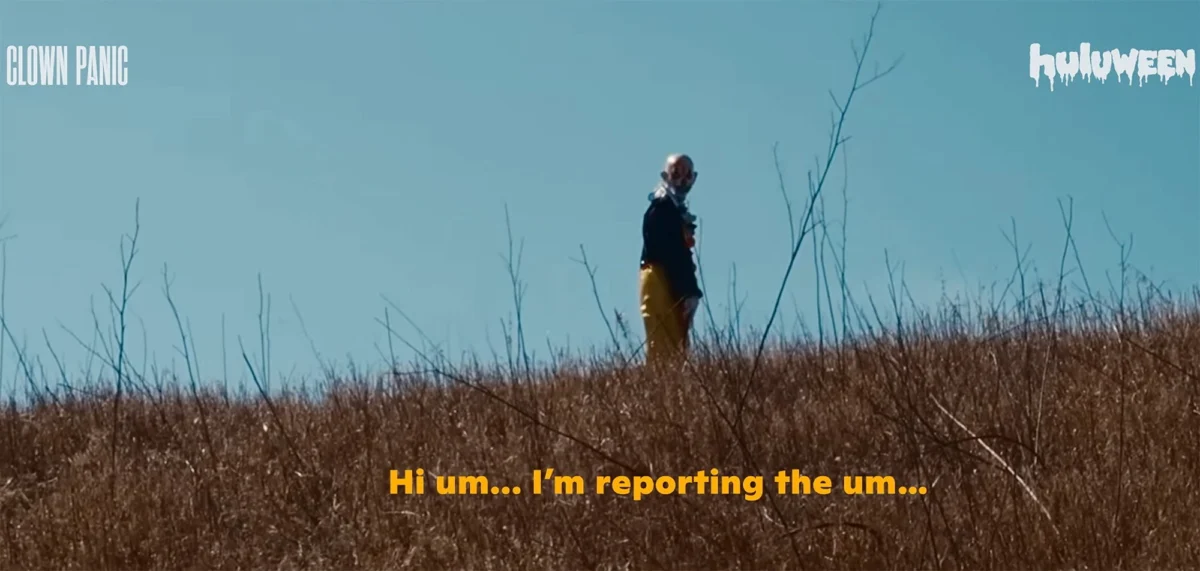
Hulu has officially released the first trailer and promotional poster for Clown Panic, an upcoming feature-length documentary directed by acclaimed filmmaker Ed Perkins. Scheduled to premiere on the streaming platform on October 12, 2016, the film takes an exhaustive and analytical look at the bizarre cultural phenomenon of 2016, when mysterious reports of menacing individuals dressed as clowns emerged across the United States and quickly escalated into a full-scale national panic. Produced by Jonathan Chinn and Simon Chinn under the Lightbox banner, the documentary combines archival news footage, viral social media content, and contemporary interviews to unpack how a localized urban legend transformed into a widespread societal obsession fueled by digital connectivity and heightened public anxiety.
The 90-minute documentary explores the mechanics of modern hysteria, drawing parallels between the 2016 clown sightings and historical moral panics, such as the Satanic Panic of the late 20th century. Through conversations with eyewitnesses, law enforcement officials, professional performers, and cultural commentators, the film investigates the intersection of folklore, mass media, and the psychological vulnerability of a nation navigating deep cultural shifts. As platforms like Facebook, Twitter, and YouTube accelerated the spread of unverified accounts, a series of seemingly harmless pranks and local rumors snowballed into school lockdowns, police investigations, and a pervasive climate of fear that resonated far beyond American borders.
Background Context of the 2016 Clown Phenomenon
To understand the scope of the documentary, it is necessary to examine the origins of the events that transpired in the autumn of 2016. While unsettling encounters involving individuals in clown makeup had occasionally been reported in prior decades—often linked to folklore, urban legends, or isolated pranksters—the autumn of 2016 marked an unprecedented surge in frequency and geographic distribution.
The phenomenon is widely documented as having originated in Greenville County, South Carolina, in August 2016. Residents of an apartment complex reported seeing individuals dressed in full clown attire attempting to lure children into the nearby woods with offers of money and treats. Local law enforcement increased patrols, and property management issued warning letters to tenants, marking the official beginning of what would become a nationwide media event.
From those initial reports in South Carolina, the sightings rapidly propagated across state lines. Within weeks, similar incidents were documented in North Carolina, Georgia, Ohio, Pennsylvania, and eventually spanning dozens of states. The nature of the reports varied wildly: some involved individuals standing silently near the edges of treelines adjacent to schools or highways, while others involved direct harassment, menacing gestures, or individuals carrying bladed weapons. The ambiguity of the threats, combined with the anonymity afforded by the masks, created a fertile ground for public paranoia.
Chronology and Escalation of the Panic

The progression of the clown panic followed a distinct trajectory characterized by exponential growth, institutional response, and eventual saturation.
August 2016: The initial sightings are reported in Greenville County, South Carolina, prompting local police to investigate potential criminal activity and child enticement. Local media outlets pick up the story, introducing the narrative to regional audiences.
Early September 2016: Sightings begin to multiply across the southeastern United States. The proliferation of local news coverage creates a feedback loop, encouraging copycats, pranksters, and individuals seeking viral internet fame to don clown costumes and stage public appearances.
Mid-September to Late September 2016: The phenomenon reaches national prominence. Major news networks begin covering the incidents daily. Schools in several states implement precautionary lockdowns or heightened security measures after receiving unverified threats via social media platforms mentioning clowns targeting educational facilities. Law enforcement agencies hold press conferences urging the public to remain calm while dedicating significant resources to investigating credible and non-credible threats alike.
October 2016: The peak of the panic coincides with the lead-up to Halloween. Professional entertainers, circus workers, and community theater groups find their livelihoods disrupted as public fear turns against anyone wearing clown makeup. Several arrests are made nationwide, ranging from individuals engaging in disorderly conduct and making terroristic threats to people staging elaborate hoaxes for social media attention.
November 2016 and Beyond: As the Halloween season concludes, the frequency of reported sightings drops precipitously. The panic subsides as quickly as it began, leaving sociologists, criminologists, and media scholars to analyze how a decentralized network of rumors and viral videos could capture the attention of an entire nation.
Supporting Data and Institutional Impact
The societal footprint of the 2016 clown panic extended far beyond internet memes, resulting in tangible disruptions to public infrastructure, law enforcement operations, and commercial enterprises.

According to reports compiled by law enforcement agencies during the autumn of 2016, departments across more than a dozen states received hundreds of calls per week regarding suspicious clown activity. While the vast majority of these calls proved unfounded, exaggerated, or the result of misidentifications, police departments were forced to divert critical resources to investigate potential threats, particularly near schools and residential neighborhoods.
The education sector experienced acute disruptions. School districts in states such as Ohio, Alabama, and Wisconsin instituted temporary restrictions on costumes, implemented soft lockdowns, or increased police presence on campuses after receiving threats posted on social media accounts bearing clown imagery. These measures underscored the tangible anxiety felt by parents, educators, and students.
Economically, the professional entertainment industry suffered collateral damage. Performers who rely on clowning for birthday parties, corporate events, and theatrical productions reported canceled bookings and public hostility. Major costume retailers and entertainment corporations, including McDonald’s, found themselves adjusting their marketing strategies or temporarily scaling back the public appearances of corporate mascot characters like Ronald McDonald to avoid associations with the erratic public sentiment.
Statements, Reactions, and Perspectives
The documentary Clown Panic brings together a diverse array of voices to reflect on the psychological and cultural underpinnings of the event. Through newly conducted interviews, the film captures the perspectives of those directly affected by the hysteria.
Law enforcement officials featured in the trailer emphasize the difficulty of managing public safety in an era where digital communication can instantly manufacture a crisis. Officers recount the strain of filtering through countless false reports while remaining vigilant against genuine threats to public safety.
Professional clowns interviewed for the project offer a poignant counter-narrative to the cinematic horror tropes that dominated the news cycle. As one subject notes in the trailer regarding the absurdity of malicious intent, performers operate within an economic framework dependent on community trust and children’s entertainment, making the concept of hostile clowning antithetical to the profession itself.
Cultural commentators and media theorists interviewed in the documentary contextualize the panic within the broader sociopolitical landscape of 2016. Scholars point to a climate of heightened collective anxiety—driven by a contentious presidential election cycle, economic uncertainties, and the rapid, unfiltered expansion of social media algorithms designed to amplify sensational content—as the primary catalyst for the phenomenon. In this view, the clown served as a blank canvas upon which the public projected broader anxieties regarding safety, institutional trust, and the changing nature of truth in a digital society.

Implications and Broader Cultural Significance
The release of Clown Panic arrives at a time when the relationship between digital media ecosystems and collective psychology remains a subject of intense academic and public interest. By revisiting the 2016 phenomenon with the benefit of hindsight, the documentary provides a structured analysis of how urban legends evolve in the twenty-first century.
The film’s exploration of modern moral panic highlights the ways in which viral loops can bypass traditional journalistic gatekeeping, allowing localized folklore to achieve national and international scale in a matter of days. Furthermore, the documentary sheds light on the blurred lines between reality and performance art in the internet age, where the pursuit of online engagement frequently supersedes social norms and public safety considerations.
Director Ed Perkins, known for his critically acclaimed documentary works including Tell Me Who I Am, The Princess, and Garnet’s Gold, brings a measured and analytical approach to the subject matter. Rather than relying solely on sensationalism, Perkins and producers Jonathan and Simon Chinn utilize the clown panic as a lens through which to examine modern human behavior, herd mentality, and the enduring human susceptibility to fear in the face of the unknown.
As streaming audiences prepare for the October 12, 2016 release of Clown Panic on Hulu, the documentary stands as a comprehensive historical record of a uniquely strange chapter in contemporary American culture—a time when the boundaries between myth, media, and reality momentarily dissolved into a nationwide spectacle.