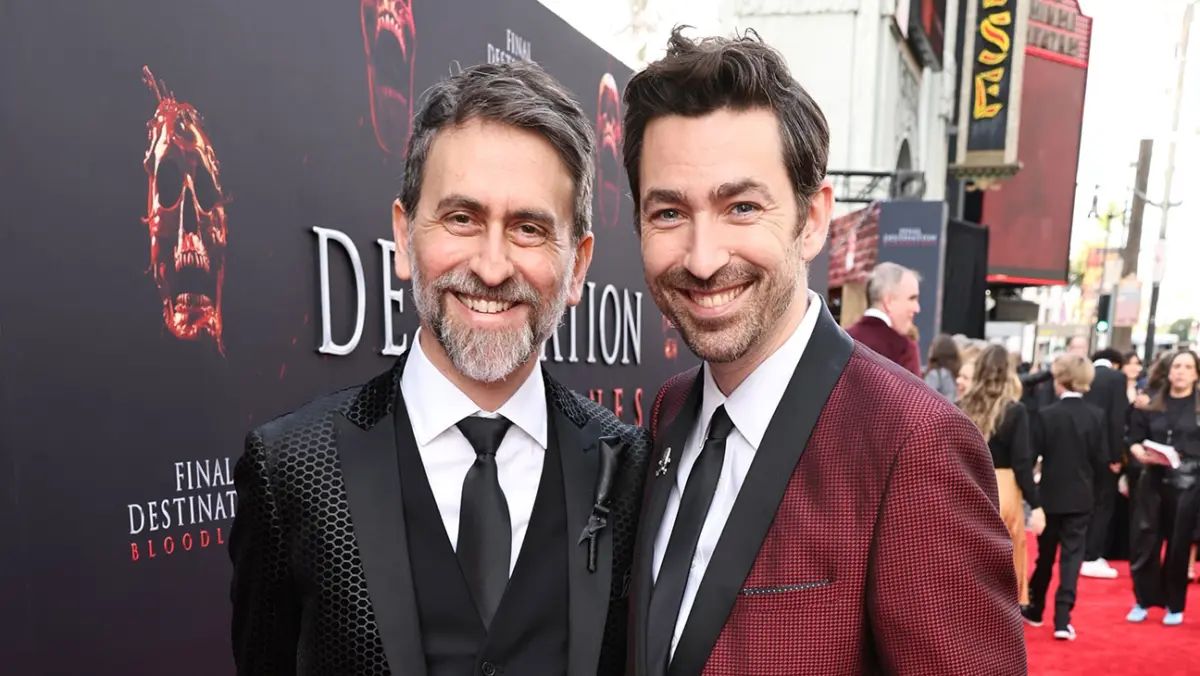
The journey from aspiring independent filmmakers to industry heavyweights is rarely a linear path, yet the trajectory of Zach Lipovsky and Adam B. Stein serves as a definitive case study in modern Hollywood success. Having built their reputations on the back of high-concept, visceral horror and genre-bending thrillers, the duo has effectively transitioned from the periphery of the industry to the center of the Sony Pictures lot. Their ascent, anchored by the runaway success of their 2018 breakout Freaks and their recent contributions to the Final Destination franchise, underscores a broader shift in the cinematic landscape: a renewed studio appetite for original, auteur-driven horror and suspense.
A Foundation Built on Genre Resilience
Long before their current status as in-demand creative partners, Lipovsky and Stein were competitors on the Fox reality competition series On the Lot, produced by industry legends Steven Spielberg and Mark Burnett. While they did not emerge as the winners of that 2007 series, the experience served as a formative baptism by fire. For nearly two decades, the pair navigated the unpredictable tides of Hollywood, learning the hard lessons of project development—a period Lipovsky describes as a necessary education in managing expectations.
The true turning point arrived with the 2018 dystopian sci-fi thriller Freaks. Starring Emile Hirsch and Bruce Dern, the film captured the imagination of global audiences, pulling in an impressive $375 million worldwide. More importantly, it solidified the duo’s ability to balance intimate, character-driven storytelling with high-stakes genre tropes. The film’s narrative, centered on a seven-year-old girl isolated in a suburban home by a paranoid father, struck a chord with critics and viewers alike, transforming Lipovsky and Stein into bona fide "hot commodities" overnight.
The Return to Vancouver: A Homecoming and Cultural Milestone
This weekend, the filmmakers return to their roots in Vancouver, British Columbia, to screen the long-awaited sequel, Freaks 2. The event, taking place at the historic Rio Theatre and the recently saved Park Theatre, is more than a promotional stop; it is a homecoming for Lipovsky, who spent his formative years at the Vancouver Film Festival (VIFF).
Lipovsky’s connection to the city runs deep. As a teenager, he utilized a festival "super pass" to immerse himself in world cinema, viewing as many as five films a day. These screenings acted as a crash course in directing, providing the inspiration he needed to pursue a career in film. The return to the Park Theatre is particularly symbolic; Lipovsky was one of several prominent filmmakers—including Osgood Perkins, Mike Flanagan, Sean Baker, and Finn Wolfhard—who invested personal capital to save the art deco landmark from permanent closure. By bringing their latest project back to the screen that helped shape his career, Lipovsky closes a twenty-year circle.
Narrative Evolution: From Isolation to Connection
The thematic progression from Freaks to Freaks 2 reflects a maturation of the directors’ vision. While the original film focused on the claustrophobia of childhood isolation and a desperate, singular need for a mother figure, the sequel explores the expansion of that world.
"The first film was very much about a girl who can’t leave her house, and really wants a mom," Lipovsky notes. "In the second film, she’s now much older. So she doesn’t want a mom. What she wants is a friend." The narrative shift introduces new complexities: how does a young protagonist navigate the vulnerability of friendship in a world specifically designed to eliminate her kind? With Paramount Pictures backing the project and a cast featuring Amanda Crew and Lorelei Olivia Mote, the film promises to escalate the stakes, focusing on themes of vengeance and survival in an increasingly hostile environment.
The Horror Renaissance and Studio Strategy
The success of Lipovsky and Stein is inextricably linked to the current health of the horror genre at the box office. Following the massive success of their work on Final Destination: Bloodlines—the sixth entry in the franchise which grossed over $285 million—the pair has become an essential part of the industry’s strategy to leverage proven IP while maintaining a fresh, auteur-focused approach.
Lipovsky observes that horror is one of the few remaining genres where theatrical attendance remains robust for original concepts. "It’s the voice of the authors that are creating the work that audiences are becoming attracted to," he argues. "When the work is original, Hollywood is definitely starting to pay attention." This trend is corroborated by recent breakout successes such as Backrooms and Obsession, which have outperformed expectations in a summer season otherwise characterized by franchise fatigue.
A Robust Slate of Future Projects
Currently, the duo operates from a base at the Sony Pictures studio lot, a "surreal" milestone for filmmakers who once struggled to gain traction. Their development slate is extensive, signaling a high level of institutional trust from major studios. Among their upcoming projects are:
- Long Lost: An adaptation of a short story for Amblin and Universal.
- Gremlins 3: Serving as writers for the next installment of the iconic franchise under the guidance of Chris Columbus.
- Venom: Developing an animated feature for Sony.
- Metal Gear Solid: A high-profile adaptation of the legendary video game franchise.
This diversity of projects—ranging from animation to long-standing horror franchises and video game adaptations—highlights the versatility that makes Lipovsky and Stein unique in the contemporary industry.
Familial Influence and Industry Legacy
The significance of the upcoming screenings is amplified by the presence of Lipovsky’s mother. As a single parent in the 1980s, she prioritized her career as a television producer at the Knowledge Network in Vancouver, often setting aside her own directorial ambitions to provide stability. Her presence at the VIFF event highlights the generational shift in the industry. Where she once navigated a landscape that offered limited paths for women to pursue directing, she now watches her son navigate the pinnacle of that very same industry.
Implications for the Independent Filmmaker
The trajectory of Lipovsky and Stein serves as a blueprint for the modern "indie-to-studio" pipeline. Their success suggests that the industry is moving away from the era of impersonal, committee-driven blockbusters in favor of filmmakers who can demonstrate a mastery of genre mechanics, emotional stakes, and audience engagement.
As they prepare for the release of Freaks 2 and continue to develop their upcoming slate, the duo remains grounded by the volatility of the business. Lipovsky’s candid admission—that "over 20 years of making movies, you get very used to things not happening"—is a testament to the perseverance required to succeed in a town that thrives on uncertainty.
Ultimately, the partnership between Lipovsky and Stein is more than just a creative alliance; it is a successful navigation of the complex, often unforgiving ecosystem of modern cinema. Whether they are reviving the Final Destination brand or crafting dystopian sequels, their work continues to define the intersection of commercial viability and creative integrity. As they prepare to debut their latest work to a home crowd in Vancouver, they stand not just as directors, but as evidence that the bridge between the festival circuit and the studio lot is still a viable, albeit demanding, path to success.