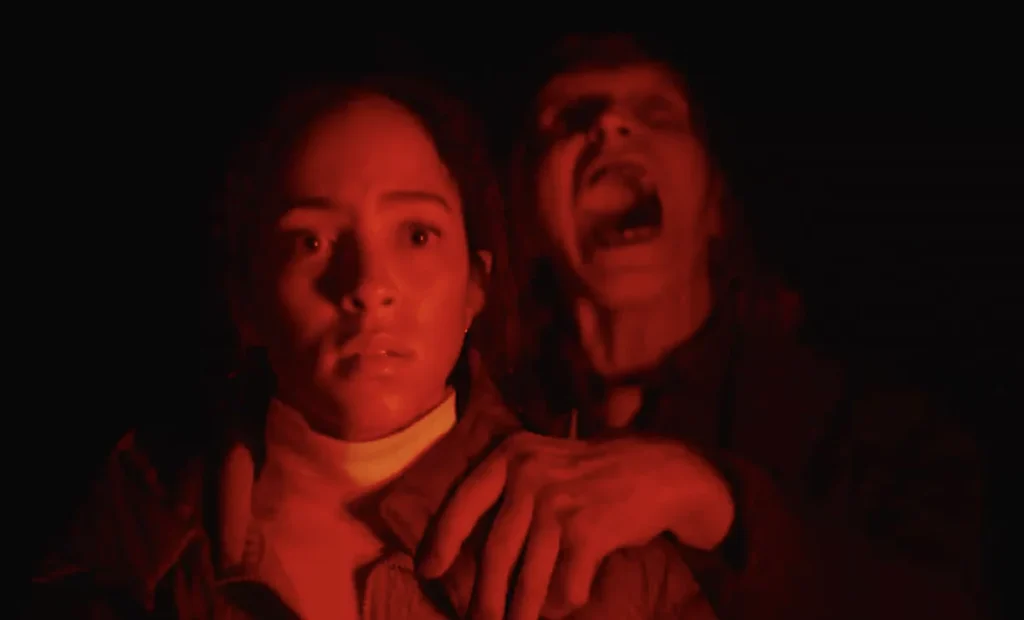
Mark H. Rapaport’s latest cinematic offering, Godhead, has emerged as a significant talking point at the ongoing [Name of Festival, e.g., Fantasia International Film Festival], a cinematic event renowned for showcasing daring and thought-provoking independent cinema. The film, which premiered to an enthusiastic reception, marks Rapaport’s return to the festival circuit following the successful debut of his previous feature, Hippo, in 2023. Godhead delves into challenging and often taboo subjects, including the lingering effects of religious upbringing, the corrosive nature of shame, and the profound psychological impact of abuse. While unflinching in its depiction of sensitive themes such as pedophilia, incest, religious fanaticism, and sexual assault, the film transcends mere provocation, weaving a narrative that is simultaneously philosophical, tender, and visually arresting.
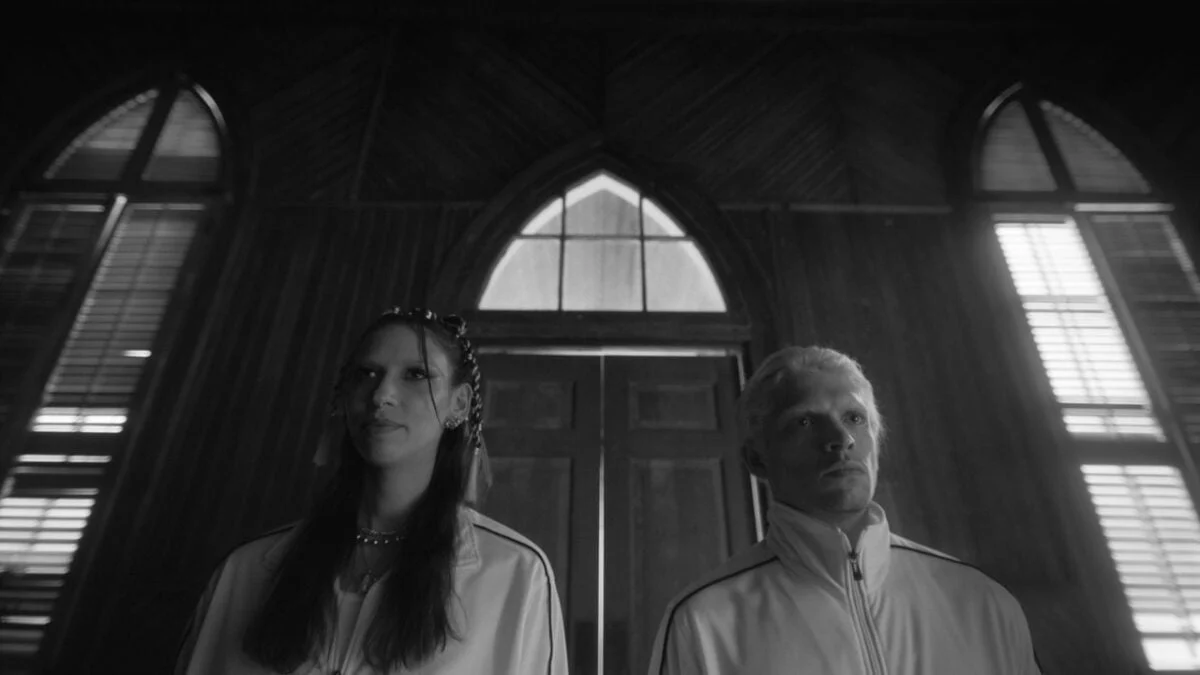
The narrative of Godhead unfolds in the desolate American South, centering on a local priest, portrayed by Al Warren, who finds his solitary existence disrupted by the arrival of an enigmatic pair of fraternal twins. Dressed in stark, matching white tracksuits and sneakers—an aesthetic reminiscent of cult iconography like that of Heaven’s Gate—the twins present themselves as Firstborn (Sarah Coffey) and Secondborn (Kimball Farley). They claim to be on a divine mission: one of them, they believe, is the Holy Spirit, and they seek the priest’s assistance in identifying which sibling carries this celestial designation. Their urgency is palpable; they must ascertain the truth before dawn, as the chosen one is destined to be "shot and ascend to Heaven to complete the ‘Godhead’," a phrase they bear tattooed on their palms as a crudely drawn dove.
Initially, the priest dismisses their claims as the delusion of a disturbed game. His skepticism is evident as he suggests they resolve their spiritual quandary by taking the firearm into the woods and confronting each other. However, this practical, albeit dismissive, advice is met with an inability from the twins to act upon it themselves. This unexpected incapacity transforms the priest from a detached observer into an unwilling participant in a deeply unsettling spiritual reckoning. He is thrust into a confrontation with his own buried demons, forced to grapple with the moral and existential questions posed by the twins’ extraordinary predicament.
The film’s initial stages bear a striking resemblance to the Southern Gothic literary tradition, evoking the stark realism and unsettling atmosphere found in the works of authors like Flannery O’Connor. However, Godhead soon pivots, taking a decidedly surreal and Lynchian turn, a stylistic choice that is likely to resonate with fans of avant-garde cinema, particularly those who appreciate the dreamlike, unsettling qualities of films such as David Lynch’s Eraserhead. This shift in tone and style contributes to the film’s overall enigmatic and thought-provoking nature.
Visually, Godhead is a triumph, standing out as one of the most aesthetically compelling films to emerge from the [Name of Festival]. Cinematographer William Babcock’s luminous black-and-white cinematography imbues the film with a haunting beauty. Kimball Farley, in particular, commands attention with his striking appearance: platinum blonde, seemingly "fried" hair, bleached eyebrows, and wide, dark eyes. Babcock’s lens captures Farley with an almost angelic softness, a choice that amplifies the character’s potential divinity, even when he is engaged in moments of intense physicality or wielding the firearm. This visual approach subtly underscores the film’s central ambiguity regarding Farley’s character—is he a divine entity, or something else entirely?
The ensemble cast delivers performances of remarkable courage and commitment, fully embracing the audacious nature of Rapaport’s material. However, it is Kimball Farley who serves as the film’s emotional core. His portrayal of Secondborn is nuanced and deeply affecting. He and Sarah Coffey, as Firstborn, exhibit a potent chemistry that is evident from their initial appearance in the church. Their interactions hint at a shared history and a secret far more profound and disturbing than the impossible task they present to the priest. The gradual unveiling of their secret is masterfully handled, with the initial revelations eliciting a sense of dawning recognition, while subsequent twists provoke a collective gasp and uncomfortable chuckles from the audience, a testament to the film’s ability to elicit a visceral, albeit complex, emotional response.
Godhead deliberately leaves its audience with a multitude of unanswered questions, fostering a climate of ongoing intellectual and emotional engagement long after the credits roll. The lobby discussions overheard by this correspondent, debating the film’s layered meanings, underscore its power to provoke introspection. Questions such as the inherent worthiness of human beings for forgiveness, the possibility of beauty emerging from profound evil, and the subjective nature of right and wrong are central to the film’s thematic tapestry. Rapaport deliberately refrains from providing definitive answers, choosing instead to explore the complexities of these theological and philosophical quandaries. Even in the aftermath of viewing, the film’s more disturbing implications continue to resonate, prompting a desire for deeper analysis and understanding.
The film’s impact is undeniably profound, moving viewers in unexpected ways. The striking imagery and compelling performances coalesce to elevate the film’s more ambiguous theological and philosophical underpinnings. While not a film one would categorize as a "comfort movie," Godhead possesses a compelling gravity that invites repeat viewings. This suggests that the film touches upon deeply resonant, perhaps even latent, themes within its audience, potentially including personal experiences with religious trauma that require further exploration and processing.
Background and Context of the Festival Premiere
The screening of Godhead at the [Name of Festival, e.g., Fantasia International Film Festival] is particularly noteworthy given the festival’s established reputation for championing boundary-pushing cinema. Fantasia, held annually in Montreal, Canada, is recognized globally as a premier venue for genre films, including horror, fantasy, science fiction, and avant-garde cinema. Founded in 1996, the festival has consistently provided a platform for emerging filmmakers to showcase their work to an international audience and industry professionals.
The festival’s programming often features films that explore dark, complex, and challenging themes, making it an ideal environment for a film like Godhead. The enthusiastic reception mentioned in the original report indicates that the film’s audacious subject matter and artistic execution aligned well with the tastes and expectations of the Fantasia audience, who are often receptive to experimental narratives and unconventional storytelling. Rapaport’s previous success at the festival with Hippo in 2023 likely contributed to the anticipation and positive reception of Godhead, suggesting a growing trust and interest from the festival-goers in his directorial vision.
Chronology of the Narrative and Thematic Development
![‘Godhead’ Plunges Viewers into a Stunning, Unsettling Examination of Fanaticism, Faith, and Forgiveness [Fantasia Review]](https://www.dreadcentral.com/wp-content/uploads/2026/07/GH_Still_6-1200x675.jpg)
The narrative of Godhead can be understood through a progression of escalating tension and revelation:
- Arrival and Proposition: The film opens with the unsettling arrival of the Firstborn and Secondborn twins at the priest’s residence. Their peculiar attire and confident, yet cryptic, pronouncements immediately establish an atmosphere of mystery and unease. They present their central claim: one of them is the Holy Spirit, and they require the priest’s judgment to identify this divine presence.
- Skepticism and Refusal: The priest, grounded in his understanding of the world and his faith, initially rejects their story as a fabrication or a form of mental instability. His attempts to logically dismiss their claims highlight the chasm between their perceived reality and his own.
- Inability and Escalation: The twins’ demonstrated inability to act independently when challenged by the priest marks a turning point. This inability forces him to acknowledge a reality beyond his immediate comprehension, drawing him into their perplexing situation.
- Spiritual Reckoning: The priest’s unwilling involvement initiates a process of confronting his own deeply ingrained beliefs and personal history. The twins’ presence and their existential dilemma serve as a catalyst for his own psychological and spiritual introspection.
- Unveiling of Secrets: As the narrative progresses, the twins’ past and the true nature of their relationship and mission are gradually revealed. The film employs a layered approach to disclosure, with initial revelations setting the stage for more shocking and profound truths.
- Ambiguous Resolution: Godhead concludes not with clear-cut answers, but with a profound sense of ambiguity. The film intentionally leaves the audience to grapple with the ethical, spiritual, and psychological implications of the events depicted, encouraging personal interpretation and reflection.
Analysis of Implications and Broader Impact
The thematic depth of Godhead invites a multi-faceted analysis of its broader implications. Rapaport’s exploration of faith and doubt within a religious framework touches upon universal human experiences. The film challenges conventional notions of divinity and human fallibility, suggesting that the divine might manifest in unexpected or even disturbing ways, and that human capacity for both good and evil is intricately intertwined.
The film’s engagement with taboo subjects, particularly abuse and its lasting psychological impact, places it within a contemporary cinematic discourse that seeks to confront societal traumas. By weaving these sensitive themes into a narrative that also questions the nature of the divine, Rapaport prompts viewers to consider how deeply ingrained societal and religious structures can both protect and harm individuals, and how the wounds of the past can manifest in profound and often inexplicable ways.
The visual artistry of Godhead, particularly its black-and-white cinematography, contributes to its thematic resonance. The starkness and luminous quality of the images can be interpreted as reflecting a spiritual clarity or, conversely, a profound emptiness. The visual representation of the twins, particularly Secondborn’s ethereal yet unsettling appearance, further complicates their identity, blurring the lines between the sacred and the profane, the divine and the disturbed.
The film’s open-ended conclusion is a deliberate artistic choice designed to foster continued dialogue. In an era where audiences are often presented with neatly resolved narratives, Godhead‘s refusal to provide definitive answers can be seen as a powerful statement on the inherent complexity of life, faith, and the human condition. It suggests that some questions are not meant to be answered definitively but are instead intended to be lived with, pondered, and continuously explored. The film’s ability to provoke such deep contemplation positions it as a significant work of art that challenges viewers to confront uncomfortable truths and re-examine their own belief systems.
Artistic and Technical Merits
Beyond its thematic weight, Godhead distinguishes itself through its accomplished artistic and technical execution. The aforementioned cinematography by William Babcock is a standout element, utilizing light and shadow to create a mood that is both haunting and beautiful. The stark contrast of black and white enhances the film’s thematic exploration of duality and the struggle between good and evil, light and darkness, the sacred and the secular.
The production design, while not extensively detailed in the original review, likely plays a crucial role in establishing the film’s oppressive Southern Gothic atmosphere. The priest’s dwelling, the desolate landscapes, and the stark visual presentation of the twins all contribute to the film’s immersive and unsettling world.
The sound design and score, though not specifically mentioned, are critical components in crafting the film’s emotional and psychological impact. In films that delve into surrealism and existential dread, sound can be used to amplify feelings of unease, isolation, and spiritual yearning. It is highly probable that the auditory elements of Godhead work in tandem with its visual storytelling to create a cohesive and potent cinematic experience.
The performances, particularly from Kimball Farley and Sarah Coffey, are central to the film’s success. Their ability to convey complex emotional states and navigate the film’s challenging dialogue with conviction is a testament to their talent and Rapaport’s direction. Al Warren, as the priest, provides a grounding presence, embodying the audience’s initial skepticism and gradual immersion into the film’s surreal reality.
Conclusion
Godhead is a film that defies easy categorization. It is a challenging, yet ultimately rewarding, cinematic experience that probes the depths of human faith, the enduring scars of trauma, and the profound mysteries of the divine. Mark H. Rapaport has delivered a work of art that is as intellectually stimulating as it is emotionally resonant, solidifying his reputation as a filmmaker unafraid to explore the darker, more complex corners of the human psyche and the spiritual landscape. Its premiere at [Name of Festival] marks a significant moment in independent cinema, offering a powerful and unforgettable exploration of themes that are both deeply personal and universally relevant. The film’s lasting impact will undoubtedly be felt in the conversations it sparks and the introspection it inspires.