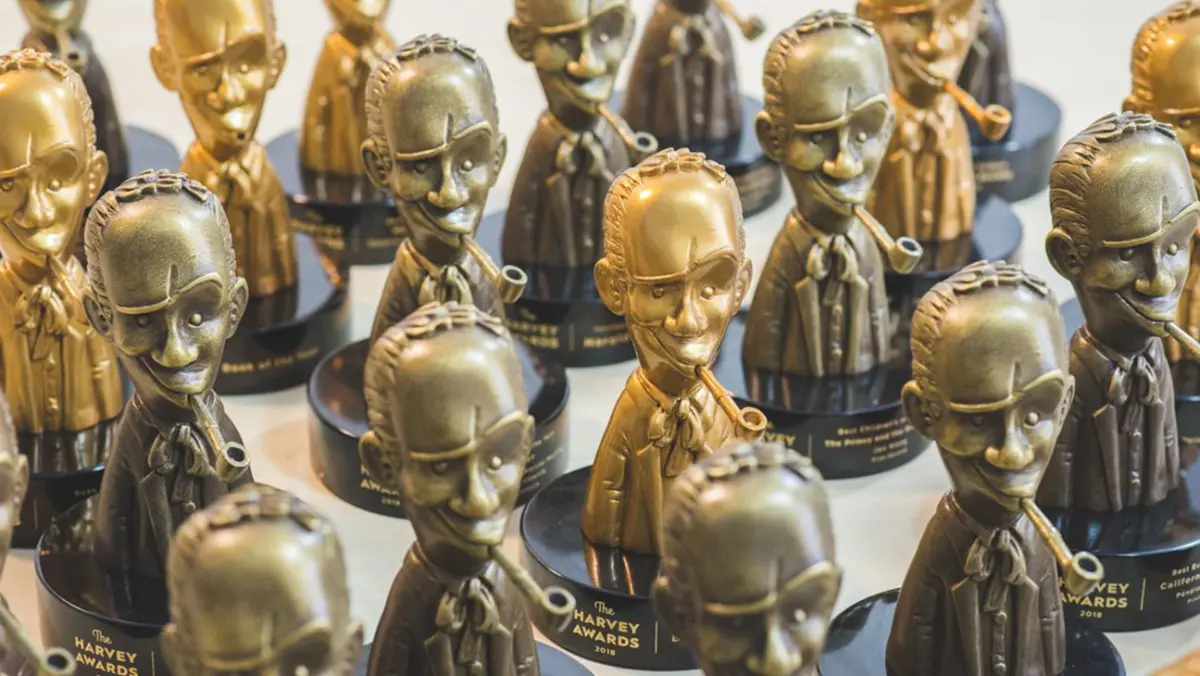
The Bat-signal has been lit, not over the fictional skyline of Gotham City, but in the halls of the 38th annual Harvey Awards, which have announced a historic induction class for their 2026 Hall of Fame. This year’s selections represent a monumental acknowledgement of the creators who defined the caped crusader, coinciding with the 40th anniversary of seminal works that permanently altered the trajectory of the comic book industry. Among the living legends to be enshrined are Frank Miller, inker Klaus Janson, artist David Mazzucchelli, and former DC publisher Jenette Kahn. They are joined by a posthumous class of industry titans, including Jerry Robinson, Dick Sprang, Carmine Infantino, Frank Robbins, Denny O’Neil, Dick Giordano, Jim Aparo, Marshall Rogers, and Tim Sale.
A Legacy of Creative Evolution
The induction ceremony, scheduled for Friday, October 9, during New York Comic Con, marks a significant shift in the event’s presentation. For the first time, the Hall of Fame honors will be bifurcated into an afternoon panel accessible to all badge holders and an invite-only gala in the evening. This structure reflects the growing public interest in the history of the medium, elevating comic creators from niche artisans to figures of mainstream cultural significance.
The selection of this year’s cohort is rooted in the 1986 cultural explosion. The mid-1980s served as a crucible for the comic book industry, during which DC Comics transitioned from a provider of lighthearted serial adventures to a publisher of sophisticated, complex, and often dark graphic novels. At the center of this movement was Jenette Kahn, whose tenure as publisher provided the institutional support necessary for the "British Invasion" of writers and the grittier, auteur-driven style championed by Frank Miller.
Chronology of the Dark Knight’s Ascent
The significance of the 2026 class is best understood through the lens of the milestones these individuals helped reach:
- 1940s–1950s: Jerry Robinson co-creates the Joker and Robin, defining the rogues’ gallery and the sidekick dynamic that would sustain the franchise for decades. Dick Sprang brings a definitive Golden Age aesthetic to the page.
- 1960s: Carmine Infantino revitalizes the Batman brand, moving the character away from camp and toward a more streamlined, modern visual identity, while co-creating Batgirl.
- 1970s: Denny O’Neil and Dick Giordano move Batman back to his "creature of the night" roots in Detective Comics, emphasizing detective work and psychological depth. Jim Aparo becomes a definitive visual architect of this era, eventually drawing the pivotal "Death in the Family" arc.
- 1986: Frank Miller, with Klaus Janson’s inks and Lynn Varley’s colors, releases The Dark Knight Returns. Simultaneously, Miller and David Mazzucchelli redefine the hero’s origins in Batman: Year One.
- 1990s–2000s: Tim Sale, in collaboration with Jeph Loeb, crafts The Long Halloween, a noir-inspired masterwork that remains a top-selling trade paperback decades after its release.
Official Responses and the Industry Perspective
Harvey Awards co-chair John Lind noted that the planning for this year’s class was driven by the convergence of major anniversaries. "As 2026 marks the 40th anniversary of both The Dark Knight Returns and Daredevil: Born Again, we have long planned to induct Frank, one of the most visionary creators in our industry and beyond, alongside his collaborators Klaus Janson and David Mazzucchelli," Lind stated. "Honoring their industry contributions together was a natural fit."
The inclusion of Jenette Kahn is a specific recognition of the "editorial enabler." Her leadership provided the editorial freedom that allowed for the deconstruction of superheroes, a trend that persists in modern cinema and literature.
Frank Miller, in a formal statement, highlighted the interconnected nature of these contributions. "EC Comics were a huge influence on me, and Harvey Kurtzman was obviously a key contributor to what made those books so fantastic! I consider Harvey a master cartoonist, and his use of satire really paved the way for entertainment as a whole. With the anniversary of The Dark Knight Returns and Daredevil: Born Again, it couldn’t be more fitting for me to be inducted alongside Klaus, Dick, Denny, David, and Jenette."

The Socio-Economic Evolution of Comic Creators
The induction of Denny O’Neil—represented by his son, Larry O’Neil—serves as a poignant reminder of the professional evolution of the medium. In the mid-20th century, working in comics was often viewed as a transient or "disreputable" occupation. Larry O’Neil noted that his father’s generation approached the craft with a blue-collar work ethic, prioritizing deadlines and page counts over the hope of future prestige. "My father inherited a lot of self-deprecating humility from that Midwestern family, so he didn’t say that last part out loud very often," Larry said. "Whatever his ambitions were, he certainly didn’t imagine a future with any awards like this one."
This sentiment underscores a broader trend: the transition of comic book creators from anonymous work-for-hire laborers to recognized auteurs. The Harvey Awards, named after the legendary Mad magazine co-founder Harvey Kurtzman, serve as a mirror to this shift, focusing on the craft as a whole.
Analytical Implications for the Industry
The Harvey Awards continue to distinguish themselves by moving away from granular, category-heavy award structures—which can often feel divisive—in favor of a more holistic approach. With only seven categories, including Best Manga, Best YA, and Best Adaptation, the awards emphasize the cultural impact of the work rather than technical minutiae.
The inclusion of a "Best Adaptation" category is particularly telling. As comic books have become the primary source material for the most lucrative intellectual property in Hollywood, the Hall of Fame inductions serve as a reminder of the source. By honoring the creators who built the foundation of the DC Universe, the Harvey Awards are asserting that the current "superhero era" of global media is built upon the specific, innovative choices made by writers and artists in the 1970s and 80s.
Broader Impact and Future Outlook
The 2026 Harvey Awards steering committee—co-chaired by Lind, Nellie Kurtzman, and Chip Mosher—is tasked with maintaining this bridge between the history of the medium and its future. The hosting duties by Brad and Lisa Gullickson, known for their deep-dive analytical work on the Comic Book Couples Counseling podcast, suggests an intent to lean into the critical appreciation of the medium.
As the industry faces new challenges, including the rise of digital consumption and the influence of global markets, the Hall of Fame acts as a stabilizer. It reminds both the public and the industry that the current creative output is part of a continuum. Whether it is the noir-drenched pages of Batman: Year One or the complex psychological narratives established by Denny O’Neil, these works have proven to be durable cultural artifacts.
The 38th annual Harvey Awards will not merely be a night of celebration; they will be an affirmation of the medium’s legitimacy. By inducting the architects of Batman alongside the pioneers of satirical journalism, the committee is signaling that the history of comics is not just a history of characters, but a history of creative courage. As fans gather at the New York Comic Con this October, they will be honoring a group of individuals who, despite working in an industry once dismissed by the mainstream, effectively captured the imagination of the world and refused to let go.