Production Background and Creative Influences
The development of Half began with a clear intent to elevate the action-horror subgenre through technical precision. Central to the film’s identity is the involvement of fight choreographer Very Tri Yulisman, a veteran of the industry whose resume includes pivotal work on Gareth Evans’ The Raid 2 and Timo Tjahjanto’s The Night Comes for Us. Yulisman’s contribution is foundational to the film’s pacing, as the choreography serves as the primary vehicle for character development. In a departure from dialogue-heavy narratives, the film relies on the physical interactions between the protagonists—twins Ethan (Ranjith Sajeev) and Ivy (Aiswarya Raj)—and their adversaries to define the stakes of the conflict.
The aesthetic direction of the project, captured by cinematographer Pappinu, utilizes a frenetic, handheld camera style intended to immerse the viewer in the chaos of combat. This visual intensity is paired with a score by composer Midhun Mukundan, which draws heavily from the minimalist, trumpet-heavy motifs established by Ennio Morricone, grounding the supernatural elements in the harsh reality of the desert wasteland.
Narrative Chronology and Plot Dynamics
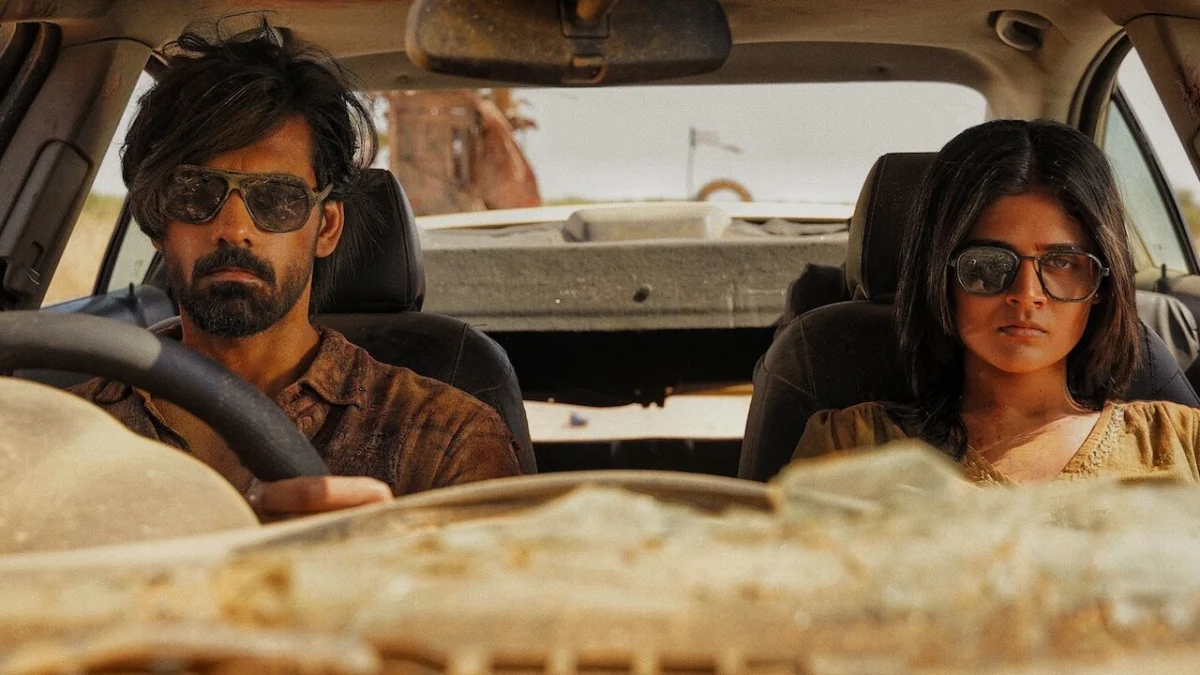
The plot follows a straightforward, linear progression designed to maintain momentum. Ethan and Ivy, portrayed as half-vampires due to their unique lineage, travel through Rajasthan under the pretense of a job opportunity for Ivy. The narrative catalyst occurs early in the first act when the siblings are ambushed by a violent syndicate of highway marauders. The gang, characterized by their lack of moral restraint and extreme cruelty, murders the twins, believing them to be deceased.
The supernatural element—the twins’ regenerative abilities—is triggered by the setting of the sun. The remainder of the film functions as a systematic, road-trip-based revenge procedural. Following their resurrection, the siblings pursue their attackers across a series of desert locales, including isolated outposts and roadside settlements. The film abandons traditional narrative arcs in favor of a "staircase" structure, where each encounter increases in intensity and technical complexity. By the second act, the film mirrors the "point A to point B" momentum of high-velocity road movies like George Miller’s Mad Max: Fury Road, eschewing downtime to focus on the systematic dismantling of the antagonist force.
Technical Analysis of Action Choreography
The film’s reliance on practical effects and innovative stunt work differentiates it from contemporary CGI-heavy action films. Yulisman’s influence is evident in the creative use of environmental objects as weaponry. Given the vampire nature of the protagonists, the film frequently repurposes traditional vampire lore; instead of ornate, gothic stakes, the twins utilize improvised items, including skeletal remains and structural debris, to dispatch their foes.
The choreography is designed to emphasize the disparity in power between the twins and their human attackers. While the villains are depicted as physically imposing and ruthless, the twins operate with a level of clinical, almost surgical efficiency. This stylistic choice creates a sense of inevitable "karmic justice" that drives the audience’s engagement, as the antagonists are established early on through acts of extreme violence, including targeting vulnerable populations, which justifies the subsequent, heightened retaliation.
![‘Half’ Takes Vampires on a Bloody, Full-Throttle Road Trip of Revenge [TIFF Review]](https://www.dreadcentral.com/wp-content/uploads/2026/08/HALF_Still-1200x675.jpg)
The Evolution of Modern Indian Genre Cinema
The release of Half represents a significant shift in the Indian film landscape, which is increasingly moving toward stylized, non-traditional genre narratives that target global audiences. While mainstream Indian cinema has long been dominated by musicals and social dramas, films like Half, alongside other recent action-oriented features such as The Furious, signal a growing appetite for high-concept, Western-influenced genre work.
Industry analysts note that this shift is largely driven by the democratization of production technologies and the influence of international streaming platforms, which have expanded the reach of regional filmmakers. By blending the "curry western" sensibility—a term often applied to Indian films that utilize the motifs of the American Western—with the specific, brutal combat style of Indonesian action cinema, Samjad is effectively participating in a globalized cinematic dialogue.
Critical Implications and Future Outlook
From a production standpoint, Half serves as a case study in "minimalist maximalism." By stripping away subplots, romantic arcs, and extensive world-building, the film avoids the "bloat" that often hampers genre features. The decision to keep the protagonists mostly silent—partially necessitated by the character of Ivy being mute—strips the film of extraneous dialogue, placing the burden of storytelling on the visual medium.
While the film has been noted for its lack of complex character development, this appears to be a deliberate creative constraint. The characters are archetypes of rage and retribution rather than nuanced studies in human psychology. This focus allows the film to function as a pure spectacle. For the studio and the creative team, the success of such a film is measured not by narrative depth but by technical execution, pacing, and the visceral satisfaction provided to the target demographic of action-horror enthusiasts.
The implications for Samjad’s career are clear: having established a distinct, highly stylized visual language with his second feature, he is now positioned within a cohort of directors capable of delivering high-impact genre work that can translate across linguistic and cultural barriers. The film does not attempt to redefine the vampire mythos or offer philosophical insights into the nature of immortality; rather, it seeks to perfect the mechanics of the revenge thriller. As the global market continues to favor high-energy, visually distinct cinema, projects like Half provide a template for how independent filmmakers can utilize limited resources to create globally competitive entertainment products.
Ultimately, Half stands as a testament to the effectiveness of focused, singular-vision filmmaking. By adhering to a rigid stylistic framework and prioritizing the kinetic energy of its action sequences, the production succeeds in its objective of providing a relentless, atmospheric, and highly stylized experience that satisfies the core requirements of its genre while pushing the boundaries of contemporary Indian action cinema.