Television has always existed in a perpetual state of reinvention, yet few series have captured the underlying existential anxieties of the medium quite like HBO’s The Comeback and Max’s Hacks. Across different eras of corporate upheaval, streaming saturation, and technological disruption, both comedies have utilized the trials of aging female entertainers to examine the broader vulnerabilities of Hollywood. As these landmark shows navigate their respective final chapters—confronting the encroachment of generative artificial intelligence, corporate censorship, and shifting economic models—they offer a sharp, timely reflection of an industry struggling to preserve its human core.
The Evolution of Television Satire
When The Comeback premiered on HBO in 2005, the television landscape was undergoing a seismic shift driven by the proliferation of unscripted programming. Created by Michael Patrick King and Lisa Kudrow, the series starred Kudrow as Valerie Cherish, a former sitcom staple desperate for a return to relevance via a behind-the-scenes reality television crew. At the time, reality TV was viewed by traditionalists as a low-cost, tabloid-friendly threat to the scripted medium.
When HBO revived the series for a second season in 2014, the television industry was on the precipice of the streaming wars. The race for subscriber acquisition had unleashed an unprecedented volume of content under the banner of prestige television, a term that quickly lost its distinction through sheer saturation.
Twelve years after that initial revival—having weathered a global pandemic, dual labor strikes by the Writers Guild of America (WGA) and SAG-AFTRA, and ongoing corporate contraction—Kudrow returned for a third and final season. This time, Valerie Cherish finds herself entangled in the most contemporary existential threat facing the entertainment industry: artificial intelligence.
The AI Dilemma in Hollywood
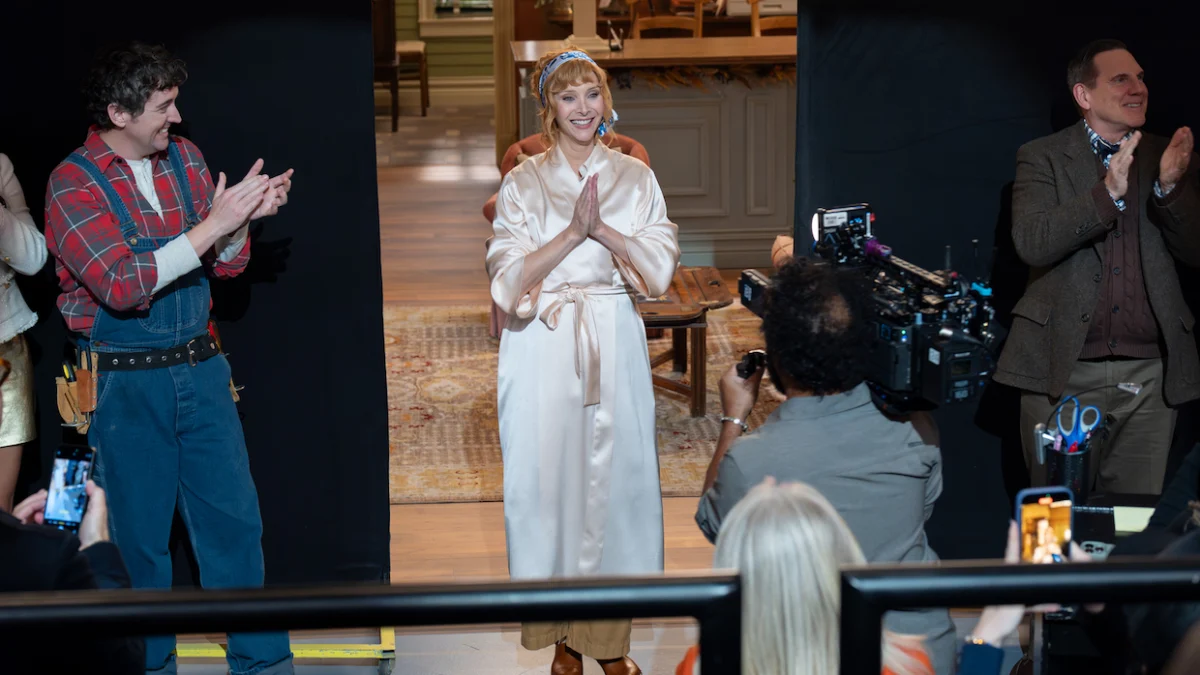
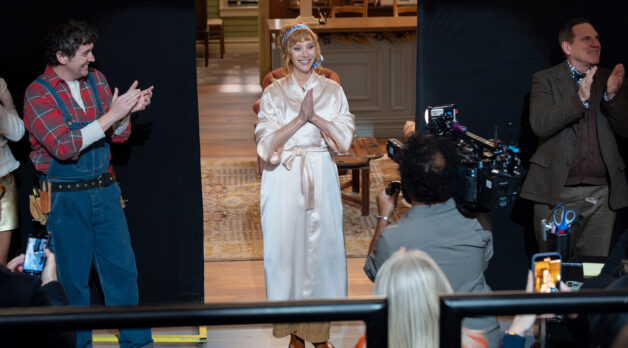
In its third season, The Comeback finds Valerie securing the lead role in a multi-camera sitcom produced for a Big Tech-funded network named NuNet. The series, titled How’s That?!, carries the dubious distinction of being the first television comedy written entirely by an proprietary AI system known as Allassist.
For Valerie, who serves as an executive producer, the job represents a financial lifeline as traditional production opportunities across Hollywood contract. However, it immediately thrusts her into an acute ethical and creative dilemma. The AI-generated scripts rely heavily on recycled material, prompting Valerie’s veteran castmates to recognize dialogue lifted directly from their past projects.
While the premise allows for trademark comedic humiliation, it directly addresses the very real fears of contemporary Hollywood writers. The narrative underscores a fundamental irony: the technology threatens the livelihoods of the human writers who have historically served as Valerie’s chief creative antagonists, while simultaneously delivering a product devoid of genuine human insight.
This sentiment is underscored within the narrative by veteran television director James Burrows, who appears as himself in the series. Following the completion of the pilot, Burrows critiques the predictable nature of the AI-written comedy, noting that true surprise and comedic timing stem exclusively from the collaborative friction of human writers working collaboratively in a room.
Parallels with Hacks and Industry Censorship
A similar thematic exploration of aging, legacy, and technological disruption anchors Max’s Emmy-winning comedy Hacks, created by Lucia Aniello, Paul W. Downs, and Jen Statsky. The series centers on the complex dynamic between legendary stand-up comic Deborah Vance, played by Jean Smart, and her young head writer, Ava Daniels, portrayed by Hannah Einbinder.
Over its multi-season run, Hacks has charted Deborah’s pursuit of late-night television dominance—a historically male-dominated arena. In the penultimate season, Deborah achieves this milestone, only to forfeit the position rather than comply with network demands to terminate Ava.
The subsequent final season examines the aftermath of corporate censorship and non-compete clauses, exploring how networks seek to silence outspoken talent. Notably, the broadcast of the fourth-season finale, which detailed Deborah’s professional downfall, coincided with real-world industry contractions, including network cancellations that amplified the narrative’s commentary on corporate risk aversion.
Artificial intelligence emerges as a parallel threat in Hacks as well. While mounting a comeback performance at Madison Square Garden, Deborah is approached by a venture capitalist proposing to license her likeness and material for a large language model named QuikScribbl. The encounter triggers a sharp monologue from Ava regarding the manufactured inevitability of AI-driven tools in creative fields, culminating in the realization that automated systems fundamentally devalue the decades of lived experience required to master comedic performance.
Chronology of Critical and Awards Recognition
The convergence of these two series highlights a notable moment in contemporary television comedy, particularly as they compete within the same awards cycles.
- 2005: The Comeback premieres on HBO, receiving critical acclaim for its ahead-of-its-time satire of reality television, though viewership remains modest.
- 2014: HBO revives The Comeback for a critically lauded second season, earning Kudrow another Primetime Emmy Award nomination for Outstanding Lead Actress in a Comedy Series.
- 2021: Hacks debuts on HBO Max, quickly establishing itself as a critical darling and sweeping major categories at the Primetime Emmy Awards.
- 2024–2025: Hacks captures multiple consecutive wins, including Best Comedy Series for its third season and historic acting accolades for Jean Smart and Hannah Einbinder.
- 2026: The Comeback returns for its third and final season on HBO, directly addressing generative AI and labor concerns, setting the stage for a head-to-head showdown with Hacks in the upcoming Emmy race.
Broader Economic and Cultural Implications
The parallel trajectories of Valerie Cherish and Deborah Vance illustrate the precarious position occupied by seasoned performers in the modern media economy. Both characters operate in environments where their commercial viability is constantly weighed against shifting technological platforms and risk-averse corporate strategies.
Industry analysts note that as media conglomerates consolidate and prioritize algorithmic predictability over original creative risks, the themes explored in both series resonate beyond satire. The reliance on legacy IP, the integration of generative AI into production pipelines, and the enforcement of restrictive contractual clauses reflect systemic challenges facing creative guilds and talent agencies alike.
Despite the bleak industrial backdrops, both The Comeback and Hacks maintain an underlying optimism. By centering women who have navigated decades of industry turbulence and survived, the creative teams behind these series offer a form of resistance against creative homogenization. Whether through Valerie’s dogged persistence on a tech-funded soundstage or Deborah’s refusal to compromise her artistic autonomy, these narratives suggest that the human element of television production—flawed, collaborative, and entirely unreplicable—remains its most vital asset.