Production Overview and Creative Direction
The anime adaptation is helmed by director Kazuya Fujishiro, whose portfolio includes notable contributions to projects such as Dropkick on My Devil! and the emotionally charged Cells at Work! Code Black. Under the joint production banner of acca effe and Frontier Engine, the series aims to capture the unique blend of horror, dark comedy, and character-driven narrative found in Rokuro Uraji’s original light novel series.
The technical staff supporting Fujishiro includes series screenwriter Yasushi Hirano, a veteran known for his work on classic titles like City Hunter and The Brave Fighter of Legend Da-Garn. They are joined by scriptwriters Kayo Shimoyama and Makuto Okimiru. Character designs, which are central to distinguishing the series’ distinct visual identity, are being handled by Megumi Ishihara, whose previous work on Fate/stay night and Fortune Arterial: Akai Yakusoku demonstrates an aptitude for balancing expressive character work with atmospheric settings.

The production’s soundscape is being managed by sound director Tadashi Jinbo, working with the team at Bisei, while the musical score is composed by ISAO, produced through Frontier Works. The project’s musical identity is further defined by its opening and ending themes: the opening track, "No Reaction," is performed by RetBear, and the ending theme, "Tsukikage" (Moonlight), is performed by Itsuka Saisei.
Cast Additions and Character Dynamics
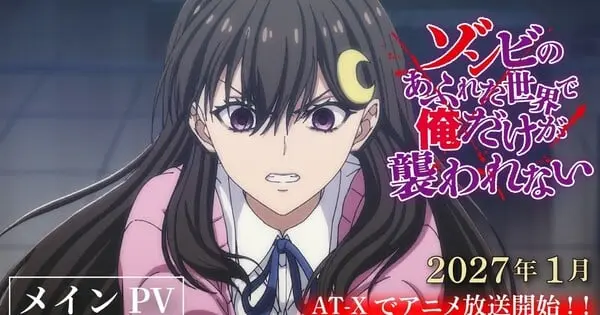
The latest promotional trailer highlights the expansion of the voice cast, providing fans with a clearer look at the supporting ensemble that will interact with the central protagonist. Joining the previously announced leads—Wataru Katō as the protagonist Yūsuke Takemura and Yuno Azuma as Mitsuki Fujino—are Rikako Ito, who will voice the character Tokiko Kurose, and Marie Miyake, who has been cast as Sayaka Makiura.
These additions are crucial to the narrative, as the story revolves around the internal social dynamics of survivors in a post-apocalyptic landscape. The inclusion of these characters suggests a deepening of the plot, moving beyond the initial hook of Takemura’s immunity to explore the complex interpersonal relationships that emerge when the conventional rules of society are replaced by the primal necessity of survival in a world overrun by the undead.

Narrative Context and Source Material History
The story of I am the only one who is not attacked in the world filled with zombies originated on the R18-rated web fiction platform Shōsetsuka ni Narō, where author Rokuro Uraji began serializing the work in January 2013. The series concluded its web run in 2017, having garnered a dedicated following for its unconventional take on the "zombie apocalypse" subgenre. Unlike traditional entries in the genre where immunity to zombies typically functions as a "chosen one" trope used to save humanity, the protagonist Takemura uses his immunity primarily to serve his own personal desires, adding a layer of moral ambiguity and cynical humor that differentiates the series from mainstream survival horror.
In 2016, Frontier Works began publishing the series in print, featuring illustrations by Saburō. The transition from digital serial to physical media allowed for a wider distribution of the narrative, eventually leading to a manga adaptation. Launched in June 2021 by artist Chihiro Masuda, the manga has seen steady growth in popularity, with the fifth volume arriving in August 2025. Furthermore, the intellectual property has demonstrated commercial viability through spinoff content, most notably the Tokiko IF STORY spinoff manga by Robo Kondō, which launched on the Comic CMOA platform in October 2025. The publication of the first volume of this spinoff alongside the fifth volume of the main manga series underscores the brand’s sustained momentum in the marketplace.
Timeline of Development
The path to the screen has been a measured process, reflecting the complexity of modern anime production schedules:

- January 2013: Rokuro Uraji launches the original web novel.
- 2016–2017: Frontier Works publishes three volumes of the light novel series.
- June 2021: Chihiro Masuda debuts the official manga adaptation.
- February 2024: Official announcement of the TV anime adaptation.
- April 2025: Initial window for a 2026 premiere is announced.
- October 2025: Launch of the Tokiko IF STORY spinoff manga.
- January 2027: Scheduled television broadcast premiere on AT-X.
Analysis of Genre Impact and Market Positioning
The "zombie panic action" genre remains a staple of the Japanese entertainment market, yet I am the only one who is not attacked in the world filled with zombies occupies a distinct niche. By subverting the hero’s journey—where the protagonist is granted a supernatural advantage only to use it for personal gratification rather than altruistic salvation—the series challenges audience expectations. This thematic choice positions the anime as a darker, perhaps more grounded exploration of human selfishness in the face of societal collapse.
From a market perspective, the move to a January 2027 release on AT-X is strategically significant. AT-X is known for catering to a demographic that appreciates niche, mature, or high-concept anime series. Given the source material’s roots in the R18 web fiction scene, the selection of this network suggests that the production committee intends to maintain the edge and thematic maturity of the original work without heavily censoring the narrative’s unconventional moral core.
Future Implications for the Franchise
The transition of this property from a web-novel experiment to a multi-platform franchise (including novels, main manga, and spinoff manga) indicates a strong internal confidence from the publisher, Frontier Works. The anime adaptation is the final pillar in this expansion, serving as both a conclusion to long-term promotional efforts and a potential catalyst for further interest in the source material.

As the industry continues to see a high volume of light novel adaptations, the success of this series will likely depend on the visual fidelity of the action sequences and the ability of the voice cast to convey the specific, often selfish tone of the protagonist. With a production timeline that has been extended to ensure quality, and a creative team that has proven experience in both comedy and darker, character-driven storytelling, the series is positioned to be a standout of the Winter 2027 season.
The upcoming months leading up to the January premiere will likely see further promotional activity, including character-focused trailers and perhaps more information regarding the scope of the adaptation. For fans of the original light novel, the wait represents a transition from a written experience to a fully realized audio-visual production, one that aims to redefine the limits of the zombie subgenre by prioritizing character agency—however selfish it may be—over traditional heroic tropes. As the production enters its final stages, the focus remains on delivering a product that stays true to the tone that first propelled Uraji’s work to prominence over a decade ago.