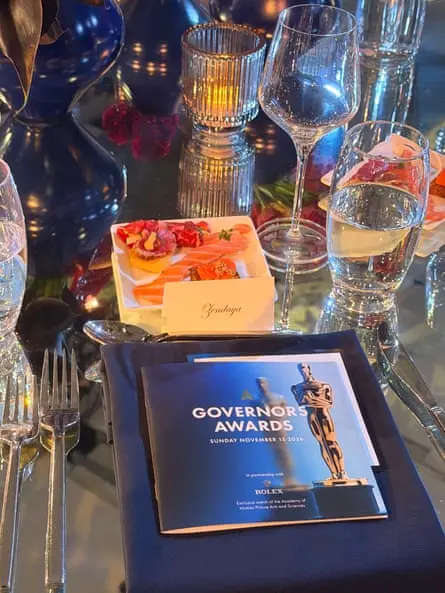
The annual Governors Awards of the Academy of Motion Picture Arts and Sciences often function as an intriguing sociological study of Hollywood’s elite, blending the rigid hierarchies of a high school campus with the immense financial and cultural stakes of the global film industry. Held at the Ray Dolby Ballroom in Hollywood, the untelevised gala brings together roughly 700 of the motion picture industry’s top power players—directors, producers, studio executives, and A-list actors—not to compete for a prize in real-time suspense, but to honor career-defining contributions to cinema.
Unlike the Academy Awards broadcast, which commands global television audiences and drives multi-million-dollar marketing campaigns, the Governors Awards offer a rare, relatively insulated environment. Here, the raw material of Hollywood glamour—later packaged neatly for high-fashion magazines and digital news feeds—is forged in real-time amidst mundane cocktail playlists, hurried networking, and strict seating protocols.
Pre-Gala Atmosphere and the Arrival Hierarchy

The evening began well before the 6:00 PM program commencement. Attendees trickled into the Ray Dolby Ballroom lobby beginning around 4:00 PM, navigating a standard reception space complete with a bar, a s’mores station, and a background loop of default office-party pop music.
The social stratification of the room was immediately palpable. First-time attendees, such as 27-year-old filmmaker Curry Barker, dressed in a sharp white suit, mingled alongside established industry titans. Barker noted the surreal nature of the gathering, admitting to being uncertain of the event’s exact protocols while harboring ambitions of meeting director Christopher Nolan. Elsewhere, independent creators and documentary filmmakers like Nathan Fielder and Lance Oppenheim discussed the critical reception of their recent projects, moving with a surprising social ease that contrasted with their public personas.
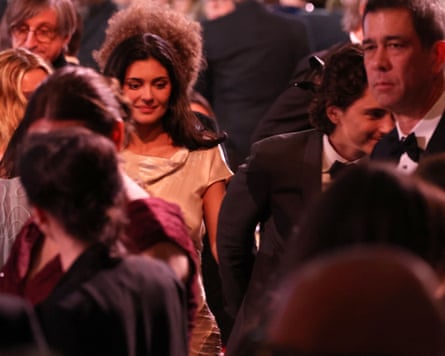
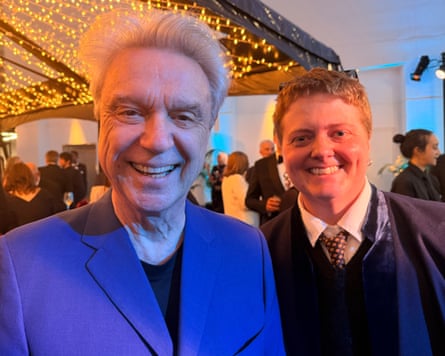
By 5:30 PM, the room’s gravity shifted with the arrival of heavyweights. Willem Dafoe, David Byrne, Matt Damon, John Malkovich, and Edward Norton filtered into the space, engaging in quiet industry chatter, pouring wine, and navigating the intricate network of alliances and studio loyalties. Tom Cruise drew considerable attention for his characteristic intensity, while younger luminaries like Tom Holland and Zendaya maintained a swift, focused pace through the crowd. Security protocols reached a peak around 5:43 PM, anticipating the arrival of Kylie Jenner and Timothée Chalamet. As the couple entered, followed closely by Chalamet taking his place at a prominent table opposite Holland and Zendaya, the room visibly braced itself for the official proceedings.
Chronology of the Ceremony and Official Proceedings
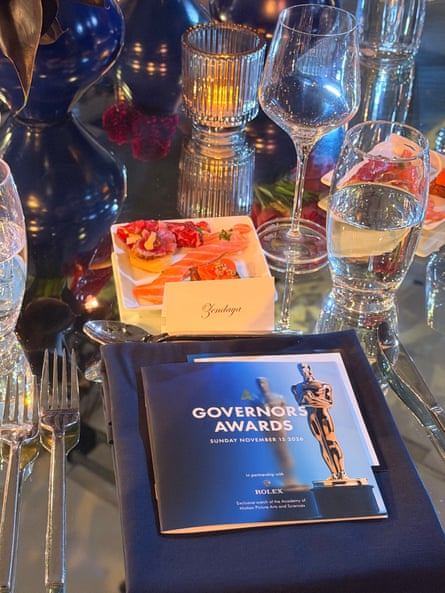
At precisely 6:00 PM, Academy President Lynette Howell Taylor attempted to corral the 700-odd guests into their seats, playfully threatening to call out lingering attendees by name. Among the last to sit was Chalamet, who stood momentarily near his table before complying.
Howell Taylor took the stage to deliver the evening’s opening remarks. Her brief, five-minute address touched upon the endurance of cinema and the looming implications of artificial intelligence within the creative industries.
The formal presentation of honors then proceeded through a carefully curated list of cinematic icons:
- Floyd Norman: The evening’s first honor went to Norman, who broke barriers in 1956 as Disney’s first Black animator, contributing to classic features such as Sleeping Beauty and One Hundred and One Dalmatians. Mahershala Ali presented the Honorary Oscar to a thoroughly appreciative, standing room.
- Glenn Close: Celebrated by long-time friend and Dangerous Liaisons co-star John Malkovich, Close received recognition following eight competitive Academy Award nominations without a win. Malkovich delivered a touching, humorous, and ultimately emotional tribute to Close’s cinematic legacy, prompting a visible emotional response from the actress as she accepted the honor.
- Ridley Scott: Matt Damon introduced a retrospective video package for the legendary director, who was unable to attend in person, highlighting Scott’s enduring influence across science fiction, historical drama, and epic cinema.
- Christine Vachon and Pamela Koffler: Directors Todd Haynes and Julianne Moore presented the Irving G. Thalberg Memorial Award to the pioneering independent producing partners behind Killer Films. Marking a historic milestone, Vachon and Koffler became the first female producing team and the first independent producers to receive the prestigious accolade, punctuated by a surprise musical performance by Neil Patrick Harris.
Supporting Data and Event Logistics Behind the Scenes
While the public perception of Hollywood galas centers entirely on the talent in front of the camera, the Governors Awards rely on an extensive, behind-the-scenes operational infrastructure. Hundreds of event planners, catering staff, security personnel, and technical directors work across multiple days to transform the ballroom space.
Logistical data highlights the scale of such Academy functions:
- Guest Capacity: Approximately 700 high-profile industry professionals, studio executives, and nominees.
- Honoree Count: Five distinct entities recognized annually for lifetime achievement and extraordinary contributions to film arts and sciences.
- Support Staff: A workforce numbering in the hundreds manages security clearances, culinary execution, seating logistics, and media coordination, typically wrapping operations late into the evening as the last limousines depart by 9:00 PM.
Statements and Industry Implications
The Governors Awards serve a vital institutional function for the Academy, bridging the gap between historical preservation and contemporary industry politics. By honoring pioneers like Floyd Norman and championing independent luminaries like Christine Vachon and Pamela Koffler, the Academy signals its institutional values at a time when traditional theatrical distribution models face intense economic pressure from streaming platforms and shifting global box office trends.
The emphasis placed by Vachon and Koffler on thanking below-the-line workers—specifically lawyers, distributors, and assistants—underscores a broader industry shift toward acknowledging the collective labor required to bring independent and boundary-pushing cinema to the screen. In an era marked by corporate consolidation and risk-averse studio greenlighting processes, celebrating figures who have sustained independent queer cinema and high-risk storytelling provides a strategic moral compass for the broader film community.
Broader Impact on Hollywood’s Cultural Ecosystem
As the evening concluded and the ballroom cleared out promptly by 9:00 PM, the broader implications of the gathering resonated beyond the immediate festivities. The event acts as an early indicator of awards-season momentum, establishing relational networks and narrative frameworks that influence upcoming guild awards and, ultimately, the Academy Awards themselves.
However, the juxtaposition between the high-octane glamour broadcasted to the public and the dry, corporate reality observed behind the scenes reveals an industry deeply focused on survival, adaptation, and legacy. As technological disruptions like artificial intelligence and shifting economic realities continue to reshape filmmaking, events like the Governors Awards provide a necessary anchor, celebrating the foundational labor and enduring artistry that define the motion picture medium.