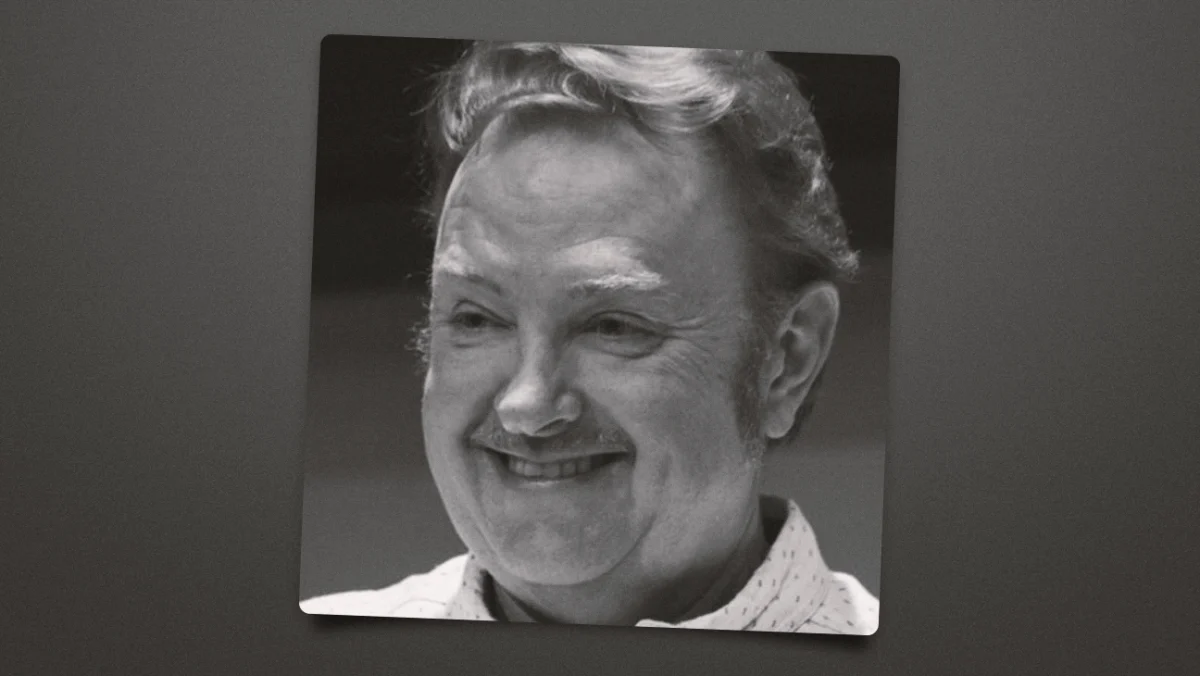
The veteran artist, whose meticulous sketches served as the architectural blueprints for some of the most visually distinct films of the last four decades, passed away on Thursday at a hospital in Orange County, California. His death followed a courageous, years-long battle with cancer, according to reports confirmed by The Hollywood Reporter.
A Career Defined by Visionary Collaboration
Born John Todd Anderson in Springfield, Ohio, Anderson emerged as a pivotal figure in American independent and mainstream cinema during the late 1980s. While storyboard artists often remain unsung heroes of the filmmaking process—operating behind the scenes to bridge the gap between a director’s abstract vision and the camera’s lens—Anderson achieved a rare level of creative integration. His career is perhaps best defined by his lifelong partnership with Joel and Ethan Coen, a collaboration that began with their 1987 sophomore feature, Raising Arizona.
That initial project sparked a professional synergy that would endure for nearly forty years. Anderson’s ability to interpret the Coens’ idiosyncratic blend of dark humor, precise blocking, and sweeping visual storytelling made him an indispensable member of their inner circle. From the neon-drenched absurdity of The Big Lebowski to the austere, monochromatic geometry of The Tragedy of Macbeth, Anderson’s boards provided the structural foundation upon which the Coens built their legendary filmography.
Chronology of a Storied Professional Trajectory
Anderson’s professional life can be viewed as a timeline of modern cinematic evolution. His work spanned the transition from traditional hand-drawn storyboards to the more integrated digital workflows of the 21st century.
- 1987: The release of Raising Arizona marks Anderson’s first credit, cementing his relationship with the Coen Brothers.
- 1990–1998: Anderson works on key Coen projects including Miller’s Crossing, Fargo, and The Big Lebowski, establishing the visual language of the "Coen-esque" aesthetic.
- 1999: Anderson expands his creative footprint by co-writing and directing The Naked Man, a testament to his ambition to participate in the narrative process beyond visual pre-visualization.
- 2000–2010: He branches out to work with a wider array of directors, contributing to Confessions of a Dangerous Mind (2002), The Ladykillers (2004), and Leatherheads (2008).
- 2011–2020: Anderson becomes a staple for high-concept productions, including The Dictator (2012), The Nice Guys (2016), The Predator (2018), and The Old Man & the Gun (2018).
- 2021–2025: Even as his health faced challenges, Anderson continued to contribute to major projects, including Joel Coen’s The Tragedy of Macbeth and Ethan Coen’s latest ventures, Drive-Away Dolls and Honey Don’t!.
The Technical Significance of the Storyboard Artist
To understand Anderson’s impact, one must understand the role of the storyboard artist in a high-budget production. In the context of modern filmmaking, a storyboard is far more than a simple drawing; it is a communication tool that saves millions of dollars in production costs. By pre-visualizing complex action sequences—such as those found in Shane Black’s The Nice Guys or the sweeping, brutal landscapes of True Grit—Anderson enabled directors to communicate their intent to lighting crews, stunt coordinators, and camera operators with surgical precision.
Industry analysts often point to the "Anderson effect" within the Coen filmography: the visual consistency across their diverse genres—from screwball comedy to neo-noir—was maintained largely through the continuity of Anderson’s visual style. His boards allowed for the "Coen look," characterized by low-angle shots, wide-lens distortion, and tight framing, to remain consistent even as the crew size and budget scope shifted over the decades.
Breadth of Influence: Beyond the Coens
While the Coen Brothers represent the primary pillar of his career, Anderson’s portfolio demonstrates a remarkable versatility. His work on The Addams Family (1991) showcased an ability to handle stylized, macabre production design, while his contribution to Warcraft (2016) highlighted his capacity to map out massive, CGI-heavy action set pieces.
His collaborations with Shane Black on The Nice Guys and The Predator showcased a different skill set entirely: the ability to choreograph kinetic, fast-paced action that relied on both comedic timing and physical spectacle. Mark Wahlberg and LaKeith Stanfield’s recent project, Play Dirty, which features Anderson’s final contributions, stands as a testament to his longevity in an industry that often favors younger talent over established veterans.
Official Responses and Industry Legacy
While the industry often reserves its highest honors for directors and cinematographers, Anderson’s passing has elicited a somber response from his peers. Though the Coen Brothers are known for their privacy, the long-standing nature of their working relationship suggests a deep professional loss. Producers and department heads who worked alongside Anderson often described him as a "director’s collaborator"—a man who understood that his work was not the final product, but the vital bridge to it.
The implications of his death reach into the craft of pre-visualization. As Hollywood moves toward virtual production and real-time rendering, the loss of a veteran who bridged the gap between traditional illustration and modern technological application is significant. Anderson served as a mentor to younger artists, ensuring that the foundational principles of composition and storytelling remained at the heart of the technical process.
Personal Life and Survivors
Despite his extensive resume, Anderson remained a relatively private figure. Beyond his professional achievements, he maintained a close-knit life in Southern California. He is survived by his mother, Donna Lou, his sister, Kimberly, and his niece, Haley.
The absence of Anderson’s signature style in upcoming projects will be felt not just by the directors he collaborated with, but by the crews who relied on his precise, evocative sketches to navigate the chaos of a film set. His legacy is etched into the margins of the scripts of some of the most important films of the last forty years.
A Concluding Perspective on Cinematic Craft
In an era where the visual identity of a film is often fragmented by the involvement of hundreds of visual effects artists, J. Todd Anderson represented a singular, cohesive vision. By consistently delivering work that elevated the script to the screen, he proved that the storyboard artist is a storyteller in their own right. His death marks the end of a specific chapter in the history of the Coen Brothers’ filmography and, more broadly, in the tradition of classical cinematic planning.
As the industry looks forward to the releases of Honey Don’t! and Play Dirty, the audience will have one final opportunity to engage with the visual architecture of a man who spent his life mapping out the dreams of others. J. Todd Anderson’s work, preserved in the frames of modern classics, ensures that his influence will continue to inform the visual grammar of American cinema for generations to come. His death is not merely the loss of a technician, but the loss of a vital creative voice that shaped how millions of people perceive the stories unfolding on the silver screen.