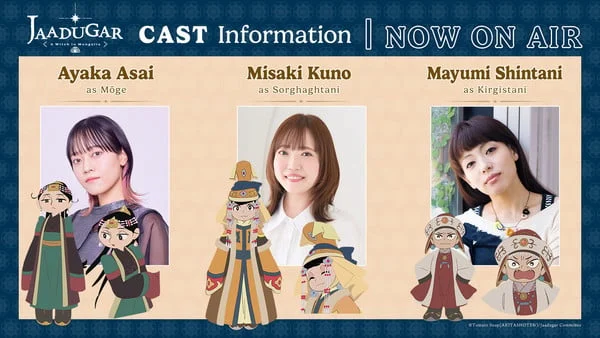
The highly anticipated television anime adaptation of Tomato Soup’s acclaimed manga, A Witch’s Life in Mongol (Japanese Tenmaku no Jādūgar), has officially released a captivating promotional video for its "Mongolia Arc," offering fans a tantalizing glimpse into the unfolding narrative. This significant development was accompanied by the announcement of three new voice cast members, further fueling excitement for the series produced by the renowned Science SARU studio. The promotional video, now available for streaming, showcases dynamic animation and teases the dramatic events and character interactions that will define this pivotal arc of the anime.
A Deep Dive into the "Mongolia Arc"
The newly released promotional video for the "Mongolia Arc" of Jaadugar: A Witch in Mongolia promises an immersive experience into a crucial period of the series’ historical fantasy setting. The arc is expected to delve deeper into the political machinations and personal journeys of its central characters against the backdrop of the formidable Mongol Empire in the 13th century. The visual style, characteristic of Science SARU’s work, hints at a blend of historical authenticity and fantastical elements, with fluid animation and evocative character designs. Early reactions to the trailer suggest a heightened sense of drama and emotional depth, aligning with the critical acclaim the original manga has garnered.
The video’s release on Wednesday marks a significant milestone in the anime’s promotional campaign, building upon the initial buzz generated by its premiere. The "Mongolia Arc" is understood to be a central part of the narrative, exploring the complexities of intercultural exchange, the challenges of integrating advanced knowledge into a different societal structure, and the personal growth of the protagonist, Fatima. The visual cues in the trailer suggest a rich tapestry of cultural details, from traditional Mongolian attire and architecture to the bustling atmosphere of the imperial court.
Expanding the Ensemble: New Voice Talent Joins the Cast
In addition to the visual treat of the promotional video, the production team announced three new additions to the anime’s stellar voice cast. While the specific roles for these new actors are yet to be fully detailed, their inclusion signifies the expansion of the narrative and the introduction of significant new characters. The careful selection of voice actors is crucial for bringing such a historically and culturally nuanced story to life, and the established talent pool for Jaadugar: A Witch in Mongolia suggests a commitment to excellence.
The anime’s staff also took the opportunity to formally introduce the character of Boraqchin, identified as Ægedei’s first wife and Empress, also known as the Great Khatun. This introduction highlights the historical figures and power dynamics that will be explored within the series. The depiction of Boraqchin is expected to be a significant element, as she would have held considerable influence within the imperial court. The visual representation of this character, as hinted at through promotional art, suggests a figure of regal bearing and potential complexity.
Historical Context and Narrative Foundation
Jaadugar: A Witch in Mongolia is an adaptation of Tomato Soup’s manga, A Witch’s Life in Mongol, which debuted in September 2021 on Akita Shoten’s Souffle website. The story is set in the 13th century, during the height of the Yeke Mongol Ulus, the vast Mongol Empire. The narrative centers on Fatima, a skilled physician from Persia, a region renowned for its advanced medical and scientific knowledge. Driven by a desire to utilize her expertise on a grander stage, Fatima travels to the Mongol court. There, she encounters TÆregene, the sixth wife of Ægedei, the second Great Khan. TÆregene is portrayed as a powerful woman grappling with her own complex feelings regarding the empire’s trajectory. The dynamic between these two women is presented as the linchpin upon which the palace’s politics, and ultimately the world’s events, will hinge.

Yen Press is handling the English release of the manga, making the story accessible to a global audience. The publisher’s description emphasizes the narrative’s focus on the intersection of advanced knowledge, imperial power, and the personal ambitions of its female protagonists. This premise sets the stage for a compelling blend of historical drama, political intrigue, and character-driven storytelling.
A Masterful Creative Team at the Helm
The production of Jaadugar: A Witch in Mongolia is helmed by an exceptionally talented creative team, underscoring the project’s ambition and potential. Naoko Yamada, celebrated for her work on The Heike Story, A Silent Voice, and The Colors Within, serves as the chief director. Her distinctive directorial style, known for its emotional resonance and nuanced character portrayal, is expected to bring a unique sensibility to the historical setting. Abel GÆngora, who has contributed to notable projects like DAN DA DAN season 2, Scott Pilgrim Takes Off, and Star Wars: Visions‘ "TO-B1," is directing the series at Science SARU. This collaboration between Yamada and GÆngora, along with the studio’s reputation for innovative animation, promises a visually stunning and artistically compelling series.
Further bolstering the creative force are Kenichi Yoshida (Eureka Seven, Gundam: Reconguista in G), who is responsible for character design and serves as animation chief, and Kanichi KatÆū (Black Clover, The Eminence in Shadow), who oversees the series scripts. The musical score is composed by KÆshirÆ Hino. This assembly of seasoned professionals suggests a meticulous approach to both the visual and narrative aspects of the anime, aiming to create an authentic yet engaging portrayal of the historical period and its characters.
Musical Contributions and Broadcast Details
The anime’s auditory landscape is further enhanced by the contributions of prominent musical artists. The opening theme song, "Stella," is performed by the popular Japanese band SEKAI NO OWARI. The ending theme song, "Hoshi" (meaning "Star"), is provided by the acclaimed artist Queen Bee. These musical collaborations are expected to add another layer of polish and emotional impact to the series, reflecting the themes and atmosphere of the narrative.
Jaadugar: A Witch in Mongolia premiered on July 4th at 11:00 p.m. JST (10:00 a.m. EDT) as a special one-hour broadcast featuring its first two episodes. It aired within the "IMAnimation W" programming block on TV Asahi and its 23 affiliated channels, as well as on BS Asahi. For international viewers, Crunchyroll is streaming the anime as it airs, ensuring global accessibility for fans eager to experience the series.
Global Acclaim and Festival Presence
The anime has already garnered significant international attention, with a world premiere screening of its first three episodes held on June 13th at United Cinemas Aqua City Odaiba. Its selection for the Annecy International Animation Film Festival in the TV Films category is a testament to its artistic merit and potential impact on the global animation scene. Furthermore, Anime Expo hosted the U.S. premiere screening of the anime on July 3rd, marking a key moment for its reception in North America. These events underscore the widespread interest and critical anticipation surrounding the series.
Manga’s Journey and Accolades
The source material, A Witch’s Life in Mongol manga, has enjoyed a successful run since its launch in September 2021. Akita Shoten is set to release the sixth compiled book volume on July 15th. The manga’s journey has been marked by critical recognition and awards. It topped the Kono Manga ga Sugoi! 2023 rankings for female readers and ranked #11 in the 2024 rankings. The series has also been nominated for the prestigious Manga Taisho Awards in both 2023 and 2024, and received a nomination for Best New Manga at the second American Manga Awards. Most recently, A Witch’s Life in Mongol won the grand prize in the Comic division of the 55th Japan Cartoonists Association Awards, further solidifying its status as a critically acclaimed work.

The manga’s publication history has seen it serialized simultaneously on Akita Shoten’s Souffle website and in Mystery Bonita magazine. It was initially published bimonthly before a temporary hiatus due to Tomato Soup’s maternity leave. The series resumed publication on March 25th, indicating a strong commitment to its continued development.
Broader Implications and Future Outlook
The success of Jaadugar: A Witch in Mongolia and its source material has several significant implications. Firstly, it highlights a growing global appetite for anime that explores historical settings with cultural depth and complex female protagonists. The series’ ability to blend historical accuracy with compelling narrative arcs and sophisticated animation positions it as a potential landmark title in the genre.
Secondly, the strong creative team and studio backing suggest a high production value that is likely to resonate with both long-time anime enthusiasts and newcomers. The international distribution through platforms like Crunchyroll ensures that the series can reach a vast audience, potentially increasing the visibility of Japanese animation on a global scale.
The critical and commercial success of the manga, evidenced by its award nominations and wins, provides a solid foundation for the anime’s reception. Fans of the original work will undoubtedly be eager to see their beloved characters and intricate plot brought to life through animation. The promotional video and new cast announcements are strategic steps that serve to maintain and amplify this anticipation, suggesting a well-planned marketing campaign designed to maximize the series’ impact.
The "Mongolia Arc" itself is poised to be a narrative turning point, potentially introducing new conflicts, alliances, and character developments that will shape the remainder of the story. The introduction of characters like Boraqchin and the expansion of the voice cast indicate a deepening of the narrative’s complexity and a commitment to fleshing out the rich world established by Tomato Soup. As the anime progresses, its ability to balance historical authenticity, engaging storytelling, and artistic innovation will be key to its sustained success and its contribution to the broader landscape of animated storytelling. The series represents a compelling fusion of historical research, imaginative storytelling, and cutting-edge animation, promising a viewing experience that is both educational and profoundly entertaining.