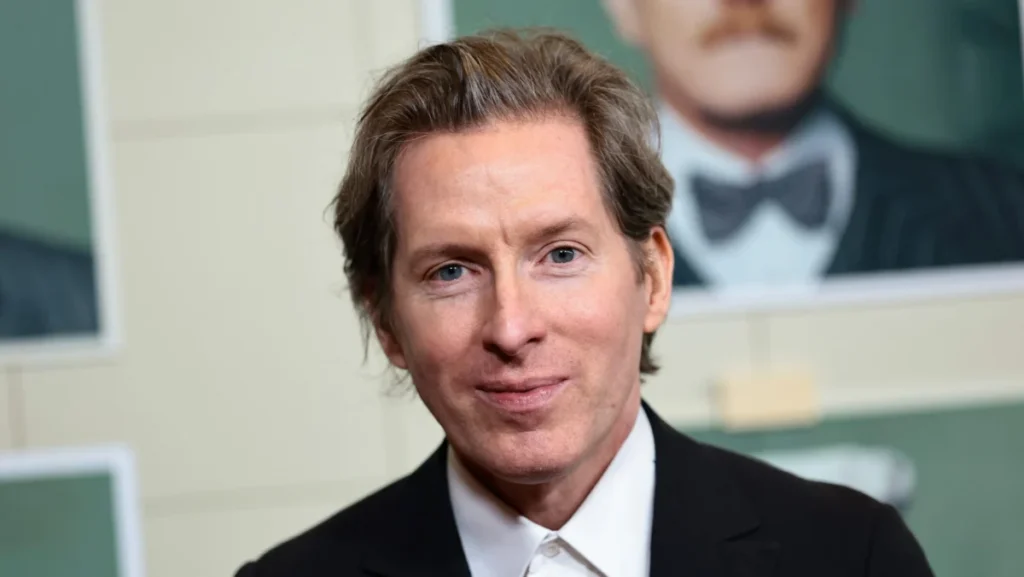
The New York Film Festival (NYFF) commenced its 64th annual iteration on Friday evening at Lincoln Center’s historic Alice Tully Hall with a homecoming of sorts for one of American cinema’s most enduring auteurs. As the lights dimmed for the North American premiere of Paper Tiger, Artistic Director Dennis Lim introduced director James Gray by describing him as "one of the great living American filmmakers." The designation, while high praise, served as a symbolic capstone to a career that has long balanced critical adoration with a persistent, if puzzling, absence from the industry’s most prestigious podiums. For Gray, a Queens native who grew up just miles from the festival’s Upper West Side hub, the evening was marked by a poignant reflection on the trajectory of his life—from a young dreamer questioning the feasibility of a career in film to a seasoned director commanding a full house at one of the world’s most prestigious cinematic gatherings.
A Career Defined by Personal Narrative
James Gray’s relationship with the New York Film Festival is deeply entrenched in the organization’s recent history. He previously closed the festival with the historical drama The Lost City of Z and celebrated a milestone anniversary with a special screening of his semi-autobiographical Armageddon Time. However, the atmosphere surrounding the unveiling of Paper Tiger felt distinct. During his introductory remarks, Gray recalled his parents’ skepticism when he first announced his intention to become a director. "How are you ever going to do that?" they had asked. Standing before the sold-out audience on Friday, Gray, visibly moved, offered a simple, powerful response: "Well, here I am."
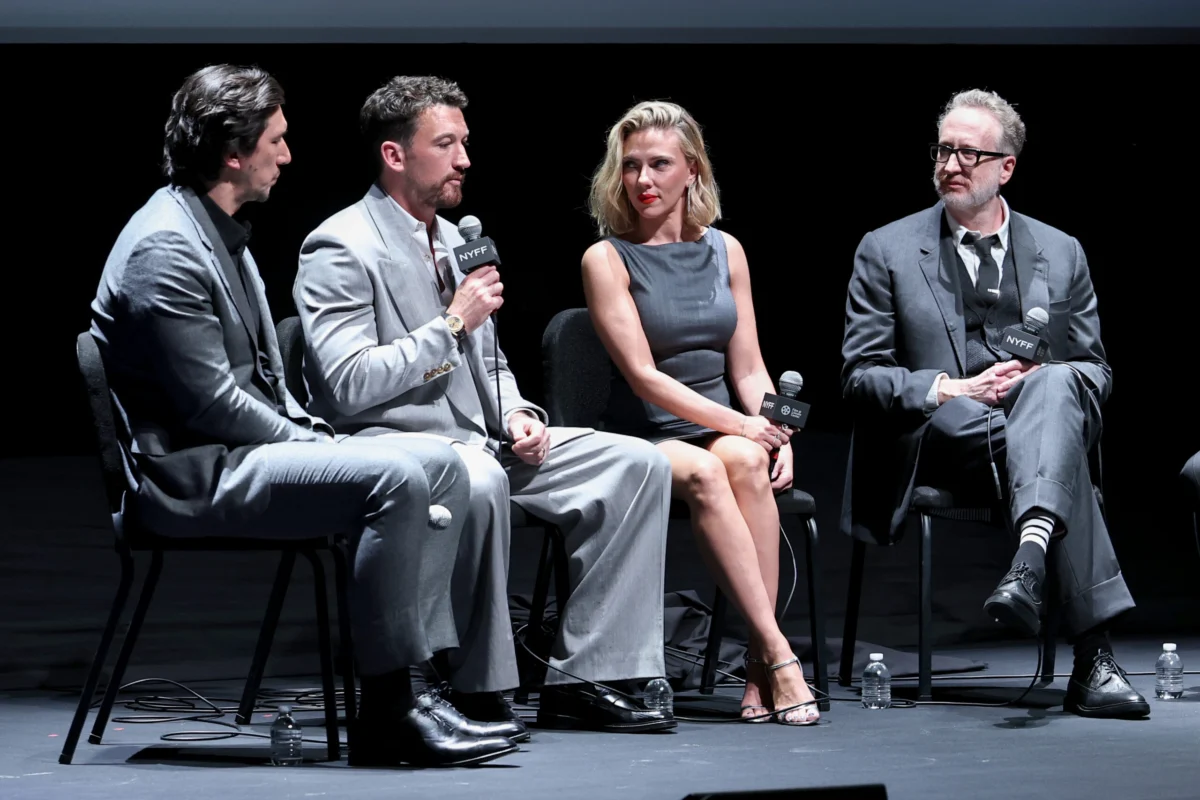
The film itself represents a stylistic synthesis for the director. Paper Tiger blends the tension of a crime-thriller with the intimate, textured family dynamics that have become a hallmark of his filmography. Set against the backdrop of 1986 Queens, the narrative follows brothers Irwin (Miles Teller) and Gary Pearl (Adam Driver) as they become entangled in a high-stakes scheme that threatens the stability of their household. The emotional gravity of the film is anchored by Scarlett Johansson, who portrays Irwin’s wife, Hester. Her character’s struggle to safeguard her children while confronting a personal existential crisis serves as the moral and emotional fulcrum of the story.
The Production Context and Industrial Hurdles
The journey of Paper Tiger to the New York Film Festival has been deliberate and measured. Following a highly acclaimed world premiere at the Cannes Film Festival earlier this year, the film was intentionally held back from public release to maximize its impact during the fall festival circuit. In an industry increasingly dominated by international co-productions and tentpole blockbusters, the emergence of a mid-budget, character-driven American drama is often described by critics as a rarity.
Dennis Lim, in his recent discussions regarding the selection, characterized the film as "miraculous," citing the increasing difficulty of securing financing and distribution for personal, independent American projects. The film’s distributor, Neon, has positioned the project as a cornerstone of its fall slate, opting for a strategic rollout that highlights the "bold classical filmmaking" style for which Gray is known. The presentation at Alice Tully Hall, projected on a 35mm film print, emphasized the director’s commitment to traditional cinematic craftsmanship, a choice that resonated with the festival’s cinephile audience.
Analyzing the Awards Campaign Landscape
With the North American premiere successfully executed, the focus shifts to the upcoming awards season. According to recent reports, Neon has finalized its strategy for the film’s campaign. Miles Teller, whose performance as Irwin provides the narrative’s primary perspective, will be campaigned in the Best Actor category. Meanwhile, Academy Award nominees Adam Driver and Scarlett Johansson will be positioned for Supporting Actor and Supporting Actress contention, respectively.

Statistical analysis of recent Academy Award trends suggests that while the Best Actor field is particularly crowded this year, the transformative nature of the performances by Driver and Johansson may provide the necessary momentum to bolster the film’s broader profile. Historically, Gray’s films have often been overlooked by the major guilds and the Academy despite consistently high critical marks. The "overdue" narrative surrounding the director’s career, bolstered by the enthusiastic reception at both Cannes and the NYFF, provides a compelling, if informal, campaign hook that could influence voting blocs within the industry.
Production Realities and Cast Dynamics
The post-screening Q&A session offered a glimpse into the collaborative environment on set. Scarlett Johansson noted the physical and emotional demands of the production, emphasizing the "labor of love" aspect required to complete a project of this nature. "We were on such a small set, and also it was extremely hot," Johansson recounted. "When you have a group of actors hanging around with everybody on top of each other, honestly, that’s a labor of love. You do it because you love to do it. You end up hanging out and talking and sharing stories and feeling closer. You have to survive the day, and it’s hard making movies, and it’s very hard making movies like this."
This sentiment underscores the logistical challenges inherent in producing independent drama. The film’s tight screenplay and reliance on performance-driven scenes rather than high-concept spectacle necessitated a high level of trust between the cast and the director. For the performers, the film represents an opportunity to engage in a grounded, character-focused exercise that often disappears in an era of CGI-heavy production cycles.
Broader Implications for American Independent Cinema
The success of Paper Tiger at the New York Film Festival serves as a microcosm for the current state of American independent cinema. As studios continue to consolidate their resources around intellectual property and global franchise expansion, films like Gray’s occupy a precarious position. The critical reception of Paper Tiger highlights a sustained audience appetite for stories that prioritize human interiority and historical specificity.
Furthermore, the film’s reliance on a 1980s Queens setting provides a canvas for exploring themes of economic instability and the "American Dream" trope, topics that are frequently revisited in American drama but rarely with the level of scrutiny found in Gray’s work. By grounding the crime-thriller elements in the lived experience of a specific time and place, Gray maintains a continuity with his previous explorations of familial duty and societal pressure.
Looking Ahead: The Road to the Oscars
As the New York Film Festival continues, the attention surrounding Paper Tiger will likely serve as a barometer for how traditional, auteur-driven cinema performs against the high-octane competition of the year-end release calendar. If the film can maintain its current momentum, it may finally provide the recognition that has eluded Gray throughout his multi-decade career.
The industry will be watching closely to see if the combination of Neon’s strategic distribution, the high-profile cast, and the "miraculous" nature of the production will be enough to break the cycle of neglect that has plagued the director’s prior efforts. For now, the film stands as a testament to the resilience of personal filmmaking, a piece of work that, as evidenced by the standing ovation at Alice Tully Hall, remains firmly resonant with the audience it seeks to reach. As the fall season progresses, the narrative of a "long-overdue" filmmaker receiving his due may prove to be one of the most compelling stories of the 2026 awards cycle. Whether or not the Academy ultimately aligns with the critical consensus, the reception at the New York Film Festival has cemented Paper Tiger as a pivotal work in the evolving filmography of James Gray.