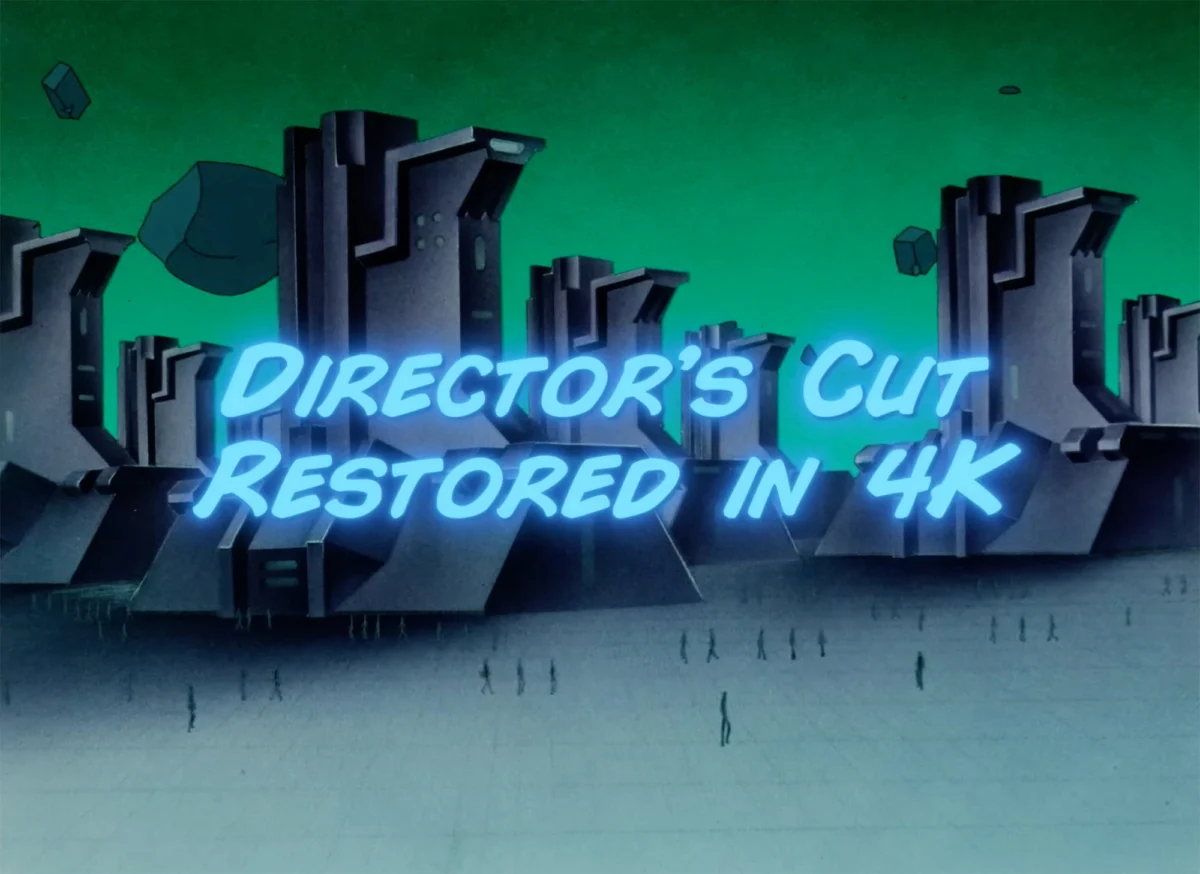
The restoration of René Laloux’s final feature-length animated film, Gandahar, marks a significant milestone in the preservation of 20th-century speculative cinema. Janus Films, the renowned distributor responsible for bringing world-class cinema to North American audiences, has officially debuted a new trailer for the 4K restoration of the 1987 French classic. Scheduled to hit select theaters across the United States starting August 28, 2026, this re-release aims to present the film in its original, uncut French version—a stark contrast to the heavily edited and dubbed English version that dominated American home video and theatrical markets for decades.
This 4K project follows the successful restoration of Laloux’s previous work, The Time Masters (Les Maîtres du temps), which Janus Films released to critical acclaim in 2024. By securing the rights to Gandahar, Janus Films continues its commitment to the legacy of René Laloux, whose surrealist approach to science fiction helped redefine the boundaries of animation as a medium for mature, philosophical storytelling.
The Narrative and Philosophical Framework of Gandahar
Originally titled Les Années-lumière (The Light Years) in France, Gandahar is set in a distant future on a planet where a utopian civilization has achieved a state of total harmony. The inhabitants of Gandahar live in a world devoid of poverty, war, and social strife, sustained by advanced biological engineering and a deep connection to their natural environment. However, this peace is shattered when reports emerge from the frontiers of an encroaching army of metal automatons that turn living beings into stone.

The Council of Matriarchs, the governing body of Gandahar, enlists a young and unproven warrior named Sylvain to investigate the source of this mechanical invasion. During his journey, Sylvain encounters the Deformed—a community of mutants who were the unintended consequences of Gandahar’s past genetic experiments. Cast out and forgotten by the utopian society, the Deformed play a pivotal role in the unfolding conflict.
The story takes a turn into complex temporal mechanics when Sylvain discovers that the true threat is Metamorphis, a sentient, gargantuan brain that exists in a state of chronological flux. The film’s central conceit is summarized by its haunting tagline: "In a thousand years, Gandahar was destroyed, and all its people massacred. A thousand years ago, Gandahar will be saved, and what can’t be avoided will be." This paradox forms the backbone of the film’s climax, as Sylvain and his companion, Airelle, must navigate through time to prevent the inevitable destruction of their civilization.
A Chronology of Production and International Distribution
The production of Gandahar was an ambitious undertaking that spanned several years and involved international collaboration. René Laloux, already famous for the 1973 Cannes-winning Fantastic Planet, sought to adapt Jean-Pierre Andrevon’s 1969 novel, Les Hommes-machines contre Gandahar.
The film’s visual identity was shaped by the legendary French comic book artist Philippe Caza (known as Caza), whose work was a staple of the influential magazine Métal Hurlant. Caza’s designs brought a distinct, organic-mechanical aesthetic to the film, characterized by vibrant palettes and unsettlingly beautiful landscapes.

- 1987: Gandahar premieres in France in December, receiving praise for its unique visual style and intellectual depth.
- 1988: The film is acquired for U.S. distribution by Miramax Films. Under the direction of Harvey Weinstein, the film is significantly altered. It is retitled Light Years, and the English adaptation is written by science fiction icon Isaac Asimov. Several scenes are cut to ensure a PG rating, and the original soundtrack is replaced in parts.
- 1988–2020: For over thirty years, the original uncut version of Gandahar remains largely inaccessible to North American audiences, surviving primarily through niche bootlegs and imported DVDs.
- 2024: Janus Films restores and re-releases Laloux’s The Time Masters, signaling a renewed interest in the director’s catalog.
- 2026: Janus Films announces the 4K restoration of Gandahar, using the original 35mm negatives to restore the film to its intended visual and auditory state.
Technical Significance of the 4K Restoration
The decision to restore Gandahar in 4K resolution is particularly impactful due to the film’s specific animation style. Unlike the smooth, digital surfaces of modern 3D animation, Gandahar features intricate line work and textured backgrounds that benefit immensely from higher resolution and better color grading.
Restoration experts utilized high-end scanning technology to capture the nuances of Caza’s original character designs and the hand-painted environments. The 4K format allows for a more accurate representation of the film’s unique color palette, which uses surreal hues to differentiate the various biomes of the planet Gandahar. Furthermore, the restoration includes a revitalized audio track featuring the original score by Gabriel Yared, whose haunting, synthesizer-heavy compositions provide the atmospheric foundation for the film’s otherworldly setting.
By bypassing the 1988 Miramax edits, this version restores approximately ten minutes of footage that were previously excised for the American market. This includes more experimental sequences and dialogue that deepen the film’s exploration of ethics, genetic manipulation, and the cyclical nature of time.
Supporting Data and Contextual Impact
The re-release of Gandahar is part of a broader trend in the film industry where boutique distributors are investing in the "prestige" treatment of international animation. Data from theatrical market analysts suggests a growing appetite for "event" screenings of classic animation. In 2023 and 2024, similar re-releases of films like Akira and the works of Satoshi Kon saw high per-screen averages, indicating that adult audiences are willing to return to theaters for high-fidelity presentations of historical masterpieces.

René Laloux’s work, in particular, occupies a unique niche. While Disney and Ghibli dominate the mainstream consciousness of animation, Laloux represents the "European school" of speculative animation—a tradition that prioritizes philosophical inquiry and avant-garde visuals over traditional character arcs.
Industry analysts note that the restoration of Gandahar is not merely a nostalgic exercise but a strategic move to preserve a specific era of hand-drawn cinema. The 1980s were a transitional period for French animation, often struggling for funding while attempting to compete with the rising dominance of Japanese and American studios. Gandahar stands as one of the final triumphs of this era before digital production methods began to standardize the industry’s aesthetic.
Official Responses and Anticipated Reaction
While Janus Films has let the trailer and the 4K imagery speak for itself, the announcement has triggered responses from animation historians and preservationists. Early reactions from the film community suggest that the restoration is being viewed as a corrective measure to the "Light Years" era.
"The 1988 American version, while featuring the writing of Isaac Asimov, was ultimately a compromised vision," says animation historian Dr. Elena Rossi (in a statement reflecting the general consensus of the field). "To finally have the uncut Laloux version available in a format that respects the original grain and color of the 35mm print is a monumental win for film history. It allows us to see the film as a cohesive piece of art rather than a localized product."

The anticipation for the August 28 release is high among "Cinephile" circles and sci-fi enthusiasts. The film’s themes of environmental collapse and the dangers of technological overreach remain strikingly relevant in the mid-2020s, perhaps even more so than they were in 1987.
Broader Implications for the Future of Classic Animation
The success of the Gandahar restoration could pave the way for more intensive efforts to preserve other "lost" or marginalized animated features from the 1970s and 80s. As streaming platforms face criticism for the ephemeral nature of their libraries, physical and theatrical distributors like Janus Films and The Criterion Collection are carving out a role as the definitive custodians of cinema.
Furthermore, the theatrical rollout of Gandahar serves as a reminder of the importance of the big-screen experience for medium-specific art. The scale of Metamorphis and the intricate details of the Men of Metal are designed for a cinematic canvas. By offering this film to a new generation of viewers, Janus Films is ensuring that René Laloux’s legacy remains a living part of the cinematic conversation rather than a footnote in an encyclopedia.
As the August 28 premiere approaches, theaters in major hubs such as New York, Los Angeles, and Chicago are expected to host special screenings, potentially featuring panel discussions on Laloux’s impact and the technical challenges of 4K animation restoration. This release is more than a simple movie premiere; it is a cultural reclamation of a visionary work that was once nearly lost to the shears of international distribution.