The global film community is mourning the loss of Jeremy Thomas, the fiercely independent British producer whose career defied commercial convention, championed cinematic outsiders, and delivered some of the most daring, visually arresting, and boundary-pushing motion pictures of the late 20th and early 21st centuries. Thomas passed away at the age of 77, leaving behind an extraordinary legacy that spanned more than five decades, earned him international acclaim including an Academy Award, and cemented his status as one of the last great, cigar-smoking mavericks of international cinema.
Known for his audacious appetite for risk and his unwavering dedication to original storytelling, Thomas once encapsulated his editorial philosophy when asked if he had ever cautioned restraint from a director: “My nature would be to go further and see what we can get away with.” Throughout his prolific career, he did precisely that, collaborating with legendary auteurs such as Bernardo Bertolucci, Nicolas Roeg, David Cronenberg, Nagisa Oshima, Jim Jarmusch, and Takashi Miike to produce films that challenged societal taboos, pushed artistic envelopes, and expanded the boundaries of what independent cinema could achieve on a global scale.
A Legacy Born of Cinematic Royalty
Born in London to director Ralph Thomas—best known for the popular Doctor comedy series beginning with 1954’s Doctor in the House—and Joy (née Spanjer), Thomas was steeped in the film industry from his earliest days. His uncle, Gerald Thomas, directed all 31 films in the iconic Carry On franchise. Growing up immersed in this environment, Thomas recalled early childhood memories of playing on studio sets and living near Pinewood, casually rubbing shoulders with screen legends like Katharine Hepburn, Brigitte Bardot, and Dirk Bogarde without fully grasping their stature at the time.
Shunning conventional higher education, Thomas chose to learn the craft from the ground up. He entered the industry through processing laboratories and editing rooms, building an invaluable technical foundation. His early credits as an assistant editor included the folk-horror film Tam Lin (1970)—the sole directorial effort of actor Roddy McDowall—Ken Loach’s uncompromising social drama Family Life (1971), and the influential reggae-infused musical crime drama The Harder They Come (1972). These formative experiences instilled in him a deep appreciation for gritty, authentic, and counter-cultural narratives that would define his later career as a producer.

The Maverick Ascent and International Breakthroughs
Thomas made his feature-length producing debut in 1976 with Mad Dog Morgan, an early entry into the rugged "Ozploitation" cinema movement that starred Dennis Hopper as a 19th-century Australian bushranger. Thomas later described Hopper’s performance as occurring "in the most extreme stupor of excess," setting an early tone for the high-wire acts that would characterize his filmography.
This defiant initiation was followed by a string of provocative and idiosyncratic projects. He partnered with Jerzy Skolimowski on The Shout (1978), starring Alan Bates as a man wielding a lethal sonic weapon, and produced Julien Temple’s chaotic Sex Pistols chronicle The Great Rock ’n’ Roll Swindle (1980).
Thomas then embarked on a pivotal creative partnership with visionary director Nicolas Roeg, producing three distinct, highly challenging films. Their first collaboration, Bad Timing (1980), examined a harrowing, destructive love affair fraught with jealousy, attempted suicide, and sexual assault. The film faced immediate institutional hostility; Rank, the studio behind it, stripped its prints of the iconic gong ident and denounced the project as “a sick film made by sick people for sick people.” Undeterred, Thomas and Roeg reunited for Eureka (1983), starring Gene Hackman, and Insignificance (1985), an imaginative dramatic exploration of an encounter between Marilyn Monroe and Albert Einstein.
Conquering the Forbidden City: The Triumph of The Last Emperor
Despite his affinity for subversion and arthouse edge, Thomas orchestrated what remains one of the most remarkable commercial and critical triumphs in independent film history: The Last Emperor (1987). Directed by Bernardo Bertolucci, the biographical epic chronicled the extraordinary life of Puyi, the final emperor of China’s Qing dynasty, who ascended the throne as a toddler in 1908 before facing exile decades later.
The production was a logistical mountain to climb. Raising a $25 million budget, Thomas achieved an unprecedented diplomatic and logistical coup by securing permission for a Western production to film inside Beijing’s legendary, tightly guarded Forbidden City. Reflecting on the monumental undertaking, Thomas admitted, “If I’d thought about what we were going to do and how we were going to do it, I’d never have done it because it was impossible.”
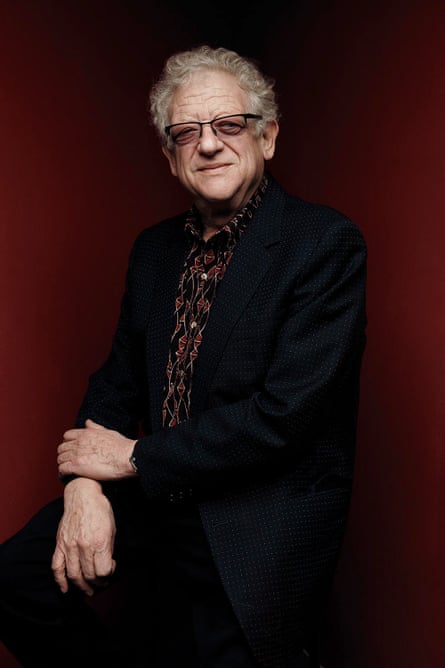
Bertolucci placed absolute faith in Thomas from their very first encounter, noting that the producer possessed the "enthusiasm of a teenager… and the reassurance of a teddy bear." The gamble paid off exponentially. The Last Emperor dominated the 60th Academy Awards in 1988, converting every single one of its nine nominations into Oscars, including Best Picture and Best Director. Caught entirely unawares by the Best Picture win, Thomas famously forgot to read his prepared acceptance speech, yet managed to eloquently declare the victory “a real affirmation for me that independent cinema can be both epic and popular.”
Provocation, Controversy, and Artistic Integrity
Thomas’s commitment to uncompromising art frequently courted public controversy, though he maintained that provocation was a natural byproduct of pushing creative boundaries rather than an intentional goal.
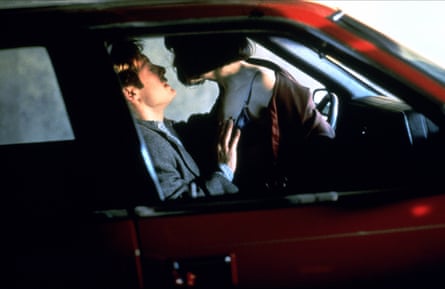
In 1991, he teamed up with David Cronenberg to adapt William S. Burroughs’s notoriously unfilmable novel Naked Lunch, featuring grotesque imagery including a sentient, talking typewriter. Five years later, Thomas and Cronenberg reunited for Crash (1996), an adaptation of J.G. Ballard’s novel exploring urban alienation and individuals finding sexual arousal through automobile collisions.
The film sparked an immediate and ferocious international firestorm. Premiering at the Cannes Film Festival, Crash was awarded a special jury prize over the explicit objections of jury president Francis Ford Coppola. When the film reached the United Kingdom, it provoked moral outrage from the tabloid press. The Evening Standard declared it went “beyond the bounds of depravity,” while the Daily Mail campaigned aggressively for a nationwide ban. Westminster Council heeded these calls by blocking screenings within its borough, though the Royal Automobile Club (RAC) dryly suggested the film might possess unforeseen educational value regarding road safety.
Ballard remained a vital literary touchstone for Thomas, who frequently referred to the author as “my Melville.” Decades later, Thomas produced Ben Wheatley’s film adaptation of Ballard’s high-rise satire High-Rise (2015). Wheatley aptly summarized Thomas’s singular stature in the industry: “He was almost like a genre himself: the last of the great cigar-smoking producers.”
A Global Portfolio of Auteurs
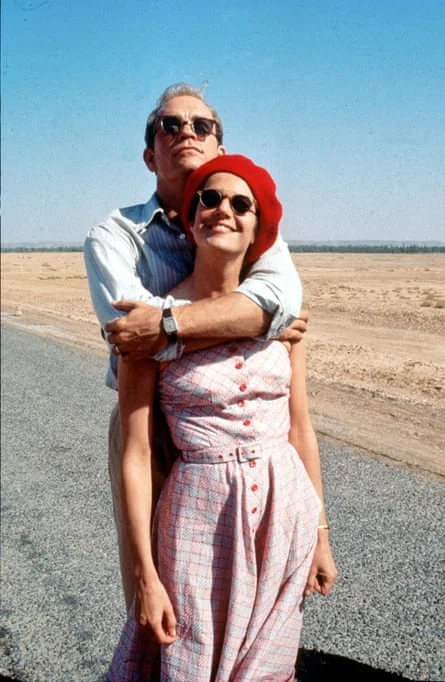
Throughout his extensive career, Thomas’s production slate read as a masterclass in global arthouse cinema. His adventurous spirit took him to North Africa for Paul Bowles’s The Sheltering Sky (1990), directed by Bertolucci and starring Debra Winger and John Malkovich—a grueling desert shoot Thomas characterized as “complete lunacy” that nearly mirrored the psychological unraveling of its protagonists.
His diverse credits span decades and continents:
- 1983: Merry Christmas, Mr. Lawrence, Nagisa Oshima’s powerful wartime drama exploring cross-cultural tension and homoeroticism, starring David Bowie.
- 1993 & 1995 & 2003: Further collaborations with Bertolucci on Little Buddha (starring Keanu Reeves), Stealing Beauty (starring Liv Tyler), and The Dreamers.
- 2000: Jonathan Glazer’s razor-sharp, electrifying British gangster thriller Sexy Beast, featuring a career-defining, ferocious performance by Ray Winstone.
- 2006: Richard Linklater’s satirical corporate exposé Fast Food Nation.
- 2010 & 2019: Collaborations with Japanese cult master Takashi Miike on the visceral period action epic 13 Assassins and the Yakuza-infused dark comedy First Love.
- 2013: Jim Jarmusch’s stylish, melancholy vampire romance Only Lovers Left Alive, starring Tom Hiddleston and Tilda Swinton.
In 1999, Thomas stepped behind the camera to direct his sole feature film, All the Little Animals, a poignant fable adapted by his wife Eski from Walker Hamilton’s novel, starring Christian Bale and John Hurt. Though he modest described it as “a very naïve kind of film,” he expressed enduring pride in the project.
Industry Impact and Preservation
Beyond production, Thomas left an enduring imprint on film distribution and curation. He co-founded HanWay Films, building a massive catalogue of approximately 500 independent titles. He viewed this collection not merely as an economic asset, but as an ecological garden requiring constant cultivation. “I’m still looking after my films in the catalogue and trying to get other people to look after their films… to try to keep them alive,” he reflected. “A film has to be run through a projector to be alive, unfortunately, and those electric shadows are few and far between now.”
Tributes from collaborators underscore the profound personal and creative impact he had on the film industry. In Mark Cousins’s affectionate 2021 documentary The Storms of Jeremy Thomas, Tilda Swinton described him as “so rock ’n’ roll” and likened him to a modern pirate, while Debra Winger praised him as “searingly bright, [with] incredible taste, [who] is totally playful and can be very serious. All that at once.”
Thomas’s relentless work ethic endured to his final days. Projects bearing his touch continued to grace international film festivals, including Takashi Miike’s Bad Lieutenant: Tokyo at Toronto and Werner Herzog’s Bucking Fastard in Venice.
Jeremy Thomas is survived by his three children: Jessica, from his first marriage to Claudia Frolich; and Jack and Joshua, from his marriage to Eski (née Vivien Coughman), who preceded him in death in 2023. He leaves behind an indelible monument in celluloid—a testament to what can be achieved when courage, unyielding artistic vision, and a refusal to compromise meet in the dark of a cinema.