Actor John Leguizamo has garnered widespread critical acclaim for his transformative portrayal of Eumaeus in Christopher Nolan’s highly anticipated cinematic adaptation of The Odyssey. The role marks a significant departure from the typecasting that has often defined Leguizamo’s four-decade-long career, with industry observers and audiences alike heralding it as a career-defining performance that underscores the actor’s profound depth and versatility. Nolan’s audacious decision to cast Leguizamo as the loyal swineherd of Odysseus has not only challenged conventional interpretations of ancient Greek narratives but also championed a new era of inclusive storytelling in epic cinema. This ambitious project, rich with dramatic intensity and visual grandeur, features an ensemble cast including Matt Damon as Odysseus, Tom Holland as Telemachus, and Anne Hathaway as Penelope, and contains key plot details from the film.
A Career Forged in Versatility, Often Constrained by Typecasting
John Leguizamo’s extensive career, spanning over 40 years, has seen him navigate a diverse range of cinematic and television landscapes. He has cultivated notable recurring collaborations with esteemed directors such as Baz Luhrmann, appearing in critically acclaimed films like Romeo + Juliet (1996) and Moulin Rouge! (2001), and with Jon Favreau, lending his talents to projects like Chef (2014) and The Mandalorian (2019-present). Despite his proven range, Leguizamo has frequently expressed frustration with the limitations imposed by industry perceptions, often finding himself confined to roles that perpetuate stereotypes. "It’s as if, because I’m a Latin man, I always have to play the villain or the aggressor or a perp," Leguizamo remarked in a recent interview, articulating a sentiment shared by many actors of diverse backgrounds.
This systemic typecasting has often overlooked the nuanced talent demonstrated in his acclaimed solo stage performances. Shows like Latin History for Morons (2017) and Freak (1998) earned him prestigious accolades, including Emmy and Tony Awards, and garnered widespread critical recognition for their insightful humor and raw emotional honesty. These one-man shows, where Leguizamo embodied a multitude of characters, served as powerful reminders of the profound theatrical capabilities and narrative range that the Tisch School of the Arts alumnus possesses, capabilities that the big screen had historically struggled to fully embrace.
Christopher Nolan’s Visionary Casting: Eumaeus Reimagined
Christopher Nolan, celebrated for his intellectual blockbusters and meticulously crafted narratives, including Inception, Interstellar, and the Oscar-winning Oppenheimer, has consistently demonstrated a penchant for pushing cinematic boundaries. His directorial approach, characterized by a blend of grand spectacle and intimate human drama, made him an ideal candidate to reinterpret Homer’s epic poem. For his ambitious take on The Odyssey, Nolan reportedly sought out Leguizamo for one of the film’s most pivotal roles, signaling a deliberate move to challenge established casting norms and harness Leguizamo’s underutilized dramatic prowess.
Nolan cast Leguizamo as Eumaeus, the steadfast and loyal swineherd of Odysseus. In Homer’s original epic, Eumaeus is a pivotal figure, a symbol of unwavering fidelity who provides comfort and counsel during Odysseus’s long-awaited return. Nolan’s adaptation, however, significantly expands Eumaeus’s narrative arc, transforming him into a character of profound emotional depth and quiet agency. Leguizamo’s Eumaeus grapples with profound grief over his master’s prolonged absence, all while cannily maneuvering behind the scenes to safeguard Odysseus’s family and legacy. He becomes a vital mentor to Odysseus’s son, Telemachus (Tom Holland), advising him on how to assume leadership, and subtly works to protect Penelope (Anne Hathaway) from the encroaching chaos and avarice of the suitors infesting Ithaca.
This casting choice resonated deeply with Leguizamo. "Christopher Nolan saw something very different in Leguizamo," the actor noted, acknowledging the director’s unique perception. "He’s the most loyal character in Western literature," Nolan reportedly told Leguizamo, a description that struck a chord with the actor’s personal values. "Loyalty to me is such a huge, huge virtue for me. If I could be a sociologist, it’s also such a huge part of Latin culture to be loyal to family, loyal to a friend. It’s loyalty above everything else." This alignment between character and actor allowed Leguizamo to infuse Eumaeus with an authentic emotional resonance rarely afforded to him on screen.

A Performance of Heartbreaking Vulnerability
Leguizamo’s portrayal of Eumaeus has been lauded as the emotional core of Nolan’s The Odyssey. Critics and early viewers have highlighted a "delicate, moving, heartbreaking performance" that captures the essence of unwavering devotion and profound loss. The emotional intensity culminates particularly when Odysseus returns home in disguise, and Eumaeus, initially disempowered and unaware of his master’s true identity, allows a lifetime of suppressed emotions to surface. This raw, unbridled vulnerability, a facet Leguizamo admits he rarely had the opportunity to display on screen, becomes a defining feature of the film.
The actor’s commitment to the role extended to a rigorous method acting approach. For Leguizamo, method acting entails extensive research, immersing oneself in the character’s experiences, and undergoing genuine emotional transformations rather than mere imitation. To embody Eumaeus, who in Nolan’s adaptation is aged and visually impaired, Leguizamo undertook significant preparation. He studied the movements and mannerisms of older individuals and drew inspiration from a legally blind high school friend, practicing navigation in darkness to understand the protective instincts and spatial memory developed by those with sight impairment.
Physically, the transformation was equally demanding. Leguizamo endured hours of prosthetic makeup application by the acclaimed artist Luisa Abel, which involved skillfully applied glue to stretch and age his skin, along with the addition of age spots. His hair was bleached over two five-hour sessions, as both he and Nolan eschewed wigs for a more natural look. Crucially, he wore specially fabricated, hand-painted lenses designed to simulate cataracts, one fully opaque and the other partially, rendering him functionally blind during filming. "I couldn’t really see," he recounted, emphasizing the profound immersion required for the role. This physical embodiment, coupled with his deep emotional work, allowed Leguizamo to access "really difficult, painful emotions from the depth of my soul."
The Epic Scale and Intimate Craft of Nolan’s Production
Working on a Christopher Nolan production meant navigating an environment where epic scale seamlessly coexisted with intense, intimate character work. Leguizamo described filming his scenes on a 900-foot cliff overlooking the Mediterranean, braving crashing winds and hazardous plant life, all while operating within the colossal IMAX format. Yet, Nolan’s directorial presence ensured that the grandeur never overshadowed the internal journey of the actors.
Nolan’s old-school approach, standing directly behind the camera rather than observing from a remote "Video Village," fostered a uniquely intimate atmosphere on set. Leguizamo found this proximity empowering. "Working with Chris Nolan, he’s so present because he stands right behind the camera, old-school… You get a chance to really be with him and you feel really seen," he explained. This direct engagement allowed Leguizamo to fully delve into his method acting process, including moments of intense emotional preparation where he would "work myself into a mood… jumping up and down, hitting myself, yelling, crying." Nolan’s fascination with this process underscored his commitment to authentic performances, regardless of the film’s massive technical scope. One memorable instance involved Nolan offering Leguizamo his coat during a freezing "fever-dream" scene, a gesture of warmth that even prompted a jocular remark from co-star Matt Damon, who had endured his own challenging scenes in the ocean.
Global Premiere and Camaraderie
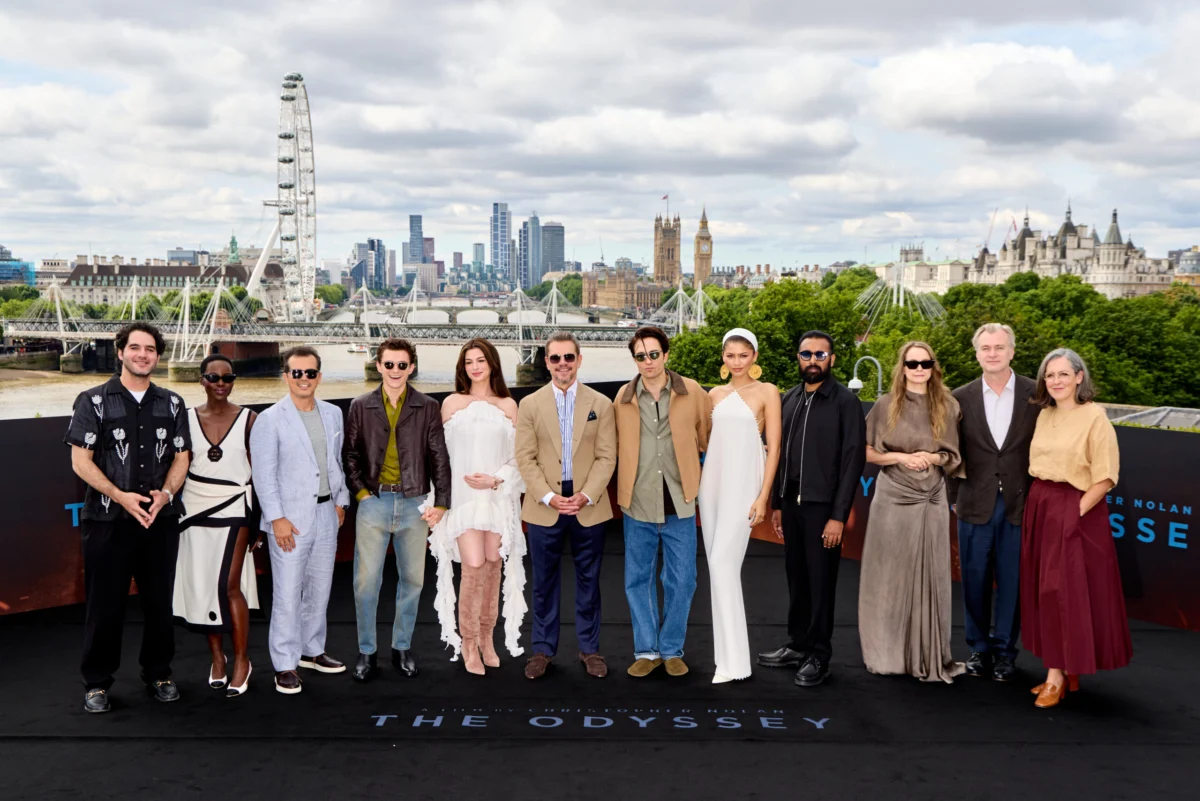
The global rollout of Nolan’s The Odyssey has been met with immense fanfare, characteristic of a major cinematic event from the acclaimed director. Leguizamo described the London premiere as "the biggest premiere I’ve ever been a part of in my entire life," eclipsing even his experience at Cannes for Moulin Rouge!. The event featured a colossal Trojan Horse installation and a star-studded lineup that included co-stars Matt Damon, Tom Holland, Anne Hathaway, Robert Pattinson, Zendaya, Lupita Nyong’o, Charlize Theron, Benny Safdie, Himesh Patel, and Samantha Morton. The sheer number of high-profile attendees necessitated a "prom-style, sideways" lineup on the red carpet, a testament to the film’s star power and the anticipation surrounding it.

Beyond the public spectacle, Leguizamo cherished the more intimate moments shared with the cast and crew. Dinners with Lupita Nyong’o, Charlize Theron, Emma Thomas (Nolan’s producing partner and wife), and Nolan himself, as well as casual interactions with Matt Damon and his family, and Zendaya and Tom Holland, provided genuine opportunities for camaraderie amidst the demanding promotional tour. His bond with Matt Damon, in particular, extended off-screen, with the two exchanging numbers, Damon attending Leguizamo’s play, and even going to a World Cup match together. This genuine connection undoubtedly enriched their on-screen dynamic, which is central to the film’s emotional impact.
Leguizamo’s first viewing of the film was a private experience with his wife at Nolan’s preferred theater, Lincoln Square 13, where they strategically chose "Row G" for optimal viewing. He recounted his wife, typically reserved during movies, weeping during the screening, an emotion he soon mirrored, particularly moved by Matt Damon’s "incredible monologue at the end where he has remorse over his whole entire life." This deeply personal reaction from both himself and his wife highlighted the profound emotional resonance Nolan achieved with the narrative.
Breaking Barriers: Colorblind Casting and the Future of Epics
One of the most significant implications of Nolan’s The Odyssey lies in its progressive approach to casting. Leguizamo lauded the film for "breaking down a lot of casting barriers, especially for period movies." He candidly pointed out the historical prevalence of period films being "all white and all British-sounding," making Nolan’s diverse ensemble, featuring actors of various ethnicities and using American accents, a refreshing and impactful choice.
This colorblind casting, where talent and suitability for a role transcend traditional racial or ethnic constraints, has been championed by pioneers like Lin-Manuel Miranda, whose Hamilton revolutionized Broadway with its diverse portrayal of America’s founding fathers. Leguizamo drew a direct parallel, stating, "Lin-Manuel [Miranda] showed us colorblind casting is a powerful thing. Look at that, the biggest hit in Broadway history… It made it so vital, so relatable, so fresh." By adopting a similar philosophy, Nolan’s The Odyssey not only enhances its accessibility and contemporary relevance but also challenges the anachronistic notion that ancient historical or mythological narratives must exclusively feature actors of a specific demographic. As Leguizamo eloquently put it, "We were all around back then. It wasn’t like we just appeared out of nowhere as a spontaneous generation." This bold casting decision sets a precedent for future epic productions, advocating for a more inclusive and historically nuanced representation of humanity.
The Zenith of a Storied Career
For John Leguizamo, his role as Eumaeus in Christopher Nolan’s The Odyssey represents more than just another acting credit; it signifies a profound culmination, a "zenith" in his remarkable career. After decades of demonstrating his talent across various platforms, often feeling pigeonholed, this project has allowed him to fully tap into a part of himself that resonates deeply with the character’s unwavering loyalty and emotional depth. "Who would’ve thought that, at my age, things could get better? All the highlights you thought were highlights are no longer highlights — I mean, this is the zenith. It definitely feels like it," he shared.
The opportunity to collaborate with a visionary like Nolan, whom he describes as a "master, craftsman, innovator, a visionary," has instilled in Leguizamo a profound sense of validation. "To be a part of something like that, of a master, craftsman, innovator, a visionary — it’s just so incredible that he saw something in me that would help him bring his dream to fruition," Leguizamo reflected. "It’s an incredible compliment that I’ll take with me for the rest of my life. I don’t know, I feel so arrived, in a way." This sentiment of having "landed," of all his gifts and hard work leading him to this significant artistic achievement, speaks volumes about the impact of this role. It solidifies his place not just as a versatile actor, but as a profound dramatic force capable of anchoring the emotional weight of a modern epic. Nolan’s The Odyssey, through Leguizamo’s exceptional performance, has not only re-energized a classic tale but also redefined the career trajectory of one of Hollywood’s most enduring talents.