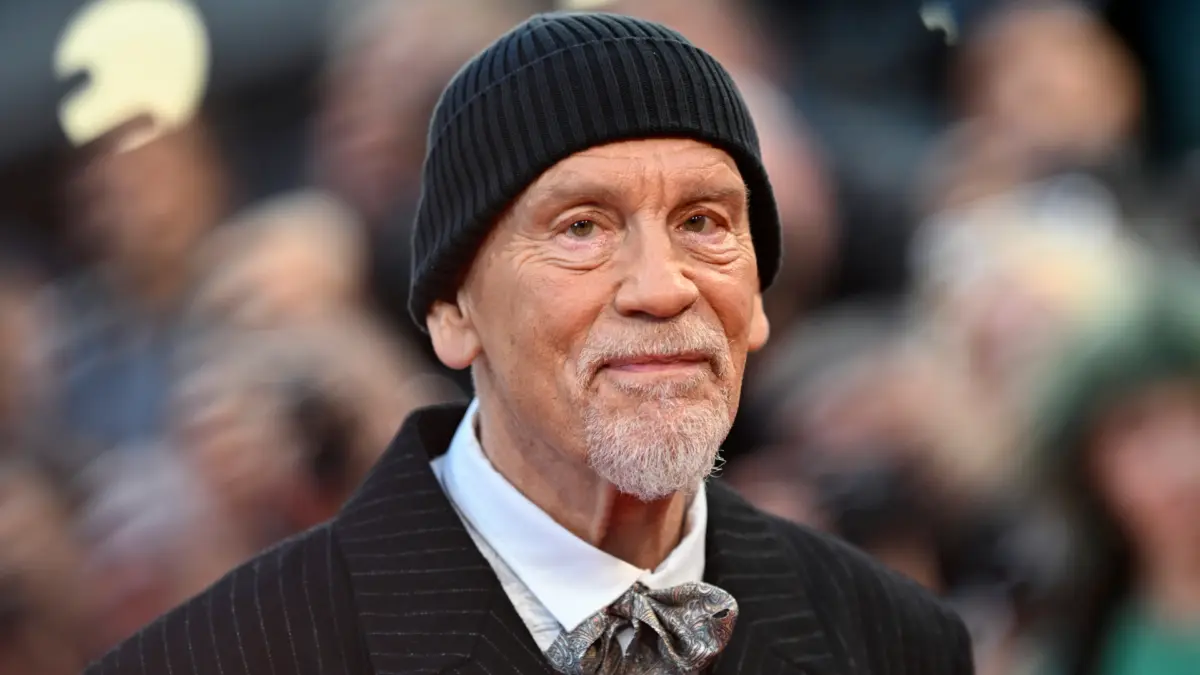
The landscape of modern cinema is currently defined by a paradox: as the industry faces unprecedented challenges in securing theatrical attendance, the weight of the awards season has shifted from a celebratory industry tradition to a vital economic engine. At the heart of this transition stands John Malkovich, whose latest performance in Martin McDonagh’s tragicomedy Wild Horse Nine has positioned him as a formidable contender for the 2026 Academy Award for Best Actor. Speaking at a BFI London Film Festival event this past Sunday, the veteran actor offered a candid reflection on his decades-long career, the evolving nature of film promotion, and the stoic philosophy required to remain relevant in a rapidly changing medium.
A Career-Defining Performance in Wild Horse Nine
Wild Horse Nine represents a significant milestone in the collaboration between Malkovich and director Martin McDonagh. The film, which features a powerhouse performance from Sam Rockwell alongside Malkovich, follows two CIA operatives, Chris and Lee, who are stationed in Santiago, Chile. The narrative arc takes a surreal turn when the characters are dispatched to Easter Island by their bureau chief, played by Steve Buscemi. Against the backdrop of the iconic Moai statues, the protagonists are forced to reconcile with a history of intelligence operations that remains shrouded in ambiguity.
The film has garnered critical acclaim for its thematic depth, specifically its exploration of grief and mortality. Beyond the central intrigue, the story is anchored by the arrival of two rebellious Chilean students, portrayed by Mariana di Girolamo and Ailén Salas, whose presence serves to catalyze the unraveling of the protagonists’ long-standing professional and personal bond. For Malkovich, the project represents a rare alignment of a brilliant screenplay and a cohesive directorial vision, a combination he describes as increasingly difficult to find in the current studio ecosystem.
The Evolution of the Awards Circuit
During his BFI London Film Festival appearance, Malkovich contrasted the current awards landscape with his earlier experiences. His first Academy Award nomination arrived in 1985 for Places in the Heart, followed by a second in 1994 for In the Line of Fire. Reflecting on those periods, he noted that the film business at the time occupied a dominant, almost untouchable position in global culture.
"The movie business maintained, undeservedly in my opinion, a very high position in the culture," Malkovich remarked. He argued that the prestige of the mid-1980s and early 1990s allowed for a natural interest in cinema that did not rely on the modern, months-long promotional "onslaught." Today, however, he observes that the awards trail has become a mandatory component of the theatrical release model. For films aiming to draw audiences into physical cinemas, the visibility generated by award recognition is often the sole differentiator in a marketplace saturated with streaming alternatives.
This shift has changed the nature of the actor’s participation. While he characterizes his own "native personality" as somewhat ill-suited for the relentless scrutiny of a modern campaign, he acknowledges the necessity of adaptation. "Things change, and you either change with them or die," he stated, emphasizing a pragmatic, growth-oriented approach to his craft at age 72.
Historical Context and Industry Impact
The urgency of the awards cycle reflects broader data regarding global box office trends. Since 2020, the theater industry has struggled to recover to pre-pandemic attendance levels, particularly for adult-oriented dramas and mid-budget films. Films like Wild Horse Nine, which rely on nuanced performances rather than high-octane franchise spectacle, are increasingly reliant on critical acclaim and festival buzz to justify a theatrical window before moving to digital platforms.
The BFI London Film Festival, which runs through October 18, serves as a critical barometer for these prestige films. By debuting at such a high-profile venue, Wild Horse Nine benefits from a prestigious platform that signals quality to both critics and the voting bodies of the Academy of Motion Picture Arts and Sciences. The presence of stars like Malkovich and Rockwell at the London premiere underscores the industry’s commitment to the traditional "red carpet" experience as a vital tool for audience engagement.
Collaborative Dynamics: McDonagh and Rockwell
Malkovich’s praise for director Martin McDonagh extends beyond the script. He described the filmmaker as both "direct" and "kind," noting the specificity of McDonagh’s direction. One anecdote, in particular, highlighted the collaborative process: during a scene involving the island’s stone statues, McDonagh provided the direction to "channel David Attenborough," a note Malkovich recalled with both humor and admiration for the director’s ability to guide performance through abstraction.
His partnership with Sam Rockwell has been similarly lauded. Malkovich compared Rockwell’s acting style to a professional performance that remains consistently sharp and unpredictable. "He’s such a great colleague, such a wonderful actor, and so fantastic in this," Malkovich noted, adding that Rockwell’s ability to pivot within a scene makes him one of the most compelling actors of his generation.
Legacy and Future Projects
Malkovich’s career trajectory has been defined by his ability to navigate both mainstream hits and experimental projects. From his work in Dangerous Liaisons to the meta-narrative of 1999’s Being John Malkovich, he has consistently challenged the boundaries of screen acting. During the festival talk, he candidly discussed his past, including his behavior on the set of the latter film—a testament to his willingness to be self-reflective about the pressures of the industry.
The discussion also touched upon the long-term future of cinema, specifically the project titled 100 Years, directed by Robert Rodriguez. The film, which is locked in a vault and scheduled for release in 2115, serves as a conceptual piece on the longevity of art. Malkovich joked about his inability to attend the premiere, noting that even his grandchildren would not be alive to witness it. However, the project underscores a deeper point: that while the methods of distribution and the habits of audiences change, the core pursuit of cinematic storytelling remains a pursuit for posterity.
Analytical Perspective: The "Side Door" Philosophy
The anecdote regarding his 1985 manager, Phyllis, who famously told him "There is no side door" at the Oscars, serves as a metaphor for his career. Malkovich’s struggle to reconcile his private nature with the public demands of the industry has been a consistent theme. In the 2026 climate, the "side door"—a way to avoid the spectacle of fame while still participating in the art—is effectively closed.
The industry’s reliance on the awards cycle creates a bottleneck where only a select few films receive the sustained marketing attention required to achieve profitability. For a project like Wild Horse Nine, the "onslaught" of attention is not merely a vanity exercise; it is a structural requirement. Malkovich’s ability to accept this, while maintaining his intellectual distance, is perhaps why he remains one of the most respected figures in the industry. As he approaches his mid-70s, his perspective is not one of nostalgia for a lost era, but of disciplined adaptation to a new one.
In summary, the reception of Wild Horse Nine at the BFI London Film Festival highlights the enduring power of the prestige drama. While the methods of reaching an audience have fundamentally altered, the fundamental value of a compelling story, delivered by actors of Malkovich’s caliber, remains the cornerstone of the cinematic experience. As the awards season intensifies, the industry will be watching to see if this marriage of high-concept storytelling and rigorous promotional strategy can successfully reverse the trend of declining theatrical attendance, providing a blueprint for the future of adult-oriented cinema.