Academy Award-winning director Jonathan Glazer has returned with his latest cinematic endeavor, Joy of Joys, a 38-minute documentary short that bridges the historic recording sessions of the charity album HELP(2) at London’s Abbey Road Studios with the stark realities of children living in global conflict zones. Following his critically acclaimed, Oscar-winning feature The Zone of Interest, Glazer’s new project adopts an unorthodox production method: handing cameras over to children in both privileged and war-torn environments. The result is a profound, resonant exploration of innocence, play, and resilience set against a backdrop of geopolitical tragedy.
The film, which recently celebrated its world premiere at the 64th New York Film Festival, has quickly generated significant industry discussion. Featuring an eclectic roster of musical talent and utilizing a dual-perspective visual methodology, Joy of Joys operates simultaneously as an entertaining behind-the-scenes document of a major philanthropic musical undertaking and a devastating commentary on the global failure to protect children in areas of active conflict.
The Genesis of HELP(2) and the Abbey Road Sessions
The primary narrative anchor of Joy of Joys traces back to the legendary Abbey Road Studios in London, where an array of prominent contemporary musicians gathered to record HELP(2). Produced in association with War Child Records, the album serves as a spiritual successor to the landmark 1995 charity release Help, which successfully raised critical funds for children affected by the Bosnian War.
The studio sequences feature an impressive roster of artists across multiple generations and genres. Musicians such as Damon Albarn, members of the Arctic Monkeys, Jarvis Cocker, Cameron Winter, Fontaines D.C., The Last Dinner Party, and Beabadoobee are captured during raw, unpolished moments of the recording process. Pop star Olivia Rodrigo opens the musical portion of the documentary, using her vocal talents to underscore the thematic intersection of love, art, and healing.
Rather than functioning as a standard, polished promotional making-of video, these sequences are filtered through a unique lens. London schoolchildren, equipped with handheld cameras, are permitted to roam the hallowed halls of Abbey Road. Their presence injects a dynamic, unscripted energy into the studio environment, capturing candid interactions between the young operators and iconic musicians.
Production Methodology: A Textual Miscommunication and Dual Perspectives
During the post-screening Q&A session at the 64th New York Film Festival, director Jonathan Glazer and frequent musical collaborator Mica Levi revealed that the concept of utilizing children as camera operators originated entirely by accident due to a text message miscommunication.
This accidental premise ultimately defined the stylistic backbone of the documentary. Glazer employs a striking dual-camera approach that juxtaposes two distinct visual methodologies:
- The Static Surveillance Aesthetic: Maintaining the formal rigor seen in his previous work, The Zone of Interest, Glazer places fixed, objective cameras throughout Abbey Road Studios. These static shots observe the musicians without intervention, establishing a clinical, detached vantage point.
- The Handheld Child-Led Perspective: In stark contrast, the footage captured by the children is fluid, energetic, and completely unrestricted. The young operators chase shots, turn lenses toward their own faces, and document the studio environment purely through the prism of their uninhibited curiosity.
This stylistic collision creates an intentional tonal dissonance, highlighting the contrast between rigid adult structures and the fluid, instinctual perspective of youth.
Expanding the Scope: From London to Active Conflict Zones
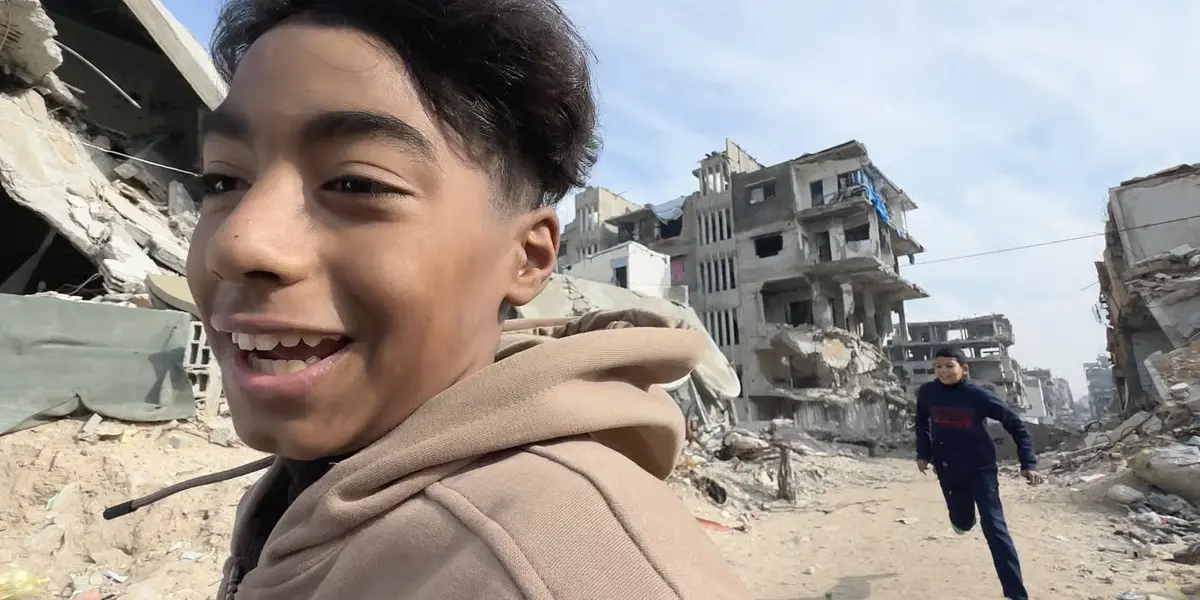
Approximately midway through its 38-minute runtime, Joy of Joys executes a jarring narrative and geographical pivot. After a child at Abbey Road waves at their own reflection, Glazer transports the audience away from the pristine acoustics of the London studio and into a decimated neighborhood in Gaza.
From this juncture, the documentary’s scope expands internationally. Glazer reveals parallel youthful camera crews operating in active conflict zones and displaced communities across the globe, including Ukraine, Sudan, and Yemen.
The footage captured in these regions presents a heart-wrenching paradox. Amidst rubble, displacement, and the visible scars of war, the children are captured at play. Their ability to find moments of infectious amusement and joy in environments defined by systemic violence introduces a profound emotional resonance to the film. Glazer has described reviewing the returned footage from these young operators as an experience that was simultaneously "beautiful and tragic to see."
Chronology and Distribution Timeline
- Pre-Production & Recording: Conceptualized alongside the organization of the War Child Records initiative, recording sessions for HELP(2) took place at Abbey Road Studios in London, incorporating spontaneous camera direction by local children.
- Global Footage Collection: Parallel camera deployments coordinated via local networks captured parallel footage of children in conflict-affected regions, including Gaza, Ukraine, Sudan, and Yemen.
- Festival Premiere: Joy of Joys made its official world premiere at the 64th New York Film Festival, screening to audiences as a surprise late addition to the festival lineup.
- Current Release Status: The film is currently making its run through the international festival circuit, drawing critical praise for its economical runtime and profound thematic weight.
Broader Implications and Critical Reception
Industry analysts and film critics have noted that despite its brief 38-minute duration, Joy of Joys carries the thematic weight of a feature-length epic. By focusing on the juxtaposition between institutional philanthropy and grassroots reality, the film forces an uncomfortable confrontation with the state of global humanitarian efforts.
Humanitarian organizations and child-advocacy groups have long emphasized the disproportionate impact of armed conflict on minors. According to data from international monitoring bodies, millions of children currently reside in active combat zones, facing severe disruptions to education, healthcare, and basic safety. Glazer’s documentary translates these macro-level statistics into an intimate, visceral portrait of endurance.
Rather than offering neat resolutions or political policy prescriptions, Joy of Joys functions as both an indictment of global systemic failures and a tribute to the indomitable nature of childhood spirit. By handing the tools of visual documentation directly to the subjects most affected by geopolitical violence, Glazer subverts traditional documentary hierarchies, ensuring that the final perspective belongs not to the observer, but to the observed.