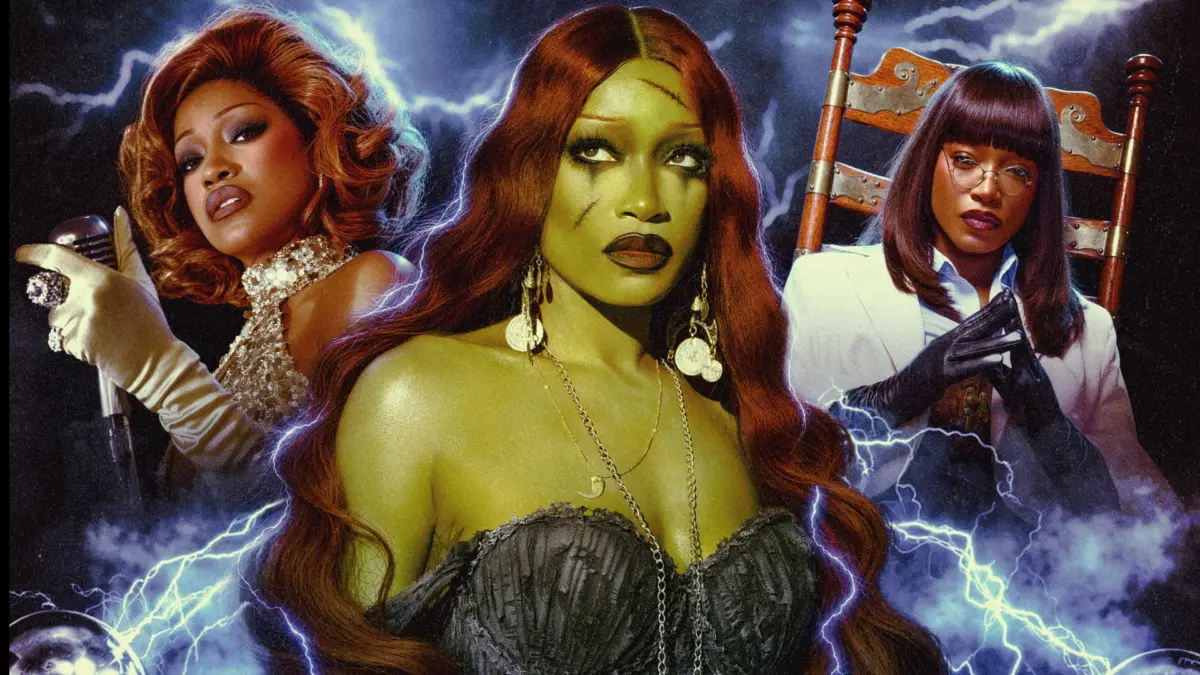
Multi-hyphenate entertainer Keke Palmer has officially leaned into her affinity for the horror genre with the release of her latest single, "Keke Frankenstein." Dropped on October 30, the track serves as both a seasonal Halloween offering and a deeply personal metaphor for the performer’s recent life experiences. Moving beyond the standard pop-culture tribute, Palmer utilizes the imagery of Mary Shelley’s classic creature to illustrate a journey of emotional reconstruction following significant personal turbulence. The song, which features lyrics centered on themes of resilience, transformation, and the "divine" nature of self-reinvention, aligns with a broader creative evolution currently defining Palmer’s career.
A Narrative of Rebirth and Resilience
In "Keke Frankenstein," Palmer moves beyond mere aesthetic homage, utilizing the iconography of the monster to address her public life. Following a highly publicized separation from her former partner, Darius Jackson—with whom she shares her son, Leo—the performer has been notably transparent about her path toward healing. The lyrics serve as a manifesto for this transition: "So when you witness this rebirth, know that it’s divine / I was cut apart and rebuilt, I was water redefined / Call it monstrous, call it holy, either way, the frame is mine."
The track functions as a companion piece to her recent album, Just Keke, which similarly explores themes of autonomy and self-actualization. By positioning herself as both the creator (Dr. Frankenstein) and the creation (the monster), Palmer suggests that her own evolution was an act of personal agency rather than a passive response to trauma. This duality is central to the upcoming music video, in which the artist portrays both characters, signaling a deliberate shift into a "villain era" that prioritizes strength and boundary-setting over the fragility often associated with public heartbreak.
Chronology of a Horror Enthusiast
Palmer’s engagement with the horror genre is not a recent development but rather a long-standing creative pillar. Her transition into the macabre space has been documented through several key milestones over the last several years:
- October 2023: Palmer celebrated her son’s first Halloween by staging a thematic photoshoot that paid tribute to The Bride of Frankenstein. She dressed as the Monster’s Mate while her son was styled as the Doctor, marking a public intersection of her motherhood and her appreciation for classic Universal Monsters.
- September 2025: Palmer served as the cover star for Dread Central, marking a significant endorsement of her commitment to the genre. During this period, she debuted Dread Manor, an anthology series reminiscent of Tales from the Crypt, effectively cementing her status as a horror host and creative curator.
- October 2026: The release of "Keke Frankenstein" arrived as the latest evolution of this persona, bridging the gap between her musical output and her horror-centric production interests.
The Influence of Classic Cinema
During her tenure as a horror spokesperson and producer, Palmer has frequently cited specific films that shaped her artistic identity. In interviews, she has highlighted the 1990 IT miniseries as a foundational text, noting that Tim Curry’s portrayal of Pennywise fundamentally altered the cultural perception of clowns. Furthermore, she has expressed a profound respect for Bernard Rose’s Candyman, describing the psychological impact the film had on her during her formative years.
These influences are not merely nostalgic; they are pedagogical. Palmer’s approach to horror is rooted in the belief that the genre provides a unique vocabulary for discussing systemic issues, fear, and human frailty. Her admiration for Wes Craven’s A Nightmare on Elm Street and her stated preference for the villainous archetypes found in classic slashers inform the sharper, more aggressive lyrical tone of her recent music. "I ain’t running from the shadows, I’ll be dancing with the freaks," she sings in "Keke Frankenstein," an assertion that aligns with her public commitment to taking control of her narrative.

Industry Implications and KeyTV Expansion
The release of "Keke Frankenstein" occurs against the backdrop of Palmer’s growing influence as a media executive through her company, KeyTV. The digital platform, designed to create space for diverse voices in media, has increasingly leaned into genre storytelling. By aligning her personal brand with horror, Palmer is signaling a strategic shift for KeyTV, suggesting that future projects may lean into darker, more evocative narratives.
Industry analysts note that celebrities moving into genre-specific content often find higher engagement rates due to the dedicated nature of horror fanbases. By becoming a fixture in the horror community—through collaborations with platforms like Dread Central and the production of anthology-style content—Palmer is effectively diversifying her portfolio. This transition from performer to producer/curator is a logical step for an artist who has spent over two decades in the industry, allowing her to leverage her public image to greenlight projects that might otherwise be overlooked.
Analyzing the "Monster" Metaphor in Modern Pop Culture
The choice of Frankenstein’s monster as a totem for personal growth is a recurring motif in contemporary art, yet Palmer’s execution is distinct in its focus on the "maker" aspect of the story. In traditional adaptations, the focus often remains on the horror of the creature’s existence or the hubris of the doctor. Palmer’s recontextualization—viewing the "stitching together" of broken parts as a source of power—reflects a modern sensibility that emphasizes post-traumatic growth.
Statistically, horror remains one of the most profitable genres in film and television, with low-to-mid-budget productions frequently yielding high returns on investment. Palmer’s entry into this space, combined with her existing massive digital footprint, positions her to bridge the gap between mainstream pop music audiences and niche horror enthusiasts. Her ability to synthesize these two worlds—producing music that functions as a narrative bridge for her film interests—represents a sophisticated approach to brand management.
Official Stance and Future Outlook
While Palmer has not released a formal statement regarding the specific commercial goals of "Keke Frankenstein," her social media presence has been consistent in framing the project as a creative necessity. Her Instagram caption, "Some girls are born. Others are MADE… The monster has awakened," suggests that this is not a fleeting seasonal gimmick, but a deliberate thematic direction for her next phase of work.
Representatives for Palmer have indicated that the artist remains focused on expanding the slate of projects under the KeyTV banner, with a specific interest in horror and psychological thriller media. As she continues to develop this branch of her business, the public can expect a continued synthesis of her musical and visual storytelling. The success of "Keke Frankenstein" will likely serve as a litmus test for the viability of her specific brand of "horror-pop," potentially influencing how other mainstream artists integrate genre elements into their creative identities.
In the final analysis, "Keke Frankenstein" is more than a Halloween track; it is a clinical demonstration of how a public figure can reclaim a narrative of victimization by adopting the language of the monster. By turning her trauma into a work of art that is both "monstrous" and "holy," Palmer has successfully repositioned herself as an architect of her own image, proving that for her, the horror genre is not a place of fear, but a landscape of unlimited creative potential. Whether this leads to a feature-length film or a more sustained foray into horror-themed musical projects, Palmer’s trajectory confirms that she is one of the most proactive architects of her own career in the contemporary entertainment landscape.