The animated feature film Wildwood represents a landmark achievement in the history of stop-motion animation, culminating a multi-year production cycle under the direction of Travis Knight and the Portland-based studio LAIKA. Adapted from the 2011 bestselling children’s fantasy novel written by Colin Meloy and illustrated by Carson Ellis, the 131-minute film follows the harrowing journey of a teenager navigating an enchanted, forbidden forest just outside of Portland, Oregon. With a sprawling voice cast featuring Carey Mulligan, Mahershala Ali, Awkwafina, Angela Bassett, and Jacob Tremblay, the PG-13-rated production blends grand-scale fantasy with deeply human themes of grief, loss, and the turbulent transition from childhood to adulthood.
Main Facts and Production Scale
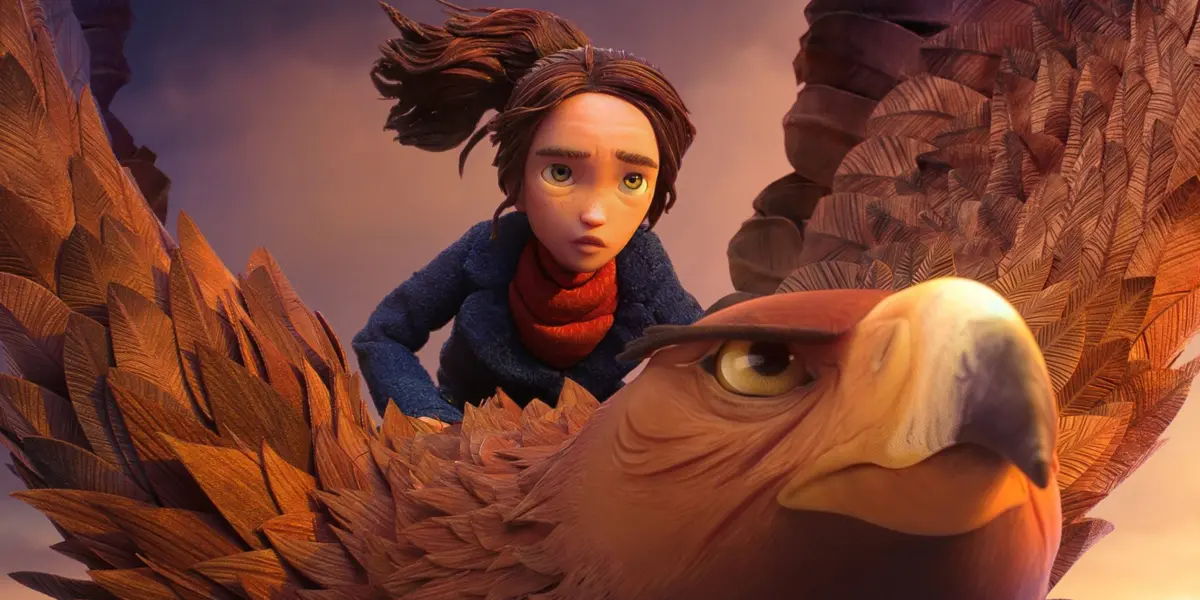
Wildwood follows headstrong teenager Prue McKeel, portrayed by Peyton Elizabeth Lee, whose infant brother, Mac, is abducted by a murder of crows and carried into the Impassable Wilderness—a forbidden, densely wooded realm hidden in plain sight from the citizens of Portland. Accompanied by her reluctant classmate Curtis Mehlberg, played by Jacob Tremblay, Prue ventures into the anomalous forest. They discover an ancient, stratified civilization of talking animals, bureaucrats, bandits, and mystics on the brink of an all-out civil war.
The conflict is largely incited by the Dowager Governess Alexandra, voiced by Carey Mulligan, a grieving mother who commands an army of disciplined coyotes and seeks to reverse a personal tragedy by any means necessary. Prue finds refuge and unexpected allies among the forest’s factions, including the Bandit King Brendan (Mahershala Ali), the majestic eagle General (Angela Bassett), and a resourceful rat named Septima (Awkwafina).
Behind the narrative lies a staggering technical endeavor that establishes new benchmarks for the stop-motion medium. Principal photography on Wildwood spanned a record-breaking 231 weeks, translating to over 1,155 days of active production. The film comprises 2,804 individual shots utilizing 233 handcrafted puppets and 132 practical miniature sets. Animators generated more than 142,000 replacement faces to capture subtle emotional shifts across a runtime of 2 minutes and 11 seconds—the longest ever recorded for a stop-motion feature film. A team of 49 specialized animators executed the project, capturing 24 frames of individual photographs for every second of screen time.
Chronology and Development Background
The cinematic journey of Wildwood began long before cameras rolled in 2021. Travis Knight, serving as LAIKA’s president and CEO in addition to directing the feature, first encountered Colin Meloy’s manuscript years prior to its commercial publication in 2011. Recognizing the immense logistical and technical challenges inherent in Meloy’s complex world-building, Knight and the studio deliberately delayed production to build institutional expertise.
During the intervening years, LAIKA completed previous stop-motion features including Paranorman, The Boxtrolls, Kubo and the Two Strings, and Missing Link. Each successive project served as a technical testing ground, allowing the studio to develop advanced puppet engineering, facial tracking systems, and visual effects integrations necessary for a project of Wildwood’s magnitude.
Longtime studio collaborator Chris Butler, celebrated for penning previous LAIKA productions, transitioned to his first adapted screenplay for the film. Pre-production officially commenced in early 2020, narrowly preceding the global disruptions caused by the COVID-19 pandemic. Despite logistical hurdles, the studio adapted its remote and on-site workflows, allowing physical production on the miniature stages to commence in 2021 and continue uninterrupted through its multi-year assembly phase.
Visual Effects Integration and Cinematography
To achieve the film’s massive cinematic scope, LAIKA partnered with visual effects studio Wētā FX to blend tangible miniature photography with cutting-edge digital augmentation. While the foundation of every frame remains physically sculpted and manually manipulated, digital artists extended the practical sets into expansive forest environments, populated large crowd sequences, and introduced dynamic environmental elements such as smoke, fire, cascading waterfalls, and a sentient digital ivy antagonist.
Cinematographer Caleb Deschanel, a six-time Academy Award nominee working within the stop-motion medium for the first time, was brought on to instill the production with the sophisticated visual grammar of live-action cinema. Deschanel utilized dynamic lighting schemas and fluid camera movements to shift the atmospheric tone from the cozy, autumnal realism of urban Portland to the high-contrast, perilous expanses of the Impassable Wilderness.
The production design, spearheaded by Oregon native Nelson Lowry, emphasized tactile authenticity. Costumes designed by Deb Cook and her department incorporated complex fabrics, such as Prue’s deliberately oversized blue peacoat—which she physically grows into over the narrative arc—and the ill-fitting Napoleonic uniforms worn by Alexandra’s coyote soldiers, symbolizing forced servitude and coercion.
Official Responses and Industry Analysis
Industry analysts and early reviewers have characterized Wildwood as a pivotal moment for LAIKA, cementing its status as a premier innovator in hand-crafted animation. The studio’s leadership has consistently maintained that stop-motion animation offers a unique tactile quality that digital-only pipelines cannot replicate, a philosophy reflected in the physical weight and spatial geography of the film’s climactic 12-minute battle sequence. Comprising 411 distinct shots, the sequence stands as the largest conflict ever staged in stop-motion history, rivaling the scale of major live-action fantasy epics through the coordinated movement of thousands of miniature combatants.
The inclusion of a PG-13 rating—driven by intense thematic stakes, realistic portrayals of grief, and substantial action-oriented violence—marks a maturation in LAIKA’s target demographic. Studio representatives noted that the narrative complexity is intentionally calibrated to resonate with older children, preteens, and adult audiences who appreciate layered storytelling.
Broader Impact and Implications
The release of Wildwood carries significant implications for the broader animation industry, demonstrating the commercial and artistic viability of prolonged, craft-intensive physical filmmaking in an era dominated by computer-generated imagery. By proving that stop-motion can sustain epic narratives exceeding two hours without sacrificing micro-level detail or emotional naturalism, LAIKA has expanded the perceived boundaries of the medium.
Furthermore, the film’s exploration of mature themes—specifically the psychological toll of unresolved grief and the societal dangers of authoritarian control—elevates contemporary animated cinema into sophisticated socio-emotional discourse. As the crown jewel of LAIKA’s twenty-year operational history, Wildwood sets a formidable standard for independent animation studios worldwide, validating patient artistic development, meticulous craftsmanship, and uncompromising creative vision.