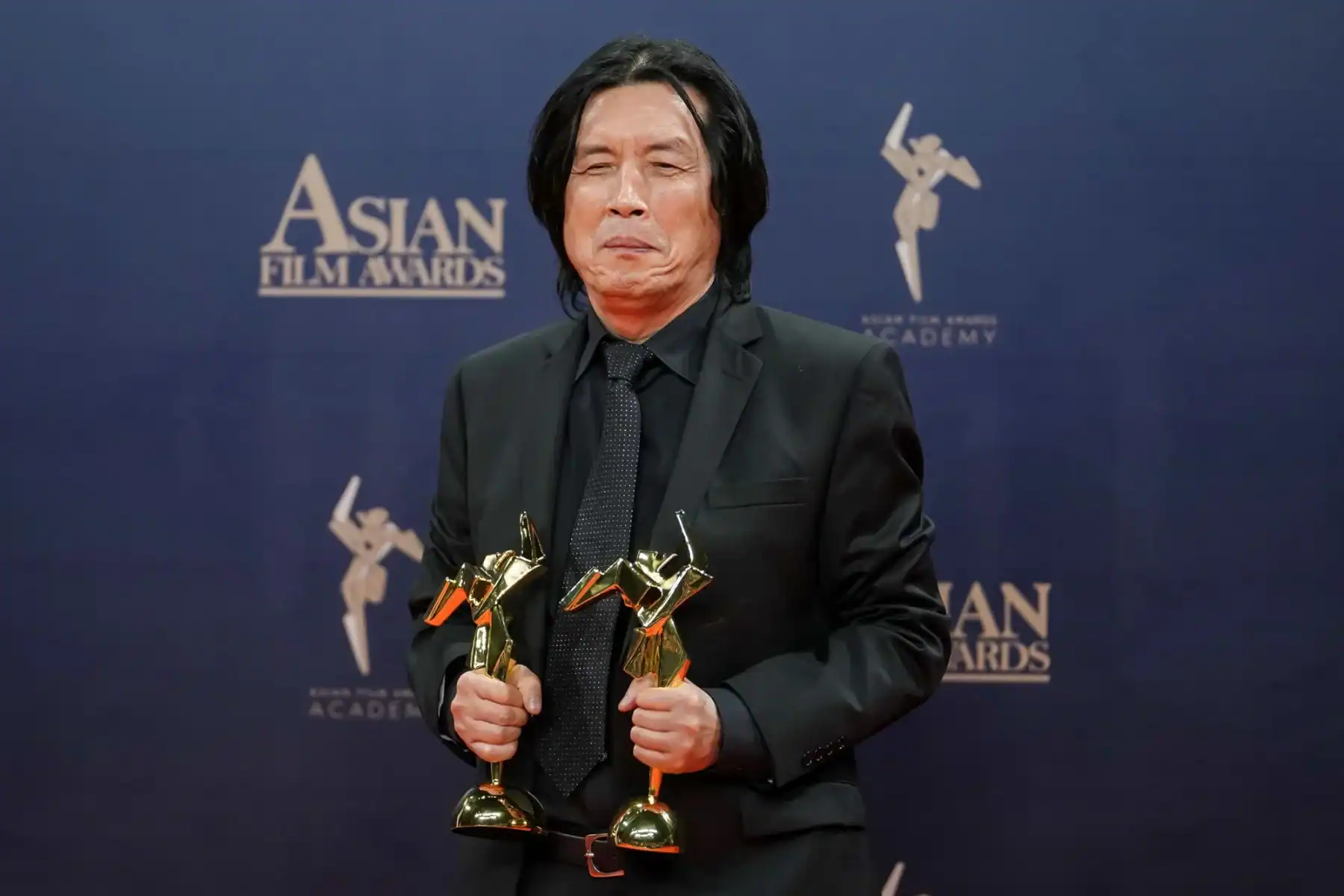
Celebrated South Korean auteur Lee Chang-dong, known for his profoundly humanistic and often stark explorations of contemporary society, recently offered insights into his creative process, the evolving film industry, and the enduring questions that drive his work. The occasion for this rare interview by Huachen Sun was the re-publication in China of one of his significant early short-story collections, coinciding with the final stages of post-production for his anticipated new project with Netflix, "Possible Love." After an eight-year hiatus following his critically acclaimed film "Burning" (2018), Lee’s return to both literary and cinematic discourse underscores his continued relevance and his critical engagement with the art forms he masters.
For nearly a decade between "Poetry" (2010) and "Burning," Lee grappled with fundamental questions: "What kind of film did I truly want to make? And what kind of film should I make for his audience?" This period of intense introspection, he revealed, was dominated by thoughts of "anger" – a pervasive, unchanneled emotion he observed in society, transcending faith, nationality, and background. This underlying current of societal unease, a hallmark of much of Lee’s oeuvre, continues to inform his artistic direction, even as the landscape of filmmaking undergoes radical transformation.
From Novelist to Auteur: The Enduring Pursuit of Meaning
Lee Chang-dong’s journey into filmmaking began after a successful career as a novelist, a background that profoundly shaped his narrative sensibilities and thematic depth. His early literary works, characterized by their raw realism and psychological complexity, laid the groundwork for the cinematic language he would later develop. The recent revised edition of his short-story collection in China serves as a timely reminder of these foundational influences, offering a glimpse into the mind of a storyteller whose artistic concerns have remained remarkably consistent over decades.
When discussing "War Trophy," a story from his collection, Lee elucidated how his literary technique inadvertently mirrored cinematic montage. The story, depicting the inner turmoil of a young South Korean man in the early 1980s grappling with anger and grief over a friend’s wrongful death, presents past and present discontinuously, interwoven to convey a fragmented inner state. "This can be seen as a stream of consciousness technique that reveals the state of inner division," Lee explained. He acknowledged the cinematic interpretation, though he clarified, "If many of the scenes presented in this form in ‘War Trophy’ give readers a vivid sense of imagery, it is not because of my cinematic imagination, but because all those events are things I have experienced." This revelation highlights the deeply personal origins of his art, whether written or filmed, suggesting that his craft is less about technical imitation and more about authentic expression born from lived experience.
Revisiting his early novels today, Lee finds himself reflecting on his younger self – "the one who constantly pushed himself, striving to bridge the gap between reality and writing." Despite his status as an "elderly film director," he feels a profound connection to that past self, still pondering "the relationship between the reality before me and the films I have made, still asking myself what significance my films truly hold for this world." This continuous self-interrogation underscores Lee’s commitment to cinema not merely as entertainment, but as a medium for profound societal and existential inquiry.
The Nuances of Realism: Life’s Ironies and Empathetic Distance
Lee Chang-dong’s unique brand of realism often incorporates elements that might, on the surface, appear romantic or idealized, yet he insists they are intrinsic to life’s complex tapestry. He cited "On Destiny," a story where the protagonist ultimately obtains an antique watch, a keepsake of his father. This narrative draws inspiration from a real-life KBS program in 1983, which sought to reunite families separated by the Korean War. The program, which captivated the nation for over a hundred days, saw thousands reunited, though countless others remained separated, a poignant reflection of the war’s enduring scars.
For Lee, the protagonist’s journey and the eventual recovery of the watch are "neither a dramatic plot nor a romantic tale; it is simply reality itself." The watch’s acquisition, he argues, is "nothing more than a bitter irony of life that we must all endure." Through such ironies, Lee aims to convey deeper insights into the nature of human existence. This approach to realism, where the extraordinary can emerge from the mundane and the tragic can carry a faint echo of hope or bitter acceptance, is a cornerstone of his storytelling, evident in films like "Oasis" (2002) and "Secret Sunshine" (2007).
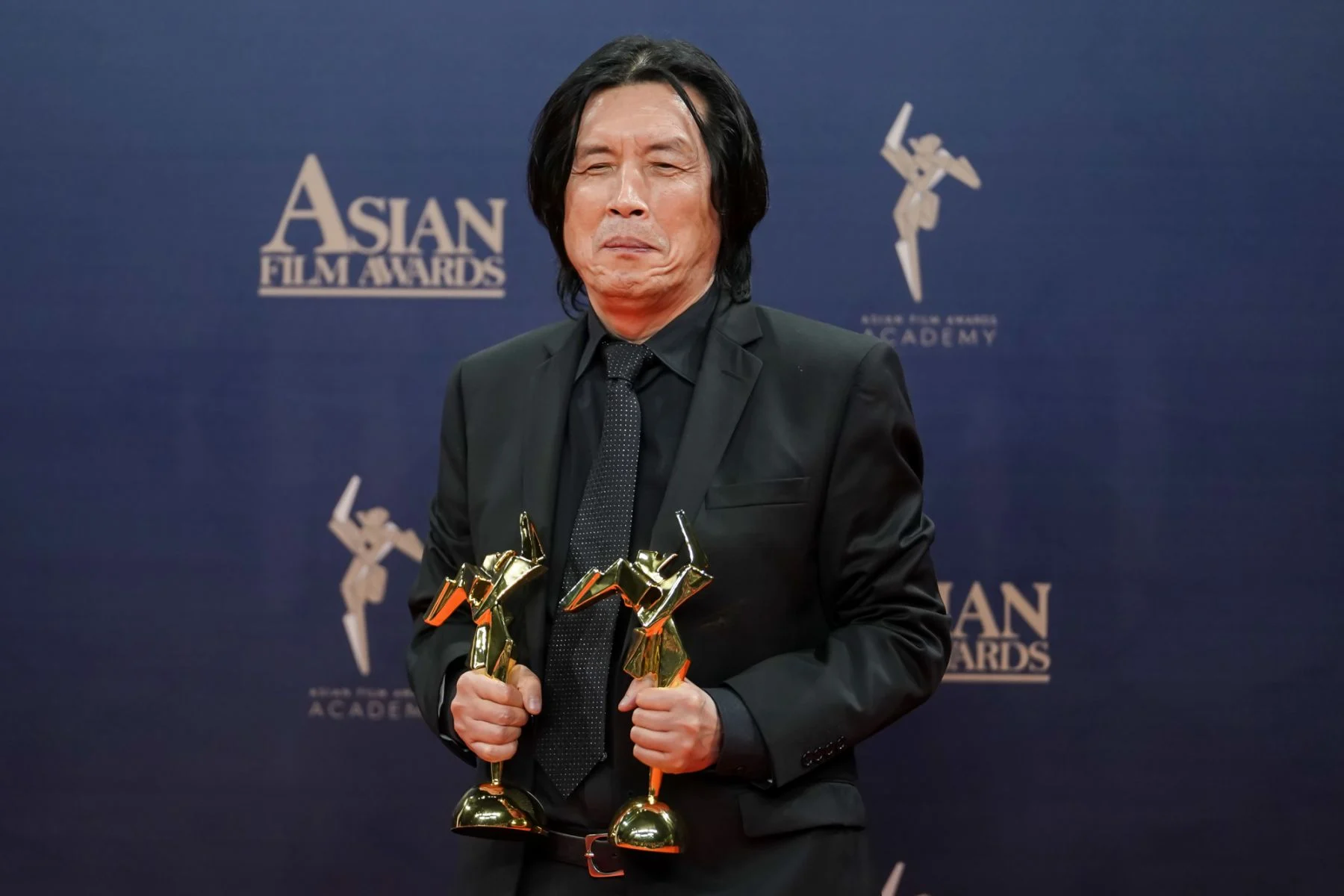
A recurring challenge for artists drawing from personal experience is maintaining objectivity. Lee addressed this by articulating his philosophy of "distance." Rather than employing cinematic techniques like close-ups for immersion or wide shots for objectivity, he conceptualizes distance as an ethical stance: "If there were someone suffering right beside me, where should I stand?" He believes that getting too close can overwhelm, while staying too far suggests a lack of responsibility. The ideal position, he posits, is "a position from which one can keep a constant watch over the other whilst truly empathising with them." This empathetic distance, a balance between involvement and observation, is fundamental to his approach, whether crafting a novel or directing a film, allowing for profound character studies without succumbing to sentimentalism or didacticism.
A Shifting Industry: The Rise of Female Voices and Evolving Genres
The South Korean film industry has witnessed significant shifts in recent years, particularly with the emergence of a new generation of female directors such as July Jung ("A Girl at My Door," 2014), Yoon Ga-eun ("The World of Us," 2016, and "The World of Love," 2025), and Namkoong Sun. Lee Chang-dong, who has supported many of these talents, expressed optimism about their impact. He notes that these directors are "using their unique perspectives to recount women’s life experiences and construct narratives that belong to women," and that their resonance is "gradually transcending gender boundaries."
However, Lee also offered a sobering assessment of the industry’s entrenched power structures. Despite an increasing number of female staff on film sets in many areas, the director’s role remains predominantly male. He views the film production system as "an extremely male-dominated and chauvinistic power structure," making it challenging for female directors to fully penetrate and reshape it. While their artistic contributions are undeniable and growing, the prospect of female directors fundamentally altering the industry’s power dynamics, he believes, "remains, it seems, a relatively distant prospect." This nuanced perspective acknowledges artistic progress while highlighting persistent structural inequalities within the Korean film industry.
Concurrently, the genre of "social problem films," a cornerstone of Korean cinema from "Green Fish" (Lee Chang-dong, 1997) to "Silenced" (Hwang Dong-hyuk, 2011), has undergone a significant transformation. Lee observes a shift from films that act as "weapons to directly confront reality and expose problems" towards those that engage in "a process of confronting trauma, restoration and healing." He attributes this evolution to the increasing complexity of South Korean society, which can no longer be simply judged in binary terms of good and evil. In a society marked by fierce competition and growing inequality, "the number of people who are suffering is on the rise – and with it, the number of those in need of healing and comfort." This shift, particularly propelled by female directors, suggests that films are moving beyond mere "films of struggle" to become "films of healing," connecting with audiences on a more emotionally restorative level. This evolution reflects a societal need for narratives that offer solace and understanding amidst ongoing social pressures.
The Digital Frontier: Netflix, Cinemas, and the Future of Film
The collaboration between a director of Lee Chang-dong’s stature and a streaming giant like Netflix for "Possible Love" marks a significant moment in the ongoing evolution of film distribution. Lee previously stated he wouldn’t rule out working with streaming platforms for projects he liked, specifically mentioning series. However, his decision for "Possible Love," a feature film, was primarily driven by the "sharp deterioration in the South Korean film industry in recent years, which has made it difficult to secure production funding." This crisis, exacerbated by a significant drop in cinema attendance post-COVID-19 pandemic, has fundamentally altered the financial landscape for filmmakers.
The pandemic accelerated a pre-existing trend, with technological advancements making home viewing increasingly sophisticated. Large, high-definition television screens now offer a viewing experience that "can almost rival cinema screens." Lee acknowledges that for commercial blockbusters with dazzling visual effects, the necessity of a special trip to the cinema might be diminished. However, he firmly believes that "films that delve deeply and sensitively into our lives are precisely the ones that are best experienced on the big screen." The subtle details of everyday life, nuanced character expressions, and environmental elements like sunlight or rustling leaves are, for him, "rendered more vividly on the cinema screen and are further amplified through the audience’s senses." This perspective champions the immersive, communal experience of cinema for artistically profound works, even as mainstream audiences increasingly gravitate towards home viewing.
The current trajectory of the South Korean film industry, Lee notes, is one of rapid polarization. On one end are mega-blockbusters with budgets soaring into hundreds of billions of won (tens of millions of USD), while on the other are low-budget independent films. The crucial "middle ground" for mid-budget productions, which historically nurtured diverse storytelling and emerging talent, is rapidly shrinking. This contraction makes it increasingly difficult for new directors to establish themselves, leading many to turn to OTT series production rather than targeting traditional cinematic releases.
Lee observes that the line between cinema films and OTT series is becoming "increasingly blurred." For audiences, the differences in aesthetic standards and value between a two-hour film in a cinema and a lengthy series at home seem to have evaporated. Ultimately, he concludes, regardless of the format or viewing platform, the core question remains the same: "whether it can provide the audience with a sense of aesthetic (or entertainment) pleasure, as well as a meaningful experience (or inspiration)." This statement encapsulates Lee Chang-dong’s enduring commitment to the substance of storytelling over its transient forms, a testament to his artistic integrity in a rapidly changing world. His journey, from a novelist exploring societal anger to a filmmaker navigating industry crises, continues to be a profound reflection on the human condition and the evolving art of narrative.