The director and Oscar-winning star of a recent box office success, "Les Rayons et les Ombres" (Rays and Shadows), have vehemently refuted accusations that their film whitewashes wartime atrocities, branding such criticisms as "dishonest" and "a scandal." The film, which delves into the life of wartime press baron Jean Luchaire, a figure deeply entangled with Nazi collaboration in occupied France, has ignited a bitter controversy among French historians and cultural commentators.
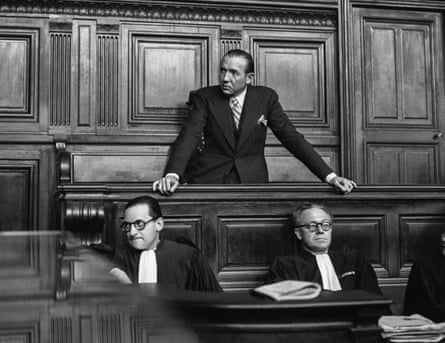
Director Xavier Giannoli and actor Jean Dujardin are directly addressing a burgeoning debate that has polarized public opinion and historical interpretation. The film centers on Jean Luchaire, a man who transitioned from pacifist ideals to active collaboration during the Occupation, serving as the commissioner for information and propaganda for the Vichy regime. Luchaire’s controversial legacy culminated in his execution for treason in 1946.
Giannoli has strongly rejected claims that his film constitutes "a masterclass in historical gaslighting," asserting that the screenplay was developed in close consultation with historical experts. He maintains that the criticisms leveled against the film are "factually false" and stem from a misinterpretation of his artistic intent.
"My point of view is to tell the story of a collaborator in his world," Giannoli stated in a recent interview on the current affairs and culture program Quotidien. "The disgusting obscenity of people who were [partying] under the chandeliers eating caviar and petit fours during the Occupation." He was responding to allegations that the film downplays the severity of wartime atrocities and the French Resistance’s efforts.
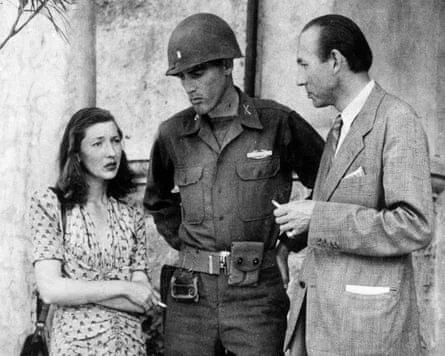
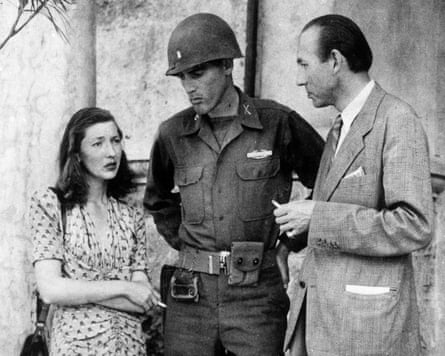
The film’s narrative is largely framed through the perspective of Luchaire’s daughter, Corinne, a former actress once celebrated as the "new Garbo." Corinne, portrayed by Nastya Golubeva, also engaged in collaboration and enjoyed the privileges of the era, a fact the film does not shy away from. Following the war, she was convicted of "national indignity" and died in 1950, a victim of tuberculosis.

A Historical Contention: The Legacy of Jean Luchaire
Jean Luchaire was a prominent figure in French journalism and publishing, rising to a position of significant influence. His appointment as minister of information within the Vichy government, led by Marshal Philippe Pétain, placed him at the heart of the collaborationist apparatus. In 1944, his newspaper, Les Nouveaux Temps, which he had founded four years prior, became a platform for disseminating Nazi propaganda. This included calls for the "extermination" of the French Resistance and articles critical of Allied forces following the D-Day landings. During the Occupation, Luchaire was known to live a life of considerable luxury, frequenting gastronomic restaurants and attending lavish social events, a stark contrast to the hardships faced by many in occupied France.
The film’s very title, "Les Rayons et les Ombres," is drawn from Victor Hugo’s 1840 poetry collection, which explores the duality of human nature, suggesting that good and evil coexist within every individual. This thematic choice has also drawn criticism, with some interpreting it as an attempt to humanize or excuse the actions of collaborators.
The Controversy Unfolds: Academic and Critical Repercussions
Since its release in mid-March, "Les Rayons et les Ombres" has attracted over 800,000 viewers in France, a significant figure given its substantial runtime of over three hours, which limits daily screenings. However, its critical reception has been deeply divided. Historians and film critics have voiced strong objections, arguing that the film minimizes the role and sacrifices of the French Resistance and neglects the fate of Parisian Jews who were systematically rounded up and deported to Nazi death camps. A central concern is that the film encourages empathy for Jean and Corinne Luchaire, thereby potentially sanitizing their wartime conduct.
Luc Chessel, a film critic for the left-leaning newspaper Libération, described the film as a "masterclass in historical gaslighting," lamenting what he perceived as a "moral approach to the whole matter." He suggested the film’s narrative was akin to "Anglicisms" in its approach to historical accountability.
Further amplifying the criticism, historian Bénédicte Vergez-Chaignon, a specialist in the Second World War, writing in Le Monde, accused the film of "distortion of time and events." She noted that "the list of ‘licences’ taken with the historical truth – some of which are quite egregious – is endless." Vergez-Chaignon argued that while it is true that "a character is never entirely good or entirely bad," this observation "does not justify forcing compassion upon the viewer."
Official Responses and Defense of Artistic Integrity
Director Xavier Giannoli has firmly defended his work, calling the accusations "disgusting" and "profoundly dishonest." He emphasized that the film’s historical debate has unfortunately become "political" and "polarizing around today’s political lines."
Giannoli pointed to the rise of the National Rally party as a potential factor influencing the heightened reactions to the film. "The rise of the National Rally [party] may have hysterically influenced these commentators’ reactions to the film," he suggested. He reiterated his commitment to historical accuracy in the research phase: "I did a huge amount of work with historians specialising in these people and from that I wrote a screenplay." However, he maintained that "a screenplay is not a historical thesis. It’s not a documentary. To say we are making [Jean and Corinne Luchaire] sympathetic is profoundly dishonest."
Giannoli further elaborated on the complexities of discussing wartime collaboration in France, even today. "Vichy was moral chaos. The extreme right was at the heart of it, but some leftwing people collaborated and some pacifists," he stated. "These people want to say the left didn’t collaborate… but history is complex, as the film shows. There is no attempt to absolve these people."
Jean Dujardin, whose acclaimed performance in "The Artist" earned him an Oscar, expressed his understanding of Giannoli’s frustration. He commented on the nuanced portrayal of historical figures, stating, "Dictators are not always monsters or fire-breathers. Great dictators were human and sympathetic in the beginning." Dujardin described Luchaire as "a paradox," a "leftwing humanist in the 1930s, but his pacifism became extreme; for him it was anything except war."
Broader Implications and Historical Context
The controversy surrounding "Les Rayons et les Ombres" highlights the enduring sensitivity and complexity of France’s wartime past. The period of Occupation and collaboration remains a fraught subject, with ongoing debates about national memory, responsibility, and the nuances of individual choices made under duress.
The Vichy regime, established in 1940 after the swift defeat of France by Nazi Germany, was a collaborationist government that enacted antisemitic laws and cooperated with the German occupation. While the Resistance movement fought valiantly against the occupiers and their collaborators, a significant portion of the French population remained passive or actively collaborated. The motivations for collaboration were varied, ranging from ideological alignment with Nazism to pragmatic considerations, opportunism, or a belief that collaboration was the only way to mitigate the harshness of occupation.
The film’s focus on figures like Jean Luchaire, who occupied positions of influence within the propaganda apparatus, brings to the forefront the role of the media and intellectual elites in shaping public opinion during the war. The dissemination of propaganda, the suppression of dissent, and the justification of violence against perceived enemies were critical components of the collaborationist project.
The debate also touches upon the ethical considerations of historical filmmaking. While filmmakers have the creative license to interpret historical events, they also bear a responsibility to represent them accurately and avoid perpetuating harmful myths or trivializing suffering. The line between historical interpretation and distortion is often debated, particularly when dealing with sensitive periods of history marked by profound moral compromise.
The film’s success, despite its length and controversial subject matter, suggests a public appetite for exploring these difficult aspects of French history. However, the intense backlash underscores the ongoing struggle to reconcile different perspectives and narratives of the Occupation. As the debate continues, "Les Rayons et les Ombres" serves as a catalyst, prompting renewed examination of a pivotal and painful chapter in French history, forcing a confrontation with the complexities of human behavior in times of extreme crisis. The differing interpretations of the film reflect broader societal divisions and the ongoing challenge of coming to terms with a past that continues to resonate in the present.