Barnaby Thompson’s exhaustively researched documentary, Maverick: The Epic Adventures of David Lean, offers a profound exploration into the life and work of the visionary British film director, illuminating the stark contrasts between his monumental professional achievements and his turbulent personal life. Unveiled at the Cannes Film Festival within the prestigious Cannes Classics section, the film presents a layered portrait of a cinematic titan, revealing both the unparalleled artistry and the deeply complicated man behind some of the greatest epics in film history. With the full cooperation of Lean’s estate, Thompson navigates a career defined by breathtaking scale and an intensely personal existence marked by a restless search for lasting happiness, a quest Lean himself acknowledged, stating in archival interviews, "I’m able to live through a film as I can’t in everyday life."
Unveiling the Man Behind the Magnificence
The documentary, running 1 hour and 45 minutes, meticulously dissects the paradox at the heart of David Lean’s existence: a director capable of marshalling vast crews and resources in remote, often infrastructure-barren locations to craft cinematic marvels, yet seemingly incapable of sustaining stable personal relationships. This discordance forms the central thesis of Maverick, which, despite its access and the sheer reverence for Lean’s work, studiously avoids descending into mere hagiography. Instead, Thompson assembles an impressive array of contemporary filmmaking luminaries – including Wes Anderson, Francis Ford Coppola, Alfonso Cuarón, Nia DaCosta, Paul Greengrass, Steven Soderbergh, Celine Song, Steven Spielberg, Denis Villeneuve, and Joe Wright – all eager to acknowledge Lean’s profound and enduring influence on their craft and on global cinema. Yet, even amidst such accolades, the film unflinchingly confronts the less palatable aspects of Lean’s personality, notably his reputation as a tyrannical perfectionist during arduous productions. The documentary’s bottom line, succinctly put, is: "Consummate artist, complicated man."
The Formative Years: From Croydon to the Cutting Room
David Lean’s journey into the cinematic stratosphere began far from the glamorous sets of his later epics, rooted in the drab South London borough of Croydon. Born into a strict Quaker family, Lean’s early life was marked by challenges that would profoundly shape his character and artistic drive. He struggled with dyslexia, a condition largely misunderstood at the time, leading to academic difficulties and the dismissive judgment of his emotionally cold accountant father, who regarded him as a "dullard" destined for little. This parental disapproval and lack of recognition, particularly his father’s complete disinterest in his burgeoning career, fostered a lifelong yearning for admiration and respect that Lean would fruitlessly seek, even sending an official invitation to the royal premiere of Lawrence of Arabia to a father who replied it was "too far to come." It is believed his father died without ever seeing a single one of his son’s films, a poignant testament to their strained relationship.
Lean’s escape from this emotionally austere environment came through a burgeoning interest in photography. This hobby soon crystallized into a clear ambition: a career in movies. In briskly entertaining fashion, Maverick outlines his entrée into the British film industry, starting with an entry-level "teaboy" job at Gaumont Studios in 1927. His rapid ascent through the ranks was nothing short of remarkable; within three years, he had transitioned from production assistant to the editing room. This period as an editor, cutting newsreels and then features like Powell and Pressburger’s 49th Parallel (1941) and One of Our Aircraft is Missing (1942), was foundational. As Alfonso Cuarón observes in the film, it was during these years that Lean began to absorb the importance of scale and spectacle, learning to tell stories visually, a skill that would become the hallmark of his directorial style. His meticulous understanding of pacing, rhythm, and the power of the cut, honed over a decade in the editing suite, gave him an unparalleled command over the cinematic language he would later deploy on an epic scale.
Early Triumphs: Mastering British Cinema
Lean’s transition to directing was catalyzed by an unlikely mentor: Noël Coward, already a theatrical and literary titan in England. Coward recognized Lean’s innate talent and chose him to co-direct his first feature, the 1942 war drama In Which We Serve. The film, a powerful depiction of British naval resilience during World War II, garnered a Best Picture Oscar nomination, marking the first of many for Lean’s films and firmly establishing his directorial bona fides. Coward, so impressed, then offered Lean his choice of scripts, leading to one of the most beloved classics of British cinema, Brief Encounter (1945). This intimate drama, a poignant exploration of forbidden love, showcased Lean’s masterful ability to evoke profound emotion through restrained performances and evocative cinematography. The film’s opening scene, the first meeting of Celia Johnson and Trevor Howard at the train station, remains an indelible image of ineffable longing and suppressed desire, a testament to Lean’s early mastery of emotional nuance. Brief Encounter received three Academy Award nominations, including Best Director and Best Actress for Celia Johnson, solidifying Lean’s reputation as a director of extraordinary sensitivity and skill.
Following this success, Lean embarked on a series of superb adaptations of Charles Dickens’ novels. Great Expectations (1946) and Oliver Twist (1948) demonstrated his capacity to translate complex literary works into visually striking and dramatically compelling cinema. Great Expectations, in particular, earned five Academy Award nominations, including Best Picture and Best Director, and is frequently cited as one of the finest Dickens adaptations ever made. Admirers of these British classics might wish for more extensive coverage in Maverick, but Thompson correctly pinpoints a pivotal moment in Lean’s career as 1955’s Summertime. This Katharine Hepburn vehicle, shot entirely in Venice, was groundbreaking as the first British film filmed entirely in an international location. More importantly, it confirmed Lean’s growing boredom with the confines of studio shoots and ignited an insatiable hunger to work outdoors in inspiring, real-world locations, setting the stage for his most ambitious projects.
The Grand Vision Takes Shape: From Venice to the World Stage
The experience of Summertime proved transformative for Lean, cementing his preference for authentic, expansive backdrops over constructed studio sets. This shift in artistic inclination found its perfect facilitator in Sam Spiegel, a powerful and equally ambitious producer. Their collaboration would yield the first of the quintessential Lean epics, The Bridge on the River Kwai (1957). Shot entirely amidst the challenging jungles of Sri Lanka (then Ceylon), the production was a monumental undertaking, involving the construction of a massive bridge that would ultimately be spectacularly destroyed in the film’s climactic sequence. Maverick offers thrilling detailed analysis of this scene, showcasing how various plot strands converged in a meticulously orchestrated explosion that remains a benchmark for practical effects. The film was a colossal critical and commercial success, winning seven Academy Awards, including Best Picture and Lean’s first Best Director Oscar, firmly establishing him as a master of grand-scale filmmaking. Its global box office performance cemented the viability of the "epic" as a cinematic genre, proving that audiences would flock to see meticulously crafted stories on a vast canvas.
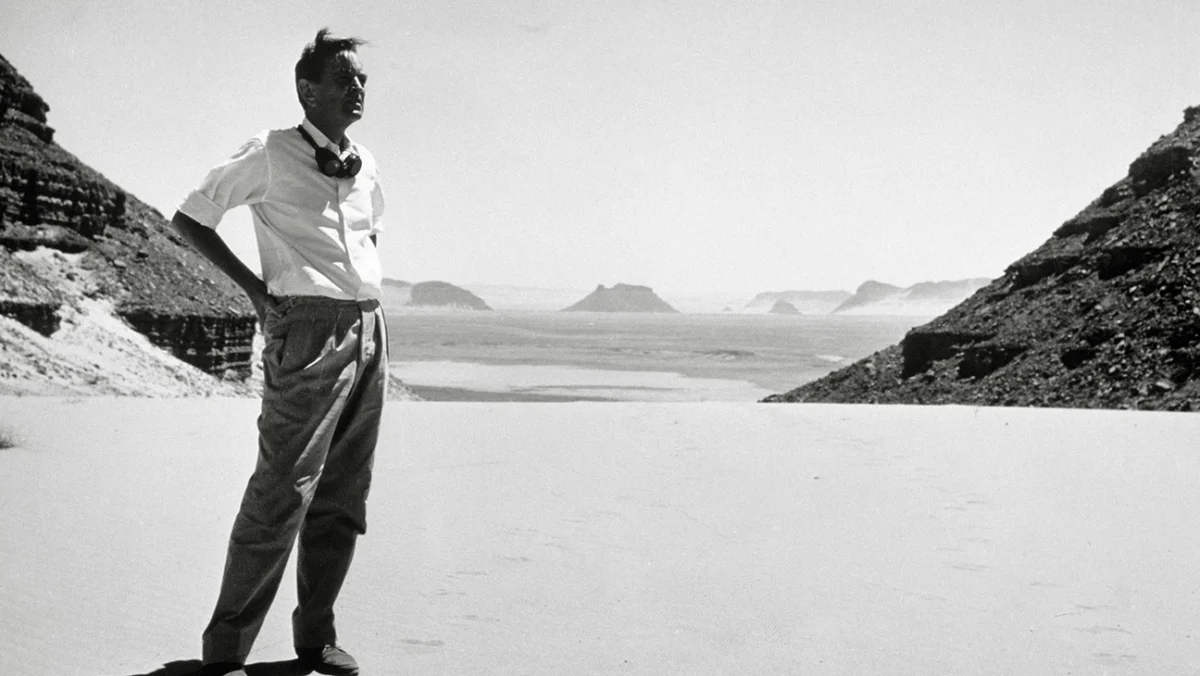
Lean stuck with Spiegel for his next undertaking, Lawrence of Arabia (1962), a film that would cement his legacy as a visionary. Predominantly shot in the scorching deserts of Jordan, the production was legendary for its sheer scale and the unforgiving conditions faced by cast and crew. When the original writer departed, Spiegel connected Lean with playwright Robert Bolt, a crucial collaborator who, like Lean, emerged from a puritanical childhood where he, too, had been considered the "dunce" of the family. This shared background fostered a unique understanding, enabling them to tackle the sprawling life and conflicted loyalties of British Army officer T.E. Lawrence, a subject long considered impossible to adapt for the screen. Bolt and Lean found the key, crafting a narrative that was simultaneously an intimate character study and a breathtaking spectacle.
Defining the Epic: Lawrence of Arabia and Beyond
Lawrence of Arabia became an undisputed milestone in film history. Maverick captures the sheer awe of major-name directors "geeking out" over its majesty, recalling how it "opened their eyes to the boundless possibilities of cinema." Its immersive quality, achieved through meticulously composed wide shots of real desert vistas and a commitment to practical effects, is frequently lauded. Every sand dune, every mirage, every cavalry charge was real, a stark contrast to the digital fakery prevalent in contemporary blockbusters. This commitment to authenticity gave the film an unparalleled sense of grandeur and verisimilitude. The film bagged another seven Oscars, including Best Picture and a second Best Director honor for Lean, solidifying its place in the pantheon of cinematic achievements. Joe Wright, who, like Lean, battled dyslexia and was "written off as a lost cause early on," expresses a particular affinity for Lean, astutely identifying how the director saw himself in Lawrence: "I think the relationship between pain and pleasure, and the invention of self, the loneliness I think are all things Lean felt and expressed through Lawrence." This sharp observation underlines how Lean’s epics, while grand in scale, were often profoundly personal.
Following Lawrence of Arabia, Lean delivered another massive commercial success with Doctor Zhivago (1965). While it garnered immense popularity and five Academy Awards, including Best Adapted Screenplay, the film was widely dismissed by critics for allegedly crushing the spirit of Boris Pasternak’s novel, trivializing the Russian Revolution, and reducing a complex historical narrative to a "soppy romance." Yet, its box office performance was staggering, proving Lean’s ability to captivate global audiences. Maverick offers fascinating glimpses into the pre-CG "movie magic" of this era, detailing how the Spanish landscape was transformed into snowbound Russia for Doctor Zhivago, a testament to the ingenuity and scale of Lean’s practical filmmaking.
The Shadow of Perfectionism: A Director’s Demands
Despite the soaring artistic and commercial triumphs, Maverick does not shy away from revealing the more challenging aspects of Lean’s directorial temperament. Testimonials from actors paint a picture of a demanding, often ruthless perfectionist. Robert Mitchum, after working with Lean on Ryan’s Daughter, described him as "monomaniacal." More disturbingly, the film recounts an incident on the set of Ryan’s Daughter where Lean insisted cameras continue rolling while veteran actor Leo McKern came perilously close to drowning, tossed about near the rocky shores of Ireland’s Western coast during a fierce Atlantic storm. Omar Sharif, who found global fame through his collaborations with Lean on Lawrence of Arabia and Doctor Zhivago, offered a frank assessment, describing Lean as a "difficult, selfish man" who drove people too hard in pursuit of his vision. "He had no pity for anyone, including himself," Sharif remarked, highlighting Lean’s intense, all-consuming dedication to his art.
Lean’s own words appear to validate the frequent charge that he prioritized visuals over performances. Musing on the role of actors on a shoot, he controversially stated, "They are – and I say this in the best possible way – puppets." While Maverick notes there’s no evidence he subjected his cast to the kind of psychological torture associated with contemporaries like Alfred Hitchcock or Stanley Kubrick, he was undeniably moody, impatient, and singularly focused on achieving his precise visual aesthetic. Nigel Havers good-humoredly recalls Lean’s initial nervousness on A Passage to India, only for the director to quickly revert to "shouting at people" to get "back in the groove." This unflinching portrayal of Lean’s demanding nature is crucial to the documentary’s balanced perspective, illustrating the immense personal cost often associated with his grand artistic visions.
Critical Firestorm and the Wilderness Years
The documentary delves into the catastrophic reception of Ryan’s Daughter (1970), a critical failure that profoundly shook Lean’s confidence and plunged his career into limbo for 14 years. The film, another large-scale production involving the construction of an entire Irish coastal village, was lambasted by critics. Maverick vividly recounts Lean’s humiliation at being summoned to a meeting of the National Society of Film Critics at New York’s Algonquin Hotel, where prominent critics like Richard Schickel and Pauline Kael subjected him to a two-hour interrogation, demanding to know how the director of Brief Encounter could produce such "garbage." Lean confessed the experience had an "awful effect" on him, filling him with shame and a deep reluctance to direct again.
Thompson skillfully contextualizes this critical backlash, presenting a fabulous split-screen montage that illustrates how the radical new wave of independent filmmaking emerging from America in 1970 — spearheaded by directors who would become known as New Hollywood — made Ryan’s Daughter seem hopelessly antiquated. The era favored gritty realism, anti-heroes, and intimate narratives over the sprawling, traditional epics Lean was known for. This shift in cinematic tastes, combined with the film’s substantial financial losses for MGM, contributed significantly to Lean’s period of self-imposed exile from filmmaking, often referred to as his "wilderness years."
A Final Masterpiece: A Passage to India
Returning from his 14-year hiatus, Lean made his final film, A Passage to India, in 1984. The comeback was met with critical acclaim and commercial success, proving that Lean’s touch for grand narrative and visual splendor remained undiminished. However, even on this final production, his dogmatic approach continued to cause friction, notably leading to open rebellion among the cast. Narrator Cate Blanchett recounts that Judy Davis was particularly "strident," hurling invective at the director and telling him "point-blank that he had no idea what he was doing." Despite the on-set clashes, Davis received an Oscar nomination for Best Actress, while her co-star, British acting royalty Peggy Ashcroft, won for Best Supporting Actress, underscoring Lean’s ability to extract powerful performances even amidst personal conflict. Lean, for his part, commented on the unpleasantness of coping with "these personal hates" from mistrusting actors, further highlighting the recurring tension between his vision and the collaborative nature of filmmaking.
Enduring Influence: Lean’s Legacy on Modern Cinema
Despite impressions of Lean as a spiky character, Maverick is by no means a reductive portrait of an insensitive despot. Thompson meticulously demonstrates how Lean built the model for the modern blockbuster, a genre he defined through a seamless blend of grand scale, meticulous visual storytelling, and deeply resonant character arcs. Revisiting the breathtaking location footage from his most ambitious projects serves as a powerful reminder of how much "movie fakery" we have come to accept in the digital age. Lean’s unwavering commitment to practical effects and shooting on location created an immersive quality that few films achieve today.
The documentary provides compelling testimony from the titans of contemporary cinema. Steven Spielberg reveals that he rewatches The Bridge on the River Kwai every time he begins shooting an action-adventure, a testament to Lean’s enduring influence on pacing and spectacle. Francis Ford Coppola and Denis Villeneuve articulate how Lean’s fearless sense of scale, which never came at the expense of story or character, informed their own epic works. Paul Greengrass credits Lean as one of a handful of directors who "invented the language of film craft." Perhaps most revealing is Steven Soderbergh’s anecdote about Lean, who, as a former editor, habitually shaped a first cut without dialogue or sound, allowing the images alone to tell the story – an approach Soderbergh admits he "stole and still uses to this day." These insights underscore Lean’s foundational role in shaping cinematic grammar and his indelible impact on generations of filmmakers.
The Personal Labyrinth: A Search for Connection
Throughout this dense and engrossing survey of Lean’s cinematic career, Thompson threads the tumultuous narrative of the director’s personal life. Spanning six marriages and various other relationships and flings, Lean’s romantic life appears to have been a relentless, often futile, search for an elusive happiness. It is a sad irony that he mirrored his father’s history by walking out on his first wife, Isabel Lean, and their only son, Peter, with whom he subsequently had minimal involvement. This cycle of abandonment, a painful echo from his own childhood, speaks volumes about his struggle with intimacy and commitment.
While many of his films, such as Summertime, Brief Encounter, Doctor Zhivago, and Ryan’s Daughter, were fundamentally about love or its elusiveness, Lean comes across in archival interviews as a contemplative man whose own belief in lasting love was stymied by a constant certainty that "something better" lay around the next corner. His thoughts on the end of a relationship reveal a ruthless lack of sentiment, perhaps a defense mechanism against emotional pain: "Anything that’s finished is finished. You must just pretend the people aren’t there. Once you’ve made your decision, you’ve got to cut them out of your life." This stark philosophy, strangely, is part of what makes Maverick so satisfying, offering an unvarnished look at the man who created such soaring emotions on screen but struggled to navigate the intricacies of human connection in his own life.
Maverick: A Layered and Unflinching Portrait
Weaving together an opulence of archival material, insightful interviews, and smart clip choices, Barnaby Thompson and editor Paul Van Dyck craft a chronological narrative that is both expansive and deeply personal. The documentary is enhanced by stirring orchestral underscoring from Rael Jones and elegant contributions from Kenneth Branagh, who reads excerpts from Lean’s letters, adding another layer of intimacy to the portrayal. Maverick: The Epic Adventures of David Lean ultimately succeeds in presenting a comprehensive, nuanced, and unflinching portrait of a man driven by an almost superhuman ambition to conjure grace, magnificence, and profound emotion in his art, even if it meant leaving a trail of personal wreckage in his wake. It is a powerful testament to a director whose visual genius reshaped cinema, offering a rare glimpse into the complex soul that fueled his legendary creations.