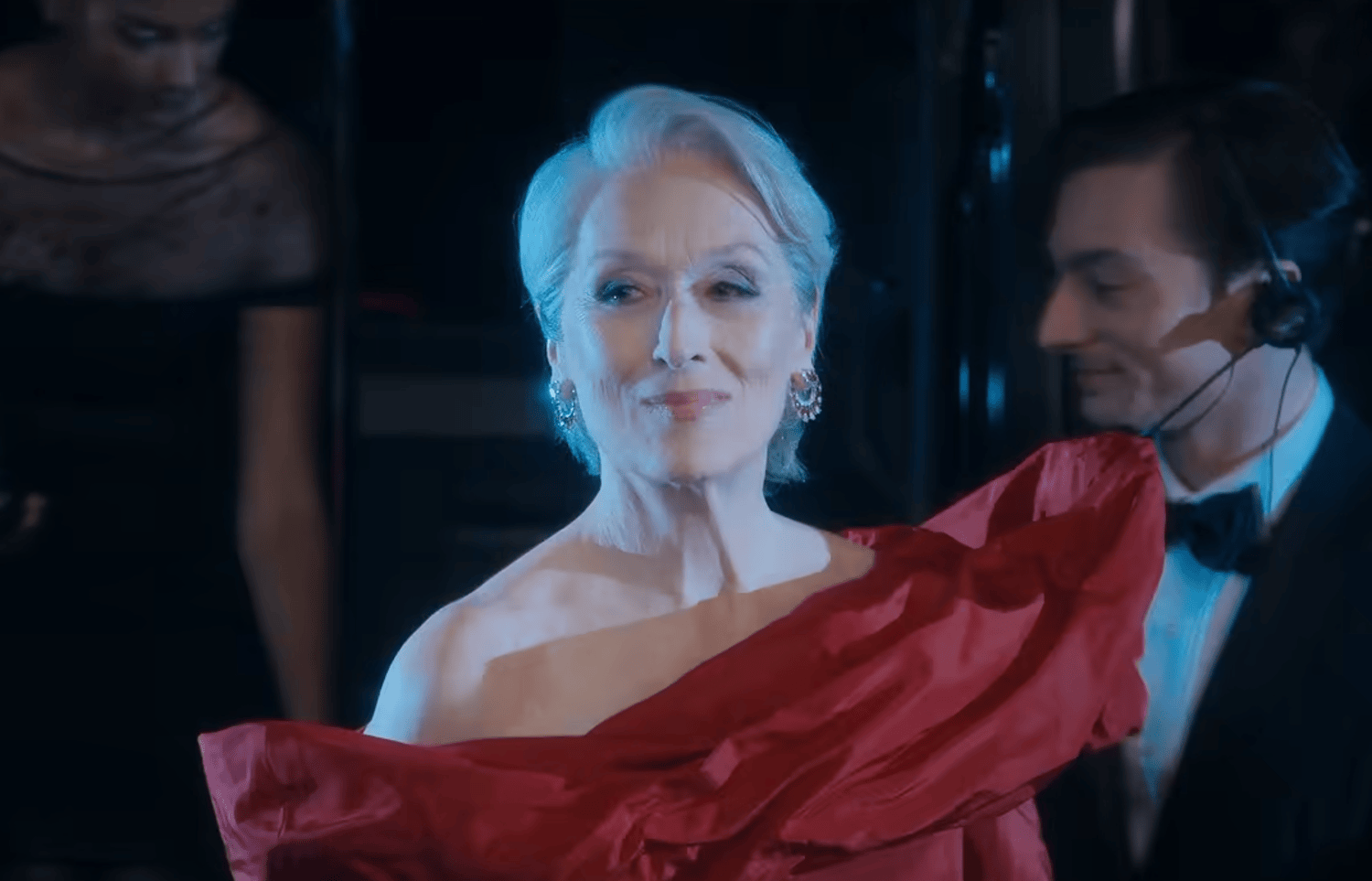
The long-awaited cinematic adaptation of C.S. Lewis’s beloved fantasy universe is finally taking shape under the visionary direction of Greta Gerwig, with production details emerging that promise a radical and visually striking reimagining of the classic material. In a major casting revelation that has instantly dominated entertainment headlines, legendary three-time Academy Award-winning actress Meryl Streep has been officially confirmed to voice Aslan, the majestic and divine lion who anchors the moral and spiritual core of the Narnia chronicles. According to an exclusive cover story published by Empire, Gerwig’s interpretation of the iconic character will break significantly from traditional depictions, featuring heterochromic eyes and a bold red-striped visage explicitly designed to pay homage to rock icon David Bowie.
The announcement brings a definitive end to years of rampant speculation, casting rumors, and industry whispers surrounding Netflix’s high-profile venture into the Narnia franchise. As Gerwig prepares to helm one of the most ambitious fantasy projects of the decade, the integration of Streep’s gravitas with an aesthetic nod to Bowie establishes an avant-garde tone that signals this will not be a standard, by-the-book adaptation of Lewis’s foundational mythology.
Casting the Great Lion: Criteria and Creative Vision
Securing the right voice and persona for Aslan proved to be one of the most formidable creative hurdles of pre-production, according to director Greta Gerwig. Speaking with Empire, the filmmaker elaborated on the exacting standards required to bring the literary deity to life through vocal performance alone. Gerwig noted that she needed an artist who possessed immense gravitas while entirely avoiding morose self-seriousness, demanding a delicate balance of profound wisdom and approachable authenticity.
Furthermore, the director emphasized the necessity of capturing a dual emotional resonance: the capacity to communicate deep pathos and existential weight alongside pure joy and childlike delight.
"I wanted someone who was older than 70, so there was a wisdom of experience, but who also had the capacity of fresh wonder, like a child. And also to be one of the greatest actors to ever do it. That list is not a long one," Gerwig explained.
By selecting Meryl Streep, Gerwig has enlisted an actress whose unparalleled cinematic legacy aligns precisely with these parameters. Streep’s involvement elevates the project from a standard streaming franchise starter to a prestige cinematic event, ensuring that Aslan will command the screen—and the soundscape—with unprecedented authority.
A Visual Departure: The David Bowie Influence
Perhaps the most startling detail to emerge from the Empire feature is the visual design chosen for Aslan under Gerwig’s direction. Rather than adhering strictly to the naturalistic depiction of a lion seen in previous adaptations, this version of Aslan will feature striking heterochromic eyes—meaning each eye is a different color—paired with a bold, red-striped visage.
Industry analysts and fans alike have noted that this stylistic choice represents a deliberate departure from the traditional literary descriptions provided by C.S. Lewis. Instead, Gerwig’s creative team has channeled the artistic persona of David Bowie, specifically drawing inspiration from the late musician’s iconic heterochromia (which resulted from a childhood injury rather than natural genetics, though permanently associated with his otherworldly stage presence) and his legendary glam-rock aesthetic epochs.
This conceptual fusion of classic fantasy literature with rock-and-roll iconography highlights Gerwig’s penchant for postmodern artistic blending. It suggests that the aesthetic landscape of The Magician’s Nephew will lean heavily into theatricality, symbolism, and a heightened sense of mythic wonder rather than purely gritty realism.
Shifting Eras: Relocating the Chronology of Narnia
Beyond the radical redesign of its central deity, Gerwig’s adaptation is introducing notable structural adjustments to the narrative timeline. While C.S. Lewis originally set the events of The Magician’s Nephew—the chronological prequel that explains the creation of Narnia and the origins of the Wardrobe—in the year 1900, the upcoming film adaptation shifts the setting forward to the 1950s.
This chronological relocation serves multiple strategic purposes within the broader context of the franchise. By anchoring the framing narrative in the 1950s—the exact decade during which Lewis published the original novels, beginning with The Lion, the Witch and the Wardrobe in 1950—the production aligns the entry point of the prequel more closely with the historical era of the books’ creation. Additionally, this shift may streamline the internal continuity if Netflix intends to weave subsequent adaptations together fluidly, allowing for smoother thematic and visual transitions across multiple eras of British history depicted in the multi-book series.
A Star-Studded Ensemble Cast Takes Shape
While Meryl Streep’s attachment as Aslan serves as the crown jewel of the production, the rest of the ensemble cast boasts an array of prestigious British and international talent.
Emma Mackey, who previously collaborated with Gerwig in the global box-office phenomenon Barbie, has been cast as Jadis, the formidable and ruthless White Witch. Mackey’s casting suggests a complex, dynamic interpretation of the villainess, moving away from purely two-dimensional evil toward a more psychologically layered antagonist.
The broader supporting cast features an impressive roster of celebrated actors, including Daniel Craig—whose role is widely anticipated, though officially unconfirmed, to be Uncle Andrew, the eccentric and morally compromised magician who triggers the adventure. They are joined by Carey Mulligan, Ciarán Hinds, Denise Gough, Susan Wokoma, Kobna Holdbrook-Smith, David McKenna, and Beatrice Campbell. The breadth of theatrical and cinematic experience within this ensemble underscores Netflix’s substantial financial and creative investment in the property.
Background Context and Corporate Strategy
The journey to bring Greta Gerwig’s vision of Narnia to the screen has been a prolonged exercise in corporate patience and strategic restructuring. In October 2018, Netflix announced a landmark multi-year deal with The C.S. Lewis Company to develop series and film projects based on the entire seven-book Narnia universe, marking the first time a single company held the rights to the complete literary canon.
For years, development moved quietly behind closed doors as Netflix sought the right creative architect to spearhead the universe. In late 2022, reports confirmed that Greta Gerwig—fresh off her critical and commercial triumphs with Lady Bird and Little Women, and currently riding the historic wave of Barbie—had signed on to write and direct at least the initial two films in the planned franchise.
For Netflix, the stakes could not be higher. As streaming platforms face mounting pressure to deliver sustainable profitability and cultural tentpole events that can compete with traditional theatrical releases, the Narnia property represents a crown jewel capable of rivaling Disney’s Marvel Cinematic Universe or Amazon’s The Lord of the Rings: The Rings of Power. By granting a visionary auteur like Gerwig the creative autonomy to infuse personal artistic flourishes—such as Bowie-inspired character design and high-caliber prestige casting—Netflix is betting that critical acclaim and distinct artistic identity will drive massive subscriber engagement.
Chronology of Production and Release Strategy
The rollout of Narnia: The Magician’s Nephew reflects an evolving hybrid distribution model designed to maximize both cultural prestige and global accessibility.
- October 2018: Netflix secures rights to the complete C.S. Lewis Narnia catalog.
- November 2022: Greta Gerwig officially signs on to write and direct upcoming Narnia films for Netflix.
- Mid-2024 to 2025: Casting announcements trickle out, confirming Emma Mackey as Jadis and assembling the supporting ensemble.
- Late 2025/Early 2026: Principal photography and intensive post-production visual effects work underway.
- February 12, 2027: The film is scheduled to open in traditional theatrical venues, leveraging the big-screen format for its grand visual scope.
- April 2, 2027: The feature debuts globally on the Netflix streaming platform, marking a roughly seven-week theatrical window designed to satisfy both cinematic exhibitors and streaming subscribers.
Implications and Industry Outlook
The official confirmation of Meryl Streep’s role and the aesthetic details surrounding Aslan carry significant implications for the fantasy genre at large. In an era where franchise filmmaking has frequently been criticized for homogenized visual styles and algorithmic casting decisions, Gerwig’s approach injects a distinct, high-art sensibility into commercial IP.
By utilizing David Bowie as a stylistic muse for a literary deity, the production signals that modern adaptations of classic children’s literature can—and perhaps must—evolve to reflect contemporary artistic sensibilities to capture modern audiences. Furthermore, the hybrid release strategy employed by Netflix demonstrates a growing recognition that premium cinematic experiences benefit immensely from theatrical runs, validating the artistic integrity of the work before it reaches home viewing environments.
As the release date approaches in early 2027, industry observers will be watching closely to see how audiences respond to this bold reimagining of C.S. Lewis’s universe. With a masterclass cast led by Streep and Mackey, guided by one of Hollywood’s most distinctive directors, Narnia: The Magician’s Nephew is positioned to redefine what a major literary adaptation can achieve in the modern streaming era.