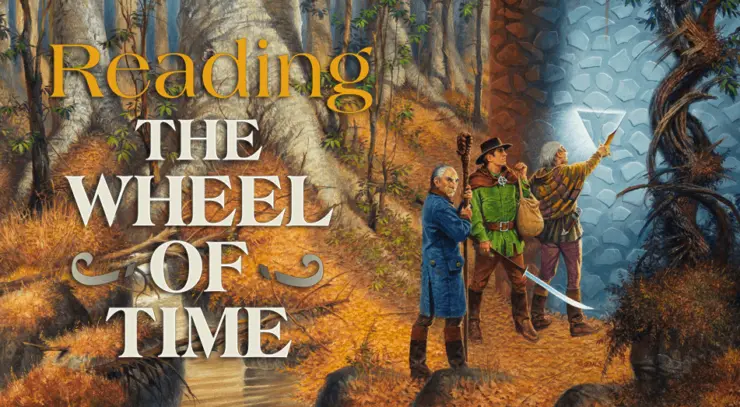
The literary landscape of Robert Jordan’s epic fantasy masterwork, The Wheel of Midnight, continues to unfold with high-stakes geopolitical maneuvering and existential dread as the narrative approaches its prophesied climax, Tarmon Gai’don. Chapters 17 and 18 of Towers of Midnight shift focus across multiple distinct character arcs, examining how key figures manage immediate military and administrative crises while grappling with the long-term viability of civilization post-conflict. The overarching theme of this segment centers on the dual burden carried by leaders: securing survival through the Last Battle while simultaneously laying the foundational frameworks for a shattered world’s reconstruction.
Matrim Cauthon and the Strategic Realignment of Seanchan Refugees
Matrim Cauthon’s narrative trajectory in Chapter 17 opens in a characteristically pragmatical fashion, utilizing his dice to determine a sleeping location beneath a wagon before waking with the physical toll of rigorous campaigning. His immediate morning duties involve logistics and personnel management, notably addressing the future of his traveling companions. Juilin Sandar formally requests permission for himself and Thera to accompany the Aes Sedai toward Tar Valon—a request Mat waves away by affirming their autonomy.
More critically, Mat inspects the picket lines to discover that the Aes Sedai have requisitioned several of his premier horses and pack animals. Confronting Seta and Bethamin, former sul’dam now grappling with their newly discovered abilities to channel the One Power, Mat addresses their profound existential crisis. Both women recognize that their capability to channel poses a direct ideological threat to the Seanchan Empire, with Seta openly questioning whether death might be preferable to perpetual flight.
Displaying unexpected diplomatic acumen, Mat instructs the women to accompany the Aes Sedai, learn to channel, and prepare for a future where they might eventually convince Empress Tuon of the truth, thereby helping to reform the Seanchan societal structure without collapsing the Empire entirely. This interaction provides Seta and Bethamin with a crucial new purpose, anchoring their displaced cultural identities to a construct endorsed by the Prince of Ravens. Concurrently, Mat arranges a parting message for the White Tower via Joline, utilizing a harmless prank involving sprinklewort-laced sweetbuns to punctuate his warning that he intends to retrieve his property from the White Tower without obstruction. Prior to his departure from the camp with Thom Merrilin, Mat entrusts young Olver to the care of Mistress Anan, ensuring the boy’s continued education.
Elayne Trakand and the Long-Term Preservation of Andor
In the royal palace of Caemlyn, Queen Elayne Trakand inspects the symbolic decay of the Sunrise Gardens—where she first encountered Rand al’Thor—noting the withered flora and brown, unyielding farmlands as tangible omens of the approaching Last Battle. Her strategic deliberations are soon joined by Birgitte, who cautions the queen regarding personal security risks, sparking a familiar debate over prophecies surrounding Elayne’s children.
The core of Elayne’s political strategy in this sequence involves securing the future integration of the Kin. Meeting with Sumeko and Alise, Elayne proposes a structured agreement: the Kin will receive official Crown support and protection to reside openly in Caemlyn, provided they pledge their services to Healing and the creation of Travelling Gateways under terms coordinated with the Amyrlin Seat, Egwene al’Vere. Crucially, Elayne suggests revising the traditional rules of the Kin to permit marriage, thereby differentiating them from the celibate Aes Sedai and mitigating White Tower anxieties regarding their existence.
This diplomatic initiative addresses Elayne’s broader geopolitical concerns. With the Seanchan Empire posing an imminent threat of conquest and the subsequent enslavement of all female channelers through a’dam, securing a proprietary network of channelers is vital for Andor’s long-term defense. Furthermore, Elayne acknowledges her administrative neglect of the Black Tower, located on Andoran soil, and weighs the necessity of establishing diplomatic or defensive ties with the Asha’man before rival power factions can exert control over them.
Perrin Aybara and the Complexities of the World of Dreams
Within Tel’aran’rhiod, Perrin Aybara undergoes intensive instruction under the guidance of the wolf Hopper. Transitioning from the physical world where his body sleeps beside Faile, Perrin investigates the Whitecloak encampment. Using his unique abilities, he successfully memorizes a signet ring within the Lord Captain Commander’s tent and spots Master Gill’s distinct hat among the captive quarters.
Hopper initiates a series of rigorous training exercises designed to teach Perrin how to navigate the dreamscape without losing his human identity to his lupine nature. Unlike wolves, who share an ancestral collective memory across generations, Perrin must consciously maintain his human grounding. Hopper brings him back to Emond’s Field to remind him of his origins, though Perrin mentally rejects his old hometown as home, anchoring his identity entirely to Faile.
During their traversal, Perrin and Hopper encounter an anomalous, translucent violet barrier resembling solid glass—an apparent manifestation of the Dreamspike provided by Moridin to Graendal. Recognizing the structure as a fundamental aberration within the Pattern, Hopper elects to pivot their training elsewhere, leaving Perrin to contemplate the escalating reality-warping dangers introduced by the Forsaken.
Rodel Ituralde and the Defense of Maradon
At the northern frontier, General Rodel Ituralde continues his masterclass in defensive warfare, holding a massive Trolloc army at bay at a critical river ford between the Blight and the city of Maradon. Relying on precise artillery and archer placements, Ituralde initially notes with strategic satisfaction that his fortifications have forced the Shadow to deploy heavy trebuchets.
However, the nature of the engagement quickly escalates into psychological and tactical horror when the enemy begins hurling the decomposing corpses of fallen Trollocs into the imperial encampment. While Ituralde recognizes the psychological demoralization factor, he quickly deduces a far more insidious secondary objective. Analyzing the frequency and trajectory of the falling bodies, Ituralde identifies the maneuver as a diversion masking the deployment of airborne Draghkar.
Screaming to drown out the hypnotic, paralyzing songs of the winged Shadowspawn, Ituralde rallies his forces for hand-to-hand combat against the sudden ambush. As the main force of Trolloc infantry renews its assault across the river ford, Ituralde’s tactical genius is pushed to its absolute limits, relying entirely upon the fulfillment of the Dragon Reborn’s promise to dispatch vital military reinforcements to Arad Doman before the defensive line collapses completely.
Analytical Summary of Strategic Implications
The convergence of events across these chapters highlights a profound transitional phase for the primary factions of the Westlands. The pragmatic reallocation of personnel by Mat, the institutional restructuring attempted by Elayne, the psychological hardening of Perrin, and the desperate holding action fought by Ituralde collectively demonstrate a universal pivot from denial to active preparation.
As the narrative prepares to transition into subsequent confrontations—including Faile’s impending confrontation with Berelain and Mat’s long-awaited diplomatic audience with Queen Elayne—the institutional frameworks of the Third Age are actively being rewritten. The long-term survival of human civilization hinges not merely on winning Tarmon Gai’don, but on the structural viability of the alliances being forged amidst the encroaching shadow.