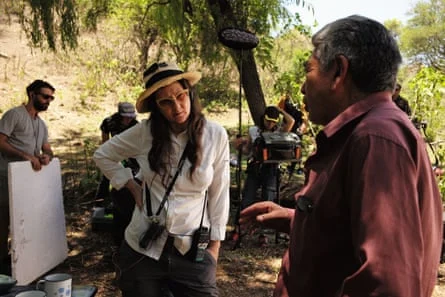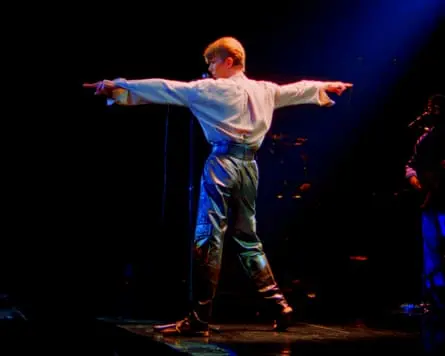
Nearly five decades after it was captured on pristine 35mm film, a legendary and previously unreleased concert recording of David Bowie performing at London’s Earls Court during his 1978 Isolar II tour is finally set to see the light of day. Acclaimed documentary filmmaker Brett Morgen, renowned for his visually striking archival works including Kurt Cobain: Montage of Heck and Moonage Daydream, has spearheaded a monumental, decade-long restoration project to bring the footage to modern audiences. Rather than receiving a traditional theatrical release, the meticulously restored multimedia production is scheduled to premiere in major arenas in early 2027, fusing a historic 1978 musical performance with state-of-the-art 21st-century presentation techniques.
Discovery in the Vaults
The journey toward this unprecedented cinematic and sonic event began in 2017 when Morgen was granted exhaustive, unrestricted access to David Bowie’s vast and carefully maintained private archives while developing his 2022 feature Moonage Daydream. Sifting through the late artist’s cavernous storage collections, the director’s attention was immediately captured by a stack of gleaming 35mm film cans bearing a single, handwritten word: "Stage."
Initially, Morgen hypothesized that the canisters contained auxiliary promotional footage or outtakes related to Bowie’s 1978 live double album of the same name, which had been compiled primarily from performances in Philadelphia during the North American leg of the Isolar II tour. However, upon closer inspection, the cans revealed an extraordinary historical artifact: multi-camera, professional footage of Bowie’s landmark, sold-out summer residency at Earls Court Exhibition Centre in London.
The performances had been filmed across three nights in June and July 1978, during a period when Bowie was actively touring in support of his critically acclaimed electronic-infused albums Low and “Heroes”. Despite the high production value and the involvement of prominent industry personnel, the footage had languished unseen in storage for nearly 50 years, effectively representing the holy grail of Bowie archival materials.
Background and Chronology of the Lost Project
In the summer of 1978, at the height of his creative powers and fresh from establishing his experimental electronic soundscapes in Berlin, David Bowie embarked on the massive Isolar II tour, often referred to by fans as the "Low/Heroes" tour. Seeking a way to document the ambitious stage production without immediately committing to another grueling, exhaustive global road schedule—he would not tour again until his 1983 Serious Moonlight tour—Bowie commissioned film director David Hemmings to capture the London Earls Court shows. Hemmings, who had recently directed Just a Gigolo, utilized a dedicated film crew to document the sold-out concerts with the intention of distributing a feature film in movie theaters as a substitute for live touring.
However, the project quickly fell victim to Bowie’s relentless creative momentum. As the tour concluded, the musician shifted his focus entirely toward the recording of his next studio album, Lodger, and subsequently relocated to Switzerland. Reports from the era indicate that Bowie grew dissatisfied with Hemmings’ initial editing choices, which reportedly included abstract conceptual interludes, such as footage of a young boy playing a younger version of the artist.
Moving forward at what Morgen describes as "the speed of light," Bowie abandoned the film project entirely. In the wake of his rapid artistic evolution, looking backward at past tours held little appeal. Although Bowie occasionally mused about dusting off and releasing the footage in the years leading up to his death in January 2016, the cans remained locked away, preserving a pristine historical window into a pivotal era of modern rock history.
Restoration and Technological Integration
When Morgen secured the rights to work with the footage, he and his production team embarked on what became a nearly ten-year labor of love. The physical state of the 35mm elements, remarkably well-preserved within Bowie’s climate-controlled storage units, provided an exceptional foundation for digital restoration. Complemented by pristine multitrack audio recordings captured during the concerts by longtime producer Tony Visconti, the material offered an extraordinarily high-fidelity blueprint for modern recreation.

To bring the half-century-old footage up to contemporary standards, Morgen’s team undertook an exhaustive post-production process. Most notably, the visual elements underwent over 1,000 hours of color grading—a staggering investment of time that the director believes sets a new industry standard.
Significantly, the forthcoming presentation will strip away the extraneous narrative elements introduced by David Hemmings in 1978. The focus will rest squarely on Bowie and his backing band delivering unadulterated live performances. Morgen noted that extraneous segments, such as the footage of the young boy, have been excised to maintain absolute fidelity to the musical event itself.
Musical Significance of the Isolar II Tour
The Isolar II tour represented a watershed moment in live popular music performance, seamlessly merging the raw energy of rock and roll with the avant-garde sensibilities of electronic composition. By 1978, Bowie had assembled a remarkably sophisticated ensemble capable of executing complex sonic arrangements on stage.
Musicologists and critics have frequently highlighted the radical nature of Bowie’s touring configuration at the time. The incorporation of an electric violin, a dedicated synthesizer player, and complex keyboard setups within a standard rock lineup was exceptionally progressive for a major arena act in the late 1970s.
Morgen compiled the final cut of the film by drawing from performances across multiple nights at Earls Court, noting that the improvisational nature of the band generated an electric sense of unpredictability. Different musical arrangements were tested from one night to the next, fostering an environment of calculated artistic risk.
Among the boldest artistic choices highlighted in the footage is the decision to open the arena concerts with "Warszawa," a stark, slow-tempo, and predominantly instrumental track from the Low album. In terms of concert pacing, initiating a massive arena show with such low-energy, atmospheric tension was virtually unprecedented. Yet, as Morgen observes, Bowie’s magnetic stage presence steadily reeled the audience in, building toward explosive renditions of catalog staples such as "Station to Station."
Furthermore, the footage captures rare historical milestones. During the second Earls Court show on July 1, 1978, Bowie introduced "Sound and Vision" into the live setlist for the very first time. The newly discovered footage reveals candid, joyous moments of the artist breaking character, laughing as the electric violin jokingly attempts to mimic horn sections, and casually stepping offstage to smoke a cigarette or share a drink while maintaining total engagement with the musical atmosphere. Observers note that this tour marked a period where Bowie performed with minimal theatrical mask-wearing, projecting a more direct, authentic persona.
Implications and the 2027 Arena Experience
The decision to bypass traditional theatrical distribution in favor of a bespoke, large-scale arena experience reflects a broader shift in how historical music archives are monetized and presented to modern audiences. Rather than positioning the project as a conventional concert film meant for a static cinema screen, Morgen and his collaborators have engineered an immersive multimedia environment.
Set to debut in international arenas in early 2027—marking eleven years since Bowie’s passing—the production utilizes a multi-screen configuration, an integrated, synchronized lighting package, and a state-of-the-art 7.1 surround sound mix. This design philosophy invites attendees to navigate their own visual focus within the venue, effectively blending a 1978 historical artifact with 2027 presentation technologies.
Broader cultural analysts suggest that projects of this scale redefine the legacy touring market for deceased heritage artists. Moving beyond traditional hologram tours or standard archival box sets, this approach leverages advanced digital restoration to create interactive, spatial experiences that honor the artist’s legendary penchant for innovation. As the project prepares for its milestone premiere, it underscores the enduring viability of David Bowie’s cultural footprint, proving that even a half-century after its creation, his artistic vision remains ahead of its time.